REVIEW · CASSIS
Cassis: Three Calanques Tour by Electric Mountain Bike
Book on Viator →Operated by TROLIB · Bookable on Viator
Turquoise coves meet pedal-assist power. This three-Calanques e-bike ride from Cassis is a fast, guided way into Calanques National Park, with enough stops to feel like a full day without spending the whole day on the saddle.
What I really liked: the electric mountain bike makes the climb parts feel manageable, so you actually get to enjoy the views instead of just surviving the hills.
My second favorite part is how the route lines up for big “wow” moments, especially at the En Vau viewpoint and the limestone inlets with that unmistakable turquoise water. There’s also an option to swim, so you can turn the scenery stop into a water break if conditions are right.
One thing to consider: this isn’t a leisurely cruise. You need to know mountain biking basics and be comfortable on gravel tracks, plus there are height and weight limits (and it’s not recommended if you’re pregnant or have health problems).
In This Review
- Key things that make this tour click
- Electric bikes turn Calanques into a real outing, not a slog
- Price and value: what $66.26 buys you (and what it doesn’t)
- Where you meet and how to set yourself up for the 8:30 start
- Into Calanques National Park: faster riding, real scenery, smart pacing
- En Vau viewpoint: the photo stop that earns its time
- Riding through Cassis village: the human scale between cliffs
- Optional swim time: how to think about water breaks in the Calanques
- Route changes during summer fire risk: what happens if roads close
- Bike skills, health limits, and who should (and shouldn’t) go
- The guide’s role: keeping the ride smooth and the scenery understandable
- Small group size and photo add-ons that make it easier to remember
- Quick practical checklist before you go
- Should you book the Three Calanques electric bike tour?
- FAQ
- How long is the Cassis Three Calanques tour?
- What time does the tour start?
- Where do I meet for the tour?
- What’s included in the price?
- Is food or water provided?
- Do I need to know how to ride a mountain bike?
- What are the rider height and weight limits?
- What’s the group size?
- Is there an option to swim?
- What happens if conditions cause Calanques closures?
Key things that make this tour click
- Electric assist saves your energy and helps you cover more viewpoints in the same 3 hours
- En Vau viewpoint is a built-in photo and panorama moment
- Calanques National Park time on two wheels feels more efficient than walking only
- Swimming is optional in the limestone inlets if the spot and weather work
- Small groups (max 10) keep the pace friendly and the guide’s attention practical
Electric bikes turn Calanques into a real outing, not a slog

Cassis and the Calanques go together like shoes and socks. You get dramatic sea cliffs, narrow inlets, and that classic Provence coastline feel. The tricky part is that seeing it well usually means long walks, lots of stairs, or hopping between viewpoints.
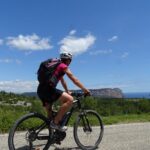
This tour solves that by using an electric mountain bike to move you faster between stops. In about three hours, you get the “high points” of the National Park without burning your whole morning on slow segments. If you’re the type who likes photos and wants to keep moving, the pacing is a big win.
Just as important, the guide doesn’t treat it like a straight line. You get commentary along the way, and you stop at the scenery points that actually matter for your effort level.
You can also read our reviews of more cycling tours in Cassis


Price and value: what $66.26 buys you (and what it doesn’t)

At around $66.26 per person for roughly 3 hours, you’re paying for three things: the electric bike + helmet, a professional guide, and a planned route with viewpoints you’ll likely want in one go. Bikes are included, which means you’re not chasing rentals or showing up empty-handed.
What’s not included is the stuff that can creep into your budget if you’re not ready: food and drinks, and a bag. So plan on carrying your own water and snacks. I strongly recommend a small day backpack with water and something like cereal bars, since you’ll be outdoors and you’ll appreciate the calories if you hit a warm morning.
There’s also value in the “effort-to-sights” ratio. Electric assist lets you spend more time looking at the coast and less time grinding on the tough bits. And if you request it, you can get tour pictures after the ride—nice for remembering spots without trying to juggle your camera mid-movement.
Where you meet and how to set yourself up for the 8:30 start
The meeting point is Trolib at Piscine Cap Provence, 13260 Cassis, France (the location is listed as Trolib / location et tours vélos et VTT électriques). You start at 8:30 am, and the tour ends back at the meeting point.
Because it’s an early start, you’ll want to arrive with your gear ready. Closed-toe shoes are required, and you’ll do better with a sporty, climate-appropriate outfit. If it’s warm, bring breathable layers. If it’s breezy near the water, bring something that cuts the wind a bit.
Also take the “don’t forget this” stuff seriously: you need to be comfortable on gravel, and closed-toe shoes help with footing. You don’t need bike fashion. You need grip, support, and confidence.
Into Calanques National Park: faster riding, real scenery, smart pacing
The main experience begins with a guided visit into Calanques National Park from Cassis. This is the heart of the tour, because it’s where the scenery density is highest: limestone cliffs, inlets, and viewpoints that usually require effort to reach on foot.
What the electric bike changes is the rhythm. Instead of feeling like every minute is a workout, you get a faster pace that keeps you moving through the best sections while you’re still fresh. That matters because Calanques views are best when you have the energy to stop, look around, and take photos without rushing.
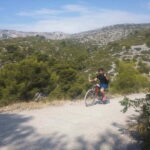
This ride is described as easy to medium difficulty, but don’t read that as “effort-free.” The tour notes that you must know how to ride a mountain bike and not be afraid of gravel tracks. In other words: it’s not extreme technical biking, but you should be comfortable with changing surfaces and a bit of uneven ground.
In practice, that means your mindset should be: show up confident, follow the guide’s pacing, and be ready for small stretches where control matters more than speed. The electric assist helps, but it doesn’t turn gravel into pavement.
En Vau viewpoint: the photo stop that earns its time

One of the named stops is En Vau viewpoint. This is exactly the kind of place you want on an e-bike tour: you get a big payoff without needing to plan a separate hike day.
At a viewpoint stop, the value isn’t just the view itself—it’s the timing. Coming in with the group means you’re not hunting for the right angle or worrying about how far you still have to ride afterward. The guide’s commentary helps you understand what you’re looking at, so the stop feels more meaningful than just a quick camera click.
If you’ve been to coastal viewpoints where you feel like you only get a minute, this is different. The tour is paced so you can actually pause and take it in. And since the bikes are electric, you’re less likely to arrive at the viewpoint wiped out from the climb.
Tip for your photo time: take a slow circuit for your angles before you start clicking like crazy. Once you find the best line of sight, you can relax and enjoy the moment instead of constantly repositioning.


Riding through Cassis village: the human scale between cliffs

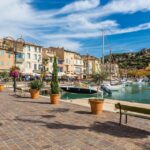
Between the big National Park scenery moments, you also get a stop that’s more about atmosphere: crossing the typical Provençal village of Cassis by e mountain bike.
This part matters because it breaks the day into layers. You’re not only staring at cliffs; you’re also seeing where the views connect to real life—streets, neighborhood texture, and the sense that Cassis isn’t just a scenic backdrop.
From a rider perspective, village riding is also a helpful balance. It can feel like a reset between more dramatic sections. If you’re managing energy and concentration, this kind of segment gives you a chance to settle into the ride—hands relaxed, cadence steady—before you head back toward the next scenery stop.
It’s one of those details that makes the tour feel like a rounded experience rather than a single sightseeing sprint.
Optional swim time: how to think about water breaks in the Calanques

The tour highlights include stops to admire the turquoise waters of the limestone inlets, with an option to swim. That’s the fun part, but it’s also the part you should plan for realistically.
If you want to swim, bring what you’d normally need for a quick dip: swimwear under your clothes and something to dry off with later. Since food and drinks aren’t provided, it’s also smart to treat swimming as a bonus, not a requirement—keep your energy steady and don’t skip water.
Even if you don’t swim, the inlets are still the point. This is the type of coastline where the color shift across the water and the contrast against white limestone cliffs creates the “wow” effect. Stopping here is how the tour earns the attention it gets.
Route changes during summer fire risk: what happens if roads close
Calanques areas can shift due to weather and fire risk, especially in summer. The tour notes that if the National Park is closed due to fire hazards, you won’t necessarily lose the whole day. Instead, you’ll be able to choose between another route, another date, or a full refund depending on conditions.
There’s also an explicit alternative riding plan during summer forest closures. In those cases, you may ride on smaller roads and discover vineyards, beaches, Canaille Cape, Cassis village, Port Miou Calanque, and the peninsula.
This flexibility is valuable for practical travelers. It means you’re not betting your morning on one fixed path that might get shut down. And if you’re the sort of person who would rather still ride than sit around, these alternate routes make the tour more dependable.
Bike skills, health limits, and who should (and shouldn’t) go
This is labeled easy to medium, but the requirements are clear. You need normal health and you must know how to ride a mountain bike. You also need to not be afraid of gravel tracks.
There are rider size and weight limits: you must be more than 4.9 feet (1.45 meters) and less than 240 lbs (120kg). Children must be older than 10, and the minimum age is listed as 11 years.
It’s also not recommended for pregnant women or people with health problems. If you’re unsure, take this as a “check first” situation. The tour’s pace and terrain mean you’ll want your body comfortable with active time outdoors.
Best fit: active travelers who can ride confidently on mixed surfaces for a few hours, and who want scenic stops more than they want a casual, seated ride. If that’s you, the e-bike helps make the day feel rewarding instead of stressful.
The guide’s role: keeping the ride smooth and the scenery understandable
A guided e-bike tour works only if the guide can manage two things: the cycling and the context. Here, the guide provides commentaries, and you get professional support during the ride.
From the way the experience is described, the guide is supportive on tougher terrain. That matters because electric assist can make you overconfident. When the road turns rougher, the guide helps you keep control and stay calm so you can continue enjoying the ride.
You also get clear explanations, which is underrated on biking tours. When you understand what’s coming—steep stretches, gravel sections, and where you’ll stop—you can relax and ride rather than guessing.
Plus, the group stays small (maximum 10). That typically means you’re not getting swept along in a big pack. You get a more personal pace and a better chance to ask questions at the stops.
Small group size and photo add-ons that make it easier to remember
With a maximum of 10 travelers per booking, you’re in a group that’s large enough to feel social but small enough for smoother movement between stops. You’re not wrestling for space, and it’s easier for the guide to keep an eye on the group’s comfort level on rougher bits.
There’s also a nice practical detail: the tour includes pictures of the ride, sent after the tour on request. If you’d rather ride than stop to constantly photograph, this is a helpful backup.
Quick practical checklist before you go
Here’s what you should think about before that 8:30 am start:
- Wear closed-toe shoes with good grip
- Bring water and snack options since food and drinks aren’t included
- Pack a small backpack (a bag isn’t included)
- If you want to swim, bring swimwear and something simple to dry off later
- Be ready for gravel—this tour assumes you can handle it
Also, at booking time, you need to advise heights. That’s a practical detail that can affect bike fit and comfort, especially on a powered bike where positioning matters for control.
Should you book the Three Calanques electric bike tour?
If your goal is to see the Calanques highlights from Cassis without turning the day into a long hike, I’d book this. The electric assist is the core reason it works: it lets you reach viewpoints like En Vau and spend real time looking, not just working.
Book it if you:
- feel comfortable riding a mountain bike and handling gravel tracks
- want a guided day with stops, not solo logistics
- like scenic momentum—fast enough to cover ground, slow enough to enjoy it
Skip or rethink it if:
- you’re not confident on uneven gravel surfaces
- you’re dealing with health limitations that make active outdoor movement difficult
- you’re traveling with concerns about the tour’s stated rider limits or terrain demands
Bottom line: for the price, you’re getting gear, guidance, and a tightly planned route that turns Calanques National Park into a doable, scenic half-day—especially if you want the big viewpoints plus a taste of Cassis village life.
FAQ
How long is the Cassis Three Calanques tour?
It’s about 3 hours.
What time does the tour start?
The start time is 8:30 am.
Where do I meet for the tour?
You meet at Trolib at Piscine Cap Provence, 13260 Cassis, France.
What’s included in the price?
An electric mountain bike and helmet rental, a professional guide with commentaries, and tour pictures sent after the tour on request.
Is food or water provided?
No. Food and drinks are not included, and you’re strongly suggested to bring water and cereal bars in a backpack if possible.
Do I need to know how to ride a mountain bike?
Yes. You must know how to ride a mountain bike and not be afraid of biking on gravel tracks.
What are the rider height and weight limits?
You must be more than 1.45 meters tall and less than 120kg.
What’s the group size?
The tour has a maximum of 10 travelers per booking.
Is there an option to swim?
Yes. There’s an option to admire the limestone inlets and swim.
What happens if conditions cause Calanques closures?
If the weather isn’t good or the National Park may be closed due to fire hazards, you can choose between another route, another date, or a full refund.