REVIEW · PARIS
Paris: Charms of Montmartre Guided Walking Tour
Book on GetYourGuide →Operated by Mon Petit Paris · Bookable on GetYourGuide
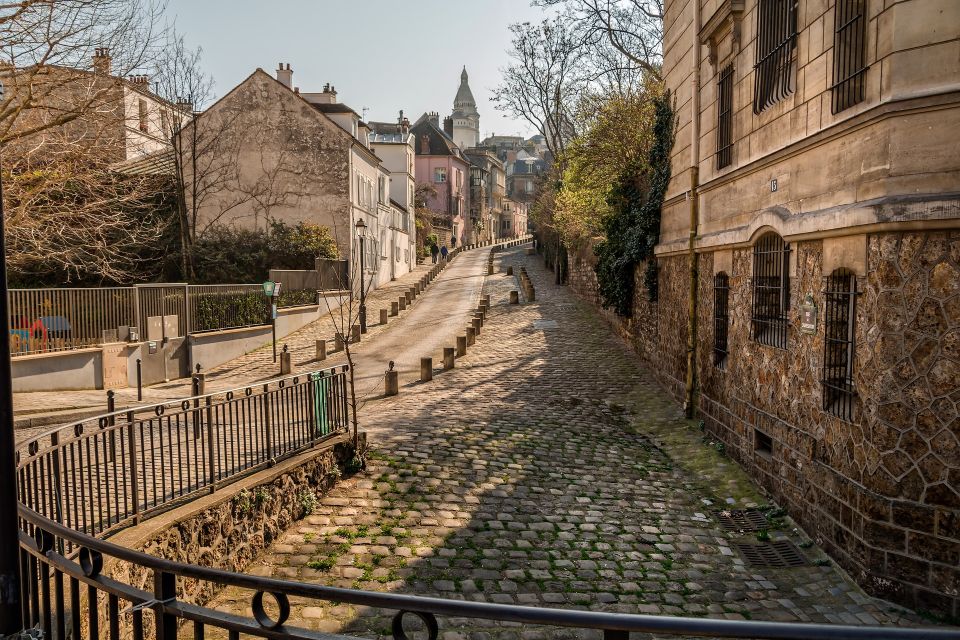
Montmartre’s best trick is how quickly Paris gives way to a village of cobbles, small squares, old cabarets, and artist stories. This two-hour walk begins at the Moulin Rouge and climbs toward Sacré Coeur, linking famous sights with the places where Picasso, Van Gogh, Renoir, and Toulouse-Lautrec worked and played.
I like the route for two reasons: it connects art to real places, and it saves the big hilltop view for the finish. The Moulin Rouge, Maison Rose, Picasso’s studio, and last vineyard in Paris give the walk plenty of variety.
The catch is the hill. You’ll climb stairs and slopes, and the tour runs in rain unless conditions become truly severe. Wear good shoes, and keep an eye on the forecast.
In This Review
- Key points of the Montmartre walk
- Starting beneath the Moulin Rouge lights
- Climbing toward Amélie and Van Gogh
- Place des Abbesses and the I Love You Wall
- Picasso’s studio and the painting that changed art
- The guinguette where artists drank and painted
- Paris’s last vineyard and a tiny Picasso cabaret
- The Maison Rose and Montmartre’s painted square
- Finishing at Sacré Coeur
- What the two-hour format means
- Is $57 a fair price?
- Who will enjoy this Montmartre tour?
- Should you book the Charms of Montmartre walk?
- FAQ
- Where does the Montmartre walking tour begin?
- Where does the tour finish?
- How long does the tour last?
- What language is the tour conducted in?
- How much does the tour cost?
- Does the tour include food or drinks?
- Do I need to be prepared for stairs?
- What happens if it rains?
Key points of the Montmartre walk
- Moulin Rouge opening: Hear about the cabaret’s saucy past before heading uphill.
- Artists in their old neighborhood: Trace the footsteps of Picasso, Van Gogh, Renoir, and Toulouse-Lautrec.
- Amélie and Place des Abbesses: See a film location and the charming I Love You Wall.
- Old drinking and painting haunts: Visit a classic guinguette, an original windmill, and a tiny cabaret linked to Picasso.
- Village life in modern Paris: See the last vineyard in Paris, which still produces wine.
- Sacré Coeur finale: End with one of the finest open views across the city.
Starting beneath the Moulin Rouge lights
Your meeting point is in front of the Moulin Rouge. Look for a guide wearing a badge. If city works block the usual spot, the meeting point may shift to the square facing the cabaret, so arrive ready to check the immediate area.
Beginning here gives the walk a lively jolt. The Moulin Rouge is more than a red windmill on a postcard. It represents Montmartre’s old nightlife, when cabarets, dancers, musicians, and artists helped create the neighborhood’s saucy public image.
Your guide sets the scene with stories about the cabaret’s scandalous past. This is a good opening because it puts Montmartre’s artistic life in context. The area was not simply a quiet artists’ quarter. It was also a place to drink, dance, perform, flirt, and watch society loosen its collar.
The tour is in English and led by a live guide. Camille led one especially small walk during rainy weather, with only two people in the group. That kind of small group can make it easier to ask questions and hear the stories clearly, though you should not expect every departure to be that intimate.
You can also read our reviews of more walking tours in Paris



Climbing toward Amélie and Van Gogh
From the Moulin Rouge, the route heads uphill. Montmartre is built on a real slope, not just a symbolic one, so the climb shapes the whole experience. You will encounter stairs and inclines, with some pauses for stories and photographs along the way.
One early stop is an iconic location connected with the film Amélie. For film fans, this adds a playful modern layer to the tour. You are not only walking through the neighborhood of painters and cabaret performers. You are also seeing streets that helped turn Montmartre into a screen version of romantic Paris.
The route also brings you to Van Gogh’s old stomping grounds. The value here is not just spotting an address. Your guide helps connect the neighborhood’s streets with the working lives of artists who came to Paris searching for new ideas, new audiences, and new surroundings.
I like this part because the walk avoids treating famous painters as names floating in a textbook. Their stories are attached to streets, buildings, squares, and cafés. You get a clearer sense of why Montmartre attracted painters in the first place: it offered room for eccentricity, social contact, and a life outside the formal center of Paris.
Place des Abbesses and the I Love You Wall
Place des Abbesses brings a change of mood. This square has an approachable neighborhood feel, and the I Love You Wall adds a light, sentimental stop to the route.
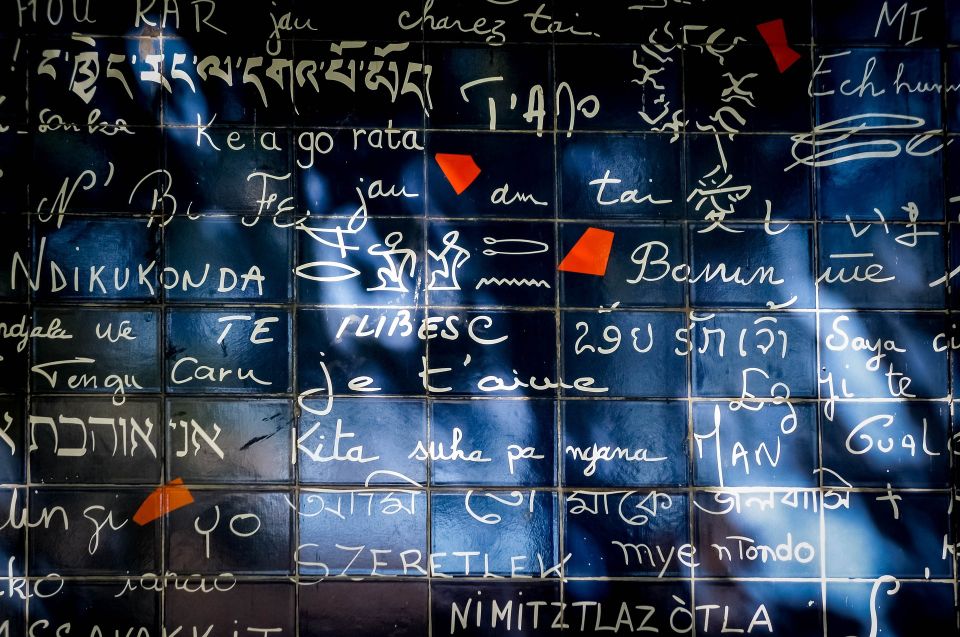
The wall is a collection of the phrase I love you in many languages. It is an easy place to enjoy without needing a long history lesson. The stop works well for couples, families, and anyone looking for a cheerful photograph between the more serious art stories.
The square also helps you understand Montmartre as a lived-in neighborhood rather than a line of attractions. You are moving through public spaces where people meet and pass through, not only monuments set aside for sightseeing.
Keep your pace comfortable here. The tour lasts two hours, and the climb continues. If you stop for pictures at every corner, you may need to listen while walking rather than expecting long stretches at each site.
Picasso’s studio and the painting that changed art
The walk next reaches Picasso’s famous studio. This is one of the most important art stops because the guide discusses a momentous painting that would change the art world forever.
The supplied details do not name the painting, so your guide provides the essential explanation on site. The larger point is clear: Montmartre was not just a backdrop for artists. It was a place where new approaches to art were tested, argued over, and turned into work that later shaped modern art.
A studio stop also gives you a more personal way into Picasso’s story. Museums can show the finished result. A neighborhood walk helps you think about the conditions around the work: the rooms, streets, friendships, arguments, and late nights that formed an artist’s daily world.
I would especially value this section if you like art but do not want a lecture packed with dates. The route uses place and story together, which makes the information easier to remember.
The guinguette where artists drank and painted
One of the route’s most evocative stops is a classic guinguette. These informal places combined drinking, dancing, music, and outdoor social life. Artists gathered there with their easels, and the scenes later appeared in paintings by Renoir, Van Gogh, Picasso, and Toulouse-Lautrec.
That connection gives the stop real weight. You are not merely looking at a pretty old building. You are standing in a setting that inspired work meant to capture weekends filled with movement and pleasure.
The tour also points out an original windmill. It is an excellent reminder that Montmartre once had a more rural character. Today, the hill is part of central Paris, but the windmill and old entertainment venues preserve traces of the village that existed before the area became one of the city’s best-known quarters.
I like this portion because it explains why Montmartre feels different from the grand boulevards below. The neighborhood’s charm comes from the meeting of countryside memories, cheap entertainment, working artists, and later fame.
You can also read our reviews of more guided tours in Paris






Paris’s last vineyard and a tiny Picasso cabaret
The route includes Paris’s last vineyard, which still produces wine. You should not expect a major wine estate. The appeal is its scale and setting. A working vineyard on a Paris hillside adds to the feeling that Montmartre is a village tucked inside a large capital.
This is one of the tour’s more unusual details. Many city walks concentrate on the obvious monuments. Seeing a vineyard still in production gives you a small but memorable piece of local character.
You’ll also visit a tiny cabaret that Picasso favored. The place became the source of several outlandish adventures, and your guide can explain the stories connected with it. This is where the tour’s bohemian side comes through most strongly.
The cabaret stop is useful because it shows how artists built their social world. They were not isolated figures appearing only in galleries. They drank together, argued together, entertained one another, and made the neighborhood’s reputation through their daily behavior.
The stories may be colorful, but the stop should still be taken in the spirit of local context. Montmartre’s legend has grown over time, and a good guide helps separate the actual places from the larger mythology surrounding them.
The Maison Rose and Montmartre’s painted square
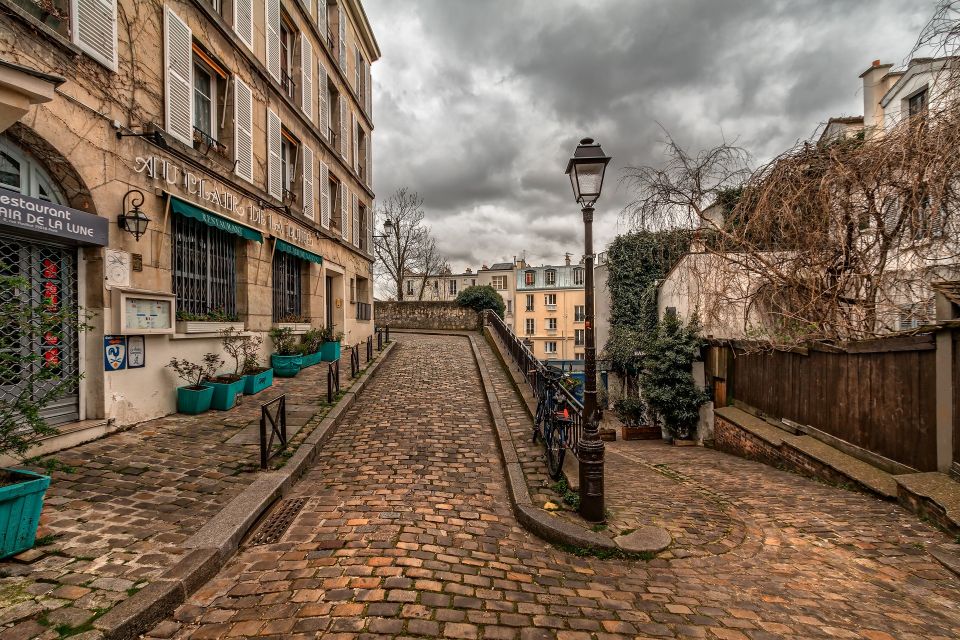
The Maison Rose is included among the legendary sights. Its painted exterior is one of Montmartre’s most recognizable images, and it fits the neighborhood’s storybook quality without being a grand monument.
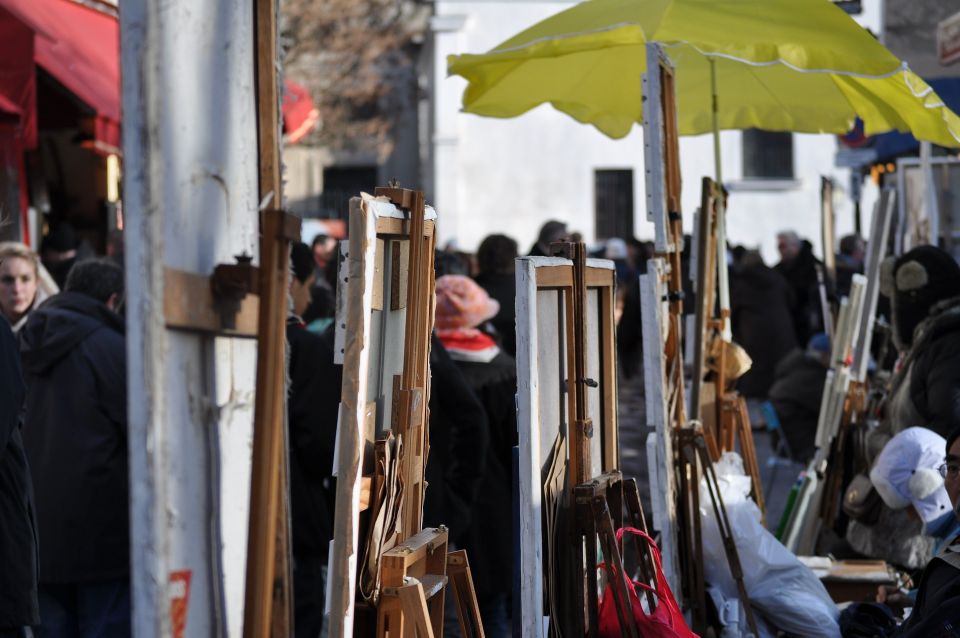
You’ll also reach a famous square filled with outdoor artists. Painters and sketch artists work there and offer original pieces for sale. This can be a useful pause if you want a souvenir that feels tied to the neighborhood rather than a standard shop purchase.
Take a moment to look at the work before buying. The point is not that every piece will suit every budget or taste. The value is the chance to see artists working in public and choose something personal.
This stop also comes with a practical note. The square can be an appealing place to browse, but you are still on a timed walking tour. If you want to make a careful purchase, ask your guide how much time you have before the group moves on.
Finishing at Sacré Coeur
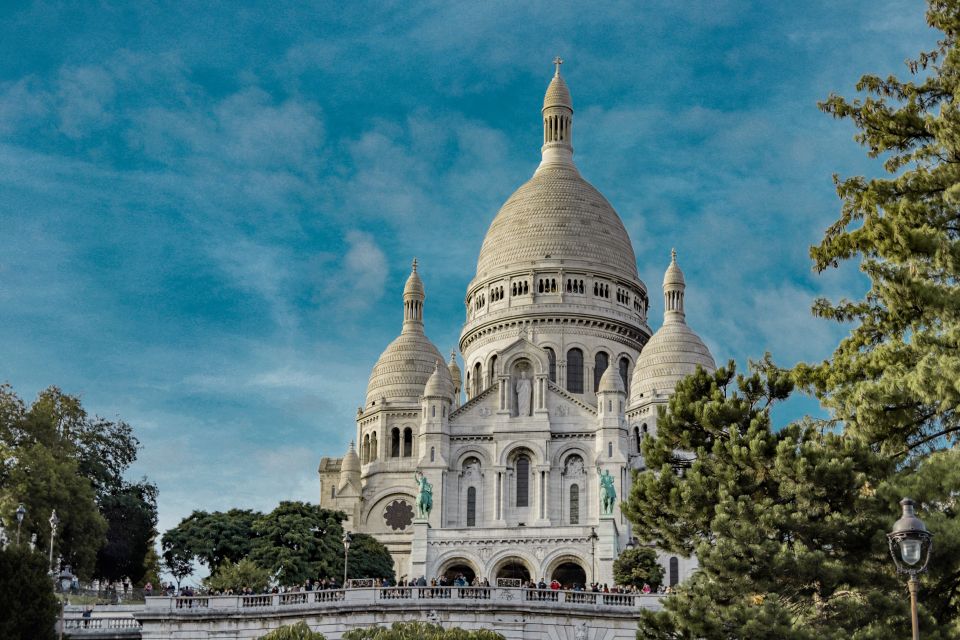
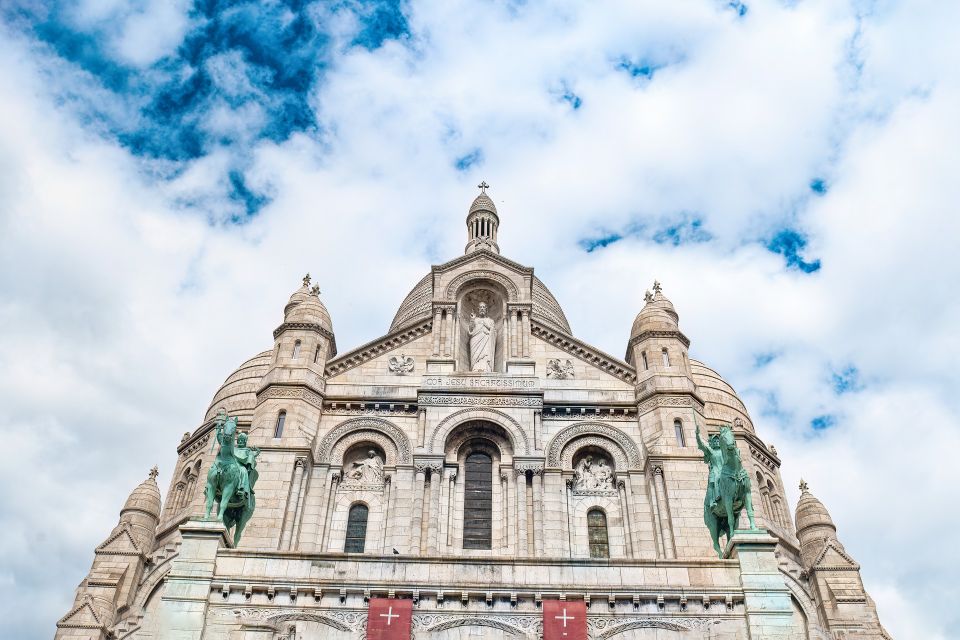
The tour ends in front of Sacré Coeur, the bright white basilica perched at the top of Montmartre. You reach it after the climb, so the final arrival has a natural payoff.
The view is the main reward. From the hill, Paris spreads out below you in a broad panorama. This is the point when the separate pieces of the walk come together: the cabaret below, the artist streets, the village corners, and the hilltop church all form one picture.
Because the tour finishes here, you can decide what to do next without being rushed into another stop. You may want to enjoy the view, take photographs, or continue inside the basilica if that fits your plans. The tour itself concludes in front of Sacré Coeur, so any extra visit is your own choice.
The basilica and panorama also make this route a good first introduction to Montmartre. You get a clear sense of the district’s shape and its place above the rest of Paris.
What the two-hour format means
Two hours is enough to cover a strong selection of Montmartre’s highlights, but it is not enough for a slow, detailed visit inside every location. Think of this as a guided orientation with stories, viewpoints, and exterior stops rather than a full museum tour.
The route has a steady rhythm: listen, walk, pause, take a photograph, then climb again. You will get the most from it if you enjoy moving through a neighborhood and learning its character on foot.
The moderate physical level matters. Montmartre’s slopes and stairs are manageable for many people, but they can feel tiring in poor weather or if you are carrying heavy bags. Comfortable shoes are specifically recommended, and that advice is worth taking seriously.
The tour operates rain or shine unless the rain becomes truly heavy. Bring weather protection if the forecast looks uncertain. Rain can make the cobblestones slick, and it may reduce the comfort of the hilltop view.
Is $57 a fair price?
At $57 per person, the tour is not the cheapest way to walk around Montmartre. You can visit the public streets, Place des Abbesses, the vineyard area, Maison Rose, and Sacré Coeur without paying for entry to the neighborhood itself.
The price pays for structure and interpretation. In two hours, you get a planned route from the Moulin Rouge to Sacré Coeur, an English-speaking guide, and stories that connect places with Picasso, Van Gogh, Renoir, Toulouse-Lautrec, cabaret culture, film, and local wine production.
I see the value most clearly if you are visiting Paris for the first time, have limited time, or prefer not to build your own route from scattered addresses. The guide also helps you notice details you might walk past, such as the old windmill, the tiny cabaret, or the artistic links behind a familiar street.
The value is weaker if you want a private tour, a long museum visit, or plenty of free time for shopping and photographs. This is a compact group walking experience, and the hill limits how quickly you can move.
Free cancellation up to 24 hours before the start and the option to reserve now and pay later make the booking less rigid. Those terms are useful when your Paris schedule is still shifting.
Who will enjoy this Montmartre tour?
I would choose this walk for:
- First-time visitors who want a clear introduction to Montmartre
- Art lovers who want to connect famous painters with actual places
- Film fans interested in the Amélie location
- Couples who will enjoy the I Love You Wall and hilltop view
- People who prefer stories and streets to long indoor museum visits
- Visitors looking for an English-language walk with a live guide
I would think twice if stairs and slopes are difficult for you, if you want a completely weather-proof activity, or if your main aim is to spend hours browsing artists’ work in the square.
The walk is also a good fit near the start of a Paris stay. Afterward, you will have a better sense of where to return for a slower meal, more photographs, or a closer look at the neighborhood.
Should you book the Charms of Montmartre walk?
Book it if you want Montmartre explained through its people and places, not just photographed from the steps of Sacré Coeur. The route packs in the Moulin Rouge, Picasso’s studio, the Maison Rose, a guinguette, an original windmill, the last vineyard in Paris, an artists’ square, and a hilltop panorama.
I especially like the balance between famous sights and odd little details. The walk does not stop at the postcard version of Montmartre. It gives you cabarets, working wine production, film history, painting, and the neighborhood’s old social life.
Skip it if you want a flat route, a private guide, or a relaxed afternoon with no fixed pace. For most visitors who can handle the climb, $57 is a reasonable price for a focused, story-filled introduction to one of Paris’s most distinctive districts.
FAQ
Where does the Montmartre walking tour begin?
The meeting point is in front of the Moulin Rouge. If city works prevent meeting there, the location may move to the square facing the Moulin Rouge.
Where does the tour finish?
The walk finishes in front of the Sacré Coeur basilica, at the top of Montmartre.
How long does the tour last?
The tour lasts two hours.
What language is the tour conducted in?
The live guided tour is conducted in English.
How much does the tour cost?
The listed price is $57 per person.
Does the tour include food or drinks?
No. Food and drinks are not included.
Do I need to be prepared for stairs?
Yes. Montmartre is a hill, and the route includes stairs and slopes. Comfortable shoes are recommended.
What happens if it rains?
The tour takes place rain or shine unless the weather becomes extremely heavy. Bring suitable rain protection if needed.