REVIEW · SAINT REMY DE PROVENCE
Following the steps of Van Gogh
Book on GetYourGuide →Operated by Time 4 Provence · Bookable on GetYourGuide
Vincent Van Gogh left tracks you can still follow. This tour ties art to the places in Provence that shaped his work, with stops in Arles and Saint-Rémy plus a final look at hilltop life in Les Baux de Provence. I especially love the way the guide connects the paintings to exact street corners and buildings, and I also like the bonus context of Roman Arles alongside Van Gogh. One thing to consider: it’s not wheelchair-friendly, and you should expect a fair amount of walking on uneven old-town surfaces.
In a small group limited to 8, the pace feels human. The vibe is part history lesson, part art walk, and part getting your bearings fast in a town that can feel crowded. If you need a little extra help, the guide can use photos on a phone when crowds block your view of where certain artworks were posted around the city.
Finally, the rules are simple: no alcohol and no drugs. It keeps the tour focused, and frankly, that helps when you’re trying to look closely at places tied to Van Gogh’s life.
In This Review
- Key things you’ll notice right away
- A 5-hour route that mixes Van Gogh with real streets
- Walking Arles: amphitheatre ruins plus the Van Gogh footprint
- Roman Arles you can actually see
- Hotel-Dieu and the places tied to his time
- The Forum square and Saint Trophime landmarks
- Coffee at night on Arles’ Forum square
- Saint-Rémy de Provence and Saint Paul de Mausole: where the story turns inward
- Les Baux de Provence: the hilltop finale in the Alpilles
- How good is the guide, and what should you look for while walking?
- Price and value: is $106 fair for 5 hours?
- Who should book this tour (and who might want to skip it)?
- Should you book Following the Steps of Van Gogh?
- FAQ
- FAQ
- How long is the tour?
- What’s the price per person?
- What’s included in the experience?
- Is there a live guide, and what language?
- What places are the main highlights?
- Is the group small?
- Is it wheelchair accessible?
- Are alcohol and drugs allowed?
- Can I cancel if my plans change?
Key things you’ll notice right away

- Small group size (up to 8) keeps the walk from feeling like a stampede
- Arles Roman Amphitheatre adds a strong time-travel contrast to Van Gogh’s era
- Van Gogh mental asylum entry (Saint Paul de Mausole) gives you real grounding in the Saint-Rémy chapter
- Coffee stop on Arles’ Forum square at night lets the town slow down
- Les Baux de Provence perched setting delivers classic Alpilles views in a short time
- English live guide makes the art-and-history links easy to follow
A 5-hour route that mixes Van Gogh with real streets

This experience works because it’s not just a museum outing. It’s a walking route across towns where you can stand where things happened. You’ll move through Arles first, then head to Saint-Rémy de Provence for the asylum visit, and finish with Les Baux de Provence in the Alpilles.
The time limit of 5 hours sounds tight until you see the logic. You get key anchor stops rather than dozens of photo-op moments. And with a group max of 8, you’re less likely to get stuck behind someone trying to frame the perfect shot.
The best part is how the guide keeps switching lenses: one minute you’re reading the city like a Roman, the next you’re looking like an art viewer trying to spot what Van Gogh responded to.
You can also read our reviews of more tours and experiences in Saint Remy De Provence.


Walking Arles: amphitheatre ruins plus the Van Gogh footprint

Arles is where the tour starts, and it’s the right opening act. Arles has big, dramatic remnants from its Roman past, and it also has the kinds of streets and landmarks that Van Gogh used as raw material for his attention.
Roman Arles you can actually see
You’ll visit the Arles Roman Amphitheatre, a UNESCO monument and a major link to the city’s older identity. The amphitheatre context matters here. It’s not random sightseeing. The guide uses these ruins to show you how Arles has been an eye-catcher for centuries, not just in the 1800s. You’ll also get Roman history stops tied to the theatre and the broader feel of the town as a historic stage.
This is one of the tour’s strongest ideas: it puts Van Gogh into a longer story. When you understand the scale and setting of Roman Arles, Van Gogh’s choice of subject and his bold way of seeing suddenly makes more sense.
Hotel-Dieu and the places tied to his time
Arles also connects to Van Gogh through the Hotel-Dieu area and the places associated with his stay, including references to the Yellow house area in town. Even if you’ve seen his paintings before, standing near the landmarks turns the images into geography. You start noticing how the light and the street layout guide what an artist can frame.
And because it’s a walking tour, it feels less like you’re watching slides. You’re making your own mental map as you go.
The Forum square and Saint Trophime landmarks
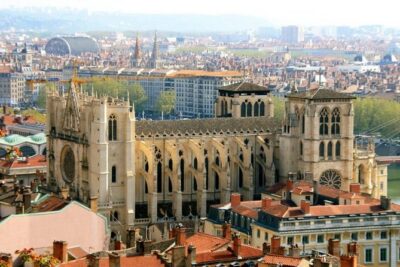
In the middle of the Arles walk, you’ll stop at the main square area for a few important visual cues. This includes an 11th-century church and the 12th-century portal gate of Saint Trophime. Those details matter for two reasons.
First, they show you that the town’s look isn’t only about Van Gogh. Second, the guide uses these landmarks to help you understand how different eras stacked up in one place, which is exactly what makes Arles feel like a living timeline.

Coffee at night on Arles’ Forum square

One of the highlights listed for this tour is a stop on the Arles Forum square for coffee at night. That timing is smarter than it sounds.
Daytime in Provence can flatten detail. Night brings contrast, and streets feel more intimate. Even a simple coffee stop becomes a way to reset your eyes after walking and reading multiple landmarks back-to-back.
If you like your sightseeing with a little rhythm, this is the moment that breaks the history loop. You get a chance to catch your breath, compare notes with your small group, and look back at the town without rushing to the next stop.
Practical note: bring a layer if evenings feel cool to you. Provence can shift quickly once the sun drops, and you’ll be outside as you walk between stops.
Saint-Rémy de Provence and Saint Paul de Mausole: where the story turns inward

Then comes the Saint-Rémy de Provence part, and it’s emotionally different. You’re moving from city landmarks into the setting tied directly to Van Gogh’s time at the Saint Paul de Mausole mental asylum, included as an entry stop.
This is where the tour becomes more than “matching paintings to buildings.” It gives you perspective on the period of his life when his work and mindset were changing in serious ways. Even without getting heavy or dramatic, it helps you understand why certain colors, moods, and subjects feel more intense during this phase.
The value here is simple: standing in the right place helps your brain connect the art to a human story. When you see where he lived and painted while there, you’re not just admiring technique. You’re also considering what it might have felt like to create under those conditions.
If you’ve ever wished art history had a pulse, this stop is the closest thing to it on a 5-hour schedule.
Les Baux de Provence: the hilltop finale in the Alpilles

The last stop is Les Baux de Provence, famous for being a perched hilltop village in the Alpilles. This part of the tour works as a payoff.
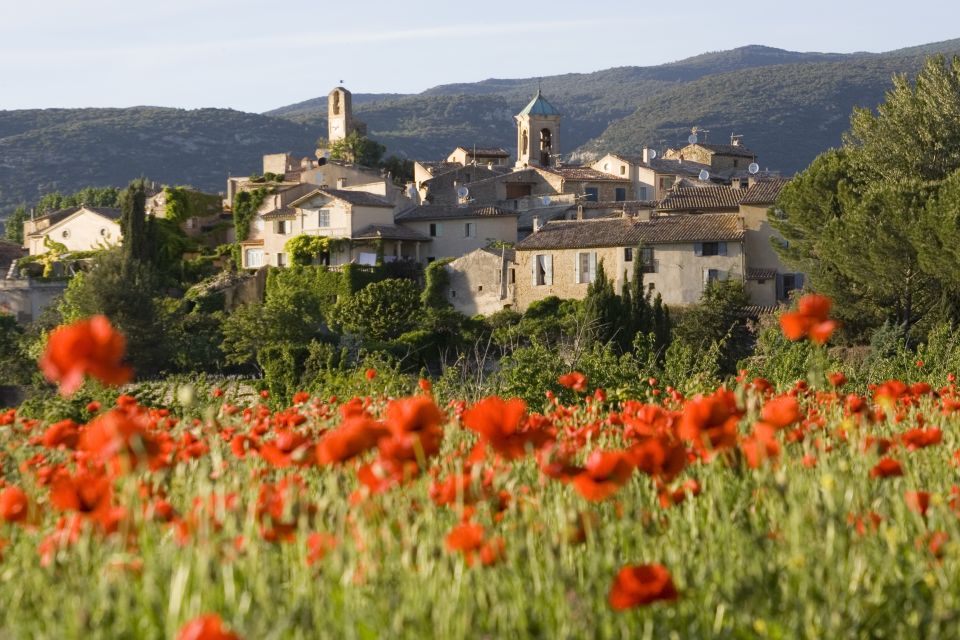
After Arles’ ruins and Saint-Rémy’s reflective asylum visit, Les Baux gives you open air and sweeping views. It’s also a nice change of pace because you get to experience a classic Provence silhouette: stone village shapes against sky, with the kind of “up here” feeling that makes you slow down.
This is one of the most visited destinations in France for good reason: the town layout encourages wandering and looking. And because the tour includes time here at the end, you can enjoy it without needing to plan a full separate day.
How good is the guide, and what should you look for while walking?

This tour lives or dies by the guide’s approach. The positive feedback you’ll want to pay attention to is how the guide handles crowds and still keeps the art points clear.
In busy Arles, it can be hard to see posted artwork locations when people pack the streets. A really useful trick is that the guide can show photos of the paintings on a phone when the crowd makes it tough to see the spots in person. That means you’re not stuck either guessing what you’re looking at or walking past a clue and missing it.
You’ll also get a balance of topics. The best guides keep the Roman and Van Gogh sections from feeling like two separate tours. They link them so the walk feels like one story rather than a checklist.
And since the tour is in English with a small group, you can ask follow-up questions without feeling like you’re interrupting an avalanche of people.
Price and value: is $106 fair for 5 hours?

At $106 per person for a 5-hour small-group tour, you’re paying for three things that don’t come cheap when you add them up:
- A live English guide for the full duration
- Guided entry to Saint Paul de Mausole (included)
- Transport time and routing between Arles, Saint-Rémy de Provence, and Les Baux de Provence
The value becomes clearer when you compare what you actually get. This isn’t just “see these places.” The tour adds interpretation: Roman landmarks in Arles, Van Gogh-linked locations, a focused asylum entry, and a finale in Les Baux. You’re essentially buying an organized route plus the context that helps the route mean something.
If you’re the kind of traveler who likes to understand what you’re seeing, this price lands in the reasonable zone. If you only want to stroll without stories, you might not get your money’s worth. But for an art-and-history person, it’s a strong deal for the time.
Who should book this tour (and who might want to skip it)?

This fits best if you:
- Want Van Gogh in the real world, not just in a gallery room
- Like art history that also explains architecture and landmark use
- Prefer a small group pace where you can hear the guide
It may be less ideal if you:
- Need wheelchair access (it’s not suitable for wheelchair users)
- Want a long, slow day with lots of free time for independent exploration
Also, you’ll get the best experience if you’re okay following a guide for 5 hours. This isn’t an open-ended “wander whenever you feel like it” plan. It’s a guided route built to hit specific Van Gogh and Roman points and then transition smoothly to Saint-Rémy and Les Baux.
Should you book Following the Steps of Van Gogh?

I think this is a smart booking if you want a concentrated Provence story in one go. The pairing of Arles Roman monuments with Van Gogh-linked stops makes the art feel grounded. The Saint Paul de Mausole entry gives the Saint-Rémy chapter weight. And the ending in Les Baux de Provence is a satisfying change of scenery that keeps the day from feeling too heavy.
Book it if you like guided context, short resets (like the coffee stop), and a small-group pace. Skip it if you need full accessibility support or you’re chasing a totally self-directed day.
FAQ
FAQ
How long is the tour?
The tour lasts 5 hours.
What’s the price per person?
The price is $106 per person.
What’s included in the experience?
It includes a walking tour of Arles, Les Baux de Provence, and entry to the Van Gogh mental asylum in Saint-Rémy (Saint Paul de Mausole).
Is there a live guide, and what language?
Yes. The tour has a live guide in English.
What places are the main highlights?
Key stops include the Arles Roman Amphitheatre, Arles Forum square, Arles Hotel-Dieu, Saint-Rémy de Provence (Saint Paul de Mausole), and Les Baux de Provence.
Is the group small?
Yes. It’s limited to 8 participants.
Is it wheelchair accessible?
No. It is not suitable for wheelchair users.
Are alcohol and drugs allowed?
No. Alcohol and drugs are not allowed.
Can I cancel if my plans change?
Yes. Free cancellation is available up to 24 hours in advance for a full refund.