REVIEW · PARIS
Paris 4 : Fragrance Creation Workshops – Vegan Perfumes
Book on GetYourGuide →Operated by Seeds of Scent · Bookable on GetYourGuide
Paris has plenty of grand sights, but this two-hour workshop gives you something more personal: your own perfume, made in an art gallery on Île Saint-Louis. You smell about 30 raw materials, learn how scents fit together, and build a blend with help from fragrance expert Gauri.
I like the small groups, capped at eight, and the useful keepsakes: a 50ml bottle, two 5ml trials, and a formula card for future reorders. The main consideration is that scent-making takes focus, so anyone hoping for a quick, purely hands-off souvenir may find the process more involved than expected.
In This Review
- Key points to know
- A perfume workshop on Île Saint-Louis
- Learning the building blocks of perfume
- Smelling around 30 fragrance notes
- Turning scent choices into a harmonious blend
- What you take home after two hours
- Why the small group changes the experience
- The pace, atmosphere, and possible drawbacks
- Who should book this Paris activity
- Should you book Seeds of Scent?
- FAQ
- Where does the perfume workshop take place?
- How long does the workshop last?
- How much does the experience cost?
- What do I take home?
- Are the fragrance materials vegan?
- Is previous perfume or chemistry experience required?
- What languages are used?
- What are the age requirements?
Key points to know
- Make a personal Eau de Parfum: Build your own fragrance instead of choosing from a fixed menu.
- Work with about 30 scent notes: Smell and assess the materials before deciding what belongs in your blend.
- Take home three bottles: You receive one 50ml perfume and two 5ml trial bottles.
- Keep the formula: Your formula card makes it possible to reorder your chosen scent.
- Enjoy a bilingual class: Sessions are held in English and French, with language-friendly tables when needed.
- Use vegan materials: The raw materials are vegan, cruelty-free, and IFRA compliant.
A perfume workshop on Île Saint-Louis
Seeds of Scent holds the class in an art gallery in Paris 75004, on Île Saint-Louis. That setting gives the activity a different feel from a standard retail counter. You are in a creative studio, not simply picking a bottle from a shelf.
The location also fits the subject. Perfume is part science, part design, and part memory. A gallery setting helps frame the class as a hands-on creative session rather than a shopping stop.
You should arrive five to 10 minutes early. The class lasts about two hours, so this is easy to fit between sightseeing plans, though I would avoid booking it at the exact edge of another timed activity. The meeting point is central Paris, but the address provided is the gallery on Île Saint-Louis, so check the precise meeting instructions before setting out.
The group is limited to seven participants in one description and a maximum of eight in another. Either way, this is a small class. That matters because perfume creation is personal. You want enough time to ask why one note is overpowering, how to soften a blend, or what might help two scents work together.
The bilingual format is another practical strength. English and French are both used, and the setup can place English speakers and French speakers at separate tables when needed. That makes it easier to follow the explanation and talk through your choices without constant confusion.
A few more Paris tours and experiences worth a look



Learning the building blocks of perfume
The workshop begins with the basics of perfumery. You do not need chemistry training or previous experience. The aim is to give you enough structure to make sensible choices, not to turn you into a professional perfumer in one afternoon.
You learn how fragrance materials behave and how a finished perfume needs balance. The important lesson is that liking a note on its own does not always mean it will work well in a blend. A scent can be pleasant by itself yet too strong, too sweet, too dry, or too sharp when combined with others.
That guidance is where the instructor matters. Gauri has been praised for being warm, helpful, and clear while explaining the art, science, and history of perfume-making. She helps you move from random smelling to deliberate choices.
I like that the class treats perfume as both creative work and a practical exercise. You are not just told which notes are fashionable. You learn to think about harmony, proportion, and the way separate materials come together.
The class is also suitable for people who simply enjoy fragrance. You do not need to arrive with a fully formed idea of your signature scent. You can start with broad preferences and let the scent palette guide you.
Smelling around 30 fragrance notes
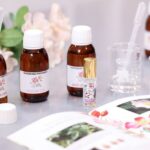
The scent palette includes about 30 different notes. This is the heart of the workshop. You smell and analyse the materials, comparing them before selecting the ingredients for your perfume.
Thirty notes is enough variety to make the choice feel personal without turning the table into an impossible maze. You might find that your first choices change as you smell more. A note that seemed appealing at the start may feel too heavy after several tests, while a quieter note may become useful as part of the final blend.
Take your time here. Smell carefully, make notes, and try not to decide everything at once. Fragrance can shift as you compare one material with another. The class is designed to help you understand those differences rather than rush straight to a bottle.
One essential tip: do not wear perfume on the day of the workshop. Your own fragrance can interfere with the raw materials and make it harder to judge your blend. Avoiding strong scented products is also sensible, since the point is to keep your nose focused on the class.
The workshop materials are supplied, as is drinking water. You do not need to bring special equipment or chemistry supplies. The main tool you bring is an open mind and a little patience.
Turning scent choices into a harmonious blend
Once you have explored the palette, you begin shaping your own fragrance. The instructor guides you through the blending process and helps you create an Eau de Parfum that feels balanced.
This is the part where the workshop becomes more than a scent tasting. You are making decisions about what belongs in the bottle and how the notes should relate to each other. You may need to adjust your first idea, add a supporting note, or reduce something that takes over the blend.
The goal is not simply to pile your favorite smells together. A successful perfume needs a clear character, and the guidance helps you find that character. The class offers a useful balance between instruction and practical work, so you get enough explanation to understand your choices while still doing the creative job yourself.
Do not expect every first trial to be perfect. That is one reason the two 5ml trial bottles are valuable. They let you leave with smaller versions of your experiments rather than only one final bottle. You can compare your trials later and decide how your preference changes over time.
Your formula card is also more useful than a simple certificate. It records the recipe for your personalized scent, allowing you to reorder it later. For a visitor who wants a lasting reminder of Paris, that is a real advantage over a generic souvenir perfume.
What you take home after two hours
The main finished item is a 50ml bottle of your bespoke perfume. That is a generous take-home size for a two-hour creative activity, especially since it is made specifically for you.
You also receive two 5ml bottles of your trials. These smaller bottles help preserve the stages of the process and give you a way to test the fragrances outside the studio. Your formula card completes the package.
The take-home collection makes the $115 price easier to assess. You are paying for the instruction, the materials, the small-group format, and the finished products. It is not the cheapest souvenir activity in Paris, but it offers more lasting value than a short demonstration where you leave with only a sample.
The price makes the most sense if you already enjoy perfume or want a personal keepsake. If you are interested only in seeing how perfume is made and do not care about taking home your own blend, the cost may feel high.
The vegan, cruelty-free, IFRA-compliant raw materials are another important part of the value. These standards will matter more to some people than others, but they give you clear information about the materials used in the workshop.
A few more Paris tours and experiences worth a look


Why the small group changes the experience
A perfume workshop can become frustrating if too many people need help at once. With no more than eight participants, the instructor has a better chance to give useful advice during the blending stage.
This is especially helpful for first-timers. You may know that you like fresh, floral, woody, or warm scents, but not know how to turn that preference into a balanced formula. Personal guidance helps close that gap.
The small format also suits couples, friends, and parent-child outings. Participants can create different scents while sharing the same activity. A birthday visit can feel personal without requiring a large private event, and the final bottles give each person a separate souvenir.
If you attend with someone else, do not assume your perfumes will resemble each other. The experience is built around individual choices. That difference is part of the fun, especially when you compare the finished bottles at the end.
The language arrangement can also improve the social side of the class. English and French speakers may sit at separate tables so conversations stay comfortable. You still take part in the same workshop, but the instruction is easier to follow.
The pace, atmosphere, and possible drawbacks
The class has been described as a pleasant way to spend a Sunday morning or an evening in Paris. The art studio setting adds a relaxed, creative mood, and the activity stays focused for its two-hour length.
Still, perfume work can be tiring for your nose. Smelling many materials in one sitting requires concentration. If you are sensitive to scents, have a strong reaction to fragrance, or simply dislike making detailed choices, this may not be the right activity for you.
The rule against strong fragrances is not a minor request. Arrive without perfume, and avoid heavily scented body products if possible. Your own scent can affect both your experience and the people sharing the table.
There is also a difference between creating a perfume and buying a finished luxury fragrance. Your result is personal, but it may not have the polished character of a commercial perfume made through years of testing. The charm lies in making a scent connected to your own choices, not in producing a flawless designer bottle.
The class is conducted in both English and French, which is helpful, but the precise balance of languages may vary by group. If you need detailed instruction in one language, confirm that when booking.
Who should book this Paris activity
I would recommend this workshop to you if you enjoy fragrance, creative classes, or souvenirs with a story. It also suits repeat visitors who have already seen the major Paris sights and want an activity that feels more personal.
Couples can make it part of a birthday or special trip. Friends can compare their scent choices. Parents can bring children aged 14 or older, provided an adult accompanies anyone under 18. Participants attending alone must be at least 18.
This is also a good choice if you care about vegan and cruelty-free materials. The raw materials are described as vegan, cruelty-free, and IFRA compliant, so the workshop offers a clear alternative to fragrance activities that do not emphasize those standards.
I would think twice if you dislike perfume, are sensitive to strong smells, or want a fast activity with little participation. The point is to smell, compare, decide, and revise. You need to be involved.
Booking is flexible, with free cancellation up to 24 hours before the start time and a reserve-now, pay-later option. Starting times vary, so check availability before planning the rest of your day.
Should you book Seeds of Scent?
Book it if you want a hands-on Paris souvenir and like the idea of leaving with a scent nobody else chose for you. The strongest reasons are the small group, Gauri’s personal guidance, the bilingual setup, and the useful package of a 50ml perfume, two trials, and a formula card.
At $115 per person, the workshop is best judged as both a class and a finished product. It offers more than a simple perfume demonstration, but you should be ready for a focused, scent-heavy two hours.
For a birthday, couple’s outing, or creative break on Île Saint-Louis, I think it is a strong choice. Skip it only if you want passive sightseeing or find fragrance overwhelming.
FAQ
Where does the perfume workshop take place?
The workshop takes place in an art gallery on Île Saint-Louis in Paris 75004, in the Île-de-France region.
How long does the workshop last?
The activity lasts two hours. Starting times vary, so check availability for the date you want.
How much does the experience cost?
The listed price is $115 per person.
What do I take home?
You take home one 50ml bottle of your bespoke fragrance, two 5ml bottles of your trials, and a formula card for future reorders.
Are the fragrance materials vegan?
Yes. The workshop uses vegan, cruelty-free, IFRA-compliant raw materials.
Is previous perfume or chemistry experience required?
No. The workshop teaches the basics of perfumery, and no previous experience in perfumery or chemistry is required.
What languages are used?
The workshops are conducted in English and French. English speakers and French speakers may sit at separate tables to make communication more comfortable.
What are the age requirements?
Participants must be at least 18 if attending alone. Participants aged 14 or older may attend when accompanied by an adult.