REVIEW · PARIS
Notre-Dame Cathedral Exterior & Latin Quarter Guided Tour
Book on Viator →Operated by Connecting France · Bookable on Viator
Paris’s Latin Quarter is best understood on foot, where Roman ruins, medieval churches, student streets, and grand French monuments crowd into a surprisingly compact area. This tour connects those pieces, ending at Notre-Dame Cathedral, where you examine the façade, sculptures, and gargoyles rather than entering the building.
I like the small maximum of 11 people, which gives you a better chance to ask questions than on a big bus tour. I also like the route’s range: you get Roman baths, St. Séverin’s Gothic interior, the Panthéon, two historic churches when access allows, and plenty of local history in between. The main drawback is clear: Notre-Dame’s interior is not part of the tour, and the two-hour walk includes an uphill stretch toward the Panthéon.
In This Review
- Key points to know before you book
- Why this Latin Quarter route works so well
- Starting at Place Saint-André des Arts
- Fontaine Saint-Michel and the first look at Paris
- St. Séverin and the Latin Quarter’s medieval character
- Roman Lutetia at the Cluny Baths
- The uphill walk to the Panthéon
- St. Julien le Pauvre beside Notre-Dame
- Notre-Dame’s façade and the story of the fire
- Guides who make the difference
- What the two-hour schedule really means
- Who should book this walk
- Booking, cancellation, and practical details
- Should you book the Notre-Dame and Latin Quarter tour?
- FAQ
- How long does the Notre-Dame and Latin Quarter tour last?
- Where does the tour begin?
- Where does the tour end?
- Is entry to Notre-Dame included?
- Are museum and monument admission tickets included?
- What is the maximum group size?
- Is cancellation available?
Key points to know before you book
- Small groups of up to 11: Expect a semi-private feel, with more room for questions and conversation.
- A walk through several eras: Roman Lutetia, medieval Paris, revolutionary France, and modern Notre-Dame all appear on one route.
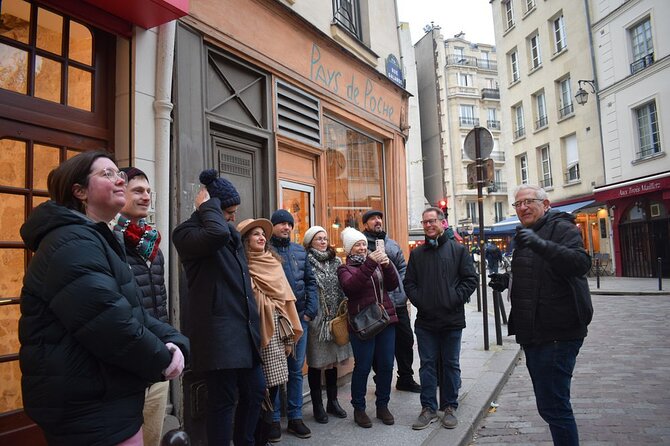
- Strong guide reputation: Pierre-Louis, Jean-Pierre, Benjamin, and Marta are named guides associated with warm, clear, entertaining tours.
- Notre-Dame from the outside: You study the cathedral’s architecture and story, but there is no guided interior visit.
- Good practical introduction: Your guide can offer tailored suggestions for the rest of your Paris stay.
- Plan for moderate walking: The tour lasts about two hours, begins near Saint-Michel, and climbs toward the Panthéon.
Why this Latin Quarter route works so well
The Latin Quarter is not a single attraction. It is a layered part of Paris, and its interest comes from how quickly the scenery changes. One minute you are near the dramatic Fontaine Saint-Michel, and soon you are on a narrow cobblestone street beside a medieval church.
I like tours that explain how the pieces fit together instead of treating each monument as an isolated photo stop. Here, the guide links Roman Paris to the city of the Middle Ages, then to the intellectual and political figures honored at the Panthéon. By the time you reach Notre-Dame, the cathedral feels less like a famous façade and more like the final chapter of a long city story.
The route also goes where cars cannot. That matters in this part of Paris, where small lanes and quiet squares reveal more character than the major traffic corridors. You will not simply be driven past the Latin Quarter. You will walk through it at street level, with time to notice its scale and texture.
At $50.47 per person, the tour is not the cheapest way to wander the neighborhood. But the price is reasonable if you want a guide who can sort out the chronology, point out architectural details, and answer questions as you go. It is especially useful early in a Paris visit, since the guide’s tailored tips may help shape the rest of your sightseeing.
You can also read our reviews of more guided tours in Paris



Starting at Place Saint-André des Arts
The meeting point is Place Saint-André des Arts, in the 6th arrondissement. From there, the walk heads toward the Latin Quarter and the Fontaine Saint-Michel.
This is a practical starting area because it puts you close to public transportation and within easy reach of the Seine. Check your route before leaving, since Paris streets around Saint-Michel can be busy and confusing if you are rushing. The experience does not include pickup from your accommodation, so you need to make your own way to the square.
The walking format is part of the appeal. There is no coach transfer between stops, no glass window separating you from the neighborhood, and no need to keep looking for the right monument from a moving vehicle. Wear comfortable shoes and expect city pavement, cobblestones, and a moderate amount of walking.
Fontaine Saint-Michel and the first look at Paris
The Fontaine Saint-Michel makes a theatrical opening. Its 19th-century design features the Archangel Michael defeating the Devil, a bold subject given equally bold treatment in stone and sculpture.
Your guide uses the fountain as more than a meeting point. It helps place you in the story of Paris and introduces the grand public style of the 1800s. The stop lasts about 15 minutes, enough to examine the composition and hear its background without turning the tour into a long lecture.
I appreciate this kind of beginning because it gives you a visual landmark before the route moves into smaller streets. The fountain is dramatic, easy to recognize, and close to the older quarter you are about to explore.
St. Séverin and the Latin Quarter’s medieval character
The route continues through the Latin Quarter’s narrow streets to St. Séverin Church. This Gothic church is one of the more rewarding stops because it receives less attention than Notre-Dame while offering striking details of its own.
Inside, look for the medieval stained glass and the unusual double ambulatory. The ambulatory is the passage that curves around the church’s choir, allowing people to move through the eastern end of the building. Your guide can help you see why the layout matters instead of leaving you to admire a blur of arches and colored windows.
The church gives the walk a welcome change of pace. Outside, the Latin Quarter can feel lively and crowded. Inside St. Séverin, the mood becomes quieter and more reflective. The contrast is part of the lesson: medieval churches were not just monuments, but working places of worship woven into daily neighborhood life.
Access to churches can depend on what is happening there, so do not treat an interior visit as guaranteed at every moment. Still, the experience has included visits inside two historic Catholic churches, adding more than you would get from an exterior-only walk.
Roman Lutetia at the Cluny Baths
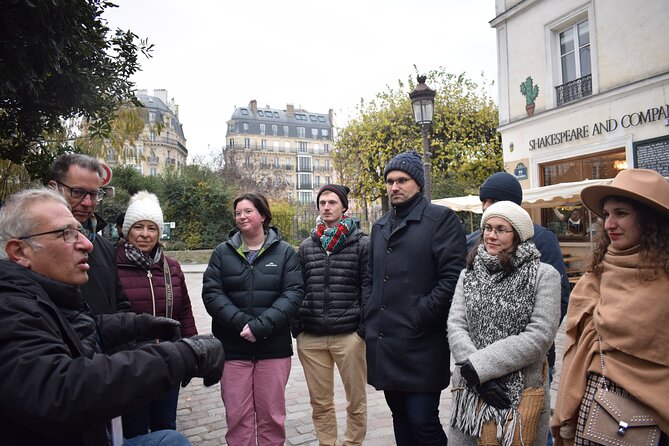
At the Musée de Cluny, you see the remains of the Cluny Roman Baths, some of the clearest reminders that Paris began as Roman Lutetia. The ruins show the scale of an ancient public complex and give the guide a chance to explain how baths fit into Roman daily life.
This is one of the tour’s strongest history stops. You are not only hearing that Romans occupied Paris. You are looking at physical remains of the city they built. The ruins help connect the modern street plan to a much older settlement.
The tour focuses on the exterior and does not include museum admission. That keeps the experience moving, but it also means you will not see the museum’s full collection during these two hours. If Roman art and medieval objects are a major interest, you may want to return later with a separate ticket.
For a first look, the outside stop is useful. Your guide can explain what you are seeing, how the baths functioned, and why the adjacent museum matters. You get context without spending the tour inside one institution.






The uphill walk to the Panthéon
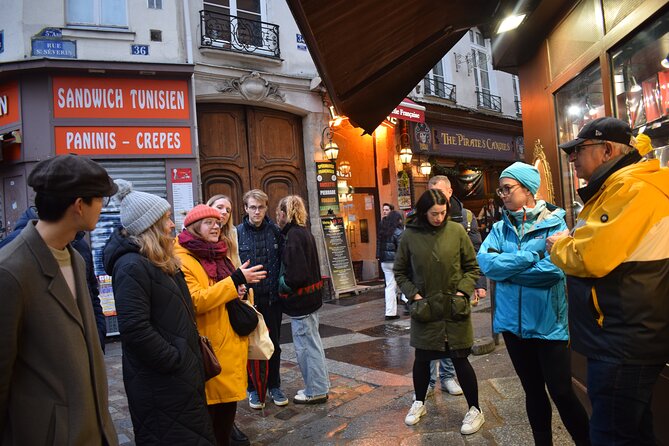
From the Cluny area, the route climbs toward the Panthéon. This is the tour’s most noticeable physical effort, though the overall activity calls for only moderate fitness.
The Panthéon began as a church and later became a national mausoleum honoring major French figures. Inside are the tombs of people such as Voltaire, Rousseau, Victor Hugo, and Marie Curie. The guide explains that change in purpose and the national ideals attached to the building.
Even from outside, the Panthéon has enormous visual weight. Its neoclassical columns and dome feel very different from the narrow medieval streets below. That shift in architecture mirrors the shift in the story, from local religious life to France’s public memory and its celebration of intellectual and cultural achievement.
Admission is not included, so this tour does not take you through the interior. If you want to see the tombs or examine the inside, plan a separate visit. The guided exterior stop still gives you a useful introduction and helps you decide if the building deserves more of your time.
St. Julien le Pauvre beside Notre-Dame
The walk then returns toward the Seine and the area beside Notre-Dame, stopping at St. Julien le Pauvre. This church dates from the 12th century and offers a much smaller scale than its famous neighbor.
Its Byzantine-style character makes it a useful comparison with Notre-Dame’s grand Gothic presence. In this quiet square, you can consider how medieval Paris contained churches of very different sizes and roles, often only a short distance apart.
The stop is brief, about 10 minutes. Admission is not included, so any interior entry requires separate access. The church is best treated as a compact historical pause before the final cathedral stop, not as a major museum visit.
I like this part of the route because it prevents Notre-Dame from swallowing the entire afternoon. The cathedral is famous for good reason, but a smaller church nearby can reveal how ordinary religious life once fit around the city’s grandest monuments.
Notre-Dame’s façade and the story of the fire
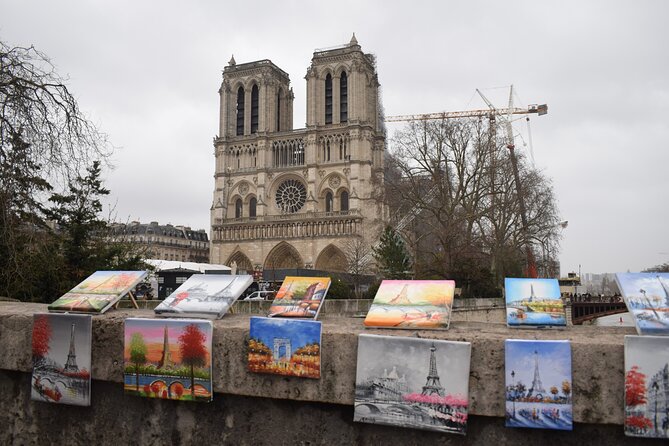
The tour ends at Notre-Dame Cathedral. You examine the western façade, sculpture, towers, and gargoyles while the guide recounts the cathedral’s medieval origins and the devastating 2019 fire.
This is an exterior experience, and that distinction matters when you compare it with Notre-Dame tickets or interior visits. The tour does not include entry, and guided tours of the interior remain forbidden under the stated conditions. You are here to understand the building from the square and surrounding streets.
A guide adds value at Notre-Dame because the façade contains more detail than most people can absorb alone. Sculptures, portals, towers, and gargoyles each carry part of the cathedral’s message. With someone pointing out the major features, you can spend your time looking instead of guessing.
The fire is part of the modern story, but it does not replace the medieval one. A good explanation connects the original cathedral, its long life, the damage, and the continuing importance of the building to Paris. The final stop works best when you have already walked through the older neighborhood and seen the city’s other religious and Roman remains.
The ending at Notre-Dame is convenient if you plan to continue along the Seine, visit the Île de la Cité, or stop for lunch nearby. There is no return transfer, which is helpful if you want to continue exploring on your own.
Guides who make the difference
The guide is the most important variable in a history walk. The named guides connected with this experience include Pierre-Louis, Jean-Pierre, Benjamin, and Marta.
Pierre-Louis is particularly associated with clear explanations, friendly conversation, and historical timelines that make 19th-century France easier to follow. Jean-Pierre has been praised for keeping the tour enjoyable even in poor weather. Benjamin is described as funny and informative, with the ability to bring out details people had not considered before.
That range tells you what to expect from the strongest version of the tour: history presented in plain language, with room for questions and a sense of humor. The material can cover Roman Paris, medieval churches, French political and cultural figures, and the modern history of Notre-Dame. A good guide keeps that broad subject from becoming a pile of dates.
Because the group is capped at 11, you should have a better chance to speak directly with the guide. This is a useful feature if you want restaurant, museum, or neighborhood suggestions for later in your trip. The tour promises tailored tips, though the exact advice naturally depends on your interests and the guide leading your walk.
A tip of about €15 is suggested and is not included in the price. Treat it as optional and based on the quality of the service you receive.
What the two-hour schedule really means
Two hours is enough for a strong overview, not a full examination of every monument. Each stop receives roughly 10 to 20 minutes, with walking time connecting the sites.
That pace suits you if you want orientation and context before returning to places on your own. It may feel quick if you want long periods inside churches, detailed photography time, or a museum visit. The tour is designed to show you the neighborhood and explain its major landmarks, not replace separate admissions.
The schedule also keeps the route manageable. You see several important sites without giving up half a day. Since the walk averages about two hours, you can fit it between other plans, though you should leave some margin for the walking pace and questions.
Weather is worth considering. The tour operates outdoors for most of its length, and one named guide kept the experience enjoyable despite poor conditions. Still, bring suitable clothing for Paris rain or cool weather. The route’s value depends on being comfortable enough to look up, listen, and enjoy the streets.
Who should book this walk
I would recommend this tour to a first-time Paris visitor who wants a clear introduction to the Latin Quarter and Notre-Dame area. It also suits you if Roman remains, Gothic architecture, French history, or city stories interest you more than shopping or food stops.
The experience is a good fit for:
- You want a small group instead of a large guided crowd.
- You prefer walking to riding between sights.
- You want a guide to explain historical connections.
- You plan to visit museums and monuments separately.
- You want practical suggestions for the rest of your Paris stay.
- You have moderate fitness and can manage cobblestones and an uphill section.
I would choose something else if your main goal is to enter Notre-Dame, tour the Panthéon interior, or spend substantial time inside the Cluny Museum. Those admissions are not included, and the route only provides exterior context for the major buildings.
Booking, cancellation, and practical details
The experience is offered in English and uses a mobile ticket. Confirmation arrives at booking, and service animals are allowed. The meeting point is Place Saint-André des Arts, and the walk ends at Notre-Dame.
The tour is often booked about 50 days ahead, so advance planning makes sense if your Paris dates are fixed. The group maximum is 11, though the experience may be arranged as semi-private or private depending on the booking.
Free cancellation is available up to 24 hours before the start time. Changes or cancellations inside that window are not accepted for a refund, and cut-off times follow local Paris time.
Should you book the Notre-Dame and Latin Quarter tour?
Book it if you want two hours of useful orientation through one of Paris’s most layered neighborhoods, especially with a small group and an English-speaking guide. The combination of Roman baths, St. Séverin, the Panthéon, St. Julien le Pauvre, and Notre-Dame gives you more range than a simple cathedral photo walk.
At $50.47, the value comes from the guide’s explanations and the compact route, not from included admissions. I would book it near the start of your trip, then use the guide’s suggestions to plan later visits to the Cluny Museum, the Panthéon, or Notre-Dame’s surrounding sights.
Skip it if you need guaranteed interior access or dislike walking outdoors in uncertain weather. For everyone else, it is a sensible, history-filled introduction to the Latin Quarter, with enough detail to make your next walk through central Paris much more rewarding.
FAQ
How long does the Notre-Dame and Latin Quarter tour last?
The guided walk lasts approximately two hours.
Where does the tour begin?
The tour begins at Place Saint-André des Arts, Pl. Saint-André des Arts, 75006 Paris, France.
Where does the tour end?
The tour ends at Notre-Dame in Paris.
Is entry to Notre-Dame included?
No. The tour visits Notre-Dame from the outside, focusing on its façade, sculptures, gargoyles, and history. Interior entry is not included.
Are museum and monument admission tickets included?
No. Entry tickets to monuments and museums in the area are not included. The tour covers the major buildings from outside.
What is the maximum group size?
The experience has a maximum of 11 participants and may be arranged as a semi-private or private tour.
Is cancellation available?
Yes. You can cancel up to 24 hours before the experience start time for a full refund. Changes or cancellations made less than 24 hours before the start time are not accepted for a refund.