REVIEW · PARIS
Paris Private & Personalized Half-Day Tour with a Local Guide
Book on Viator →Operated by City Unscripted · Bookable on Viator
Paris feels huge on day one. That’s exactly why this private walking tour is so useful. You get a personalized route across classic sights and local-feeling neighborhoods, led by a like-minded host who adjusts on the fly.
What I like most is the private, just-your-party format. It makes it easier to ask questions, slow down for photos, or skip anything that’s not your thing. The main drawback to keep in mind: it’s still a walking itinerary, and some ticketed stops (like the Eiffel Tower) cost extra.
What I also really like is how many different Paris “moods” you sample in a short time. You start around Colonne Vendôme, then you can move through places like Montmartre’s steep cobblestones, the Champs-Élysées with its grand architecture, and the Latin Quarter’s student energy—without wasting hours on transit. Just know the exact order can shift based on what your host thinks fits you best.
In This Review
- Key Points That Matter Before You Go
- What This Tour Is Really Good At (And What It Isn’t)
- Starting at Colonne Vendôme: Your Easy Launch Point
- Montmartre’s Steep Cobblestones and Big Views
- Eiffel Tower Area: Seeing the Icon Without a Full Ticket Stop
- A Big French-Style Garden Park Break (For Breathing Space)
- Champs-Élysées to Arc de Triomphe: Big Architecture, Quick Orientation
- Moulin Rouge: The Showstopper Stop (Tickets Extra)
- Latin Quarter Energy: Sorbonne, Bookshops, and Student Cafés
- Notre-Dame Cathedral Area: Worth It Even While Recovery Continues
- The 18th-Century Cathedral Stop in the Latin Quarter
- Opéra Garnier and the Shopping Street Windows Nearby
- Bastille: Local Hangout Energy for Bars and Shops
- The Guides Are the Real Secret Sauce
- Tickets, Timing, and How to Budget Without Stress
- Who This Tour Fits Best
- Should You Book This Paris Private & Personalized Half-Day Tour?
- FAQ
- How long is the tour?
- Is this tour private?
- Where does the tour start and end?
- Do I need to buy tickets for the Eiffel Tower or Moulin Rouge?
- Is the Notre-Dame stop included if the cathedral is closed?
- Does the tour include transportation?
- What language is the tour offered in?
- What’s the cancellation rule?
Key Points That Matter Before You Go

- Private and personalized for your group so you’re not stuck with a one-size-fits-all script
- Hotel meet-up help for central locations, so you spend less time figuring out logistics
- Multiple neighborhoods in 3–4 hours (with an option to go longer) instead of a single-sight checklist
- Ticket costs are only sometimes included (Eiffel Tower and Moulin Rouge are not, Notre-Dame stop is free)
- Stops can change based on your interests, which keeps the day from feeling rushed
- Guides are known for adaptability, including connecting well with teens and multi-generational groups
What This Tour Is Really Good At (And What It Isn’t)
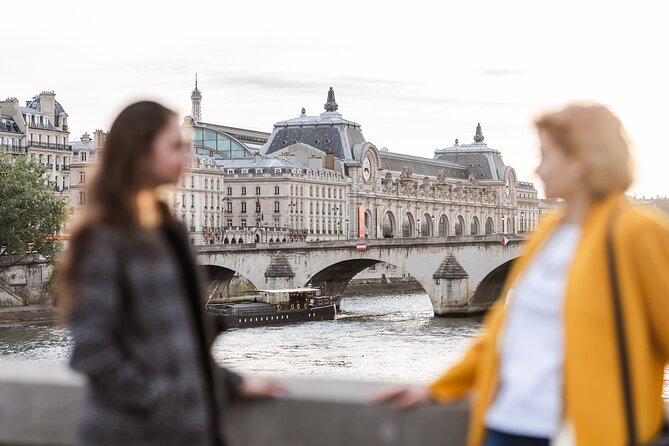
This is a private walking tour built for people who want their first taste of Paris to feel guided, not chaotic. Instead of you wandering from landmark to landmark with guesswork, you’re walking with a local host who can explain what you’re seeing and where to look next.
The value here comes from three things. First, the tour is tailored to you, not the other way around. Second, you cover several distinct neighborhoods—so you start understanding how Paris is “stitched together” across arrondissements. Third, you get a guide who can spot the practical details: where it’s easiest to pause, what’s worth a closer look, and how to keep moving even if the day is rainy.
The limitation is simple: this is half-day style. You won’t slow-walk every monument like you’re living there. If you want lots of time inside major attractions, you’ll either need the longer option (the experience offers 4 hours or 8 hours with a local host) or plan to add timed tickets later. Also, two big-ticket sights—Eiffel Tower and Moulin Rouge—do not include admission.
You can also read our reviews of more guided tours in Paris



Starting at Colonne Vendôme: Your Easy Launch Point

Your meeting point is Colonne Vendôme, Pl. Vendôme (75001), and the activity ends back there. That’s a handy starting location because it’s central and walkable to multiple directions, which matters when your day depends on good pacing.
If you’re staying in a central area, you can request a hotel meet-up. That can be a lifesaver if you’re traveling with limited mobility for long walks, dragging bags, or you simply don’t want to start the day playing “find the exact corner” in a busy city.
Here’s my advice: confirm your meeting time and exact pickup location ahead of time if you’re requesting hotel pickup. With private tours, the whole rhythm depends on starting smoothly.
Montmartre’s Steep Cobblestones and Big Views
One of the “Paris in motion” pleasures you can expect is time in Montmartre—described as artists’ territory, famous for steep cobbled streets and sweeping views. This neighborhood is a quick lesson in how Paris can flip from grand avenues to hillside charm within minutes.
Why I like this part of the itinerary: Montmartre gives you a sensory contrast early in the day. You get texture under your shoes, not just monuments on postcards. Your host can point out where the viewpoints are best, and how to read the streets like a map instead of a maze.
Practical consideration: cobblestones plus steep grades means comfortable shoes are not optional. If your group is multi-generational or includes anyone who prefers flatter walking, talk to your host early so they can adjust how long you spend there.
Eiffel Tower Area: Seeing the Icon Without a Full Ticket Stop

You’ll stop to see the Eiffel Tower, with your guide also pointing out nearby landmarks such as Notre-Dame and Sacré-Cœur (and a few off-the-path spots). The tour description is clear that admission tickets are not included, so you’re not paying for entry when you book.
That’s a good setup for two types of travelers.
- If you mainly want the classic sight and great photo angles, this works well.
- If you want to go up inside, you’ll need a separate plan for tickets and timing.
In my experience, the smartest approach is to decide what you truly want from the Eiffel Tower. Do you want the lift-and-view moment, or do you want a guided “look at the city from street level” moment? Either way, having a host who can point out what you’re looking at makes the stop feel less like a checklist.
Also, note that the exact places you visit may shift based on your interests. That’s not a downside by default. It means you’re less likely to feel like you’re being marched through someone else’s version of Paris.
A Big French-Style Garden Park Break (For Breathing Space)

Between the major landmarks, the itinerary includes a stop at the biggest park inside Paris, known for splendid French-style gardens. I love this kind of break on a walking tour because it changes the pace.
A formal garden stop does a few things for your trip:
- It gives your legs a chance to reset.
- It makes the day feel like more than a photo sprint.
- It helps you understand the French taste for symmetry and planned beauty.
What to expect: you’re not there just to pass through. The stop is part of the experience, giving you a moment to slow down and take in the layout. If you’re traveling with people who get tired quickly, this is often a good “reset station” in the middle of the day.
You can also read our reviews of more private tours in Paris





Champs-Élysées to Arc de Triomphe: Big Architecture, Quick Orientation

Then you head toward Champs-Élysées, with a stop to admire the Arc de Triomphe. This is the Paris “main stage” section—wide boulevards, iconic views, and architecture you can’t unsee.
Why this is valuable on a private tour: your host can explain what you’re seeing while you’re actually walking past it, not just after. You get a fast orientation to where things sit relative to each other, which makes your self-guided exploring afterward easier.
The only caution: this corridor can feel busy, especially at peak times. If you want calmer moments for photos, ask your host when to pause. A good host times little breaks so you’re not only standing in crowds.
Moulin Rouge: The Showstopper Stop (Tickets Extra)

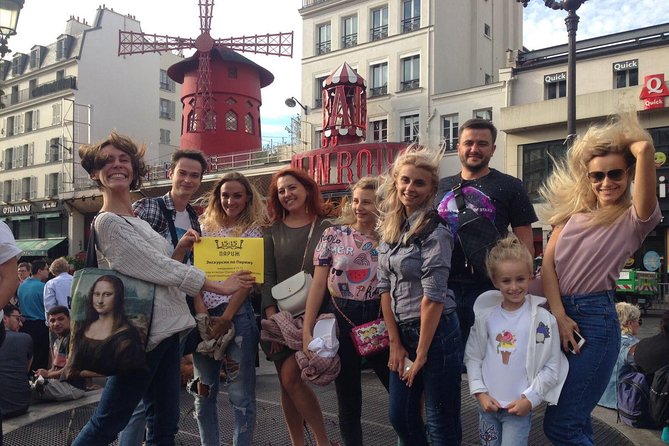
Next up is Moulin Rouge. The tour is set up as a sightseeing stop, and the description is explicit that admission tickets are not included. That means you’re seeing the place as part of the walk, not automatically buying a cabaret experience.
This part works best if you’re two things at once: curious about Paris nightlife and okay with “seeing the scene” rather than locking in a full show during your tour time. If a cabaret show is a must-do, you can use this stop as a decision point later in your trip.
If you’re sensitive to noise or crowds, tell your host. A private guide should be able to adjust how much time you spend in the densest areas.
Latin Quarter Energy: Sorbonne, Bookshops, and Student Cafés

Then you shift into the Latin Quarter, described as the home of Sorbonne University and famous for bookshops and student-filled cafés and bistrots. This is where Paris starts to feel lived-in.
What makes this stop strong is that it’s not only about buildings. It’s about atmosphere. Your guide can point out the rhythms of the neighborhood—where students tend to hang out, how the street life feels different than the grand avenues, and what to look for if you want to return on your own.
If you want to shop for books, browse cafés, or just wander with direction, this is a great match. It’s also a nice zone for different ages in a group because there’s plenty to observe without needing a ticket to enjoy it.
Notre-Dame Cathedral Area: Worth It Even While Recovery Continues
One stop is at Cathedrale Notre-Dame de Paris. There’s an important note: the cathedral is currently closed while it recovers from a terrible fire. Even so, the tour includes a stop because the surrounding island still matters.
This is one of those moments where a guide earns their keep. You’re not just arriving at a closed doorway. You’re walking a meaningful urban space and understanding what you’d be seeing if it were open.
The good news: admission is free for the stop, and your host can still help you appreciate the scale, setting, and why locals care so deeply about this site.
My practical advice: don’t treat this as a disappointment stop. Treat it as an orientation stop. You’ll leave with context, and you can always plan an additional visit when the building reopens.
The 18th-Century Cathedral Stop in the Latin Quarter
The itinerary also includes an 18th-century cathedral in the Latin Quarter, where some of the most important men and women from France’s history remain. This kind of stop adds depth without requiring a long museum day.
Why it helps: when you mix landmarks (Eiffel Tower, Arc de Triomphe) with a memorial-style cathedral stop, you start getting a better sense of what Paris values—art, power, faith, and remembrance—layered across the city.
Timing note: these stops can be quick depending on how your host adapts the route. If your group is especially interested in this kind of site, tell your host you’d like more time.
Opéra Garnier and the Shopping Street Windows Nearby
Next, the route includes Opéra Garnier, along with its surroundings. The tour description also points out Galleries Lafayette across the street and the glass-domed brasserie inside Le Printemps.
Even if you don’t go inside, it’s a strong visual moment. Opéra Garnier is the kind of building you can’t fully understand from photos—you need to see how it performs in real light. Your guide can help you look at the right details so you don’t just walk past “a pretty façade.”
If you do want to spend time shopping or grabbing a drink nearby, this is one of the natural places to do it, because the area is easy to branch off from before returning to the main walking flow.
Bastille: Local Hangout Energy for Bars and Shops
Finally, the tour reaches Bastille, where you can discover trendy bars, restaurants, and shops where locals hang out. Bastille often feels like a different Paris than the central postcard zones.
This ending segment is useful for two reasons.
First, it gives you a place to continue your evening after the guided part ends.
Second, it helps you see Paris as something more than monuments. People live here. They eat here. They meet here.
If your group enjoys food neighborhoods and easy browsing, you’ll probably want to spend a bit more time on Bastille after the tour ends.
The Guides Are the Real Secret Sauce
The most praised part of this experience isn’t the route on paper. It’s the host behind the route.
I’ve seen plenty of private tours that follow a script. This one is designed to be flexible. For example, guides like Igor are described as passionate and informative, and especially good at adapting to multi-generational groups. Others, like Cat, are mentioned for connecting well with teenagers while still keeping the facts interesting.
I also love the pattern in the positive feedback: hosts don’t just point at landmarks. They help you understand neighborhoods and move through them. Richard is noted for being approachable and connected to the community, with hidden surprises. Del is praised for packing a first-day orientation into a 4-hour pace. Roffy gets repeated mentions for personalization and balancing famous sights with lesser-known moments. Jill is described as warm and gentle, which matters if you’re traveling with someone who gets overwhelmed easily.
And a shout-out to Pascal and Anukool, who are both singled out for making walking feel more meaningful—showing passages and mosaic details with stories, not aimless wandering. Even Rahul is highlighted for a great layover-style orientation, including seeing the Eiffel Tower close up.
The balanced takeaway: the tour works best when your guide is truly fluent in your language and can explain more than just the shortest facts. If language fluency is a big deal for you, I’d ask for confirmation before you go and communicate what you want to learn (history, architecture, neighborhoods, food streets, or all of it).
Tickets, Timing, and How to Budget Without Stress
Here’s the simplest budgeting truth. Tickets to attractions are not included. That includes Eiffel Tower and Moulin Rouge. The Notre-Dame stop is free as described, even though the cathedral itself is closed.
So what should you do with this info? Plan on your booking as the “guided city time” portion, and then add paid entrances only if you personally want them.
If you’re thinking about value: $120.83 per person for a private tour is a fair price when you consider what you’re paying for—time saved, local knowledge, pickup help if you’re central, and the ability to skip the guesswork of building a route across multiple neighborhoods. It can also be a smarter value for groups of two or more, because the “private” part spreads across the party rather than forcing you into a big group tour vibe.
Timing matters too. Rain can happen. One guide was praised for trying hard even in poor rain all day. Still, bring a rain layer and be ready for the fact that Paris sidewalks don’t care about your schedule. A good guide will adapt, but you’ll have the best day if you come prepared.
Who This Tour Fits Best
This tour is a great match if you:
- want a first-day orientation without planning a route yourself
- care about neighborhood feel, not only landmark photos
- like the idea of asking questions and having the itinerary adjusted
- value a private guide for mixed ages or different interests
It’s less ideal if you’re trying to see every inside attraction on a single day. Since major ticket entries are not included, you’ll either need a second booking for entrances or choose the longer option so you have time.
Should You Book This Paris Private & Personalized Half-Day Tour?
Yes, if you want a smart, guided walk that blends the classics with Paris texture—Montmartre hills, grand boulevards, Latin Quarter streets, and the Notre-Dame area—without wasting your energy on planning.
I’d book it especially if you’re likely to benefit from a guide who adjusts: families with teens, couples with different interests, or first-timers who want to leave with a map in their head, not just a camera roll.
Skip or rethink it if you need lots of time inside paid attractions during this same window. In that case, consider pairing this with a separate ticket plan, or choose the longer duration if offered for your group.
FAQ
How long is the tour?
The duration is listed as about 3 to 4 hours, and the experience also notes that you can choose to explore for 4 hours or 8 hours with a local host.
Is this tour private?
Yes. It’s a private and personalized experience, and only your group participates.
Where does the tour start and end?
It starts at Colonne Vendôme, Pl. Vendôme, 75001 Paris and ends back at the meeting point.
Do I need to buy tickets for the Eiffel Tower or Moulin Rouge?
Yes. Admission tickets to attractions like the Eiffel Tower and Moulin Rouge are not included.
Is the Notre-Dame stop included if the cathedral is closed?
Your tour includes a stop at Cathedrale Notre-Dame de Paris, and it notes that the cathedral is currently closed while it recovers from a fire. The stop around the area is still included, and admission is listed as free.
Does the tour include transportation?
Transportation costs are not included. The experience is described as a walking experience, with hotel meet-up available on request for central locations.
What language is the tour offered in?
The tour is offered in English.
What’s the cancellation rule?
You can cancel for a full refund if you cancel up to 24 hours in advance of the experience start time. If you cancel less than 24 hours before, the amount paid is not refunded.