REVIEW · PARIS
Montmartre Highlights – Bohemian Streets & Sacré-Coeur Basilica
Book on Viator →Operated by My Super Tour · Bookable on Viator
Montmartre gives you the Paris you thought you knew—then flips it sideways with artists, cabarets, and serious views. This tour is built for that mix, with live English commentary and a small group (max 15) that helps you move through crowds without feeling rushed. You’ll start with the hilltop church, then work your way down through the streets that made the name Montmartre.
I especially like how the Sacré-Cœur stop isn’t treated like a quick photo stop. You get time for the basilica itself and then a viewpoint over Paris from the top of the hill. And the guide style matters here—names like Sacha/Sascha and Max show up in the feedback for their humor and for keeping the story clear, even when you’re walking uphill.
One thing to consider: this is a walking tour with steep hills and stairs. If you’re not used to climbing, plan for extra effort and choose an earlier start time so you’re not dealing with tired legs and lower light.
In This Review
- Quick hits
- Montmartre in two hours: what this tour does best
- Price and timing: is $47.79 a good deal?
- Getting oriented at Blanche, then ending at Place du Tertre
- Stop 1: Sacré-Cœur and the view that makes Montmartre click
- Stop 2: Moulin Rouge from outside, with the windmill story
- Stop 3: Montmartre streets where artists and writers left their marks
- Stop 4: Pigalle—the red-light district past, cafés, cabarets, and “pearls”
- Stop 5: Place du Tertre—vineyards and bocce fields nearby, calm after the noise
- What the guides really bring (and why the group stays smooth)
- Hill reality: moderate fitness, lots of stairs, plan your day
- How to use this tour after it ends
- Who this tour is best for
- Should you book? My call
- FAQ
- How long is the Montmartre Highlights tour?
- What does the tour cost?
- Is the Sacré-Cœur entrance ticket included?
- Do we go inside Moulin Rouge?
- How many people are in the group?
- Is the tour offered in English?
- Is the walking steep and strenuous?
- What happens if the weather is bad?
Quick hits
- Max 15 people means you can actually hear the guide and see what’s important
- Sacré-Cœur includes free admission time plus a viewpoint over all of Paris
- Moulin Rouge is outside only, so you’re learning the symbolism without buying a ticket
- Pigalle and Place du Tertre balance each other: nightlife history, then countryside calm
- Expect a lot of uphill walking, so pack water and comfortable shoes
- Guides use a loudspeaker so the story stays consistent in busy pedestrian areas
Montmartre in two hours: what this tour does best

Montmartre is one of those areas where you can wander for hours and still feel like you missed the point. This tour gives you a fast, focused way to understand why Montmartre mattered—artists, painters, writers, nightlife, and the hilltop church all in one loop.
What you’re really buying here isn’t just stops on a map. It’s the order and the explanations. By starting at Sacré-Cœur, you get oriented on where you are—high ground, big views, and the geography that shapes the neighborhood. Then, as you descend, the stories make more sense: Pigalle’s edgy past, Moulin Rouge’s legend, and the calmer side at Place du Tertre.
You can also read our reviews of more tours and experiences in Paris.



Price and timing: is $47.79 a good deal?
At $47.79 per person for about 2 hours, this isn’t a “cheap and cheerful” option. It’s closer to a practical add-on that saves time and spares you guesswork.
Here’s what helps the value:
- A professional guide with live commentary in English
- A small group cap (max 15), which usually makes a walking tour feel more personal and easier to follow
- Free admission at Sacré-Cœur as part of the stop timing (15 minutes)
- Multiple areas covered without needing extra logistics or extra tickets
You’ll also notice the tour is offered at different start times (morning, afternoon, or evening). That matters because Montmartre’s walking effort is real. If you can, pick a time when daylight helps you enjoy the streets and reduce the strain of climbing.
Getting oriented at Blanche, then ending at Place du Tertre
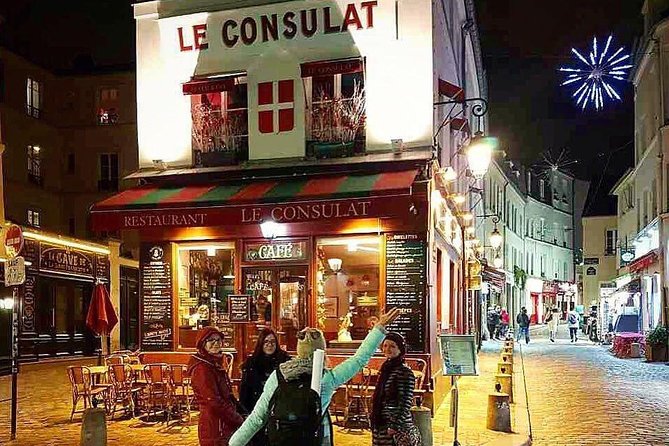
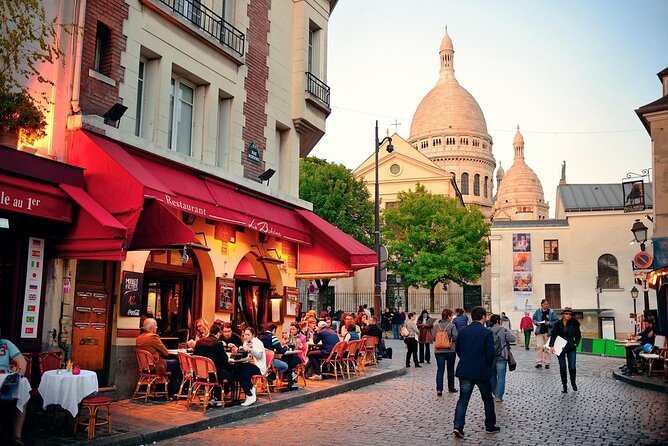
The tour starts in the Blanche area (Blanche, 75018 Paris) and ends at Place du Tertre (Pl. du Tertre, 75018 Paris). That end point is smart. Place du Tertre is where you’ll naturally want to linger: painters, caricaturists, cafés, and restaurants all around.
Also, the route works well for planning your next move. Once you finish, you’re already in the Montmartre “linger zone,” so you don’t have to immediately jump back into transit just to enjoy the neighborhood.
One practical note: this is near public transportation. That’s useful on a day when the metro crowds are thick and you don’t want to commit to a long walk before the tour even starts.
Stop 1: Sacré-Cœur and the view that makes Montmartre click
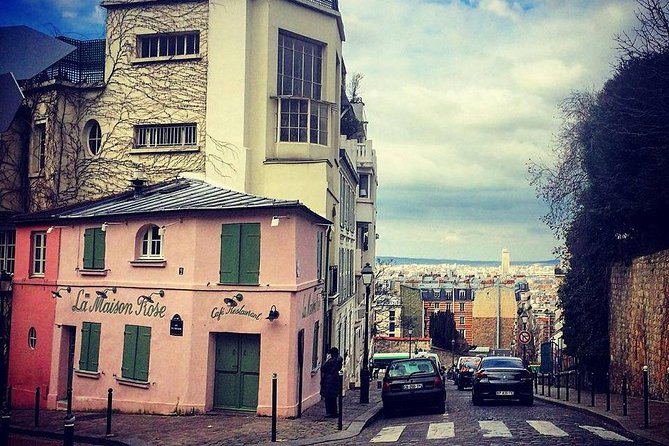
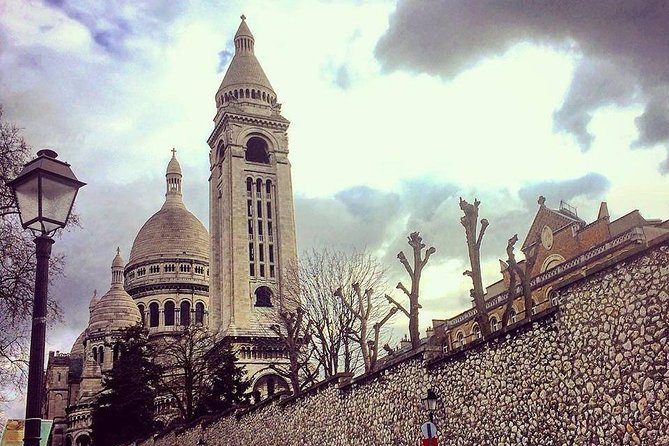
Sacré-Cœur (Basilique du Sacré-Cœur de Montmartre) is the dramatic starting point for a reason. The basilica is one of the largest churches in Paris, and you’ll have about 15 minutes there with free admission included.
What’s worth your attention:
- The impressive cupola
- The big fresco on the walls (480 m²)—a scale detail that makes the building feel more monumental than a quick exterior glance
After the basilica visit, you’ll get the payoff: a view from the top of Montmartre across Paris. This viewpoint isn’t just scenic filler. It helps you understand why the neighborhood feels like it does—why the streets twist, why the hill matters, and why certain sightlines exist.
Drawback? Fifteen minutes goes fast once you’re inside and looking around. If you want extra time for photos or you’re the type who reads every plaque, arrive ready to skim and trust the guide to point you to the best angles quickly.
Stop 2: Moulin Rouge from outside, with the windmill story
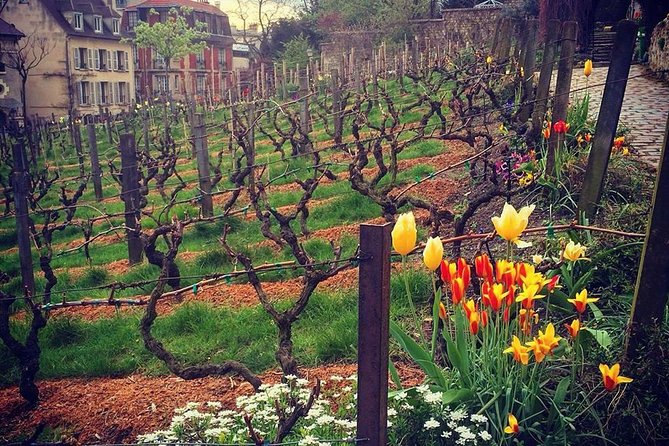
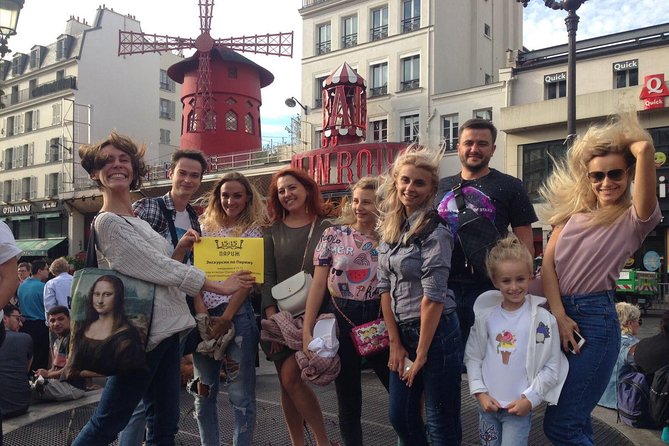
You’ll see Moulin Rouge from the outside in a stop timed at about 15 minutes. Importantly, admission is not included, because you’re not going in.
Even if you never buy a ticket to the cabaret, this stop works because you’re given the history behind the emblem: the red windmill. It’s one of those simple symbols that becomes instantly meaningful once you learn why it exists.
This is also a good moment to reset your energy. After Sacré-Cœur and the hilltop walk, a brief, exterior-focused stop can feel like a breath—especially if you’re traveling with anyone who needs a less strenuous moment.





Stop 3: Montmartre streets where artists and writers left their marks
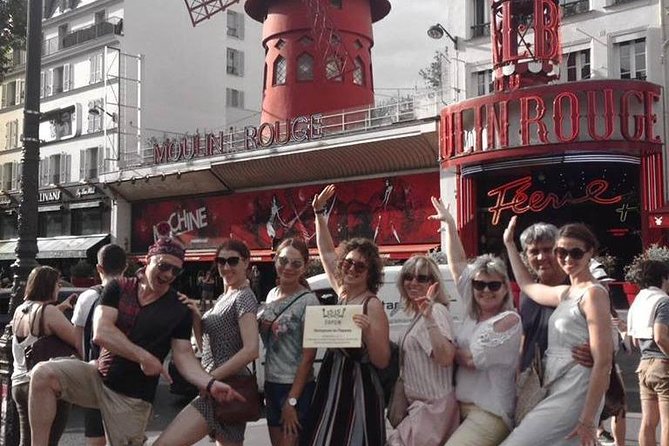
This is where the tour shifts from landmarks to lived-in streets. You’ll walk through Montmartre with a focus on the artists and writers associated with the area around the late 1800s and early 1900s.
Expect stories tied to names like Monet, Manet, Van Gogh, Pisarro, Rodin, Picasso, and Zola. The key value isn’t just learning famous names. It’s hearing how the neighborhood connected to their lives—where they went out, where they lived, and why certain places feel the way they do today.
If you like art and culture, this is the stop that turns random street corners into something you can actually picture. If you don’t care about art history, it’s still useful because the guide’s narrative helps you notice things you’d otherwise walk past.
Stop 4: Pigalle—the red-light district past, cafés, cabarets, and “pearls”
Then comes Pigalle, described as the famous red light district in Paris. You’ll spend about 30 minutes here, and you’ll see the mix of cafés, cabarets, and sex shops, plus references to hidden “pearls” from the area’s earlier life when artists and writers also made Pigalle part of their scene.
This stop has two roles:
- It gives you context for a part of Paris that many visitors either ignore or reduce to stereotypes.
- It shows you the contrast between Montmartre’s romance and its rougher side.
One consideration: Pigalle can feel crowded and noisy. The tour’s loudspeaker approach helps keep the commentary audible while you’re moving through pedestrian traffic, but you should still expect to keep your eyes up and your pace steady.
Stop 5: Place du Tertre—vineyards and bocce fields nearby, calm after the noise
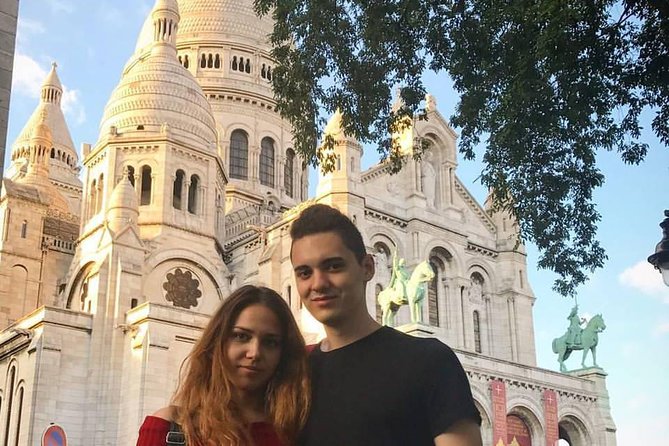
Place du Tertre is where the mood softens. You’ll spend about 30 minutes here, and the description is basically: countryside in Paris. It’s only a short distance from Pigalle’s nightlife intensity, yet it feels like a quieter village with charm.
What to notice:
- A sense of bucolic calm
- The area’s hints of vineyards and bocce fields nearby
- The “hidden parks” feeling when you step away from the busiest corners
This stop is also a practical decompression zone. After walking uphill and down through more intense areas, you can slow down, grab a drink, and decide what you want to do next.
And because the tour ends at Place du Tertre, you’re not stuck finishing and immediately hunting for dinner somewhere else.
What the guides really bring (and why the group stays smooth)
A lot of walking tours sell the route. This one sells the guidance. The best feedback points toward guides who:
- tell the story clearly (not just dates and names)
- keep an upbeat tone, even with lots of stairs
- manage crowds effectively while you’re moving through busy areas
Names that come up a lot include Sacha/Sascha, Max, and Catherine/Catrina, with descriptions like funny, patient, and good at adapting to different needs. For example, one review highlights patience with an 80-year-old parent during uphill walking, and another mentions helping someone during chemotherapy during a strenuous part of the walk. That suggests the guide approach can be considerate, not rigid.
You also get a loudspeaker for crowd distance and clarity. That’s a small detail, but it matters on Montmartre where sound bounces around and people cut across your path.
Hill reality: moderate fitness, lots of stairs, plan your day
This tour asks for moderate physical fitness. That’s code for: you’ll be walking quite a bit and you’ll be climbing.
The feedback makes it clear the hills can be the main workout. One practical tip is to choose an earlier start so you enjoy the climb during daylight. Even if you don’t sweat the details, your legs will feel it more than you expect.
If you’re sensitive to steps:
- wear shoes with solid grip
- take slow pauses when the group stops
- don’t treat this as a casual stroll
You’ll still likely enjoy it if you pace yourself. The viewpoint payoff at Sacré-Cœur is the “why” for all that effort.
How to use this tour after it ends
Once you finish at Place du Tertre, you’ll have enough context to explore without getting lost in the tourist blur.
Use what you learned:
- At Sacré-Cœur, you can look back at the neighborhood layout and understand where you’re standing.
- Near Moulin Rouge and Pigalle, you can spot the difference between the area’s famous image and its older artistic side.
- In Place du Tertre, you’ll recognize it as the calmer counterweight to the nightlife around it.
Also, you can take practical security advice with you. One standout tip included in the feedback is to be alert to pickpockets near Sacré-Cœur. That’s not fear-mongering—it’s just good travel sense in a high-footfall area.
Who this tour is best for
This tour fits best if you want:
- a tight, guided overview of Montmartre without piecing it together yourself
- live commentary in English
- an emphasis on stories tied to art, artists, and the neighborhood’s evolution
- a manageable group size (max 15)
It’s less ideal if you want a slow, museum-like pace or if you have mobility limits that make stairs difficult. The content is great, but the physical aspect is part of the experience.
Should you book? My call
Book it if you want to get your bearings fast and leave with Montmartre in your head, not just on your camera. The combination of Sacré-Cœur views, the artist-and-writer street stories, and the contrast between Pigalle and Place du Tertre is exactly what makes this area worth visiting.
Skip it or reconsider if you can’t handle steep hills and a lot of steps. The route is short on paper but energetic on the ground. If you’re comfortable with that, this tour is a smart way to turn “I’ve heard of Montmartre” into “I get it now.”
FAQ
How long is the Montmartre Highlights tour?
It runs for about 2 hours.
What does the tour cost?
The price is $47.79 per person.
Is the Sacré-Cœur entrance ticket included?
Yes. The Sacré-Cœur stop notes free admission time.
Do we go inside Moulin Rouge?
No. You’ll see Moulin Rouge from the outside, and admission isn’t included.
How many people are in the group?
The tour has a maximum of 15 travelers.
Is the tour offered in English?
Yes, it’s offered in English with live commentary.
Is the walking steep and strenuous?
It requires moderate physical fitness. Expect uphill walking and stairs.
What happens if the weather is bad?
The experience requires good weather. If it’s canceled due to poor weather, you’ll be offered a different date or a full refund.