REVIEW · PARIS
Paris Montmartre Private Walking Tour – Best Art, Culture, Food
Book on Viator →Operated by ExperienceFirst · Bookable on Viator
Montmartre tells stories at every corner. This private Montmartre walk strings together art icons and street-level food moments, from the I Love You Wall to Sacré-Cœur views. It’s an English tour with time for photos and refreshments, and your guide can flex the pace.
I love the adaptable pacing—your guide can slow down for a favorite detail or zip ahead when your group is ready. I also love the art hits, especially the Bateau-Lavoir stop, plus the neighborhood history told in a way that’s easy to follow even when the streets get crowded.
The only catch: you’re dealing with real hills and some narrow, busy streets. And since the walk is about 90 minutes end-to-end, you’ll want to be on the dot at the meeting point on Rue des Abbesses.
In This Review
- Key things to know before you go
- Rue des Abbesses start point and how this route actually feels
- I Love You Wall: the poetic opener you’ll want to photograph
- Old streets, cafés, and Montmartre’s bohemian past
- Bateau-Lavoir: where Picasso-era modern art got loud
- The Montmartre windmill with Renoir and Van Gogh ties
- Marcel Aymé’s wall-walking sculpture and Montmartre’s odd humor
- Dalida’s bronze bust: pop culture in a quiet square
- The pink house café: a photo stop that turns into a real meal
- A small Montmartre vineyard (still making wine since 1933)
- Sacré-Cœur from the outside: views first, entry if you want it
- Place atmosphere and the walk’s ending at La Bonne Franquette
- Guides like Laura, Anastasia, Heidi, and Tamar: what that means for your day
- Price and value: what $57.13 buys you in Montmartre
- Should you book this private Montmartre walking tour?
- FAQ
- Is Sacré-Cœur Basilica entry included?
- How long is the private walking tour?
- Where does the tour start and end?
- Is this tour private?
- What language is the tour offered in?
- Does the route include stairs?
- How does cancellation work?
Key things to know before you go
- I Love You Wall in 300 languages for instant, photo-ready “Montmartre mood”
- Bateau-Lavoir art-house stories tied to Picasso, Modigliani, and Braque
- Windmill past with Renoir and Van Gogh connections (plus dance-hall history)
- Food stops built into the art route, including a famous pink-house café
- Sacré-Cœur exterior now, optional inside later with guide tips for what to look for
- No stairs, but hills and tight streets mean comfortable walking matters
Rue des Abbesses start point and how this route actually feels
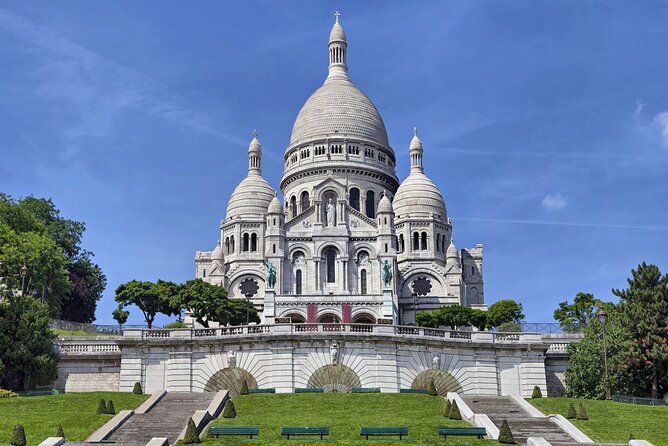
The tour begins at 19 Rue des Abbesses, 75018 Paris and ends at La Bonne Franquette, 18 Rue Saint-Rustique, 75018 Paris. It’s a private, local-guide walk for English speakers that runs about 1 hour 30 minutes.
One smart detail: the route doesn’t include stairs, which is a big deal in a hilly neighborhood. You still climb some hills and navigate narrow streets, though, and those can feel busy.
I’d treat this as a “comfortable walking” tour, not a stroller-and-easy-shoes outing. If you’re arriving by transit, you’ll likely be fine, but do plan extra time at the start because Montmartre can be confusing under crowds.
Also, you’ll get a mobile ticket, and you should receive confirmation at booking. That helps if you’re juggling multiple plans in Paris.
You can also read our reviews of more walking tours in Paris



I Love You Wall: the poetic opener you’ll want to photograph
One of your first stops is the I Love You Wall, a small square installation with the words I Love You written in over 300 languages. It’s a simple idea, but it works because it gives you an instant visual win before the walk gets more “history-and-art.”
This stop is perfect for slowing down. You’ll want a few minutes to take photos from different angles and actually read the languages, not just snap one quick shot and keep moving.
If you’re photo-focused, bring a quick plan: one steady shot facing the wall, then one sideways shot to catch the surrounding Montmartre streets. Your guide can also point out the best spots so you’re not constantly weaving around other people.
Old streets, cafés, and Montmartre’s bohemian past
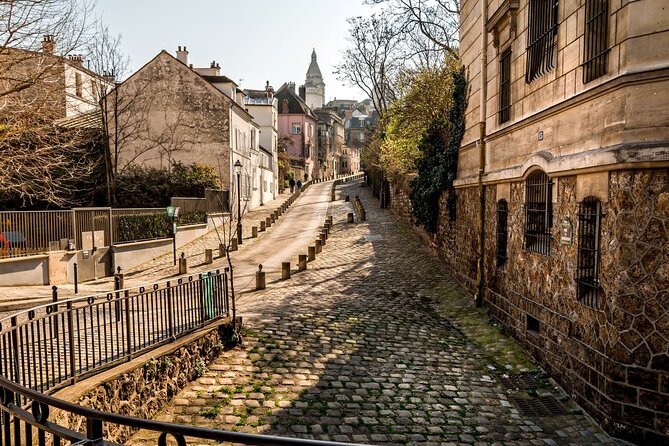
Next you’ll hit one of the oldest streets in the neighborhood, the kind of place where cafés, boutiques, and historic architecture sit close enough to feel like a living set. Your guide uses this as a jumping-off point for Montmartre’s bohemian vibe—plus its more “salacious past,” told with context so it doesn’t feel like gossip.
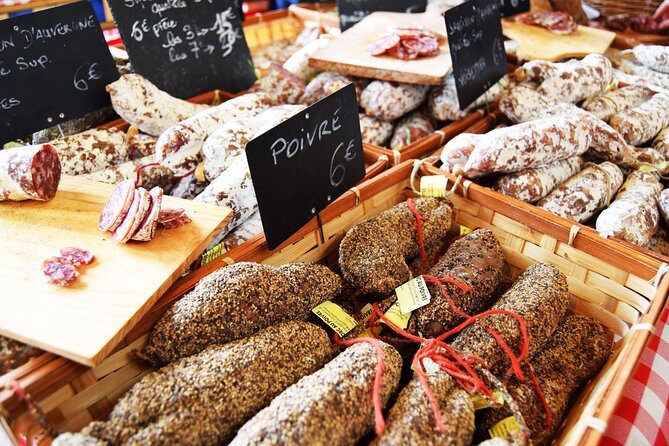
This is where the tour earns its culture-and-food balance. Instead of treating food like a random detour, your guide keeps it woven into the story of where artists and night-life characters actually spent time.
You’ll get plenty of time for refreshments and photographs, which matters in Montmartre. Crowds and lines can drain your energy, so having schedule breathing room is a real value, especially on a shorter 90-minute walk.
If you’re visiting with kids, this kind of street-level storytelling tends to work well: it’s visual, it changes every block, and it’s easy to ask questions without losing the group.
Bateau-Lavoir: where Picasso-era modern art got loud
The Bateau-Lavoir stop hits the art-nerd sweet spot. This site was once a humble artists’ residence, and it’s closely tied to legends like Picasso, Modigliani, and Braque.
What I like about covering this here is timing. Early in the walk, you learn how Montmartre became a magnet for artists. Later, when you see windmills, sculptures, and cafés, you’ll understand the neighborhood as a creative system, not just a list of landmarks.
A private guide helps because Bateau-Lavoir can turn abstract if you’re on your own. With a local storyteller, you’re more likely to grasp why these names matter and how the neighborhood environment encouraged experimentation.
One practical thought: this part of Montmartre attracts attention. If you want unhurried photos, you’ll appreciate the guide managing the pace and choosing when to pause.
The Montmartre windmill with Renoir and Van Gogh ties
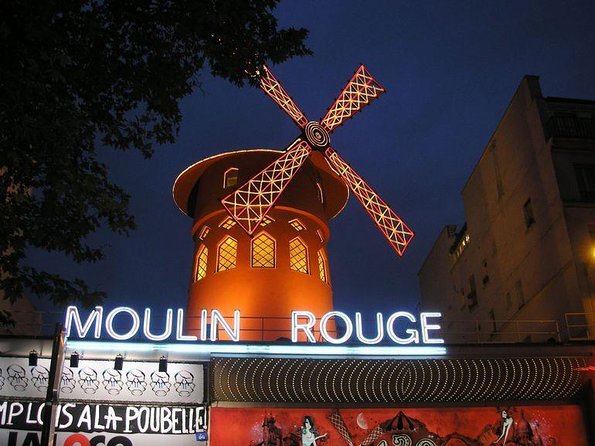
Montmartre’s last remaining windmills show up next, including a famous windmill tied to paintings by Renoir and Van Gogh. Your guide also explains how it was once used as a dance hall, which adds a fun layer of “this place wasn’t always postcard-perfect.”
This is a good stop for two reasons. First, it connects art history to a real building you can stand next to. Second, the windmill story helps you see Montmartre’s energy—music, gatherings, and crowds—without turning it into a lecture.
Even if you don’t care about the art references, the windmill works as a visual anchor. It’s one of those landmarks that makes the whole neighborhood snap into focus.
You can also read our reviews of more food & drink experiences in Paris






Marcel Aymé’s wall-walking sculpture and Montmartre’s odd humor
After the windmill, you’ll see a whimsical sculpture inspired by a short story by Marcel Aymé. It depicts a man walking through a wall, and it’s located near the author’s former home—so the joke and the art are grounded in place.
This stop is quick, but it’s memorable because it’s playful. Montmartre gets stereotyped as romantic and artsy; this helps you remember it can be strange and funny too.
If you like surrealism-adjacent details, you’ll probably enjoy how the guide connects the sculpture to that Montmartre feel—dreamlike, a little off-kilter, and always human.
Dalida’s bronze bust: pop culture in a quiet square
You’ll also learn about Dalida, a long-time Montmartre resident. She’s commemorated with a bronze bust in a peaceful square, and that corner has become a kind of tribute stop for fans.
This is one of those “Montmartre is not only painters” moments. It reminds you that the neighborhood’s artistic identity isn’t limited to one century or one art category.
It also changes the tone of the walk. You go from bustling streets and art legends into something calmer, which makes the next food-and-photo segment easier on your pace.
The pink house café: a photo stop that turns into a real meal
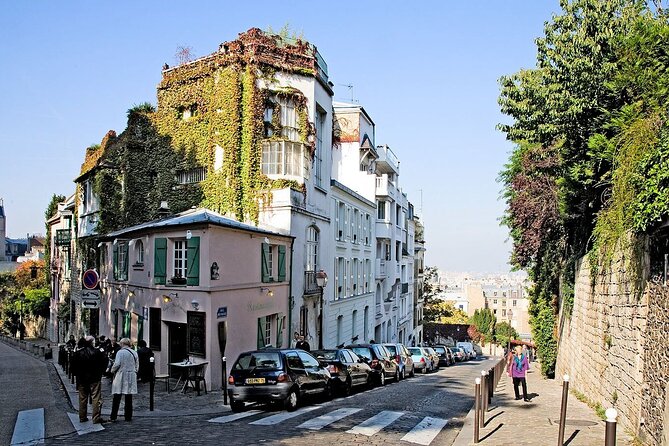
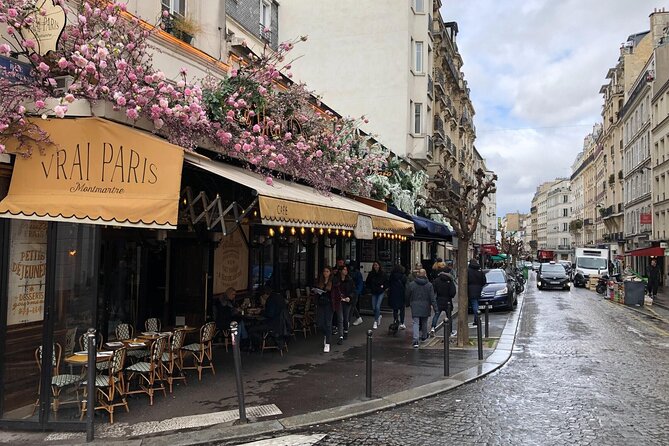
A highlight for many people is a quaint pink house that’s been an emblem of Montmartre for decades. It’s associated with artists and photographers and was frequented by Picasso and Utrillo. Today, it serves as a café with French food—and it’s also a standout photo op on your tour.
This stop matters because the tour isn’t just sightseeing. It gives you an easy chance to eat or at least refresh while you’re already in the middle of the most photogenic zone.
Also, having a guide along can help you order with confidence. If you’re traveling with a group that splits into different snack needs, private tours handle that kind of variation better than a fixed schedule.
If you’re the type who hates “walking tours” that never actually let you rest, this is why that complaint doesn’t stick here. The structure builds in time for food.
A small Montmartre vineyard (still making wine since 1933)
Then comes a surprisingly rustic stop: a small vineyard in the heart of Montmartre. It produces wine that preserves the neighborhood’s winemaking heritage, established in 1933 to keep that tradition alive.
This is valuable because it breaks the common Montmartre assumption that everything is urban art and stone streets. A working vineyard changes how you understand the neighborhood’s past, from practical agriculture to modern tourism.
If you like learning how places evolve, you’ll enjoy this part. The guide is essentially showing you Montmartre as layered: older roots under the artistic spotlight.
Sacré-Cœur from the outside: views first, entry if you want it
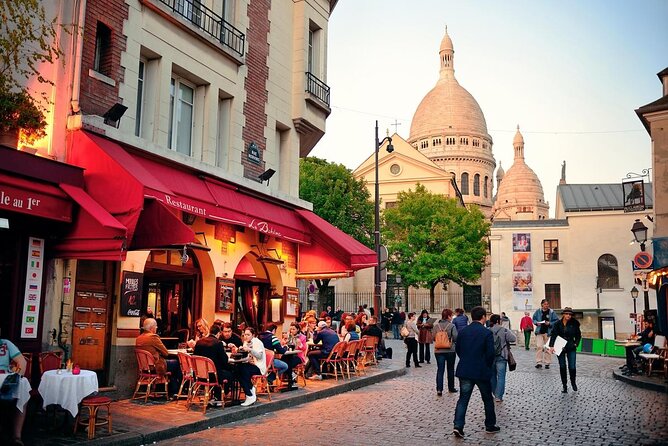
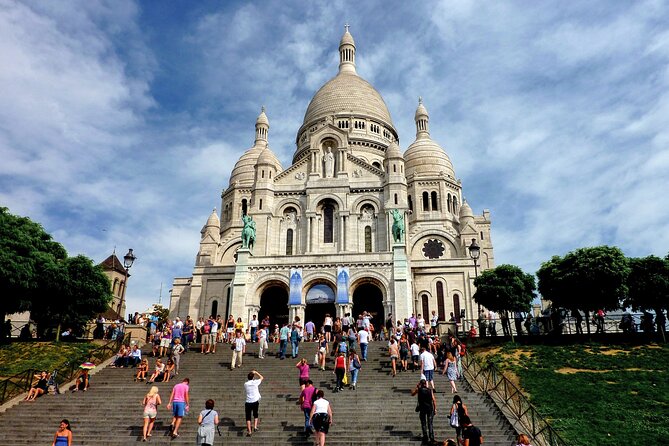
At the highest point in Paris, you’ll reach Sacré-Cœur Basilica. Your tour stays on the outside—no entry is included—so you’re mainly there for the building’s look and the city views.
Sacré-Cœur was built in the late 19th century, and your guide shares what to notice about the white domes and intricate mosaics. You’ll also get tips on what to check inside if you decide to go later on your own (especially since entry is free when open).
Even without going in on tour, this stop has real payoff. It’s the “breath” point—when Montmartre finally widens into a panoramic perspective.
One practical tip: if you’re planning to enter later, consider doing it when the light changes or when your energy is higher. On a tight 90-minute walk, the basilica is best treated as an option that fits your day, not a mandatory sprint.
Place atmosphere and the walk’s ending at La Bonne Franquette
Your final stretch focuses on the artistic heart of Montmartre: a lively square where painters, caricaturists, and street performers gather around cozy cafés and restaurants. This is where the neighborhood’s public face shows up—people drawing people, snapping portraits, and turning street life into entertainment.
Your guide helps you soak it in without turning the end into chaos. Since this is private, you’re not stuck in a rigid herd move; you can linger for a short photo, then step out when you’re ready.
The tour ends at La Bonne Franquette (18 Rue Saint-Rustique). It’s a handy finish point because it puts you close to more cafés and transport options for your next move.
Guides like Laura, Anastasia, Heidi, and Tamar: what that means for your day
This tour includes an experienced local private guide, and names like Laura, Anastasia, Heidi, and Tamar come up in the guide stories connected to this experience. The pattern across those guides is simple: they don’t just recite dates. They tell stories in a way that works for adults and kids.
One guide-led win is customization. If walking gets difficult for part of your group, you may find the guide willing to adjust. That can make the difference between a tour you enjoy and one you survive.
If you’re booking because you want both art and food, this is a big reason to choose a private format. It’s easier to ask questions in real time—Where should we eat? What should we order? What’s the background here?—instead of guessing while you follow a group.
Price and value: what $57.13 buys you in Montmartre
At $57.13 per person for about 1 hour 30 minutes, this is not a “cheap quick glance” tour. You’re paying for a local guide plus a private, story-based route that hits multiple art-and-culture landmarks while keeping time for photos and refreshments.
The value angle here is how the tour reduces your mental work. Montmartre is beautiful, but it’s also crowded, hilly, and slightly chaotic. A guide helps you connect the dots—why Bateau-Lavoir matters, how the windmill fits into Renoir and Van Gogh’s world, and why a pink café house is more than just a color.
It also helps if you’re traveling with kids. Short tours that mix visual stops with human stories tend to keep attention, and this one is built for that.
Finally, it’s booked well in advance—about 57 days on average—which usually means people find it worth it. If you’re traveling in a busy season, don’t wait until the last minute.
Should you book this private Montmartre walking tour?
Book it if you want art, culture, and food wrapped into one walk, with time to pause for photos and refreshments. The mix of I Love You Wall, Bateau-Lavoir, the windmill, and Sacré-Cœur views makes it feel like more than one Instagram stop—it’s a story of how Montmartre became Montmartre.
Skip it if you know you struggle with hills and narrow streets. While the route avoids stairs, the walking is still real. Also, the day matters: arrive early and double-check the exact Rue des Abbesses meeting spot so you don’t lose momentum at the start.
If your goal is a guided, no-stress Montmartre overview with real local flavor, this private format is a strong match.
FAQ
Is Sacré-Cœur Basilica entry included?
No. The tour covers the exterior of Sacré-Cœur. Entry is not included in the tour price, and your guide can share tips for what to see if you go in on your own later when it’s open.
How long is the private walking tour?
It runs about 1 hour 30 minutes (approx.).
Where does the tour start and end?
It starts at 19 Rue des Abbesses, 75018 Paris and ends at La Bonne Franquette, 18 Rue Saint-Rustique, 75018 Paris.
Is this tour private?
Yes. It’s a private tour/activity, so only your group participates.
What language is the tour offered in?
The tour is offered in English.
Does the route include stairs?
The route doesn’t include stairs, but it does involve hills and navigating narrow, sometimes busy streets.
How does cancellation work?
You can cancel for a full refund up to 24 hours before the experience start time. If you cancel less than 24 hours before, the amount paid is not refunded.