REVIEW · CARCASSONNE
Medieval Carcassonne: Interactive Ghost Story & City Game
Book on Viator →Operated by Questo · Bookable on Viator
Ghosts, puzzles, and medieval walls in Carcassonne. This interactive city game turns the medieval citadel into a phone-guided mystery, with 10 puzzles sprinkled along a walk you control. You also get short local stories tied to the places you pass, so the stones don’t feel like they’re just posing for photos.
I especially like the flexible timing. You can start when you want, pause as often as you like, and resume later using the same game access. One thing to watch: the experience depends on your phone being ready, because some people struggled with getting the game started, so plan for a charged battery and clear app access.
In This Review
- Key things to know before you play
- A self-guided ghost-story walk you can actually control
- Price and what you truly get for about $6
- Your 3 km route from Square Gambetta to Château Comtal
- Stop-by-stop: solving puzzles through Carcassonne’s landmarks
- Square Gambetta and the start of the old walled city idea
- Notre-Dame de la Santé: a plague-era chapel in a tight passage
- Near Pont-Vieux: a noble residence and a cloth factory legacy
- Saint-Gimer Church: Viollet-le-Duc and the idea of modesty
- Porte de l’Aude: a gate that frames the river
- Inquisition Museum: the heavy history stop
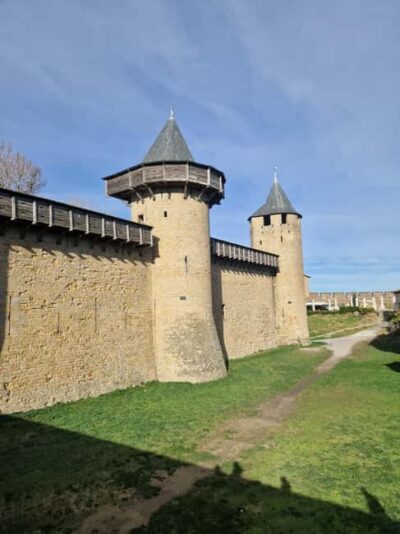
- Château Comtal area: Roman walls, Trencavel rule, and the Romanesque cathedral
- The phone-app part: how to make sure it runs smoothly
- What type of traveler should enjoy this most?
- Should you book Medieval Carcassonne: Interactive Ghost Story & City Game?
- FAQ
- How long is the Carcassonne ghost story city game?
- Can I start at any time?
- Can I pause and resume later?
- Do I need a physical guide?
- Where does the game start and end?
- What language is the game offered in?
- How much of the city do you cover?
- Are museum or monument entry tickets included?
- Is it good for families?
- What if the app doesn’t let me access the quest?
Key things to know before you play

- Start anytime, stop anytime using the Questo app, without a live guide pacing you
- 10 interactive puzzles over a route of about 3 km, built around real city landmarks
- Tragic medieval themes show up in the stories, including persecution and the Inquisition
- No monument entry tickets included, so a few spots may require separate tickets if you want full access
- English only as offered, so non-English speakers may rely on phone translation
A self-guided ghost-story walk you can actually control
This is not a traditional tour with a person herding you from point A to point B. It’s a private, contactless experience where your smartphone becomes the guide. You follow step-by-step directions to move through Carcassonne’s historic core, answering puzzles as you go.
The big practical win is freedom. You’re allowed to start at basically any time during the day window, and you can pause whenever you need to regroup, snack, or step aside to look at the view from a gate or square. That matters in Carcassonne, where crowds can move in waves and the stone streets can feel tighter than you expect.
The game’s tone is also worth mentioning. It’s described as a ghost story with a city-game format, but the themes skew serious—medieval persecutions and harsh history show up in the narratives. If you want a purely light, whimsical experience, keep that in mind. If you’d rather understand how this place got its reputation, the tone makes sense.
You can also read our reviews of more city tours in Carcassonne


Price and what you truly get for about $6

At roughly $6 per person, you’re buying the structure: the phone-based escape game route, the puzzle moments, and the stories tied to each stop. You’re not paying for museum admission or a live guide’s time.
Here’s how that plays out in real life:
- You get access to the Questo app and the interactive game.
- You get a route that’s about 3 km and takes around 1 hour 40 minutes on average.
- You get unlimited access to play at your own pace (pause and resume).
- You do not get entry tickets to monuments.
For value, the key question is this: do you like exploring by solving small challenges? If yes, this price-to-time ratio is strong, especially because you can stretch it over multiple chunks if you need to. If you want a classic guided lecture, you may feel a bit on your own.
Also note the format: you’ll be using your phone the whole way. That’s not a problem if your battery is healthy, but it’s a deal-breaker if your phone struggles outside in walking mode.
Your 3 km route from Square Gambetta to Château Comtal

The game starts at Square Gambetta, on the side of the Aude River opposite the famous Cité, near the area tied to La Bastide de Saint Louis. It ends at Château Comtal. Even though there’s no physical guide, the app is meant to guide you step-by-step toward the finish.
The walk is designed to be “game length” rather than “full sightseeing day.” So you’ll be moving between a set number of meaningful stops—enough to feel like you saw the city, without forcing you to cram in every monument.
One more practical note: since the game runs through the app, you’ll want to have:
- your phone charged
- your internet situation sorted (so the app can load where needed)
- enough time to troubleshoot if the start process isn’t instant for you
Some players reported that getting the quest going wasn’t straightforward, so arriving with a little extra patience is smart.
Stop-by-stop: solving puzzles through Carcassonne’s landmarks

This game is built around a chain of specific places. Each stop has a local story and a puzzle moment. Think of it as learning the city through details you’d otherwise overlook.
Square Gambetta and the start of the old walled city idea
Square Gambetta is the opening act. This large square is on the other side of the river from the Cité, and it marks where the older walled-city story begins: La Bastide de Saint Louis, built by King St. Louis.
How the game uses this stop: you’re asked to look around to find an answer to advance. That simple mechanic is why this type of tour can feel more rewarding than reading a plaque. You’re not just looking—you’re hunting for meaning in what’s right in front of you.
If you’re the kind of traveler who likes to “get your bearings fast,” this start helps. You establish your route and then the game starts training your eyes.



Notre-Dame de la Santé: a plague-era chapel in a tight passage
The chapel Notre Dame de la Santé is tied to a legacy: it was funded by Jean de Saix in 1527 as a hospital for people suffering from the plague. The story also highlights why this location mattered—a narrow passage between fortified buildings made it strategically placed.
Again, the puzzle logic is the point. You’ll search around the chapel to find the clue that lets you move on. It’s a clever way to make you notice architectural placement and street geometry, not just the main object in view.
Watch-out here: the theme is grim. If your group wants only cozy sightseeing, this stop changes the mood.
Near Pont-Vieux: a noble residence and a cloth factory legacy
At the foot of the Pont-Vieux on the right bank of the Aude, you’ll find a facade linked to a prosperous chapter. It was once the home of a noble Carcassonnaise family. In 1694, it was bought by someone close to Colbert, who founded a cloth factory there. That factory later gained the title Manufacture Royale in 1696.
The interesting part is that there’s still a building from that period visible: the owners’ residence. That gives you a “time layer” feeling—17th-century industry and wealth still echoing in stone and frontage.
If you like history that connects to everyday life (cloth, work, commerce), this stop is satisfying. If you want only medieval-age storytelling, you may find it a bit later than expected—but it’s still part of Carcassonne’s evolution.
Saint-Gimer Church: Viollet-le-Duc and the idea of modesty
Saint-Gimer Church was built between 1854 and 1859 by architect Eugène Viollet-le-Duc. The key design goal mentioned is modesty. The layout is described as a nave with two aisles, a polygonal apse positioned on two vestries, and a porch at the front.
In game terms, this stop is another “look closely” moment. The puzzle pushes you to notice details in the church’s structure and shape rather than treating it like background scenery.
Practical tip: churches often have changes in light and shadow. If you’re playing in bright afternoon sun, take a moment before searching so your eyes adjust.
Porte de l’Aude: a gate that frames the river
Porte de l’Aude is part of the preserved medieval walled city and overlooks the river. Gates are the city’s breathing holes—built for defense, traffic, and control. This one gives you a classic view angle where the city wall meets moving water.
For photos, it’s a good stop. For the game, it’s a clue stop. You’ll scan the gate area to answer the challenge and keep walking.
Inquisition Museum: the heavy history stop
This is the most intense stop on the route. The Inquisition Museum sits in a large 17th-century building and presents a collection of instruments of torture, spanning from the 12th century up to the French Revolution. The museum also includes characters and their biographies, plus history connected to major Cathar castles and the broader story of the Inquisition in the region.
Even if you don’t go deep into the museum displays, the game’s inclusion of this subject explains why the experience is branded as a ghost story. It’s not just spooky atmosphere. It’s fear and power and punishment woven into Carcassonne’s medieval reputation.
If you’re traveling with kids, this is the point where the experience may feel mismatched for some families, depending on their sensitivity and attention span.
Château Comtal area: Roman walls, Trencavel rule, and the Romanesque cathedral
The final stretch ties together the big architectural layers: the Romanesque cathedral and the castle complex.
- The Romanesque cathedral work started in June 1096.
- A Lady Chapel was added in the early 15th century.
- An infirmary and chapel were built by Bishop Radulph in the 1260s, and the Lady Chapel adjoined that area.
- Château Comtal was built in the 12th century by Bernard Aton Trencavel over the western part of Roman walls.
In game mode, this is where you’re prompted to “look around” and find the last answers before you finish at Château Comtal.
If you only visited the castle from the outside before, this end point helps you see how the site evolved over centuries—Roman walls beneath medieval construction, then later additions layered on top.
The phone-app part: how to make sure it runs smoothly
This experience lives and dies by the app experience. Most of the time, it’s straightforward: you have the mobile ticket, access through the Questo app, and follow instructions toward Château Comtal.
But there are real-world friction points you should plan for:
- Some people had trouble starting the quest if the app steps weren’t intuitive.
- Some had issues linking access information to the QR code or email address.
- Battery anxiety can sneak up because you’re outside, walking, and using the screen for puzzles.
My practical advice:
- Charge your phone fully before you start.
- If you’re traveling with others, make sure everyone who needs access can get into the app quickly before you begin.
- If something goes wrong, use support. The provider states assistance is available via in-app chat around the clock and also by email ([email protected]).
The best case scenario is you enjoy a fun, low-pressure walk where you pause whenever your group needs a breather. The risk is spending time troubleshooting instead of playing, so give yourself a little cushion.
What type of traveler should enjoy this most?

This city game fits best if you like active sightseeing.
You’ll probably enjoy it if you:
- want to see parts of Carcassonne beyond the most obvious postcard angles
- like learning from short story snippets tied to real places
- don’t want to fight with a set group schedule
- enjoy puzzles and can tolerate a phone-based format
It may be less ideal if you:
- expect a full audio guide style explanation (this isn’t presented that way)
- don’t want any app setup time
- strongly prefer only lighter themes, because the story includes persecution-related material and the Inquisition Museum stop
For families, the experience can work as a shared moment, but it depends on your kids’ attention and tolerance for puzzles. If your kids drift, the game can feel harder to keep going.
Language is another practical factor. English is the offered language, so if your party relies on translation, plan for that pace.
Should you book Medieval Carcassonne: Interactive Ghost Story & City Game?

If you’re happy with a self-guided phone experience, I think this is a good value play. At about $6, you’re not buying entry tickets or a traditional guide. You’re buying a puzzle route and story prompts that turn Carcassonne into an interactive walk.
I’d book it when:
- you want flexibility to start and pause
- you like solving small challenges as you go
- you’re curious about how the city ties medieval drama to its buildings and streets
I’d skip or switch plans if:
- your group hates phones-as-guides
- you’re short on time and can’t afford setup trouble
- you’re expecting an audio-guide-style narration throughout
If your biggest concern is tech friction, set yourself up for success: charge your battery, start early in your day, and keep the app access info handy.
FAQ
How long is the Carcassonne ghost story city game?
It’s about 1 hour 40 minutes on average.
Can I start at any time?
Yes. The experience is set up so you can start at any hour during the listed opening window, rather than at one strict meetup time.
Can I pause and resume later?
Yes. You can pause and resume, and you have unlimited access to play anytime.
Do I need a physical guide?
No. There is no physical tour guide. The app provides the step-by-step instructions.
Where does the game start and end?
It starts at Square Gambetta and ends at Château Comtal.
What language is the game offered in?
The experience is offered in English.
How much of the city do you cover?
The puzzles are set along a route of about 3 km.
Are museum or monument entry tickets included?
No. Entry tickets to monuments or attractions are not included.
Is it good for families?
It’s designed as a family moment and includes history at the stops, but it can be more complicated to keep everyone following the game flow.
What if the app doesn’t let me access the quest?
The provider says you can contact support through the app chat (available 24/7) or email [email protected] for help starting the game.