REVIEW · CARCASSONNE
Carcassonne: Medieval Builder-Themed City Tour with a Guide
Book on GetYourGuide →Operated by Epok'Tour · Bookable on GetYourGuide
Carcassonne works best when a story guides your feet. This tour turns 13th-century construction into a hands-on, character-led walk led by Thomas in role as Guilhem, a master builder. You’ll follow the city’s major fortifications and pick up how people lived, built, and argued—without it feeling like a classroom.
What I love most is the historical outfits plus storytelling combo. It’s not just facts; Guilhem brings in daily-life details (tools, work rhythms, and what it meant to build in that era), and he keeps the pace fun. I also like that the tour is interactive, with historical objects used to make the past feel touchable—useful for adults, and it lands especially well with kids.
One consideration: the guide speaks French, so if you don’t understand French at all, you may not catch every nuance (though you’ll still see plenty and hear the main beats). Also, this experience isn’t for very young children—there’s a minimum age of 6.
In This Review
- Key things to know before you go
- Meet Maistre Guilhem at Porte Narbonnaise
- A 13th-century builder story, not a lecture
- Narbonne Gate: the city’s message in stone
- Lices (outer walls): seeing the city as a system
- Moat of the Comtal Castle and the Catharism thread
- The Basilica exterior: learning what to notice without going inside
- Price and value: why $23 feels fair for 90 minutes
- Who this tour suits best (and who might prefer another style)
- Practical tips for a smooth 90 minutes
- Should you book this medieval builder-themed tour?
- FAQ
- How long is the Carcassonne medieval builder-themed city tour?
- Where is the meeting point?
- What is included in the price?
- What is not included?
- Will the tour run in bad weather?
- What language is the live guide?
- Is the tour suitable for young children and wheelchair users?
- FAQ
- Can I cancel and get a full refund?
- Is there a way to pay later?
- What should I bring since there’s no food included?
Key things to know before you go
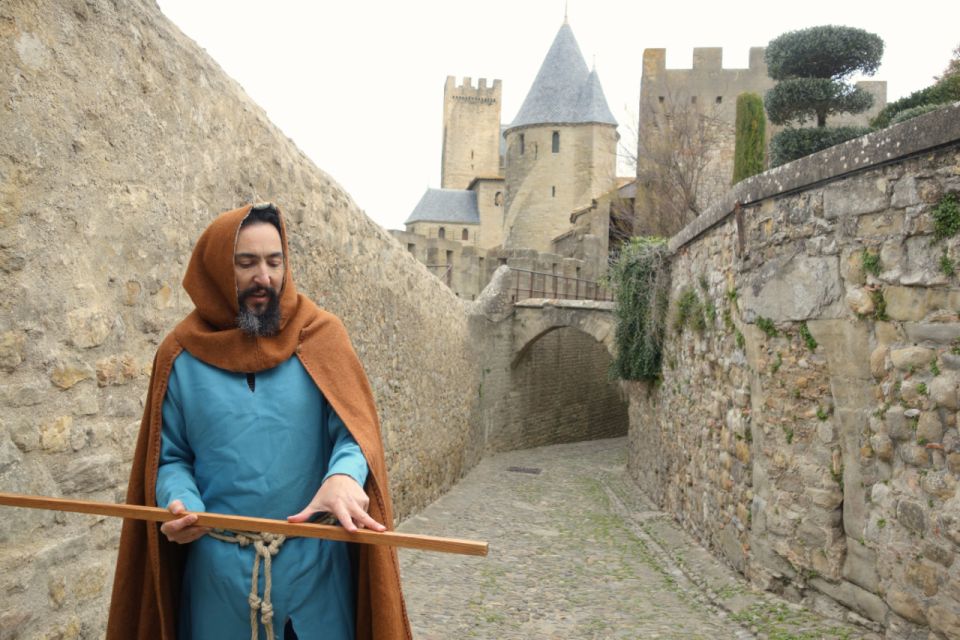
- Character-led history: Thomas plays Guilhem, a 13th-century builder, bringing the city to life through anecdotes.
- Designed for adults and kids: It’s built to stay engaging, even when the material is serious (like Catharism).
- Fortification-focused stops: You’ll walk key points such as the Narbonne Gate, the lices (outer walls), and the moat of the Comtal Castle.
- Exterior of the Basilica: You get a “look and learn” moment even if you’re not going inside.
- 90 minutes rain or shine: Plan for steady outdoor walking; wear comfy shoes.
- French only: Live narration is in French, so language comfort matters.
Meet Maistre Guilhem at Porte Narbonnaise
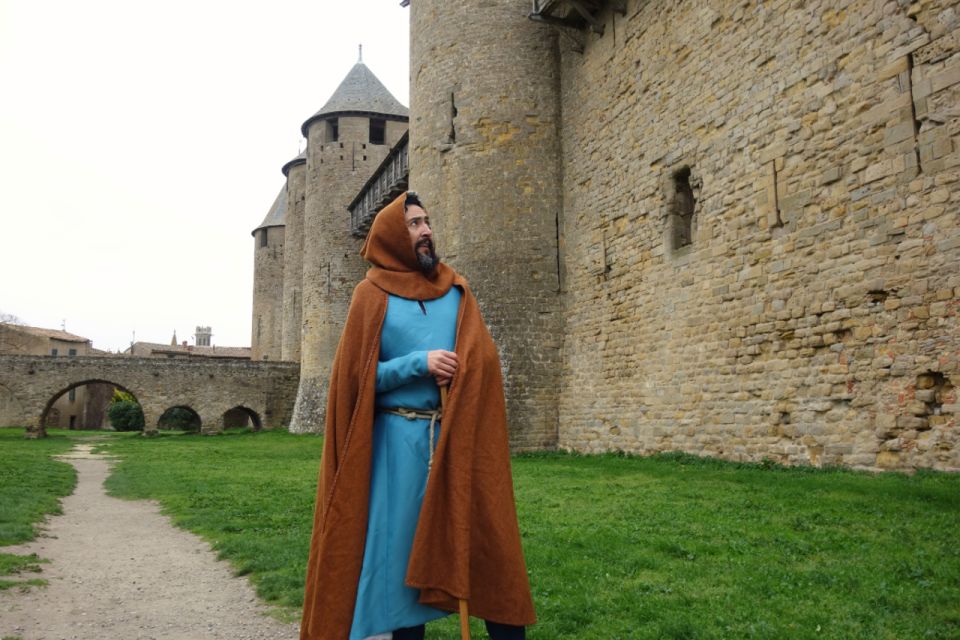
You start at a spot that’s easy to find and very on-theme: in front of the Dame Carcass statue at the Porte Narbonnaise gate. From the first minute, the tour’s tone is clear. You’re not collecting postcards—you’re lining up with the mindset of someone walking into a walled medieval city and noticing defenses, gates, and work going on everywhere.
What helps is that the guide doesn’t speak like a distant lecturer. Thomas steps into the role of Guilhem, and that makes the 13th century feel less like a textbook chapter. You get context quickly: Guilhem is presented as the son of Pierre the builder, an engineer connected to King Louis IX, and he’s also tied to an Occitan family background. That kind of personal framing gives you a thread to follow as you move from one wall and landmark to the next.
If you’re traveling with kids, this opening matters too. A character-led start gives children something concrete to latch onto: Who is Guilhem? Why is he talking like this? What does he want you to notice?
You can also read our reviews of more guided tours in Carcassonne



A 13th-century builder story, not a lecture
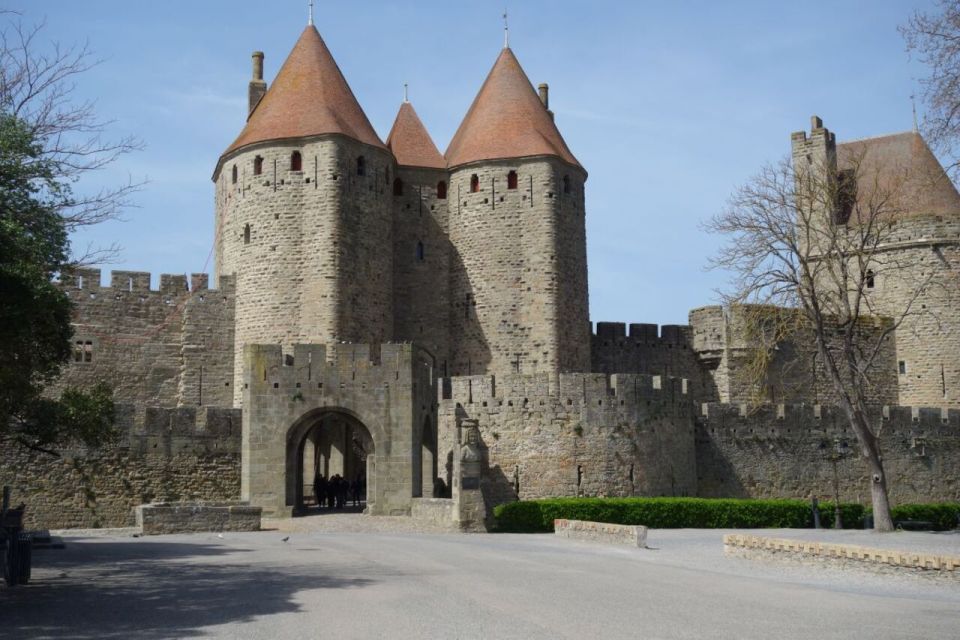
The tour’s core idea is simple: builders shaped medieval cities, and you can understand Carcassonne by understanding how construction worked. You’ll learn about daily life and the tools of a builder of the era, but it’s packaged in stories rather than a list of dates.
That packaging is what makes it work. The guide uses historical objects and an interactive style that keeps you paying attention. The tone from the character approach also helps you connect the emotional side of history—people worked hard, lived close to walls, depended on structures for safety—without needing technical engineering knowledge.
And it’s not only about stonework. The tour also weaves in Catharism through Guilhem’s perspective. You don’t get vague “medieval drama.” You get a human way to approach a hard subject: what life could feel like when beliefs, power, and public spaces collide. It’s a good balance for a 90-minute outing because it keeps the conversation moving.
Language note: since it’s a French live tour, you’ll get the best experience if you can follow at least conversational French. If you can’t, focus on the nonverbal parts: the historical objects, the costume, and the physical way the guide points things out on the walls and gates.
Narbonne Gate: the city’s message in stone
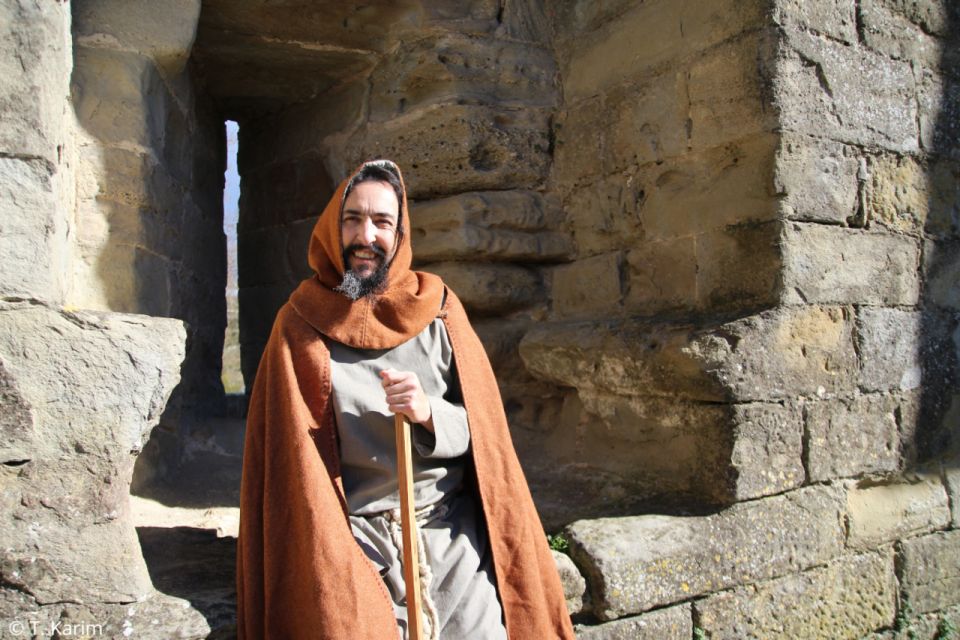
One of your key stops is the Narbonne Gate, a natural place to start if you want to understand medieval design. Gates weren’t just entrances. They were checkpoints, defenses, and symbols—built to control movement and intimidate anyone approaching.
As you stand at the gate area and hear the story, you’ll likely start noticing details that most people miss when they’re just snapping photos: how a gate sits in the broader defensive system, how the city’s layout supports protection, and how the builders would have thought about both security and daily use.
This is where the tour’s “builder” theme becomes more than a gimmick. When the guide talks like Guilhem, you’re encouraged to interpret what you’re seeing as work—something made, maintained, and upgraded. Even if you’re not a history buff, this helps you get your bearings fast.
Lices (outer walls): seeing the city as a system
Next comes the lices, the outer walls. This portion is ideal if you’ve ever looked at Carcassonne and wondered, How did all this keep people safe? Walls like these weren’t passive scenery; they were an active part of how the city functioned.
In a builder-themed tour, the walls become a lesson in construction priorities: where strength matters, how defensive lines are planned, and why so much labor goes into making barriers that have to last. The guide’s storytelling approach helps you “read” the walls as engineering and as lived environment.
This is also a good segment for anyone who likes outdoor walking with frequent points of interest. You’re not stuck in one square; you’re moving through the city’s physical logic, and the guide’s role makes the experience feel like you’re touring with an expert craftsman rather than following a script.
One practical drawback here is weather. Since the tour runs rain or shine, the outer-wall segments can feel slippery or cold in bad conditions. Wear shoes you trust on stone surfaces, and consider a light rain layer even if the day looks decent.
Moat of the Comtal Castle and the Catharism thread
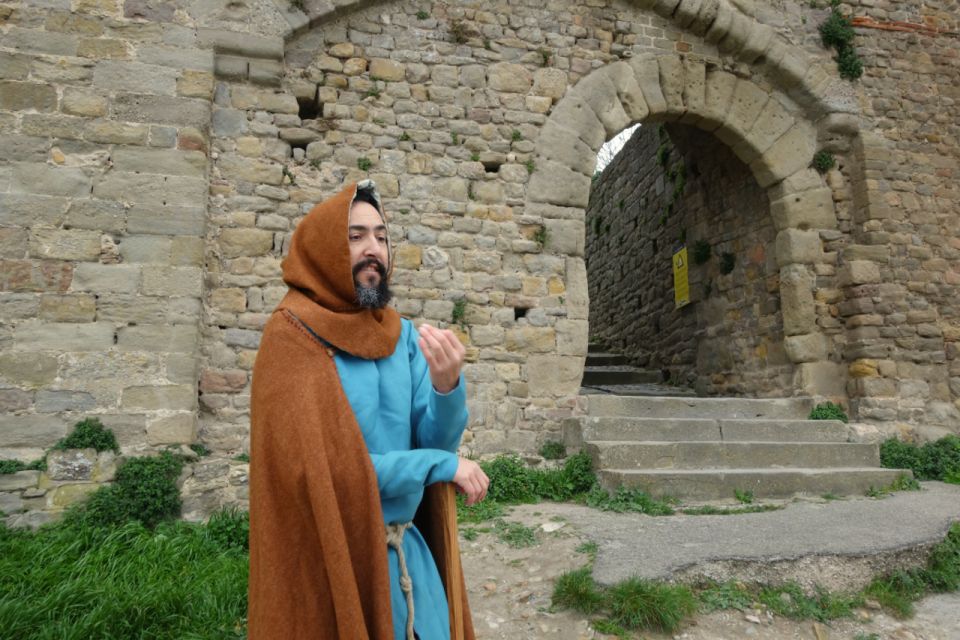
The moat of the Comtal Castle is one of the most visually clear defensive features you’ll see. It’s a place where the builder’s mindset clicks: barriers weren’t just for show. They were there to slow, redirect, and protect, forcing anyone approaching to deal with obstacles before reaching the inner structures.
What I like about placing the story here is that it gives weight to the historical talk. When the guide shifts toward the history of Catharism through Guilhem’s perspective, the setting supports the emotional tone. You’re surrounded by the kinds of spaces where power, authority, and public life intersect. That makes the conversation feel less abstract.
In other words, the moat isn’t only a photo spot. It’s a “pause point” where you can connect political and religious tensions to the physical reality of medieval life: control, surveillance, and the way walls shape what people can do.
If you’re traveling with kids, this is usually the part where attention stays focused. Even young visitors understand moats and defenses visually. Then the guide can layer in the heavier topic without losing the room.
You can also read our reviews of more city tours in Carcassonne




The Basilica exterior: learning what to notice without going inside
You also get the exterior of the Basilica. Even without an interior visit here, the stop is useful because it teaches you how to look at Carcassonne as a place where spiritual life and civic life were both built with intention.
This section works best if you’re the type who enjoys “visual reading” of architecture. The guide’s tone encourages you to see the relationship between grand religious spaces and the fortified city around them. In a city like Carcassonne, that contrast is part of the story.
Also, the tour stays efficient. In 90 minutes, it’s smart to include exterior viewpoints that add meaning without adding long transitions or waiting time. If you later want a separate basilica visit on your own, this tour gives you a sense of what to pay attention to.
Price and value: why $23 feels fair for 90 minutes
At about $23 per person for a 90-minute guided experience, the value is mostly in the way the tour is built. You’re not paying for transportation or a big add-on meal. You’re paying for a guide who performs in costume and uses historical objects to turn the city’s major features into story-driven learning.
That’s a worthwhile model in Carcassonne, where you can easily spend time wandering alone. A guided, thematic approach saves you from the “cool walls, what am I looking at?” problem. And because the tour covers multiple major stops—the Narbonne Gate area, the lices, the castle moat, and the basilica exterior—it gives you structured payoff without turning the day into a marathon.
So the key value question is: do you want a theme that makes the fortress city easier to understand? If yes, this price feels right. If you only want a quiet, self-paced walk and you don’t care about guided character storytelling, you might prefer a lighter walk on your own.
Who this tour suits best (and who might prefer another style)
This tour is a great fit for:
- Families with kids 6 and up, especially those who respond well to costumes and interactive objects
- Adults who like history but don’t want it dry
- Anyone interested in how medieval cities were built, maintained, and protected
In the reviews you shared, kids around ages 5 and 8 were called out as staying captivated, and that makes sense. The guide can pitch the story at multiple levels while still keeping the physical tour moving.
You might choose something else if:
- You need English-only commentary (this one is French)
- You prefer a quiet, museum-style lecture with minimal walking
- You’re traveling with very young children under 6
Practical tips for a smooth 90 minutes
Since this is rain or shine, plan like you’re walking outdoors for the full stretch. Bring a compact rain layer or poncho, and wear shoes with grip. Carcassonne’s stone can be slick when it rains.
Also, arrive a few minutes early for the meeting spot at Dame Carcass statue by Porte Narbonnaise. When you’re starting right at a gate, being punctual matters. You’ll want time to find the group before the guide launches into the story.
Finally, if you don’t speak much French, don’t panic. Keep your expectations flexible: you’ll still get value from what you see—walls, gates, moat geometry, and the guide’s pointing and demonstrations with historical objects. The tone and acting do a lot of the work even when you miss a few words.
Should you book this medieval builder-themed tour?
I’d book it if you want Carcassonne to feel like a living medieval place, not a list of monuments. The builder theme gives you a framework, and the character performance (Thomas as Guilhem) makes the 13th century easier to follow in a short time. You also get specific, high-impact stops: Narbonne Gate, the lices, the moat of the Comtal Castle, and the Basilica exterior.
Skip it if French is a barrier for you or if you’d rather wander independently without guided storytelling. And if you’re traveling with children, make sure everyone meets the 6+ requirement so the pacing and attention demands fit.
FAQ
How long is the Carcassonne medieval builder-themed city tour?
The tour lasts 90 minutes.
Where is the meeting point?
Meet in front of the Dame Carcass statue at the Porte Narbonnaise gate in Carcassonne.
What is included in the price?
You get a 1.5-hour guided tour in Carcassonne led by a professional guide wearing historical outfits.
What is not included?
The tour does not include hotel pickup and drop-off, and it does not include food and drinks.
Will the tour run in bad weather?
Yes. This tour takes place rain or shine.
What language is the live guide?
The live tour guide speaks French.
Is the tour suitable for young children and wheelchair users?
It is not suitable for children under 6 years. It is wheelchair accessible.
FAQ
Can I cancel and get a full refund?
Yes, you can cancel up to 24 hours in advance for a full refund.
Is there a way to pay later?
Yes, there’s a reserve now & pay later option, so you can book a spot and pay nothing today.
What should I bring since there’s no food included?
The tour doesn’t include food or drinks, so plan accordingly and consider bringing water if you expect to be thirsty.