REVIEW · CARCASSONNE
Carcassonne: Castle and Ramparts Entry Ticket
Book on GetYourGuide →Operated by Distributor: GetYourGuide Tours & Tickets GmbH · Bookable on GetYourGuide
One climb makes the whole place click. You’ll tour Carcassonne’s Château Comtal and walk the ramparts at your own pace, with standout stops like Bishop’s Tower and the Salle Pierre Embry window of early-1400s alabaster figures. The only real drawback: the ramparts involve steps and uneven ground, so plan for slower going if mobility is an issue.
This ticket is a smart-value way to experience the medieval city without paying for a private guide. You get a self-guided route plus a multi-language leaflet, and there’s an optional audio guide you can rent on-site for a small extra fee. If you want the most context, the audio helps—but it’s not required.
In This Review
- Key highlights to look for
- Where your Carcassonne visit starts (and why it matters)
- The self-guided route: what you’ll cover in a day
- Château Comtal courtyards: where the fortress story begins
- The Salle Pierre Embry window: why that alabaster detail isn’t just decoration
- Bishop’s Tower climb: the wall-straddling view you’ll remember
- Archaeological museum: connect Roman roots to medieval defenses
- Ramparts loop: how to time the walk for the best views
- Audio guide (optional): when €3 is money well spent
- Price and logistics: getting value for about $15
- Who should book this ticket (and who might want a different plan)
- Should you book this Carcassonne castle and ramparts ticket?
- FAQ
- What’s included with the Carcassonne castle and ramparts entry ticket?
- Is an audio guide included?
- How long should I plan to spend?
- Where is the meeting point?
- What do I need to bring for entry?
- Are there days or times when parts of the site are closed?
- Can I bring a stroller, bike, or large luggage?
- Are animals allowed inside?
- Is the site accessible for people with limited mobility?
- Are there free entry options?
- Is the ticket refundable?
Key highlights to look for
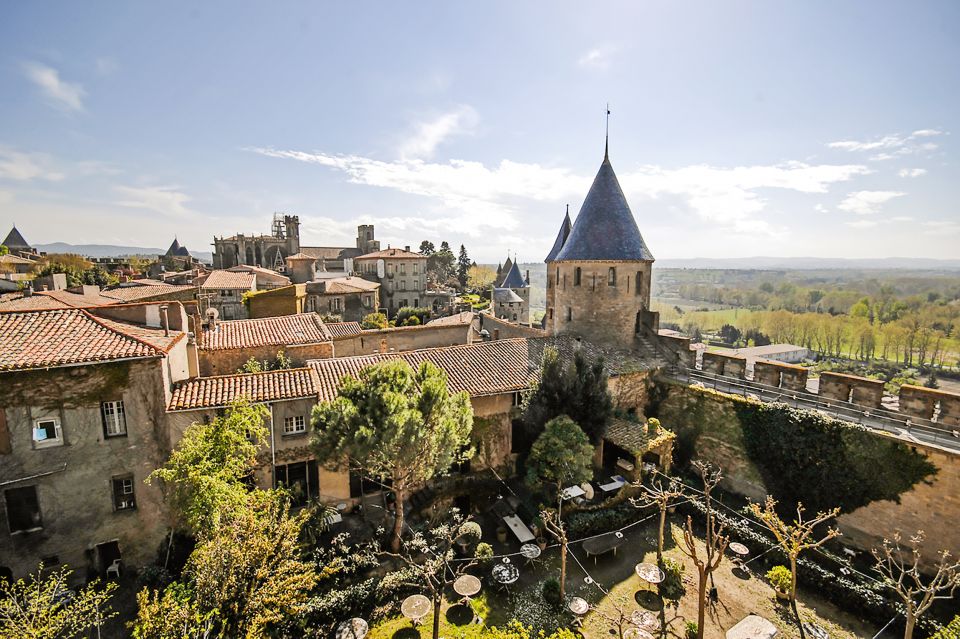
- Bishop’s Tower climb: the only construction that straddles both city walls
- Salle Pierre Embry window: three polychrome alabaster statues from the early 15th century
- Ramparts loop views: multiple viewpoints over the walled city and surrounding countryside
- Castle courtyards + museum: connect Roman roots to later fortress design
- Optional audio guide for €3: good added context if you like story-based explanations
Where your Carcassonne visit starts (and why it matters)
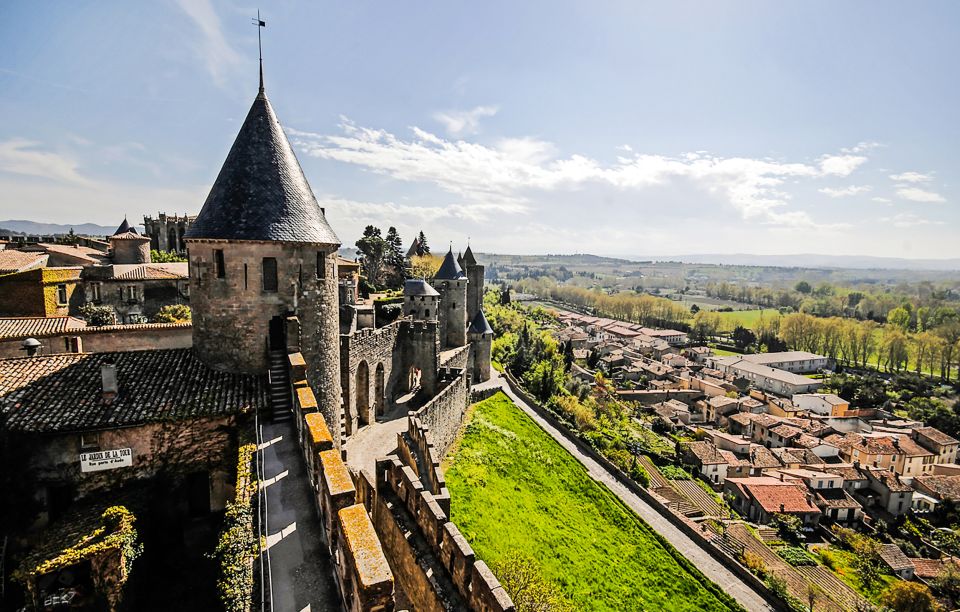
Your entry point is the Château et Remparts de la Cité de Carcassonne at 1, rue Viollet-le-Duc (11000 Carcassonne). This is the practical heart of the medieval site, so once you’re in, you’re not bouncing around town chasing landmarks. It’s designed so you can do the castle portion and then shift into the ramparts walk without backtracking.
I like that this ticket is built around a self-guided route. It fits real life: you can pause for photos, duck into shaded areas when the weather turns, and linger where something grabs your attention. Also, the group size is limited (up to 10), which usually means less crush at key entry points than you’d expect at a major attraction.
Quick heads-up: the site closes at 4:00 PM on December 24 and December 31, so you’ll want an earlier start those days. And if you’re planning your trip around holidays, some dates are closed entirely (more on that in the FAQ).
You can also read our reviews of more tours and experiences in Carcassonne.



The self-guided route: what you’ll cover in a day
This is a 1-day ticket, and it’s set up for an at-your-own-pace visit. You’re not tied to a guided schedule inside the monument, but the day still has a natural flow: courtyards and castle spaces first, then ramparts for the big exterior experience.
Here’s what your ticket includes:
- Self-guided access to the castle courtyards and the archaeological museum
- Self-guided access to the ramparts
- A leaflet available in many languages (including English, French, Spanish, Portuguese, Dutch, Japanese, Chinese, Russian, and Polish)
The ramparts portion is the classic “medieval city from the outside” moment. A useful pacing tip: plan about 30 minutes for the ramparts walk, but don’t treat that as a rule. If you stop for photos, read signs, or take your time climbing to viewpoints, you’ll easily go longer.
Also, there’s a newer self-guided addition focused on medieval western ramparts, so you can look for those standout vistas as you work your loop.
Château Comtal courtyards: where the fortress story begins
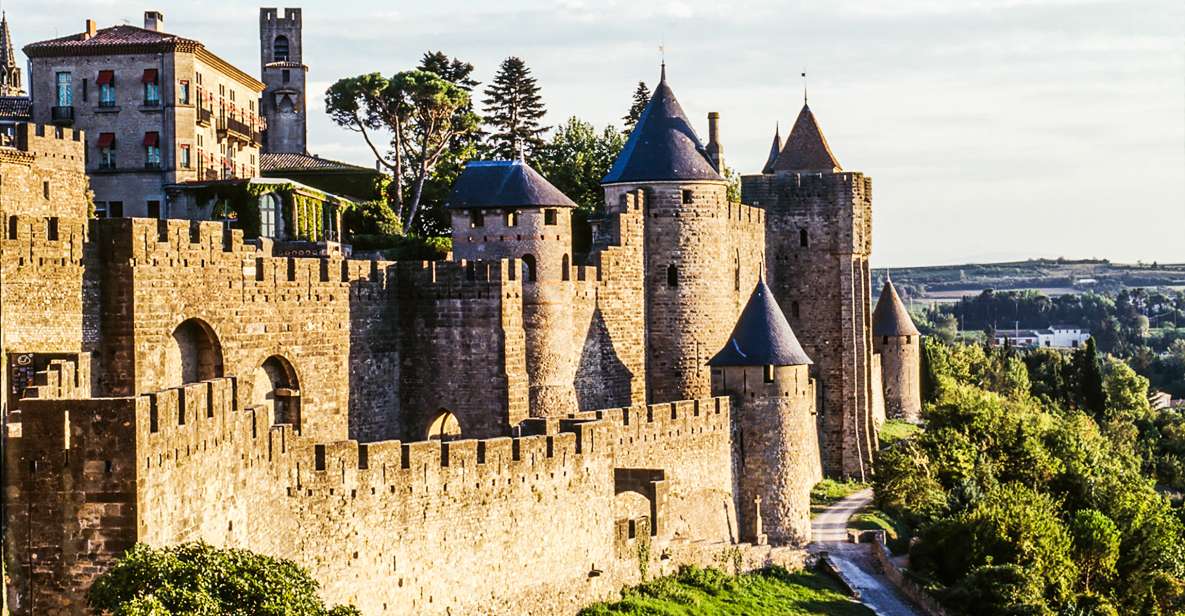
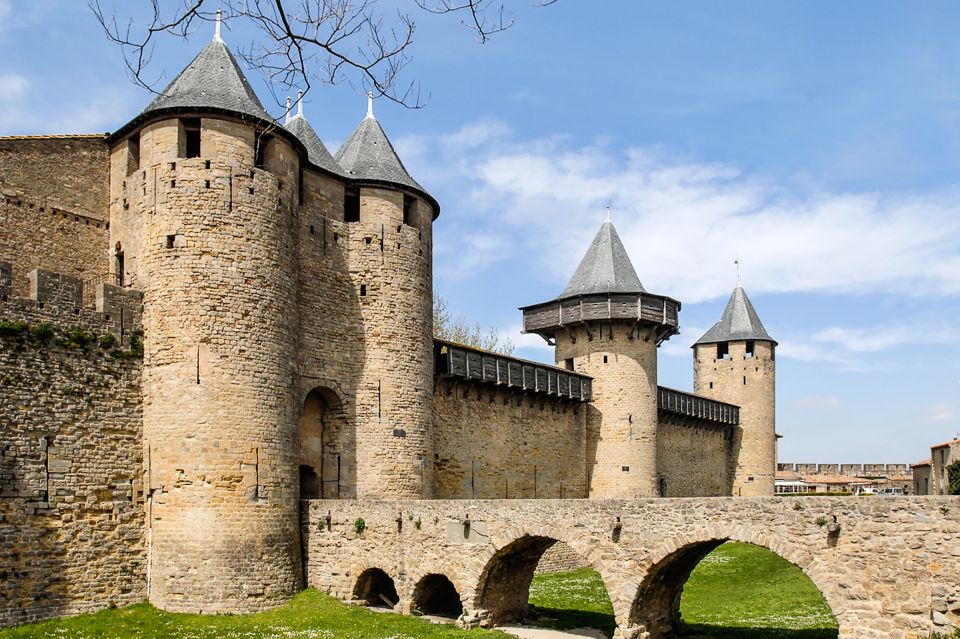
Even if you’ve seen Carcassonne photos before, the Château Comtal area makes the whole thing feel real. You’re stepping into a fortified power base tied to one of the most influential French families, and you can feel that in the way spaces are arranged and built for defense.
I find courtyards especially valuable because they let you orient yourself. From these areas, you start noticing how the castle and city walls work as one defensive system rather than separate sights. It’s also where the scale hits: this is not a “quick look then leave” stop. You’ll want time to walk, look up, and understand the geometry.
One practical drawback: surfaces are historic, not designed for modern comfort. You’ll likely deal with uneven ground in places, plus plenty of stairs if you head up towers and ramparts.
The Salle Pierre Embry window: why that alabaster detail isn’t just decoration
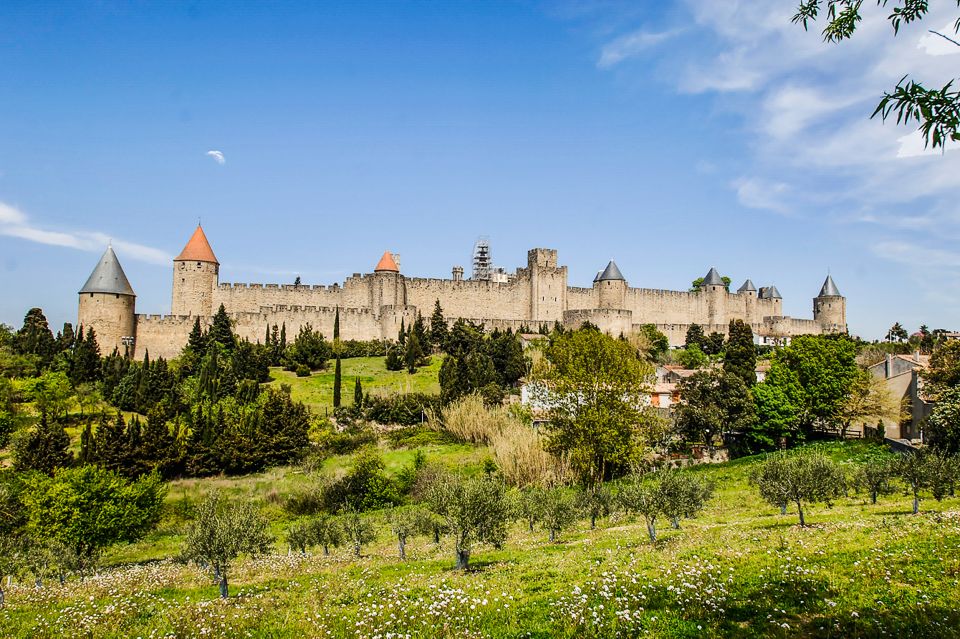
One stop I’d circle on your mental map is the Salle Pierre Embry. The reason it’s so memorable is specific: it features a window composed of three polychrome alabaster statues from the early 15th century.
That sounds like a museum fact, but here’s why it matters when you’re actually there. This isn’t just pretty stone behind glass. It connects you to the period when the fortress was not only a military machine—it was also a place for ceremony, art, and identity. When you see the statues in situ, you understand how medieval power expressed itself beyond walls and weapons.
Also, the early-15th-century date makes a nice timeline anchor. Carcassonne’s defensive story starts long before, but moments like this remind you that people lived, worshipped, and displayed wealth inside the fortifications.
Bishop’s Tower climb: the wall-straddling view you’ll remember
If you do just one “active” thing, make it Bishop’s Tower. It’s famous for a very exact reason: it’s the only construction that straddles both city walls.
That’s the kind of detail you usually only get from a real visit—standing there and noticing how the architecture overlaps. It’s not only a climb; it’s a way to understand how the city’s defenses were engineered as a system. From up top, you’ll also get a better read on the fortress layout, including how the ramparts connect back into the broader circuit.
A consideration before you commit: rampart walking involves stairs and uneven surfaces, and there can be steep sections. The good news is that you can often exit the ramparts at various points if needed, which helps if you’re dealing with mobility or fatigue.


Archaeological museum: connect Roman roots to medieval defenses
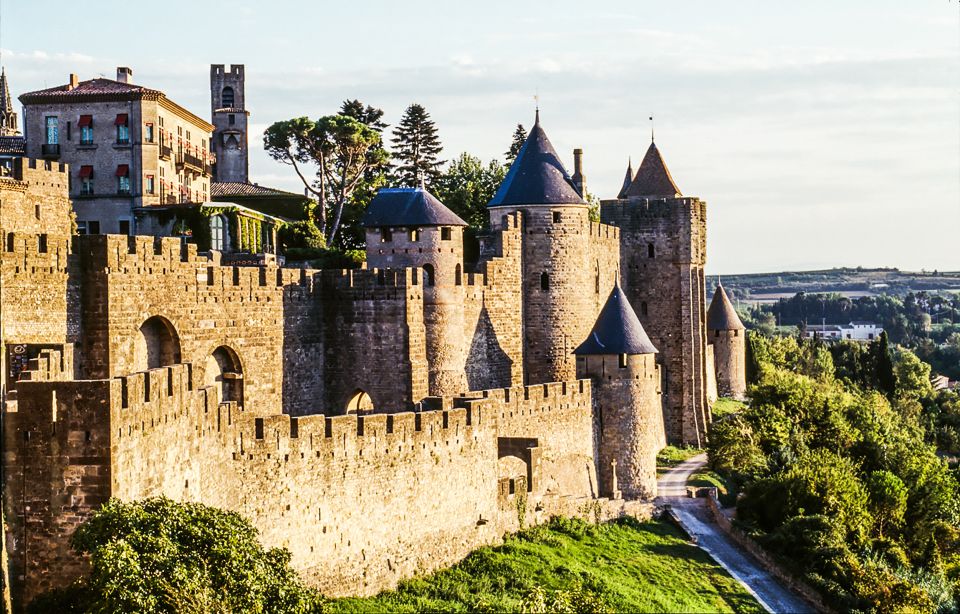
The archaeological museum is worth your time because it helps explain how Carcassonne became what you’re seeing today. You’re not starting from a blank slate in the Middle Ages—this town had earlier layers going back to Roman times, and even deeper roots before that.
I like this museum approach because it prevents the “I saw walls, now I’m done” problem. You’ll see the city as something that grew and transformed: early settlement, Roman importance, then fortification phases that shaped later medieval siege tactics.
This is also where the restoration story clicks. Carcassonne was left in ruins after the Cathar Crusade (1209–1229), followed by the Inquisition and the exile of the Trencavel family. Later, the French state commissioned restorations in the 19th century under Eugène Viollet-le-Duc, with work completed in 1911 under his pupil Paul Boeswillwald. That restoration is part of why the fortress looks so coherent today—and why UNESCO eventually listed the city.
Ramparts loop: how to time the walk for the best views
The ramparts are where Carcassonne feels cinematic. You’re above the city, looking outward over the surrounding countryside while the medieval walls frame the view. And because the route moves along the defensive perimeter, you get a steady stream of new angles instead of one “big photo spot” and then done.
One practical tip from the ground: plan to do the ramparts with enough time to enjoy it slowly. When the site is less crowded, the walk is much more relaxing—especially because ramparts can feel tight in some sections. If you go later, you may hit queues at castle areas and more foot traffic on the way up and around.
Timing can also matter for closing hours. The Château portion can close before parts of the ramparts, so I’d prioritize the castle area first, then shift into the ramparts while you still have daylight to enjoy views.
Also note: there’s a specific ramparts closure tied to fireworks on July 14, so if you’re traveling then, double-check what’s open.
Audio guide (optional): when €3 is money well spent
This ticket doesn’t include the audio guide, but you can rent one on-site for €3. The payoff is clear if you like understanding what you’re seeing without stopping to read everything.
What I’d do if you’re on the fence:
- If you enjoy explanation-driven visits, rent it.
- If you prefer just wandering with basic signage, you can skip it and still get plenty of context.
A detail that helps avoid stress: some audio setups require you to leave your ID to rent the headset. Also, the audio route can feel a bit jumpy if a segment ends while you’re mid-step. One visitor noted the recording can abruptly stop and move to the next part, which is annoying if you like a perfectly smooth narrative.
If you rent audio, take a minute early to confirm you’re starting at the right place. Once it’s working, it’s a great way to turn walls and towers into a clear story.
Price and logistics: getting value for about $15
At around $15 per person, this ticket is decent value because it gives you access to multiple major components: castle courtyards, archaeological museum, and ramparts. You’re not paying only for one highlight; you’re paying for a whole medieval circuit you can experience at your pace.
It’s also the right kind of “time saver.” People often face slow entry lines at busy attractions, and having a pre-booked ticket helps you skip the line and get inside faster. Given that the ramparts and castle are the whole point, saving time at entry is meaningful—especially in peak months.
A few on-site rules to keep your visit smooth:
- No scooters, bicycles, helmets, non-folding strollers, or large luggage inside the Château Comtal or on the ramparts
- Animals aren’t allowed inside the monument
- Bring passport or ID card and cash
One more practical note: ticket validity is 1 day, and you may need to check availability for starting times. For certain free-entry categories, you’ll need to pre-book a timeslot (the official site is www.remparts-carcassonne.fr).
Who should book this ticket (and who might want a different plan)
I think this works best for you if:
- You want a self-guided day where you can go at your own speed
- You care about architecture and fortification details, not just quick sightseeing
- You’d like to see both the castle interior spaces and the exterior ramparts circuit
It may be less ideal if:
- You need very low-stairs, flat walking. The monument is accessible to people with limited mobility for the Barbican and main courtyard, but the ramparts involve climbing and stairs.
- You want a guided explanation. This is self-guided by design, so you’ll rely on leaflet signage and optional audio.
If you’re traveling with kids, plan for frequent breaks and keep your pacing flexible. The ramparts walk can take longer than you think once you stop for views and photos.
Should you book this Carcassonne castle and ramparts ticket?
Yes, if you want the essentials of Carcassonne’s medieval defense story in one efficient visit. The Bishop’s Tower detail and the Salle Pierre Embry window give you specific, memorable “I’m really here” moments, and the ramparts deliver the views that make Carcassonne famous.
If you’re the type who likes context, I’d strongly consider renting the audio guide for the small added fee—it turns the walk into a clearer timeline. If you’re budget-minded and comfortable reading signage, you can still have a great day with the leaflet.
Just go in knowing you’ll climb and walk. Start with the château area before it closes, then work your way to the ramparts. If you do that, you’ll leave with the fortress story locked in, not just a handful of photos.
FAQ
What’s included with the Carcassonne castle and ramparts entry ticket?
You get a self-guided tour of the castle courtyards, the archaeological museum, and the ramparts, plus a leaflet available in multiple languages.
Is an audio guide included?
No. The audio guide is not included, but you can rent one on-site for a fee of 3 Euros.
How long should I plan to spend?
The ticket is valid for 1 day. The ramparts walk takes about 30 minutes for many visitors, but you should plan extra time if you want to stop for views and photos.
Where is the meeting point?
Chateau et Remparts de la Cite de Carcassonne, 1, rue Viollet-le-Duc, 11000 Carcassonne.
What do I need to bring for entry?
Bring passport or ID card and cash.
Are there days or times when parts of the site are closed?
The monument is closed on January 1st, May 1st, and December 25th. The Ramparts close on July 14 due to fireworks. Also, the attraction closes at 4:00 PM on December 24th and December 31st.
Can I bring a stroller, bike, or large luggage?
No. Scooters, bicycles, helmets, non-folding strollers, and large luggage are not permitted inside the Château Comtal or on the ramparts.
Are animals allowed inside?
No, animals are not allowed inside the monument.
Is the site accessible for people with limited mobility?
Yes, the monument is accessible to people with limited mobility, including the Barbican and main courtyard. The ramparts involve steps and may be challenging.
Are there free entry options?
Yes. Entrance is free for those under 18 and for EU citizens under 26 (with valid ID). It’s also free on the first Sunday of January, February, March, November, and December, and during European Heritage Days (3rd weekend of September).
Is the ticket refundable?
No. This activity is non-refundable.