REVIEW · CARCASSONNE
Carcassonne: Viollet-le-Duc’s medieval city
Book on GetYourGuide →Operated by Marion Quart · Bookable on GetYourGuide
Carcassonne’s fortified Cité is the star here, especially the Porte Narbonnaise, where layers of old construction meet Viollet-le-Duc’s 19th-century restoration work. I like that this private walk takes you beyond a quick photo stop, leading through the ramparts, narrow lanes, basilica, and château setting in just 90 minutes.
I also like the small private-group format, which gives you room to ask questions and set the pace within the time available. Guide Marion Quart is the named guide, and a January 2025 booking gave her a perfect rating for a great time together. The main drawback is that the tour does not include rampart access or château admission, and the steep, uneven setting is not suited to wheelchair users, people with mobility limits, or anyone with a low fitness level.
In This Review
- Key points to know before you book
- Starting at the Porte Narbonnaise and Dame Carcas
- Reading the ramparts from the outside
- Walking the narrow medieval lanes
- Saint-Nazaire-Saint-Celse Basilica and its stained glass
- Reaching the château comtal and the Trencavel connection
- What the 90-minute format does well
- Extra attractions and what is not covered
- Who will get the most from this Carcassonne walk
- Is the $165 private price good value?
- Should you book this Carcassonne experience?
- FAQ
- Where does the Carcassonne tour meet?
- How long does the experience last?
- What languages are available?
- Is this a private tour?
- Does the tour include entry to the ramparts?
- Is château comtal admission included?
- Can people using wheelchairs join the tour?
Key points to know before you book
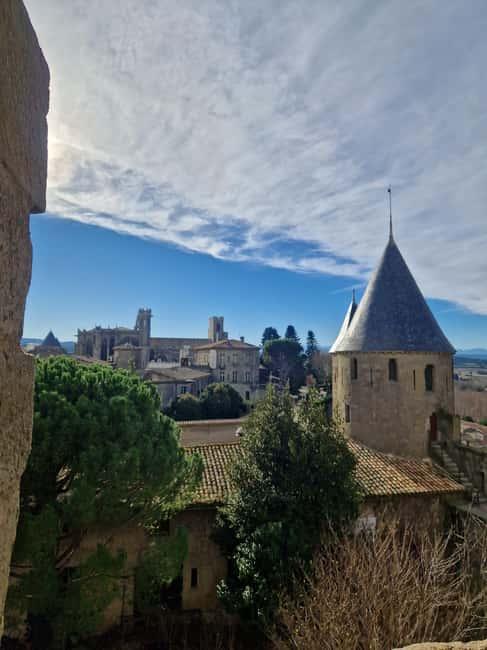
- Start at Dame Carcas: Meet in front of the statue, beside the Porte Narbonnaise.
- See both major gates: The route includes the Narbonnaise Gate and the West Gate.
- Walk the fortified exterior: You will examine the ramparts from outside, not enter the rampart walkways.
- Visit the basilica: Saint-Nazaire-Saint-Celse combines Romanesque and Gothic design with stained-glass windows.
- Finish near the château comtal: You will see the Trencavel stronghold from outside, with possible entry for an additional €13.
- Private for up to 20 people: The $165 group price can offer good value for a family or larger party, though a big group may feel less intimate.
Starting at the Porte Narbonnaise and Dame Carcas
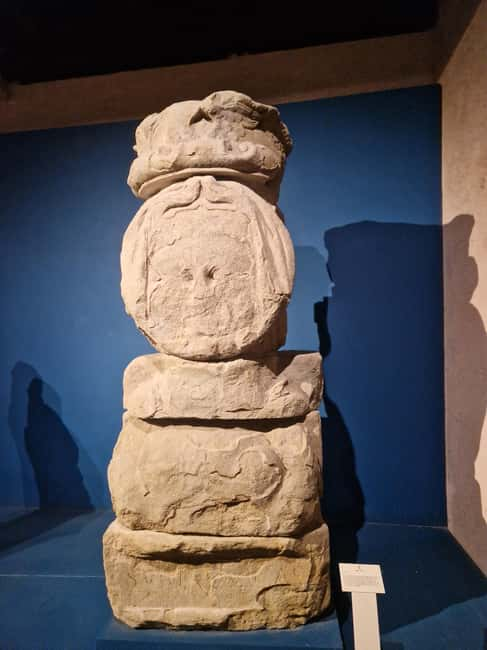
The meeting point is easy to identify: in front of the statue of Dame Carcas. This legendary figure gives Carcassonne one of its best-known stories, tied to the city’s defense against invasion. You begin at the right place, since the Porte Narbonnaise is both a major entrance and a strong introduction to the Cité’s military design.
From here, you can study the outer defenses and see how different building phases fit into the same fortified ensemble. The architecture is not presented as one perfectly uniform project. Older construction remains visible beside later work, which helps you read the walls as a series of changes rather than a single frozen medieval scene.
That is one of the tour’s real strengths. A quick walk through Carcassonne can leave you admiring the turrets without understanding how the city was built to protect itself. This visit gives you a chance to look at the gates, walls, and defensive arrangement as practical structures.
The Porte Narbonnaise also gives you a clear sense of arrival. You are not being dropped into a generic old town. You are entering a planned fortified city, and the first stop sets up the rest of the walk.
You can also read our reviews of more city tours in Carcassonne


Reading the ramparts from the outside
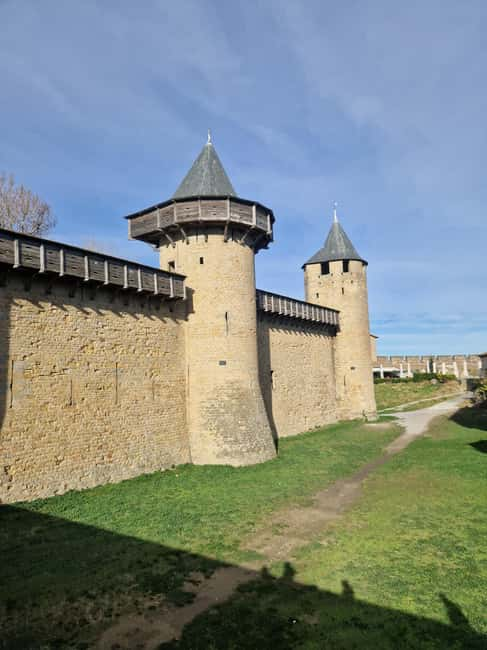
The tour includes an exterior visit to the ramparts. This distinction matters. You will see and discuss the walls, but access to the rampart walk itself is not included.
That may disappoint you if you were hoping for a walk along the battlements. Still, the outside view has its own value. The walls are the most visible part of Carcassonne, and from ground level you can better appreciate their height, gates, towers, and changing construction phases.
The wording around the restoration is also worth keeping clear. Viollet-le-Duc shaped the architectural appearance of the medieval city, but the walls also contain older elements. The result is a city that brings together ancient construction and a later vision of medieval defense.
Your guide can help separate those layers as you move around the exterior. Without that context, it is easy to treat every stone as belonging to the same period. With only 90 minutes, this portion is necessarily selective, but it gives you a useful framework for the rest of the visit.
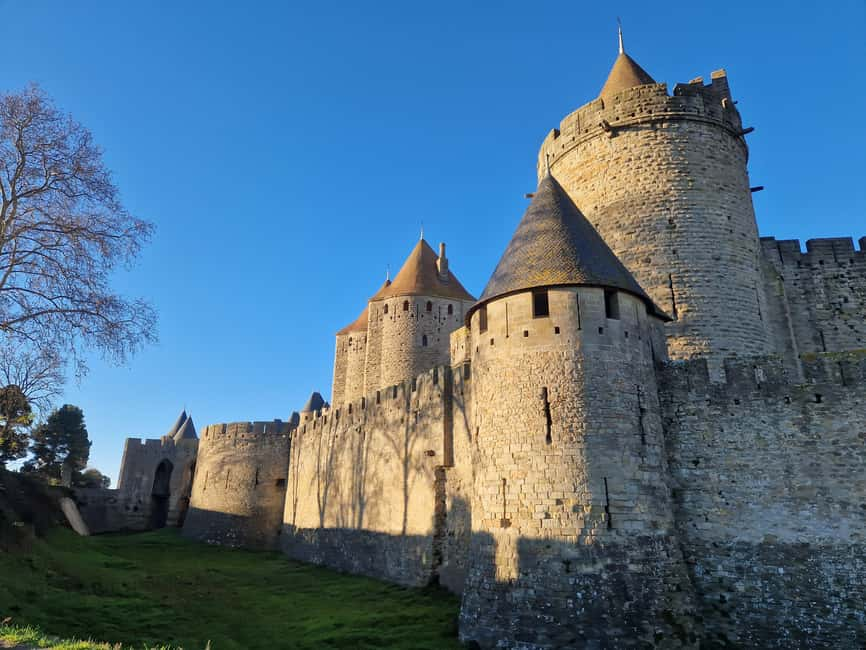
The route includes the West Gate as well as the Narbonnaise Gate. Seeing both helps you compare the city’s entrances instead of focusing on only the most famous one. It also adds variety to a tour that might otherwise be mostly a single circuit around one section of the walls.
Walking the narrow medieval lanes
After the outer defenses, you head into the Cité through one of its typical medieval lanes. This change in scale is important. The exterior walls are broad and imposing, while the lanes bring you into the daily human setting of the fortified city.
You will walk narrow streets toward the center, with the route focused on the character of the Cité rather than on a long list of shops or modern stops. The short walk gives you a chance to see how the defensive city becomes a lived-in urban space.
I like this part because it keeps the tour from becoming a wall-only inspection. Carcassonne’s appeal comes from the contrast between its grand defenses and its intimate lanes. The route lets you experience both within a compact visit.
The narrow streets may also be the point where the tour feels most demanding. The activity is not suitable for people with mobility impairments or wheelchair users, and it is also not recommended for people with a low level of fitness. The supplied details do not specify the exact surface or slope of every section, so you should plan for a historic setting that may require comfortable walking.
Saint-Nazaire-Saint-Celse Basilica and its stained glass
The basilica is one of the main interior stops. Its formal name is the Basilica of Saint-Nazaire-Saint-Celse, and it is described as part Romanesque and part Gothic. That combination gives you a useful visual lesson in changing architectural styles within one building.
Rather than seeing a church as one complete design, you can look for the contrast between the heavier Romanesque character and the later Gothic work. The tour presents the basilica as a place where the building’s design and its religious imagery work together.
The stained-glass windows are a key reason to include this stop. They reveal a divine story through colored images, offering a different experience from the stonework outside. After looking at walls designed for defense, you shift to a sacred interior designed to shape light and attention.
The basilica visit also gives the 90-minute route a welcome pause. Much of the walk takes place outdoors, so this stop breaks up the exterior viewing and adds a more contemplative part to the experience. You should not expect a full church history course in the available time, but you will get a focused look at one of the Cité’s most important buildings.
Reaching the château comtal and the Trencavel connection
The route continues through the lanes to the entrance of the château comtal. This is linked with the Trencavel dynasty, a name that gives the castle its political setting within Carcassonne’s story.
The standard experience takes you to the château entrance and includes an exterior look. This is another point where the booking details need careful reading. The château is not included as a complimentary admission, and the €13 ticket is extra.
A château visit may be scheduled depending on the weather and the cost of admission. If entering the château is important to you, confirm that arrangement before booking rather than assuming the 90-minute walk automatically includes the interior.
That extra ticket can be worthwhile if you want a fuller castle visit, but it changes the value calculation. At $165 for a private group of up to 20, the guided walk already covers the gates, exterior walls, lanes, basilica, and château setting. The castle admission is an add-on, not part of that group price.
If you are a larger family or party, the group rate can make sense. Divided among several people, $165 may be a reasonable way to get a private guide. For one or two people, the price is harder to justify unless personal attention and a private format matter more to you than keeping costs low.



What the 90-minute format does well
Ninety minutes is long enough to connect the main sights without turning the visit into an exhausting half-day outing. You get a clear route from the gate to the walls, lanes, basilica, and château entrance.
The tradeoff is depth. You will not have time for every section of the fortifications, an extended rampart walk, the château interior, and several extra museums. This experience works best as an orientation and architectural tour, not as a complete day inside Carcassonne.
The private format helps. Your group can focus on the parts that interest you most, within the time available, and you can ask questions without competing with a large public crowd. The group limit is generous, though. A party of 15 to 20 will not feel as personal as a group of two or four, even with a private guide.
The guide’s languages are French and English. Some content is presented in its original language, so English-speaking participants should be comfortable with the possibility that certain names, terms, or material may remain in French.
Extra attractions and what is not covered
The tour is centered on the main fortified Cité, not on every attraction inside it. You can visit the Inquisition Museum separately for €11, and the haunted house separately for €10. Neither admission is included.
These extras may suit you if you want a more specialized or theatrical look at Carcassonne. They are not essential to the central route, which focuses on architecture, religious art, gates, walls, and the château setting.
The most important exclusion is rampart access. The tour gives you an exterior visit to the ramparts, but not a visit along them. The same applies to the château: you reach and examine it, but admission costs €13 if you choose to go inside.
Keep these distinctions in mind when comparing this experience with other Carcassonne options. The advertised price buys a private guided walk, not a bundle of admissions to all the major attractions.
Who will get the most from this Carcassonne walk
I would recommend this experience to you if you want a short, guided introduction to the Cité and prefer a private group to a large scheduled outing. It is particularly useful for families, couples traveling with friends, or groups that can share the $165 cost.
You will get the most from it if architecture interests you. The route connects defensive walls, gates, a mixed-style basilica, stained glass, medieval lanes, and the Trencavel château. It is less suited to someone who mainly wants free time for shopping, photography, or a long unstructured stroll.
You should also be comfortable walking through an old fortified setting. The activity is specifically not suitable for wheelchair users, people with mobility impairments, or people with a low level of fitness. The available information does not promise step-free access or a gentler alternative.
The guide matters here because the route is compact. Marion Quart is the named provider and guide, and the available verified rating from January 5, 2025, gave the experience five out of five while highlighting the time spent with her. That is a useful sign if you value a personal guide rather than a recorded commentary, though one rating cannot tell you everything about every departure.
Is the $165 private price good value?
The answer depends on your group size. For a private party of up to 20, $165 can be a sensible group purchase because it includes a live guide, both major gates, the outside of the ramparts, the medieval lanes, the basilica, and the château exterior.
For a couple, the same price is a larger commitment. You are paying for privacy and a dedicated guide, not for a long tour or included entry tickets. If you want the rampart walk or château interior, you will need to pay extra where applicable.
The 90-minute length keeps the cost from becoming an all-day expense, but it also limits how much you see. I would call it good value for a group that wants context and a planned route, especially if you would otherwise wander past the main sights without knowing what you are seeing.
Free cancellation up to 24 hours before the activity and the option to reserve now and pay later add flexibility. They do not change the actual sightseeing value, but they can help if your South of France schedule is still shifting.
Should you book this Carcassonne experience?
Book it if you want a private, efficient introduction to Carcassonne’s fortified Cité, with special attention to the Porte Narbonnaise, West Gate, exterior defenses, Saint-Nazaire-Saint-Celse Basilica, and the château comtal setting. It is a strong fit for a group that can divide the $165 price and for anyone who wants a guide to explain the city’s architectural layers.
Skip it if you specifically want included rampart access, a full château visit, or a low-cost walk for just one or two people. Before booking, ask about arranging the château entry for €13, then meet Marion Quart at the statue of Dame Carcas ready for a brisk, focused walk through one of France’s most striking fortified cities.
FAQ
Where does the Carcassonne tour meet?
The meeting point is in front of the statue of Dame Carcas.
How long does the experience last?
The guided walk lasts 90 minutes.
What languages are available?
The live tour guide is available in French and English. Some content may be presented in its original language.
Is this a private tour?
Yes. It is offered as a private group experience for up to 20 people.
Does the tour include entry to the ramparts?
No. The experience includes an exterior visit to the ramparts, but rampart admission is not included.
Is château comtal admission included?
No. You can possibly schedule a château comtal visit depending on weather, but the €13 admission ticket is extra.
Can people using wheelchairs join the tour?
No. The activity is not suitable for wheelchair users, people with mobility impairments, or people with a low level of fitness.