REVIEW · EPERNAY
From Reims/Epernay:The Connoisseurs Private Tour 9 tastings
Book on GetYourGuide →Operated by Ay Champagne Experience · Bookable on GetYourGuide
The real appeal here is the mix of small producer visits and Champagne landmarks. You are not only sipping famous labels. You are seeing presses, wineries, and cellars, then tasting wines made by independent families in Cramant and Oger. The visit to Dom Pérignon’s church in Hautvillers and the view over the Marne Valley add useful context to every glass.
I especially like the six Champagne tastings, which can include natural wine without dosage, extra brut, old-vine Champagne, vintages, and oak-aged bottles. I also like the chance to taste Ratafia, Fine de la Marne, and Marc de Champagne, three local spirits and aperitifs many first-time visitors miss. The main drawback is the price, $320 per person, and the half-day schedule can feel tight if you want long visits at every stop.
In This Review
- Key points at a glance
- Why this private Champagne tour works
- Hautvillers and the church of Dom Pérignon
- Through the vineyards of the Marne Valley
- Cramant and the Chardonnay Grand Cru tasting
- A short pass along Epernay’s Avenue de Champagne
- Oger and three local Champagne spirits
- What the $320 price includes
- Who should book it
- Should you book this Champagne experience?
- FAQ
- Where does the tour begin?
- Where does the tour end?
- How long does the experience last?
- How many Champagnes are included?
- Are the tastings held at independent producers?
- Will I visit Hautvillers?
- Does the tour include Epernay’s Avenue de Champagne?
- Which additional drinks are included?
- What languages are available?
- Can I bring luggage or a large bag?
Key points at a glance
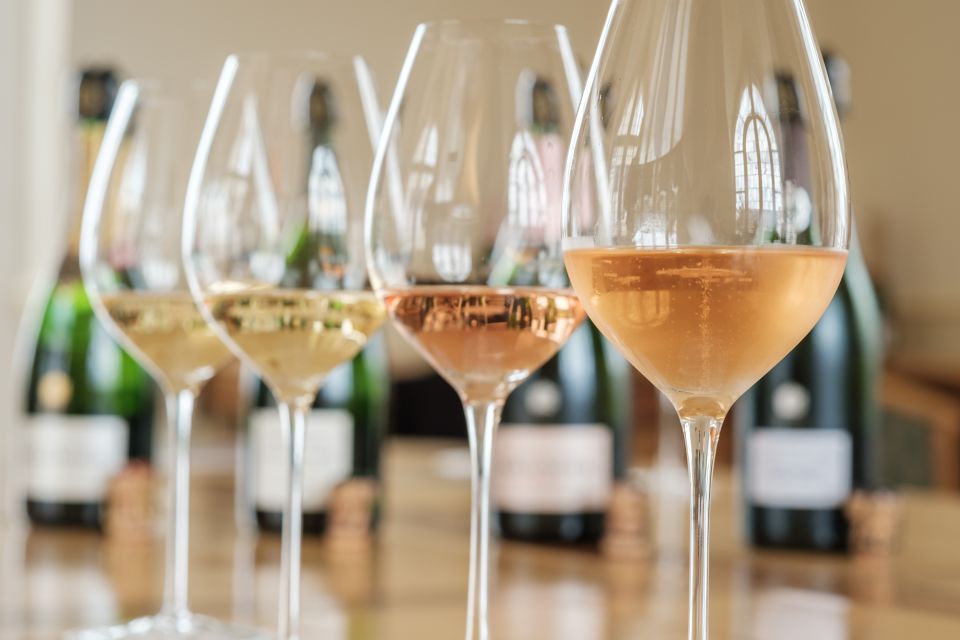
- Six serious Champagne tastings: Sample Grand Cru and Premier Cru wines in several styles, including natural, extra brut, vintage, old-vine, and oak-aged Champagne.
- Two independent producers: Visit family-run growers in Cramant and Oger, with access to presses, wineries, and cellars.
- Hautvillers with Dom Pérignon: Enter the church containing his grave and stop at a panoramic viewpoint above the Marne Valley.
- The Côte des Blancs: See the Chardonnay Grand Cru area around Cramant, one of Champagne’s most prized wine zones.
- Three local alcohols: Taste Ratafia, Fine de la Marne, and Marc de Champagne from Goyard Distillery.
- Private transport from Reims or Épernay: Pickup and drop-off are included, with English or French guiding and a choice of vehicles.
Why this private Champagne tour works
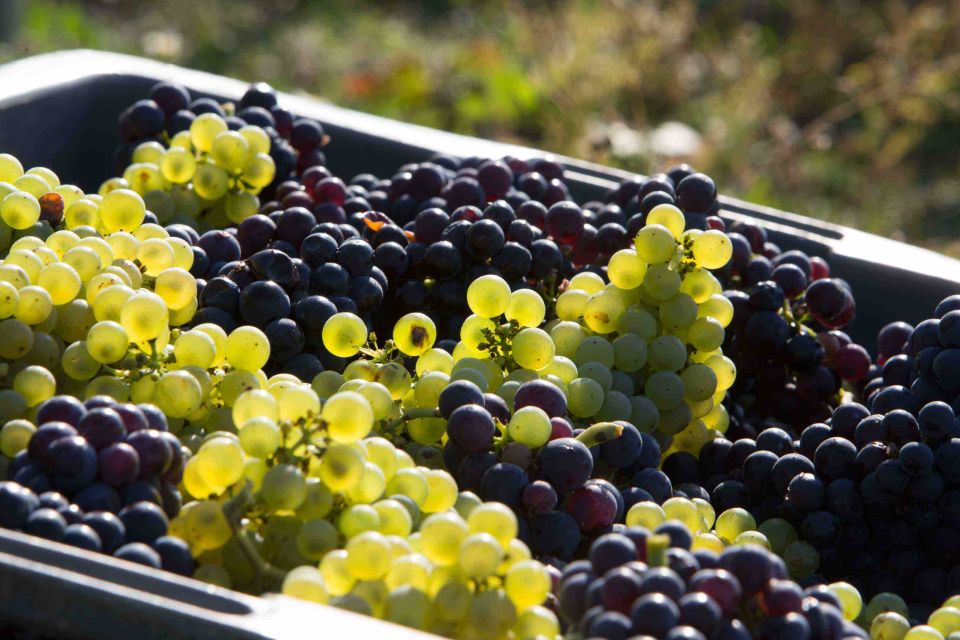
This experience is built for people who want Champagne explained rather than simply poured. Your guide drives you through the vineyards around Épernay, linking the wine in your glass to the villages, grape varieties, production methods, and family businesses behind it.
The tour lasts about three and a half to four and a half hours. That is enough time to reach several important places without giving up a full day of sightseeing. It is still a busy schedule, though. You will move from Hautvillers to the vineyards, then to Cramant, Épernay, and Oger, so this is not a slow country ramble.
The private format is a major advantage. You can ask basic questions without feeling out of place, or spend more time on technical subjects if Champagne is already familiar to you. The guides speak English or French. Svetlana is praised for being thoughtful and well versed, while Nina is noted for her patience and strong connections with local wine owners. Guide quality matters on a wine tour, and these names are useful if you have a choice when booking.
You can also read our reviews of more private tours in Epernay


Hautvillers and the church of Dom Pérignon
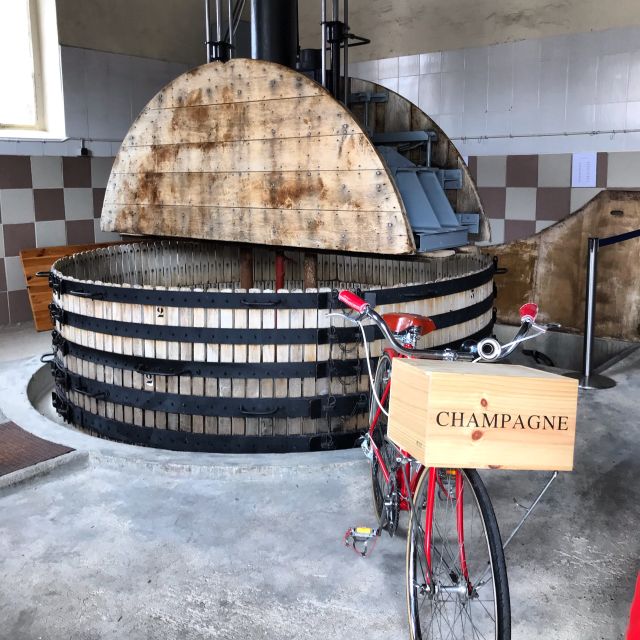
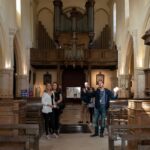
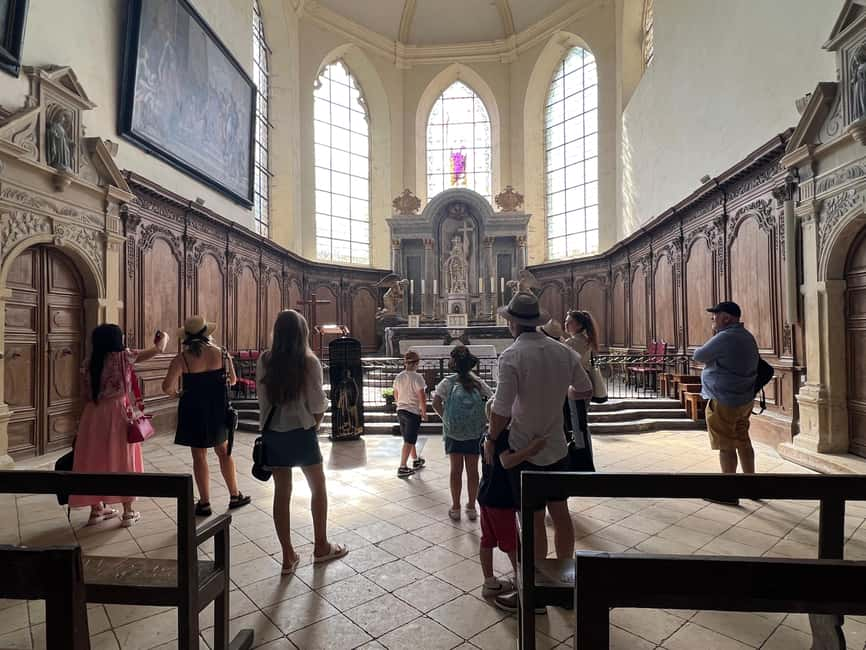
The first major stop is Abbaye Saint-Pierre d’Hautvillers, where Dom Pérignon’s grave is located. The visit lasts about 30 minutes and includes a private church tour.
Hautvillers is often called the Cradle of Champagne. Dom Pérignon worked here and is remembered as the spiritual father of the region’s wine tradition. The church visit gives the tour a human and historical anchor before you begin tasting. Instead of treating Champagne as a luxury product alone, you get a sense of the religious setting and local place tied to its development.
You will also stop at one of the finest viewpoints over the Marne Valley. The vineyards on the hillsides are listed as a UNESCO World Heritage Site, and this is the best point on the tour for photographs. You can look across the river valley and the planted slopes while your guide explains Dom Pérignon’s work, vineyard care, and the area’s approach to sustainable viticulture.
The practical catch is weather. The tour runs rain or shine, so bring a coat and shoes that can handle damp ground. The viewpoint is valuable even in less-than-perfect weather, but clear conditions will give you the strongest views and photographs.
Through the vineyards of the Marne Valley
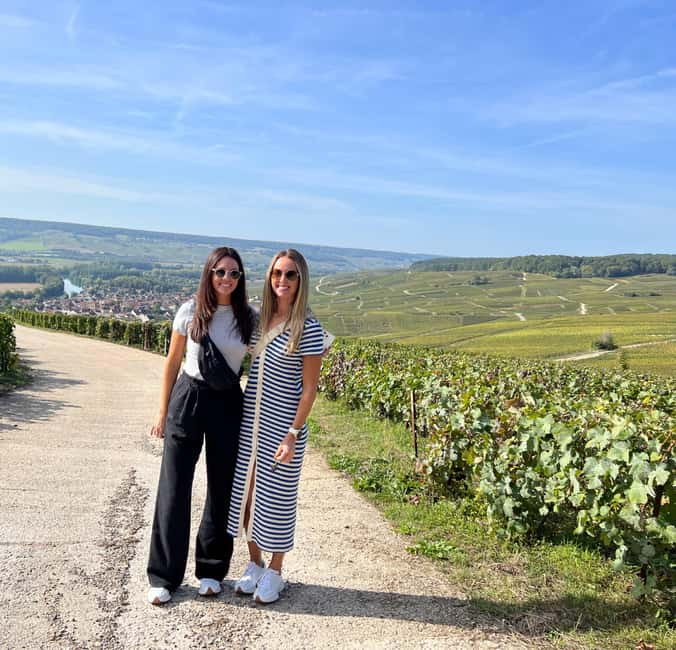
After Hautvillers, the route takes you through the Champagne countryside. The Marne Valley is associated with historic hillsides and Pinot Noir, while the Côte des Blancs is best known for Chardonnay Grand Cru. These are not just names on a wine map. They help explain why two bottles from nearby villages can taste different.
You will hear about vineyard management and sustainable growing as you pass through the villages. The guide also points out important properties along the way, including Château de Saran, an LVMH property connected with major Champagne names such as Dom Pérignon and Veuve Clicquot.
You will not be visiting Château de Saran, so keep your expectations clear. It is a passing sight, not a private palace tour. The same applies to the production site of Moët & Chandon. Still, these stops help you see the contrast between large Champagne houses and the independent producers visited later.
Cramant and the Chardonnay Grand Cru tasting
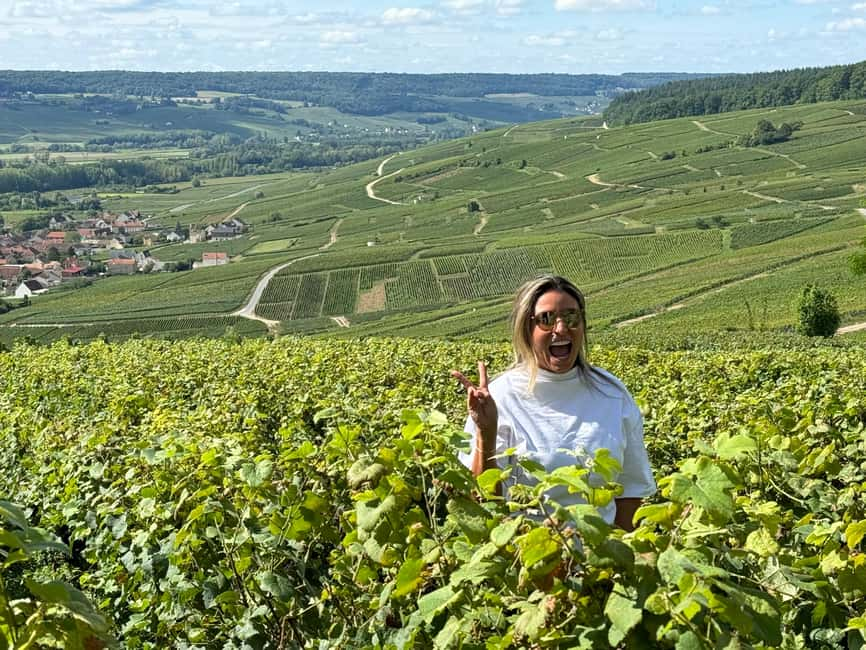
Cramant is the first producer visit and one of the tour’s strongest stops. This village sits in the Côte des Blancs, the area often described as the kingdom of Chardonnay Grand Cru.
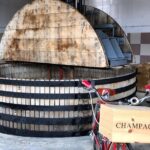
The visit takes about 75 minutes and includes a guided look at the production side of Champagne. Depending on the producer and the season, you can see the presses, winery spaces, and cellars. The point is not simply to admire equipment. Your guide explains how grapes become Champagne and how production choices affect the final style.
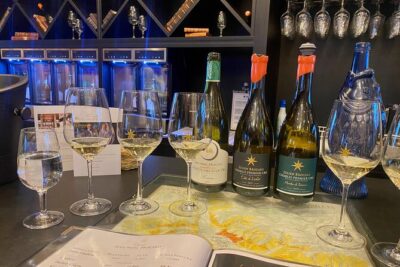
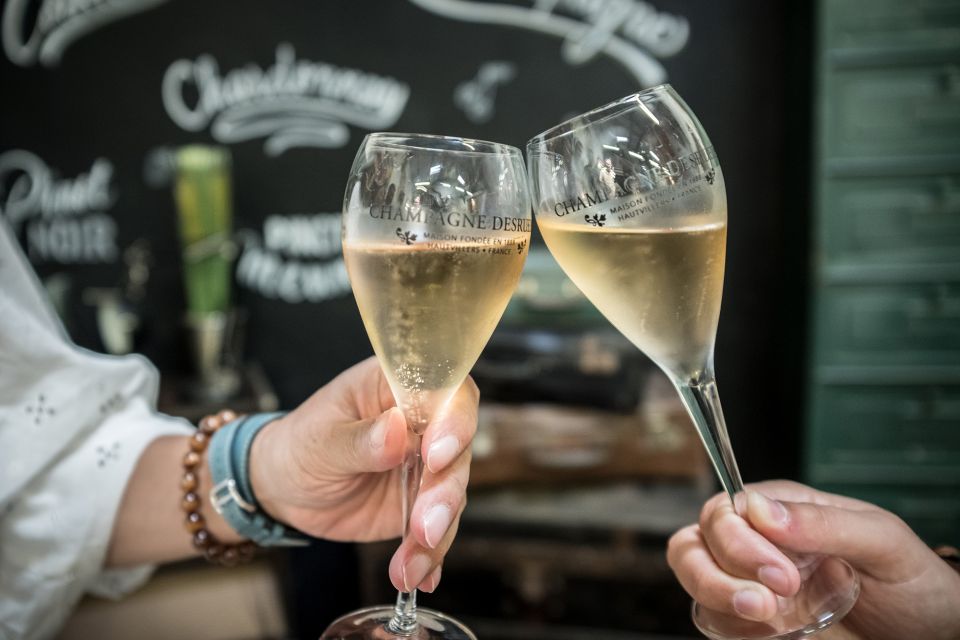
You taste several wines during the producer visits, with six Champagnes included across the day. The selection can cover Grand Cru and Premier Cru bottles, natural Champagne without dosage, extra brut, old-vine wines, vintage Champagne, and bottles aged in oak barrels.
That range is valuable because it turns tasting into comparison. A natural Champagne without dosage gives you a chance to notice the wine without added sugar at the final stage. An extra brut offers another dry style. Old-vine and vintage wines show how age and fruit source can shape a bottle, while oak-aged Champagne brings a different texture and flavor profile.
You do not need to know the technical terms in advance. Ask your guide to point out the differences as you taste. A private group makes this easier, since the tasting can respond to your interests instead of following a fixed speech for a large crowd.
The one limitation is that the exact bottles are not specified in advance. If you are searching for a particular producer or vintage, confirm before booking. This experience is designed around variety and access to independent makers, not a guaranteed bottle list.
A short pass along Epernay’s Avenue de Champagne
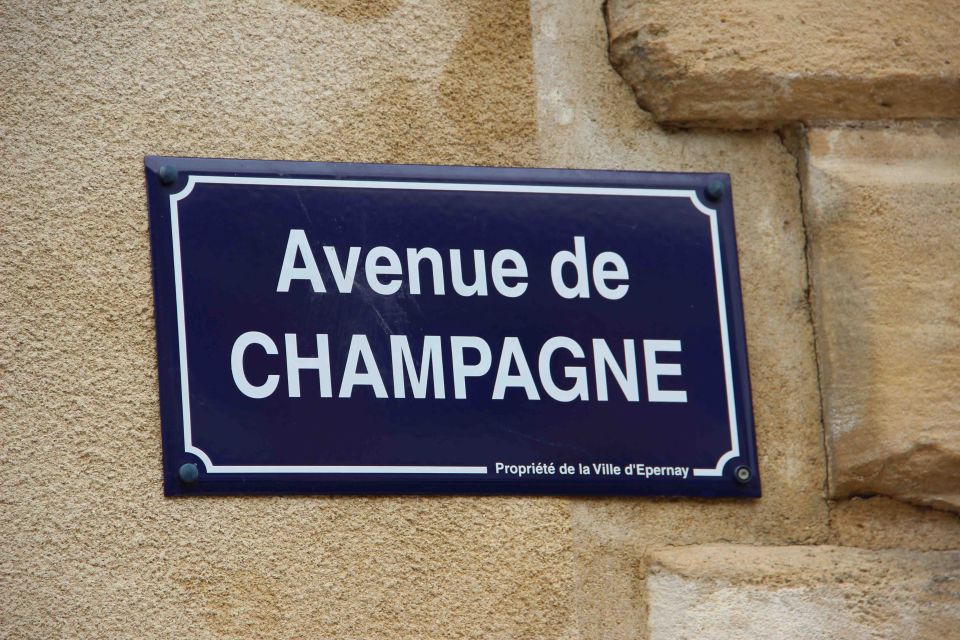
The route includes a commented 10-minute passage along Avenue de Champagne in Épernay. This famous street is lined with grand houses, mansions, and production buildings connected with names such as Moët & Chandon, Perrier-Jouët, and Pol Roger.
Ten minutes is enough for an introduction and a few photographs, but not enough for a cellar visit or a full tour of the avenue. You should think of this as a useful orientation stop. Your guide helps you understand why Épernay is considered the capital of the Champagne vineyard and how the grand houses fit into the region’s wine trade.
If you want to visit one of the large houses separately, leave time in your itinerary for another day or arrange it outside this tour. The private tour’s focus is independent producers and vineyard villages, not a full study of the major brands.


Oger and three local Champagne spirits
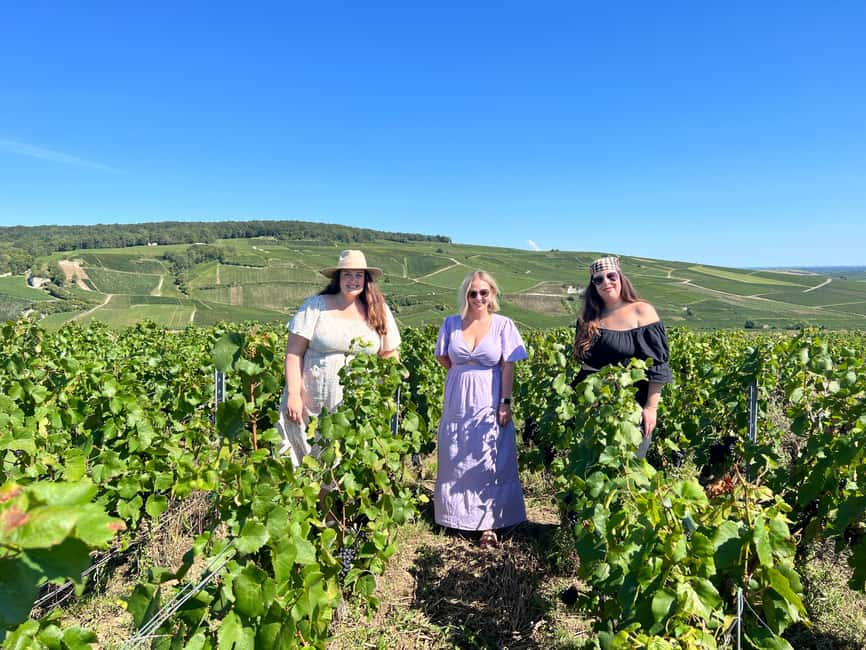
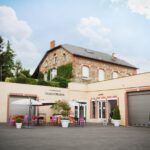
The second producer visit takes place in Oger, also within the Côte des Blancs area. Like Cramant, this stop includes a guided visit and Champagne tasting, with about 75 minutes scheduled.
Oger gives you a second look at small-scale production and lets you compare the character of another producer. This matters because one grower’s approach may differ from another’s even when both work in the same broad region. You can pay attention to dosage, aging, grape source, and cellar methods as your guide explains the bottles.
The tasting goes beyond Champagne. You also sample three important local alcohols and aperitifs:
- Ratafia, a sweet fortified aperitif made in the Champagne region
- Fine de la Marne, a regional grape spirit
- Marc de Champagne, a spirit made from grape pomace
These come from Goyard Distillery, described as the oldest distillery in Champagne. This part adds welcome variety to the day. If you only taste sparkling wine, your palate can become tired. The spirits show another side of the region’s traditions and give you a better idea of what locals may serve before or after a meal.
Take the spirit tasting seriously. Small pours can still be strong, and you may have several Champagne samples before reaching this stop. The included vehicle and driver mean you are not responsible for driving after the tastings, which is one of the clearest practical benefits of booking a private tour.
What the $320 price includes
At $320 per person, this is not a budget vineyard outing. The value comes from the package: private pickup and drop-off, a local guide and chauffeur, two producer visits, six Grand Cru or Premier Cru Champagnes, the three additional alcohol tastings, and transport between Reims, Épernay, and the villages.
For a couple or small private group, the price can make sense if you want expert attention and do not want to plan several rural stops yourself. Train connections and taxis do not make vineyard hopping simple, especially when you are tasting wine. Here, your driver handles the route and returns you to Reims or Épernay.
The value is weaker if your main goal is a long cellar tour at one famous Champagne house. You are paying for breadth, private transport, and access to independent producers, not for one grand branded visit.
Pickup is available in Reims or Épernay. In Reims, meeting points include the Tourist Office, Reims Centre station, and Reims-Bezannes TGV station. In Épernay, you can meet at the Tourist Office or train station. A hotel pickup within about 6 kilometers of either city can be requested before booking.
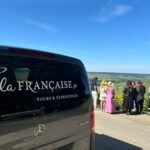
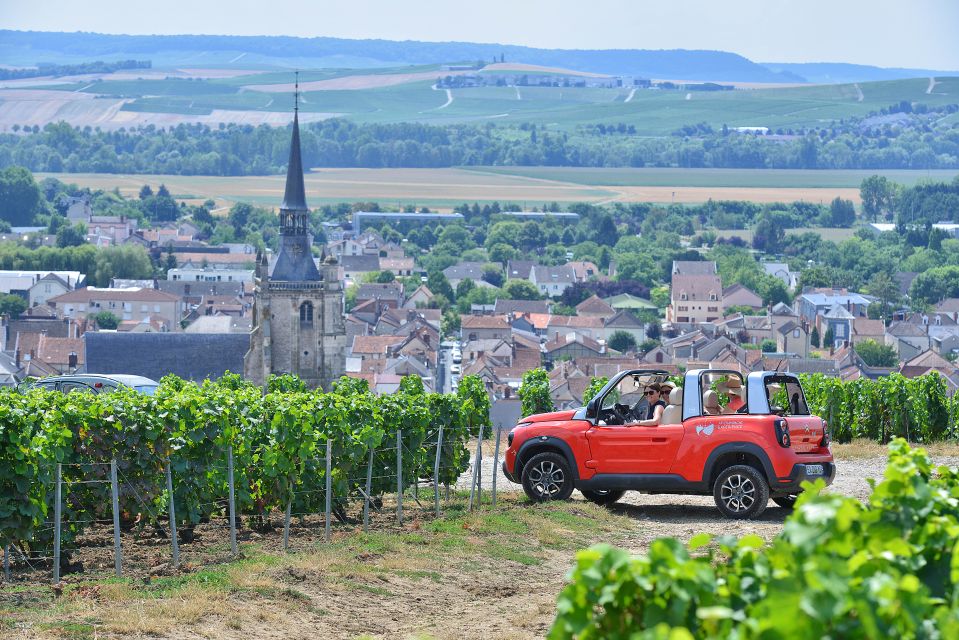
The vehicle depends on the weather, season, and group size. Options include an electric E-Mehari Jeep-style car, a premium van, and minivans. The E-Mehari vehicles are slightly raised, so tell the operator in advance if getting into a raised vehicle is difficult.
Who should book it
I would choose this tour if you want to understand how Champagne is made and prefer small independent producers to a parade of famous brand names. It suits couples, families with adult children, and private groups who want a flexible conversation with the guide.
It is also a good fit for a first visit to the region. You see Hautvillers, the Côte des Blancs, the Marne Valley, Épernay’s grand avenue, vineyard scenery, and two working producers in one outing. The route gives you a useful map of Champagne before you decide what else to explore.
Wine enthusiasts will appreciate the range of styles. The natural, extra brut, vintage, old-vine, and oak-aged examples give you more to discuss than a standard tasting of similar bottles.
I would hesitate if you use a wheelchair, since the tour is not suitable for wheelchair users. I would also avoid bringing luggage or large bags, as these are not allowed. The schedule is best for people who like a well-filled half-day rather than long, unhurried stops.
Free cancellation is available up to 24 hours in advance, and you can reserve now and pay later. Those policies help if your Reims or Épernay plans are still shifting, but the central choice remains the style of experience: private and producer-focused, rather than large-house and museum-focused.
Should you book this Champagne experience?
Book it if you want six varied Champagne tastings, independent family producers, and the cultural stops that connect the wine to Hautvillers and the surrounding villages. Svetlana and Nina are names worth noting when you want a guide who can explain the subject clearly and make introductions at the wineries.
Skip it if you want to spend most of your day inside one famous Champagne house, or if $320 feels too high for a half-day. For the right audience, the price buys convenience, access, and a well-shaped introduction to the region. You leave with more than a collection of tasting notes. You understand why Cramant, Oger, Hautvillers, and Épernay matter.
FAQ
Where does the tour begin?
You can be picked up in Reims or Épernay. Reims meeting points include the Reims Tourist Office, Reims Centre train station, and Reims-Bezannes TGV station. In Épernay, pickup is available at the Tourist Office or train station.
Where does the tour end?
Drop-off is available in Reims or Épernay. Hotel pickup or drop-off within a maximum radius of about 6 kilometers around either city can be requested before booking.
How long does the experience last?
The tour lasts approximately 210 to 270 minutes, or three and a half to four and a half hours. Starting times depend on availability.
How many Champagnes are included?
Six Champagnes are included. They are Grand Cru or Premier Cru wines, and the tasting may include natural Champagne without dosage, extra brut, old-vine, vintage, and oak-aged styles.
Are the tastings held at independent producers?
Yes. The tour visits two independent family producers, one in Cramant and one in Oger. The visits include explanations of Champagne production and access to presses, wineries, and cellars.
Will I visit Hautvillers?
Yes. The tour includes Abbaye Saint-Pierre d’Hautvillers, a private church visit, and the grave of Dom Pérignon. The church visit lasts about 30 minutes.
Does the tour include Epernay’s Avenue de Champagne?
Yes. The route includes a commented passage of about 10 minutes along Avenue de Champagne, with its grand houses and production buildings.
Which additional drinks are included?
You taste Ratafia, Fine de la Marne, and Marc de Champagne from Goyard Distillery, described as the oldest distillery in Champagne.
What languages are available?
The live guide service is available in English and French. Guides named in the supplied information include Svetlana and Nina.
Can I bring luggage or a large bag?
No. Luggage and large bags are not allowed. The tour is also not suitable for wheelchair users, and it operates in rainy or sunny weather.