REVIEW · EPERNAY
From Epernay : Bubble Champagne Tour 6 tastings
Book on GetYourGuide →Operated by Ay Champagne Experience · Bookable on GetYourGuide
Dom Pérignon territory plus six tastings.
What I liked most is the combo of a small-group, intimate producer visit and the chance to taste not only Champagnes, but also the three classic Champagne alcohols. I also really enjoyed the Hautvillers church stop tied to Dom Pérignon, with panoramic views over the Marne Valley. One thing to consider: this tour leans more toward a working, smaller producer experience than the big-house mega-scale you might be craving.
You start and finish in Épernay, and the route is built around the famous villages and vineyard areas of Champagne near town, including the Côte des Blancs. Between photo stops, short passes by famous places (like the Avenue de Champagne), and guided moments in villages, it feels like a “see it, taste it, understand it” loop that moves at a friendly pace. Guides such as Juliet and Marine are the kind who keep the explanations clear and the vibe relaxed.
For the practical side, you’re in a premium air-conditioned vehicle with pickup and drop-off in Épernay, and the tour takes about 210 minutes. It is also rain or shine, and you’ll want to travel light since luggage or large bags aren’t allowed. If you want a simple afternoon that includes tastings plus the Champagne-region highlights without planning every turn, this is a strong fit.
In This Review
- Key points I’d plan around
- Bubble Champagne Tour from Épernay: what the 210 minutes feels like
- Épernay pickup, premium transport, and the no-large-bags rule
- Hautvillers: the Abbaye Saint-Pierre visit and why Dom Pérignon matters here
- The “Côte des Blancs” route: village stops that make the Chardonnay story real
- The family grower visit: press, winery, cellar, and three Grand Cru/Premier Cru tastes
- Spirits tastings at Goyard Distillery: Ratafia, Fine de la Marne, Marc de Champagne
- Avenue de Champagne in Épernay: seeing the big houses from the outside
- Guides make the day: what you can expect from the human touch
- Is $194 worth it? Tastings, transport, time, and what to pack
- Should you book this Bubble Champagne Tour from Épernay?
- FAQ
- How long is the Bubble Champagne Tour from Épernay?
- How many tastings are included?
- Where are pickup and drop-off?
- Is lunch included?
- Does the tour run in bad weather?
- Is the tour suitable for wheelchair users?
Key points I’d plan around
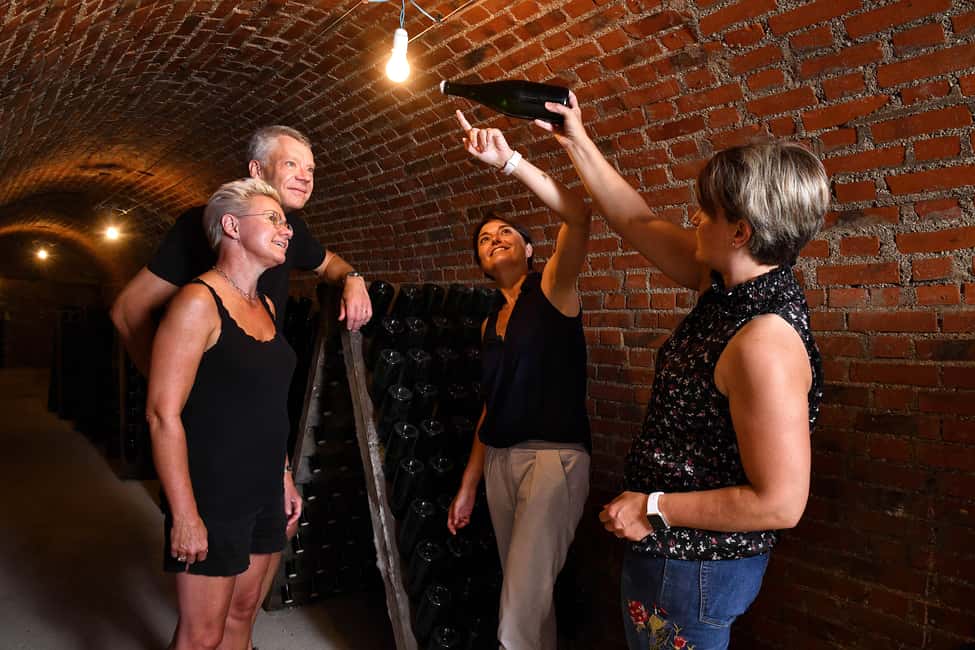
Six tastings total: 3 Champagnes plus 3 essential Champagne alcohols/aperitifs
Family grower + cellar tour: press, winery, and cellar explained by a local producer
Côte des Blancs focus: Chardonnay Grand Cru is part of the route, with stops around Oger and Cramant
Hautvillers Dom Pérignon connection: a guided visit to the church and a look at the grave site
Big-name landmarks without the hard sell: a pass by the Avenue de Champagne and major Champagne houses
Small groups (2 to 8): you get conversation time, not just a headset tour
Bubble Champagne Tour from Épernay: what the 210 minutes feels like
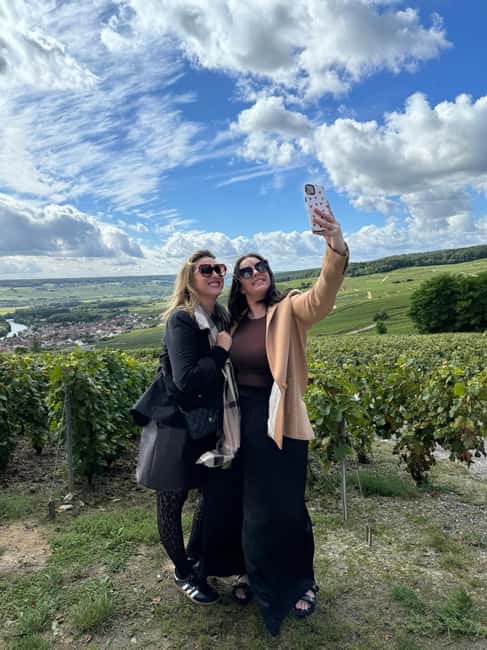
This is a tight, well-paced Champagne sampler that’s designed to give you context fast. In about 3.5 hours, you’ll cover the key “where it comes from” parts (villages, vineyards, and one producer visit) and also the “what it tastes like” part with six total tastings.
The small-group format matters. When I see tours capped at 8 people, I expect more back-and-forth questions and less waiting your turn. And that matches what guides bring to the experience—people like Phillipe, Victoria, and Isabelle have led with a warm, human style, the kind where you can ask what you’re actually noticing in the glass.
Value-wise, the $194 price isn’t just “you pay for champagne.” You’re paying for a guided route that includes transportation in a comfortable vehicle, pickup/drop-off in Épernay, a producer visit with explanation through the process, plus those additional tastings of Champagne alcohols. You also don’t have to make the connections yourself between Hautvillers, the Côte des Blancs villages, and Épernay’s famous avenue.
One note that can save you frustration: there’s no lunch included. If you’re sensitive to timing (or if you stop for snacks only after the first tasting), plan a light meal before you go.
You can also read our reviews of more wine tours in Epernay

Épernay pickup, premium transport, and the no-large-bags rule
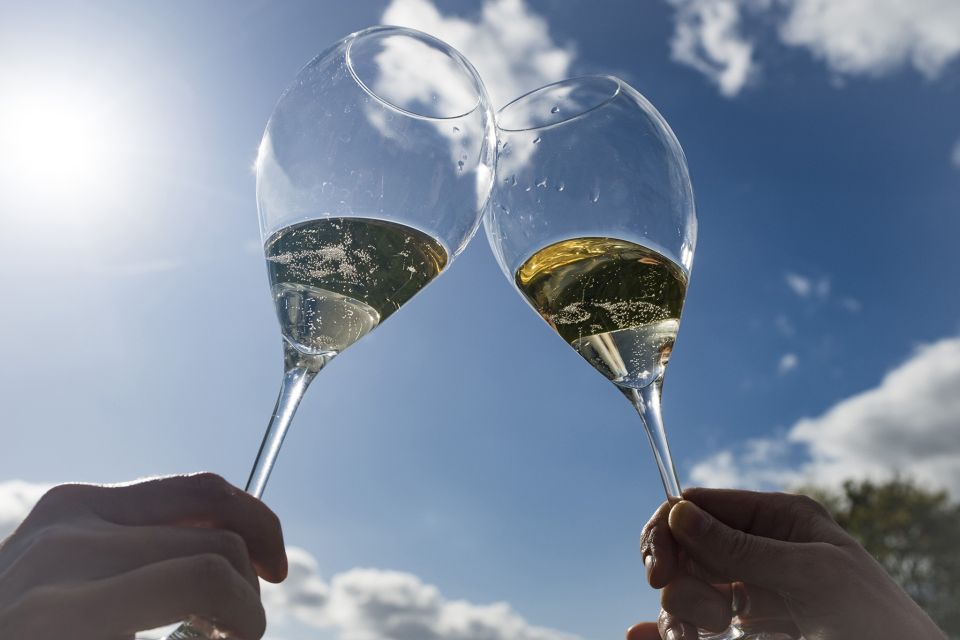
This tour starts and ends in Épernay, with the meeting point tied to the option you select. In most cases, you’ll meet at the Office de Tourisme d’Épernay en Champagne, and drop off is also back there.
You’re traveling by premium air-conditioned vehicle, which is a big deal in Champagne weather, whether it’s warm or rainy. Reviews also hint at how smoothly guides handle narrow village streets—so even though the route is “small towns and viewpoints,” it doesn’t feel like a chaotic bus tour.
The biggest logistics detail to remember is simple: no luggage or large bags. If you’re coming in from somewhere by train, aim for a compact day bag. It’ll make boarding easier and keeps the group comfortable.
If you want flexibility, there’s also an afternoon departure option at 2 p.m. So if your mornings are tied up sightseeing, you still have a schedule match.
Hautvillers: the Abbaye Saint-Pierre visit and why Dom Pérignon matters here
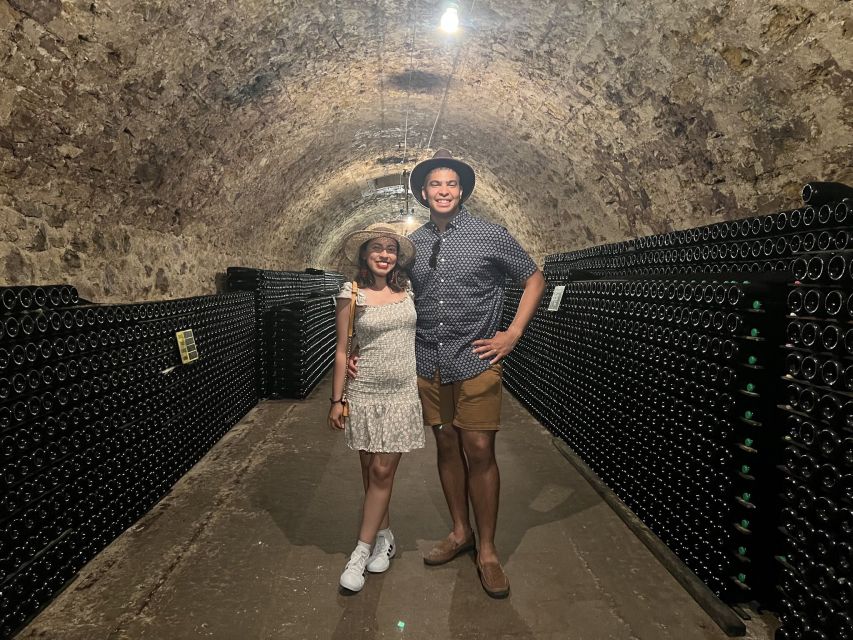
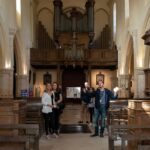
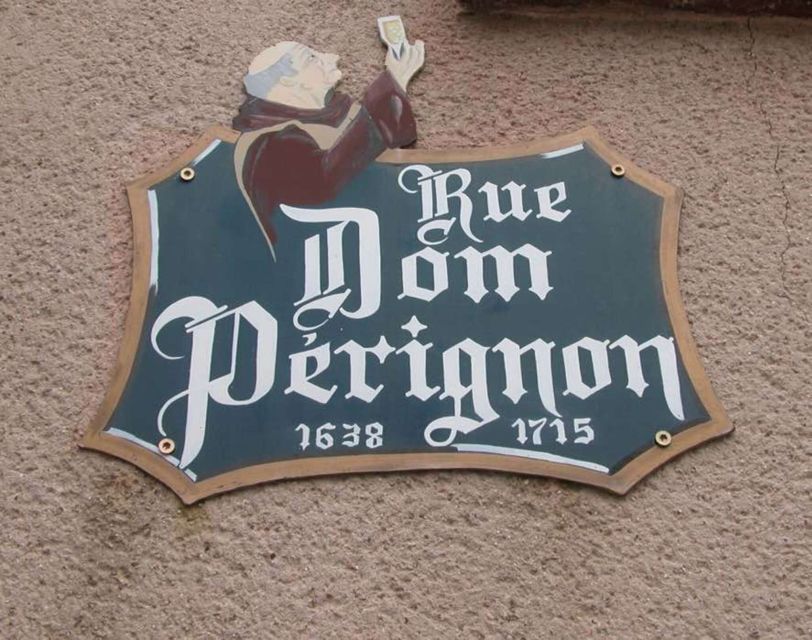
Hautvillers is the tour’s emotional anchor. You’ll begin with a guided visit to the Abbaye Saint-Pierre d’Hautvillers. This is where the experience connects to Dom Pérignon through the church and the grave site associated with him.
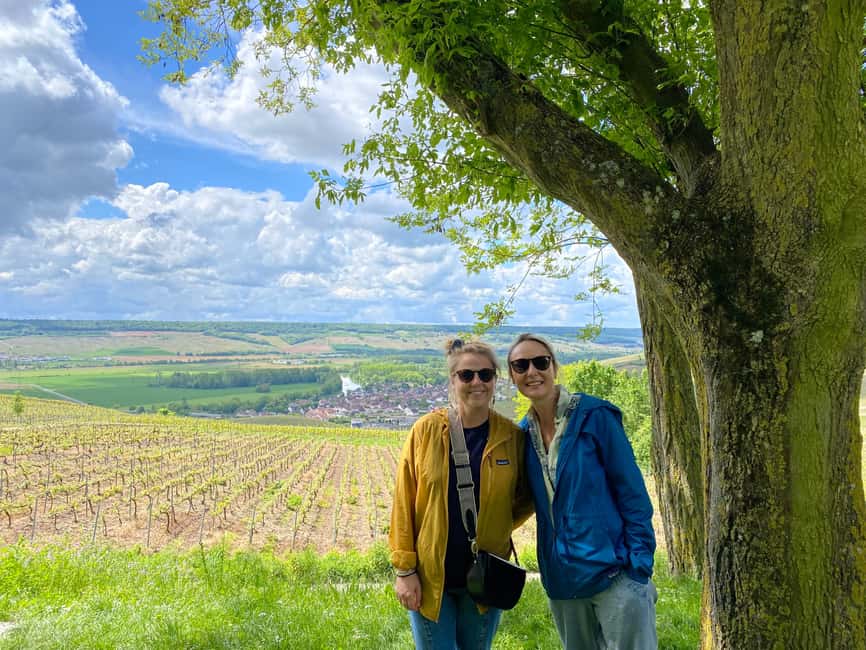
Even if you’re not a Champagne historian, this stop gives you a “why” moment. The villages around Épernay can feel like scenery until someone puts a human story on it, and Dom Pérignon is the kind of name that instantly adds meaning to the landscape. The tour also includes a panoramic viewpoint over the Marne Valley hillsides, and that view is framed as part of where Dom Pérignon carried out experiments.
You’ll also get discussion of sustainable viticulture in the vineyard area around here. That’s not just a buzzword moment—it helps you connect the past (Dom Pérignon’s experiments) to what growers are working on now (how vineyards are managed today).
Photos are a natural byproduct of this section. You’re on hillside viewpoints, and that makes it easy to grab clear shots even if the light changes quickly.
The “Côte des Blancs” route: village stops that make the Chardonnay story real
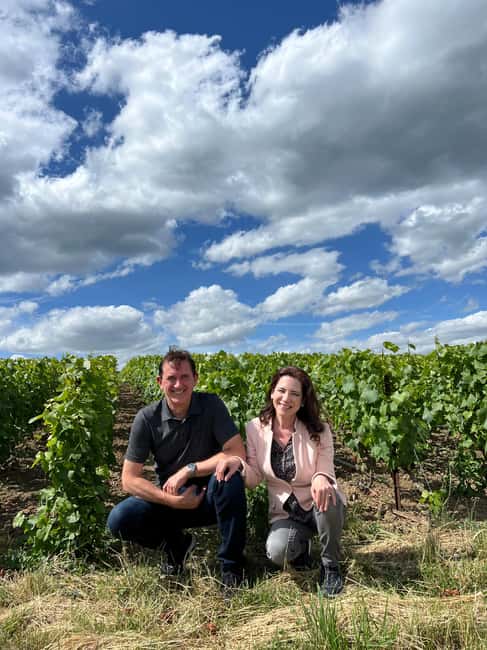
After Hautvillers, the drive and stops shift toward the Côte des Blancs area, which is where the tour highlights a Chardonnay Grand Cru. You’ll pass through and stop at villages that help you understand how Champagne geography is more than just a pretty drive—it’s tied directly to classification and style.
One stop is in Chouilly, with a short timed stop that’s built for getting your bearings in the vineyard setting. Another is Oger, where you’ll have a longer guided visit and a major tasting segment. Then you’ll end up around Cramant, with a photo stop and additional tastings tied into the overall day.
The key thing I like about this structure is that you don’t treat it like a checklist of towns. You experience the “feel” of where the vines live—then you connect that to what ends up in the bottle when you sit down for tastings.
Also, you’ll get a brief but memorable pass by the Château de Saran, described as an LVMH property and noted as a production site linked with Moët & Chandon. Even just driving past gives you scale and names, without turning the day into an all-houses tour.
The family grower visit: press, winery, cellar, and three Grand Cru/Premier Cru tastes
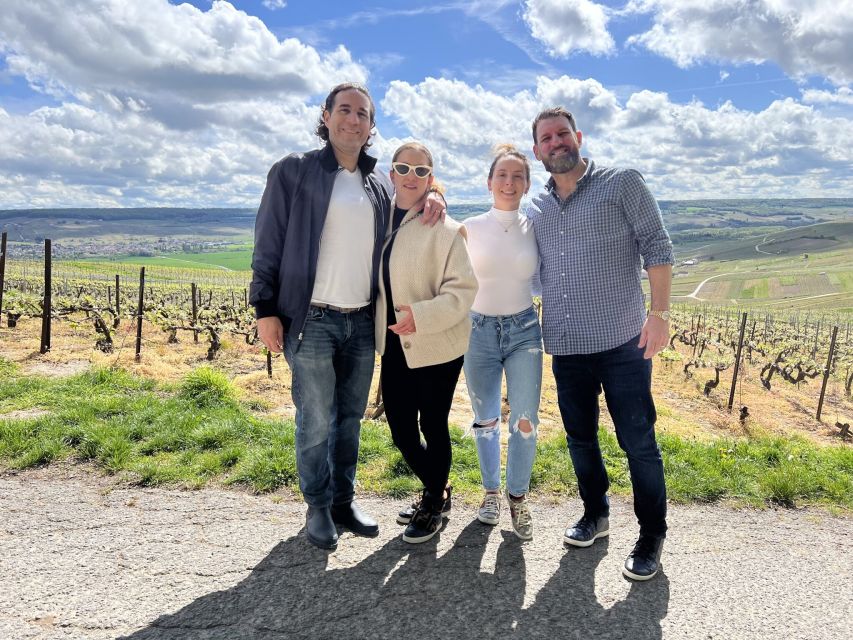
The tour’s core Champagne lesson happens at a family grower / independent producer visit. You’re not just walking into a tasting room; you get the working-producer side of the business, with an explanation of the Champagne-making process.
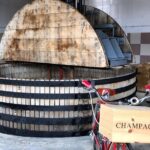
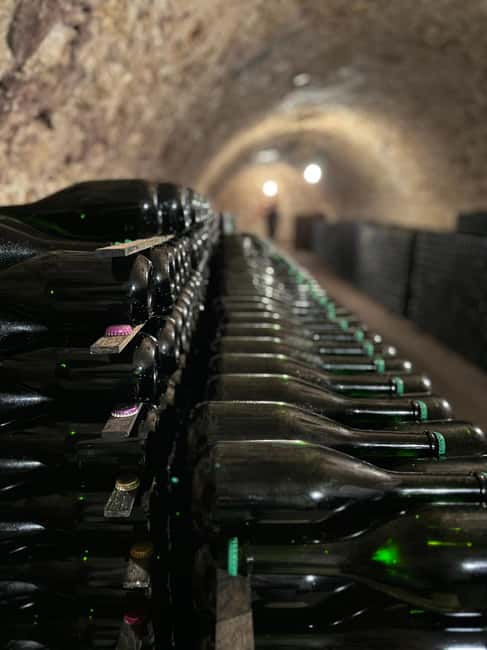
The visit includes time to see the press, the winery, and the cellar. That’s the difference between knowing facts and actually understanding steps. When someone talks you through where the wine goes after pressing, and how the cellar environment fits the process, the tasting stops feel less random.
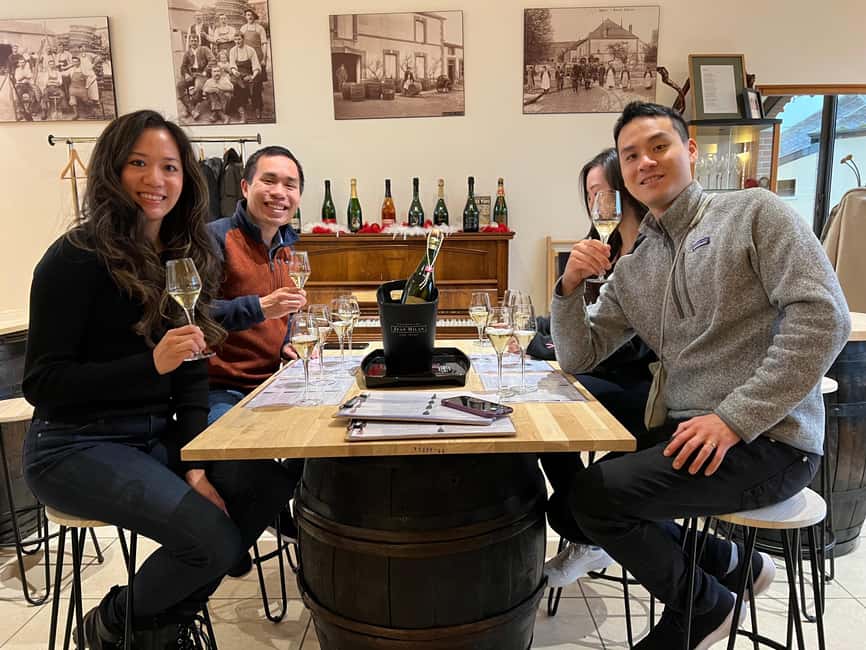
Then you move into what most people booked for: a commented tasting of several Champagnes Grand Cru / Premier Cru from that producer. The tour is set up so you taste 3 Champagnes total across the day, and this producer moment is the biggest concentration of that tasting.
What this does for you as a buyer is huge. You can compare styles with context—rather than buying based only on label design or sweetness level. It also makes it easier to spot what you personally like. If you find you prefer one Champagne after another from a smaller producer, you’ll likely have an easier time making a confident purchase later.
One practical tip: take small notes during tastings. Even if it’s just a quick “A = crisp, B = round,” you’ll remember more later when you’re choosing bottles.

Spirits tastings at Goyard Distillery: Ratafia, Fine de la Marne, Marc de Champagne
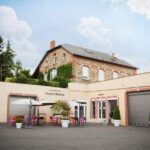
Here’s one reason this tour feels different from standard Champagne-only routes. Besides the three Grand Cru/Premier Cru Champagnes, the day includes tastings of three essential Champagne alcohols and aperitifs linked to the Goyard Distillery, described as the oldest in Champagne.
You’ll taste:
- Ratafia
- Fine de la Marne
- Marc de Champagne
Why it matters: these are a way to broaden your understanding of Champagne culture. You stop thinking of Champagne as just a single drink and start seeing it as part of a wider regional production chain—something producers make and share in different forms.
This is also where a guide’s personality pays off. When you’re tasting something new, you want explanation that matches what’s in the glass. Many guides on this route are praised for being warm and able to answer questions on the spot, and that’s especially useful when the tasting lineup goes beyond the obvious Champagne expectation.
If you’re the kind of person who likes to learn through the glass, don’t treat these tastings as an afterthought. They’re often the most memorable part of the day.
Avenue de Champagne in Épernay: seeing the big houses from the outside
The tour includes a commented pass through Avenue de Champagne in Épernay. This is where you see the famous mansions and production buildings linked to major Champagne houses such as Moët & Chandon, Perrier Jouët, and Pol Roger.
You’re not doing a full inside visit here, and that’s intentional. The tour uses the pass to set context—big-name scale, the visual identity of the avenue, and the sense of Épernay as the “Capital of the Champagne vineyard” in the tour’s framing.
I like having a quick look at big houses after you’ve spent earlier time with a family grower. It keeps the day balanced. You get both: the working-producer story and the commercial landmark story. If you only visited one side, it would be easier to misunderstand how varied Champagne production is.
Also, rain doesn’t stop this part. Even with cloudy skies, the avenue still does what it needs to do: it gives you instant Champagne atmosphere and recognizable names.
Guides make the day: what you can expect from the human touch
This tour lives or dies by the guide. And the pattern is clear in the names people associate with the experience: Juliet, Marine, Philippe, Victoria, Lucie, Isabelle, Charlotte, and Nina have all been praised for being friendly and clear in how they explain what you’re seeing.
What you should watch for during your tour is whether your guide connects the stops. Great guides don’t just say what a village is; they connect it to why the tasting makes sense. If you ask questions, you should get answers that feel personal rather than recited.
You may also get help with small moments that make the day smoother, like keeping the group moving efficiently and stopping at spots where the views and photos work. Some guests even mention being able to get good photos as part of the guiding style, which is not trivial when you’re on timed stops.
One balanced downside to keep in mind: a few people prefer seeing more large-house scale. If that’s your top priority, you might find this route leans too much toward the smaller-producer approach.
Is $194 worth it? Tastings, transport, time, and what to pack
At $194 per person for about 210 minutes, you’re paying for a structured Champagne sampler with real access: producer visit with process explanation plus six tastings total. That turns the price from “a tasting fee” into “a guided day of Champagne education.”
Here’s what makes the value feel real:
- You’re tasting 3 Champagnes tied to Grand Cru/Premier Cru tiers.
- You’re also tasting the three classic regional alcohols: Ratafia, Fine de la Marne, Marc de Champagne.
- You get transportation, pickup/drop-off in Épernay, and a guide for the route.
What you might want to adjust for yourself:
- No lunch is included, so eat before.
- If you’re sensitive to vehicle entry steps, plan for that—one reviewer suggested adding a stool for easier boarding.
- You can’t bring luggage or large bags.
There’s also something to like if your schedule is flexible: you can cancel up to 24 hours in advance for a full refund, which reduces stress if plans shift.
If you’re traveling with the goal of buying bottles, this tour gives you more than vibes. You learn how the grower presents its styles, then you taste with context, which helps you choose what you’ll actually enjoy at home.
Should you book this Bubble Champagne Tour from Épernay?
Book it if you want a compact Champagne day that mixes Hautvillers (Dom Pérignon), the Côte des Blancs villages, a true family grower visit, and six tastings including the regional spirits. It’s ideal for first-timers who want the big names and the real-making process without spending all day on logistics.
Skip it (or consider something more large-house focused) if your main goal is touring massive cellar complexes inside big Champagne houses. This route gives you landmarks and scale from the outside, but the heart of the tasting day is built around a smaller producer.
If you’re coming from Paris by train, this is also the kind of outing that fits well: you can be in Épernay, meet the guide quickly, and spend the afternoon building a clearer sense of Champagne—one stop, one explanation, one pour at a time.
FAQ
How long is the Bubble Champagne Tour from Épernay?
The tour duration is listed as 210 minutes.
How many tastings are included?
You’ll have 6 tastings total: 3 Champagnes (Grand Cru/Premier Cru) and 3 additional tastings of Champagne alcohols/aperitifs (Ratafia, Fine de la Marne, and Marc de Champagne).
Where are pickup and drop-off?
Pickup and drop-off are in Épernay, with the meeting point described as the Office de Tourisme d’Épernay en Champagne in at least one option.
Is lunch included?
No, lunch is not included.
Does the tour run in bad weather?
Yes, the tour takes place rain or shine.
Is the tour suitable for wheelchair users?
No, it is not suitable for wheelchair users.