REVIEW · EPERNAY
The Must-sees 3h30 from Epernay (Private Half day Champagne Tour)
Book on Viator →Operated by Aÿ-Champagne Experience · Bookable on Viator
Champagne history, told on a tight schedule. This private half-day from Épernay links the glamour of Avenue de Champagne with UNESCO vineyard views, plus a real look at how Champagne gets made. You’ll bounce between villages that shaped the region long before the big labels learned how to sell a lifestyle.
I love the tone of the day: you’re not just driving past places, you’re getting stories tied to the people who still work the vines and the cellars. I also love the hands-on stop at an independent producer, where you tour the press/winery/cellar and taste three Grand Cru or Premier Cru Champagnes in a guided tasting.
One possible consideration: at 3 hours 30, it’s a snapshot. If you’re chasing a long list of major Champagne-house visits and lots of pours, this route may feel a bit compact.
In This Review
- Key points to know before you go
- Setting off from Épernay: what makes this tour feel private
- Avenue de Champagne in Épernay: the UNESCO boulevard with serious cellar power
- Abbaye Saint-Pierre d’Hautvillers: where Dom Pérignon’s story gets human
- Hautvillers viewpoints + UNESCO hillsides: the Marne Valley from the right angles
- The independent producer stop: press, winery, cellar, then 3 Grand Cru/Premier Cru tastings
- Aÿ-Champagne: Pinot noir country, historic presses, and house headquarters you can point at
- Ratafia, Fine de la Marne, and Marc de Champagne: the “don’t miss” side tastes
- Mareuil-sur-Aÿ and Mont du Gruguet: where the Marne Valley view feels bigger
- Mutigny’s early 16th century church: a quick pause above the vines
- Price and time: is $293.14 for 3h30 a good value?
- Who this tour suits best (and who might want something else)
- Final verdict: should you book this Épernay private half-day tour?
- FAQ
- How long is the private half-day Champagne tour from Épernay?
- Is pickup included, and where does it cover?
- What language is the tour offered in?
- What tastings are included?
- Is the experience private?
- What happens if weather is bad?
Key points to know before you go

- Avenue de Champagne (UNESCO) in Épernay: mansions, Champagne houses, and a peek into the scale of the cellars
- Abbaye Saint-Pierre d’Hautvillers: the church tied to Dom Pérignon and his grave
- UNESCO hillside viewpoints: big views over the Marne Valley from Hautvillers and later at Mont du Gruguet
- Independent grower tour + tasting: press, winery, cellar, then 3 Grand Cru/Premier Cru Champagnes
- Tasting more than Champagne: Ratafia, Fine de la Marne, and Marc de Champagne from Goyard distillery
- Private transportation: pickup within about 6 km of Épernay and options that include an electric E-Mehari Jeep-style vehicle
Setting off from Épernay: what makes this tour feel private

This is a true private tour, so you won’t be squeezed into someone else’s pace. You start in Épernay and you’ll get pickup only if you’re within roughly 6 km (3.7 miles) of the city center. The fine print matters here: Reims is about a 40-minute drive away and isn’t within that pickup radius, so you’d need to meet in Épernay if you’re staying farther out.
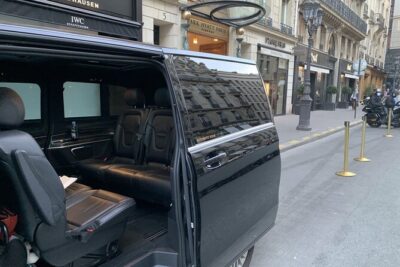
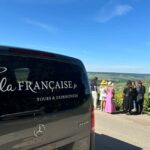
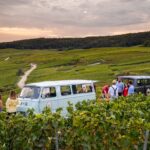
The operator also uses different vehicles depending on your group and timing. That can be a plus when the day is moving fast—clean, comfortable, and built for short drives between village-to-village viewpoints. If you have mobility needs, they ask you to tell them ahead of time, especially because some vehicles are slightly raised (they mention the electric E-Mehari specifically).
And since you’re in a 3.5-hour window, everything on the schedule is there for a reason: iconic spots first, then a producer visit, then tastings to tie the story together.
You can also read our reviews of more private tours in Epernay


Avenue de Champagne in Épernay: the UNESCO boulevard with serious cellar power
Your day begins with a guided passage along the famous Avenue de Champagne. This is one of those places you’ve probably seen in photos: a long, elegant stretch lined with the Champagne houses and their impressive mansions.
But what I think makes this part valuable isn’t the street theatre. It’s the context. You’ll get history tied to major houses such as Moët & Chandon, Perrier-Jouët, and Pol Roger, plus the idea that the real scale of Champagne is underground. The tour highlights how these cellars run about 100 kilometers and how they can hold around 200 million bottles.
If you’re a first-timer, this stop helps you understand why Épernay feels different from smaller villages later in the day. Épernay is where branding, wealth, and Champagne industry all show up in one place. It also sets you up for what follows: the more working-side of the region at Hautvillers and Aÿ.
Abbaye Saint-Pierre d’Hautvillers: where Dom Pérignon’s story gets human

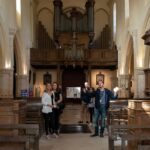
Next comes Hautvillers, often called the cradle of Champagne. The centerpiece here is Abbaye Saint-Pierre d’Hautvillers: you get a private tour of the church and the visit to Dom Pérignon’s grave.
This is the kind of stop that can be either “quick photo and move on” or genuinely memorable. The difference is your guide—this tour is built for explanation at each location. Guides in this program have included names like Philippe, Victoria, Lucie, Svetlana, and Coralie, and the common thread is that they use the setting to explain the man, the era, and the myths people attach to him.
There’s a specific moment I’d plan for: listening to the story and then deciding for yourself whether Dom Pérignon is portrayed as the inventor of Champagne (the tour explicitly nudges you to think about that question). Even if you already know the basics, the abbey setting turns it from trivia into a reason you care.
If you want a practical tip: wear something comfortable for stepping inside and out, since churches and village streets can involve uneven ground.
Hautvillers viewpoints + UNESCO hillsides: the Marne Valley from the right angles

After the abbey, you’ll continue in and around Hautvillers for a panorama over the Marne Valley. The tour also frames these hillsides as UNESCO-listed, and it connects the view to winemaking experiments associated with Dom Pérignon.
This is one of those “stand still for a minute” moments. You’re up high enough to see how the vineyards stack across slopes. And because Champagne’s quality is tied to terroir—soil, slope, and microclimate—the view makes the rest of the day easier to understand. It’s harder to treat Champagne as just a bottle when you can see why grapes grow the way they do here.
Then you move into the working part of the region with the next major stop: a family independent producer/grower.
The independent producer stop: press, winery, cellar, then 3 Grand Cru/Premier Cru tastings

This is, in my opinion, the heart of the tour.
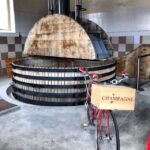
You visit a family grower where you get explanations on the Champagne making process and see the press, the winery, and the cellar. The tour then includes a commented tasting of three different Champagnes labeled Grand Cru or Premier Cru.
One useful detail: the exact location for this tasting can vary by season and availability. The tour notes it may happen in the Côte des Blancs or in Aÿ-Champagne. That flexibility can be a good thing—it can mean you’re tasting with the right access at the right time, rather than being forced into a specific spot that doesn’t work that day.
This stop also tends to land well because it’s intimate. You’re not touring a showroom. You’re meeting people who still produce and grow wine with their own rhythm and priorities. In past guide-driven experiences like this, names such as Charlotte and Nina come up, with strong praise for how the pacing stays friendly and how the group gets to ask questions without feeling rushed.
Practical note: tasting is part of the schedule, so if you’re driving yourself, plan your transport accordingly.
You can also read our reviews of more wine tours in Epernay



Aÿ-Champagne: Pinot noir country, historic presses, and house headquarters you can point at

Then you head to Aÿ-Champagne, another UNESCO-linked area with famous Grand Cru vineyards. This is where the tour slows down just enough to make the village feel like more than a stop on a route.
The tour connects Aÿ to the 16th century and explains that kings of France had their own presses there. It also points out the old name idea—wines of Champagne once being called wines of Aÿ.
You’ll also get a practical wine lesson: the vineyards around Aÿ are mainly planted with Pinot noir, and the tour talks about how the work of the vines ties to the final wine. They also mention sustainable viticulture, which is a reminder that Champagne is modern as well as traditional.
As you move through the area, you’ll stop in front of headquarters associated with well-known Aÿ Champagne houses like Bollinger, Deutz, and Ayala. This isn’t just name-dropping. Seeing those addresses makes the region feel real and anchored instead of abstract.
And then comes a second tasting layer, this time beyond Champagne.
Ratafia, Fine de la Marne, and Marc de Champagne: the “don’t miss” side tastes

A fun shift happens here: besides tasting Champagne, you also taste three key Champagne alcohols and aperitifs—Ratafia, Fine de la Marne, and Marc de Champagne—sourced from the Goyard distillery (described as the oldest in Champagne in the tour info).
This part can be a surprise even for people who think they only care about bottles labeled Champagne. It shows how the region uses byproducts and techniques to create different spirits and aperitifs from the same world of grapes and pressing.
If you’re the type who likes to understand why something exists (not just what it tastes like), this stop adds a lot. If you’re strictly a Champagne purist, it can still be interesting—small tastes help you see the broader ecosystem behind the label.
Mareuil-sur-Aÿ and Mont du Gruguet: where the Marne Valley view feels bigger

From Aÿ, you continue into the Marne Valley toward Mareuil-sur-Aÿ, a Premier Cru village. You’ll pass through its historic hillsides, again tied to UNESCO.
Mareuil-sur-Aÿ is also described as a place where more confidential Champagne houses are located, including Billecart-Salmon and Philipponnat. You’re not going to get a big factory tour here; the value is the sense of “this is where the quieter producers live.”
Then you stop at Mont du Gruguet viewpoint for another panoramic look. The tour highlights how you can see both the Côte des Blancs side (linked to Chardonnay Grand Cru) and the Marne Valley villages and vineyards.
This viewpoint is a good reminder of how close—and how different—the Champagne sub-areas can be. Even within a short drive, your grapes and your wine styles can shift because slopes, soils, and villages differ.
Mutigny’s early 16th century church: a quick pause above the vines
As the drive continues, you cross the wine-growing village of Mutigny, located above Aÿ-Champagne. The tour notes a charming early 16th century church overlooking the vines.
This is short on time, but it adds flavor to the route. It also helps keep the day grounded in small communities instead of only famous names.
Price and time: is $293.14 for 3h30 a good value?
At $293.14 per person for about 3 hours 30, you should judge this tour by what you actually get in that time:
- Private guiding (not shared)
- Multiple UNESCO-related stops across Épernay, Hautvillers, and Aÿ/Mareuil areas
- A church visit tied to Dom Pérignon’s grave
- An independent grower visit with press/winery/cellar access
- 3 Champagne tastings (Grand Cru/Premier Cru)
- 3 additional spirits/aperitif tastings (Ratafia, Fine de la Marne, Marc de Champagne)
For many people, the value comes from the mix. A lot of half-day tours either focus on big Champagne-house names or they focus on a single producer. This one tries to connect the industry glamour (Avenue de Champagne) with the working reality (press/winery/cellar) and then adds side tastes that most “Champagne-only” routes skip.
One reason this price can still feel steep: if your ideal day is heavy on multiple Champagne houses and you want a slower pace, a 3.5-hour private loop can feel tight. For you, a longer tour with more than one producer stop might fit better.
Who this tour suits best (and who might want something else)
This is a strong fit if:
- You want an easy first taste of the Épernay region without planning anything
- You care about the story behind Champagne—abbey legends, village origins, and what terroir looks like from the right places
- You like variety in tastings, including Ratafia, Fine de la Marne, and Marc de Champagne
- You appreciate a small, family-producer feel rather than only big-brand tourism
It may not be the best fit if:
- You want multiple big Champagne-house tours inside cellars with lots of time at each
- You’re expecting a very long tasting session (this is a half day, and the structure stays efficient)
Final verdict: should you book this Épernay private half-day tour?
I’d book it if you want a focused Champagne education with a clear rhythm: Avenue de Champagne for the industry scale, Hautvillers for Dom Pérignon’s connection, then real producer access and tastings in the vineyards’ backyard.
I’d think twice if your top priority is visiting several major Champagne houses with extended time at each. This route is more village-and-producer centered, and the pacing is built for learning more than lingering.
If your goal is the classic Champagne starter pack—views, heritage, hands-on wine making, and smart tastings—this one makes sense.
FAQ
How long is the private half-day Champagne tour from Épernay?
It runs about 3 hours 30 minutes.
Is pickup included, and where does it cover?
Pickup is offered only if you’re within about 6 km (3.7 miles) around Épernay. If you’re farther out (Reims is mentioned as about a 40-minute drive and outside that radius), you’ll need to join the tour from Épernay.
What language is the tour offered in?
The tour is offered in English.
What tastings are included?
You’ll taste three different Champagnes (Grand Cru/Premier Cru, depending on season and availability) plus three Champagne alcohols/aperitifs: Ratafia, Fine de la Marne, and Marc de Champagne from the Goyard distillery.
Is the experience private?
Yes. Only your group participates.
What happens if weather is bad?
The tour requires good weather. If it’s canceled due to poor weather, you’ll be offered a different date or a full refund.