REVIEW · PARIS
City Walking Tour: See the Top 5 Paris Highlights in a Day
Book on Viator →Operated by Dayin · Bookable on Viator
Paris usually asks you to choose: hilltop Montmartre or the Louvre, Notre-Dame or the Eiffel Tower. This seven-hour walking tour tries to solve that problem by linking all five big names in one day, with metro rides filling the gaps between districts. You begin among Montmartre’s vineyards and windmills, then finish beneath the Eiffel Tower.
I like the small maximum of six people, which gives a guide room to answer questions and adjust the pace. I also like the local flavor: Place Dauphine, pretty Montmartre lanes, tucked-away stories, and a Seine walk add texture beyond the standard photo stops.
The catch is clear: you will not enter any monument or museum. At $370.18 per person, the price makes sense mainly if you value a private-feeling overview, local guiding, and a carefully planned first day in Paris. It is not a bargain sightseeing route for anyone hoping to see the Mona Lisa or climb the Eiffel Tower.
In This Review
- Key points to know before booking
- Why this route works for a first day in Paris
- Montmartre at 9:30 am, starting among artists and old village traces
- Notre-Dame and a Seine walk through the oldest part of Paris
- The Louvre courtyard without museum crowds
- Arc de Triomphe and the grand Champs-Elysées
- Finishing beneath the Eiffel Tower
- What $370.18 buys you
- Pace, transport, and who will enjoy this day
- My call: book it for orientation, not admission
- FAQ
- How long does the Paris highlights walking tour last?
- Where does the tour start and finish?
- Are admission tickets to the monuments included?
- Is lunch included?
- How many people can join the tour?
- Can I cancel for a full refund?
Key points to know before booking
- Five famous sights in one day: Cover Sacré-Coeur, Notre-Dame, the Louvre, Arc de Triomphe, and the Eiffel Tower without arranging separate visits.
- A maximum of six people: The small group should make it easier to hear the guide and ask for practical advice.
- Metro rides are included: Public transport helps connect Montmartre, central Paris, the Champs-Elysées, and the Eiffel Tower.
- Every monument is viewed from outside: Plan separate admission tickets if you want interiors, exhibits, or rooftop views.
- The route starts at 9:30 am in Pigalle: You end at the foot of the Eiffel Tower, with no hotel pick-up or drop-off.
- Lunch costs extra: A restaurant reservation is included, but your meal, coffee, and pastry are not.
Why this route works for a first day in Paris
This experience is less about checking off five buildings and more about learning how Paris fits together. In one day, you move from the high, village-like streets of the 18th district to the grand avenues of the 8th, the royal center of the 1st, the medieval core of the 4th, and finally the Eiffel Tower in the 7th.
That range is the tour’s strongest idea. You get a quick sense of how different Paris can feel from one neighborhood to the next. Montmartre is hilly and intimate. The Louvre is vast and formal. Place Dauphine feels calm and tucked away. The Champs-Elysées is broad and ceremonial. The Eiffel Tower provides the familiar grand finale.
You should expect a full day on your feet. The title says walking tour, though the metro is used to cover the longer stretches. Wear comfortable shoes, carry water, and keep some room in your schedule after the tour. The route ends at about 4:30 pm, but the exact pace can vary with the group and city conditions.
The small group matters here. With up to six people, the guide can explain a detail without losing half the group at a street corner. The named guides associated with this experience include Clara, Hugo, and Walid. The strongest praise attached to their work centers on making the day personal, sharing facts you might miss in a larger group, and keeping the mood light.
You can also read our reviews of more walking tours in Paris



Montmartre at 9:30 am, starting among artists and old village traces
Meet at Pigalle at 9:30 am, in Paris’s 18th district. From here, the route heads into Montmartre, the first major stop and the one with the most distinct personality.
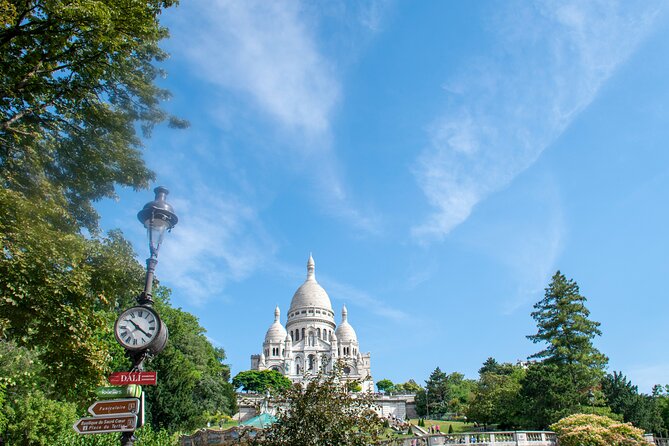
Montmartre was once a rural hill outside the main city. That older character still appears in the details listed for this walk: vineyards, windmills, narrow lanes, and Sacré-Coeur. You are not simply being led to a basilica for a quick photograph. The guide points out how this neighborhood kept traces of village life even as Paris grew around it.
The Sacré-Coeur is the visual anchor. From the hill, you get a broad view across Paris, making this a useful first stop for orientation. You can begin to understand the city’s size and layout before moving down toward the historic center.
Two hours is a generous share of the day for Montmartre. That allows time for the basilica area, side streets, and local stories. It also means the day is not just a parade of monuments. You might have a chance to pause for coffee or a pastry in one of the pretty streets, but food and drinks are not included.
The drawback is the hill. Montmartre is not the easiest opening for anyone who dislikes inclines or long periods of standing. The tour is open to most people, but you should be honest about your stamina before booking. The morning sets a brisk tone for the rest of the day.
No admission ticket is included here. The route presents Montmartre and Sacré-Coeur as part of the street experience, so check the tour details directly if entering the basilica is important to you. The supplied plan specifically warns that monuments are not entered.
Notre-Dame and a Seine walk through the oldest part of Paris
From Montmartre, the route uses public transportation toward Notre-Dame and the Île de la Cité area. The metro is included, which is useful because Paris’s main sights are spread across the city. You are not paying for a guide who simply meets you at each monument and leaves you to navigate the gaps.
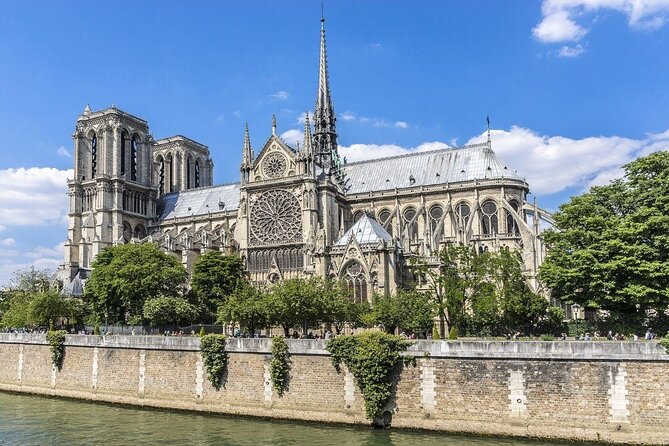
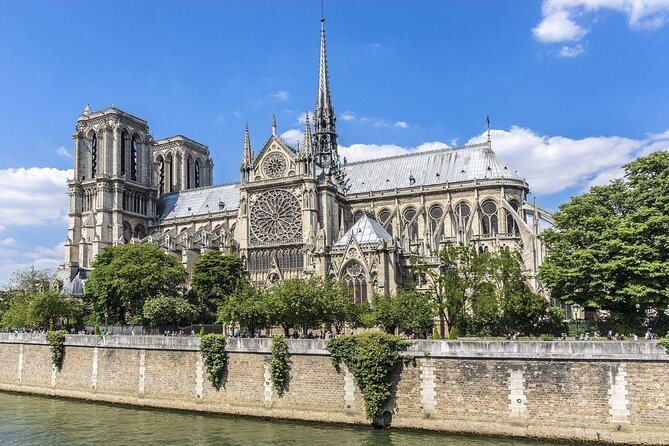
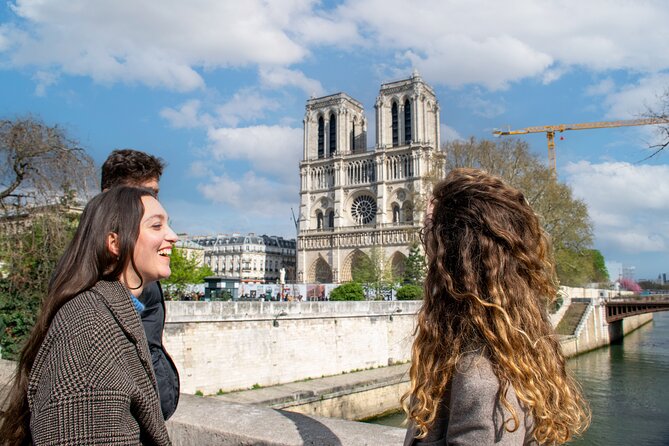
The Notre-Dame portion lasts about two hours. It combines the cathedral’s architecture and story with a walk beside the Seine. This is a good change of pace after Montmartre. Instead of climbing streets, you move through the historic center and along the river.
Notre-Dame is still under renovation, so the experience is about viewing the cathedral from outside and understanding its place in Paris. You will not go inside. That distinction matters, especially for anyone whose main goal is to see the interior.
The surrounding area is one of the best parts of this stop. The 4th district includes the oldest neighborhood in Paris, and the Seine gives the walk a natural line through the city. The guide’s local stories can help turn a famous facade into part of a larger picture: medieval Paris, royal power, religious life, and the changes brought by time.
This is also where the tour offers one of its quieter moments. Place Dauphine is described as a small haven of peace, a pleasant contrast to the major sights. It is exactly the kind of place that can get lost when you rush from one headline attraction to another.
Two hours can feel long if you want only a cathedral photograph. It feels more reasonable if you enjoy city walks and want context. The experience is best for someone who sees Paris itself as the subject, not just the monuments.
The Louvre courtyard without museum crowds
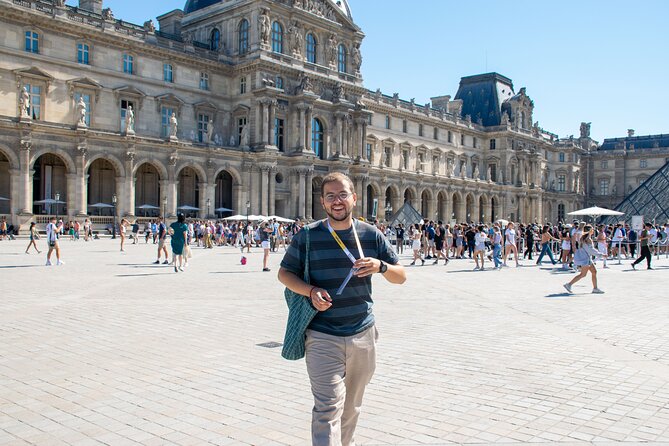
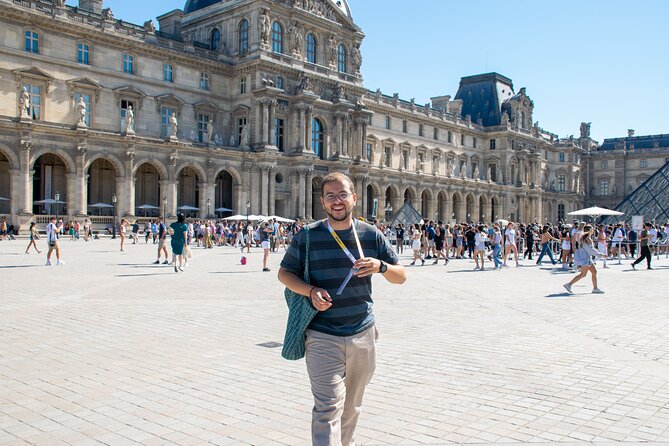
The Louvre section lasts about an hour and focuses on the exterior. You see the former royal residence and the grand courtyard, but you do not enter the museum or view the Mona Lisa inside.
That limitation is both a weakness and a useful feature. It is a weakness if you have come specifically to see the collections. The Louvre can take a full day on its own, and this route cannot provide that museum experience in a single outdoor stop.
It is useful if you are new to Paris and want to understand the Louvre’s scale before deciding how to return. The building was once a residence of France’s kings and later became one of the world’s best-known museums. Even from outside, the courtyards and long facades show why it is such a major part of the city.
An hour keeps the tour moving. You get the setting, the basic story, and a chance to take photographs without spending the rest of your day in a museum queue. If you plan to visit the Louvre separately, this preview can help you recognize the entrance and decide how much time to reserve.
The practical advice is simple: do not book this tour as your Louvre visit. Book it as your Paris overview, then arrange a separate museum ticket if the art matters to you. The admission cost is not included here.
Arc de Triomphe and the grand Champs-Elysées
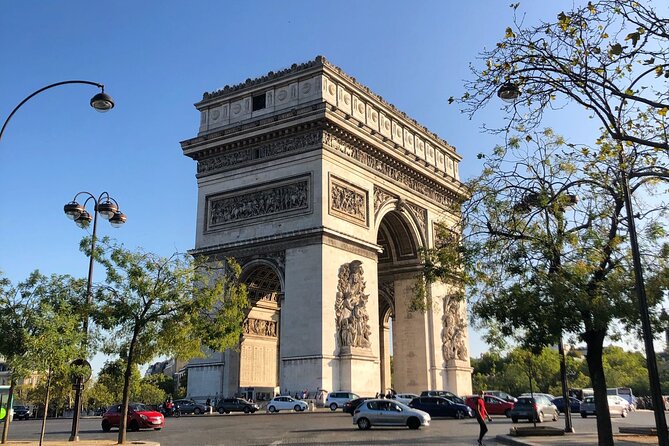
The next stop moves to the 8th district and the Arc de Triomphe. The monument is linked with Napoleon and sits at the western end of the Champs-Elysées, Paris’s best-known avenue.
The tour allows about an hour here. You see the arch and the surrounding avenue, but admission to the monument is not included. That means no climb to the rooftop and no close look at the views from above.
Even from street level, the Arc de Triomphe explains a lot about Paris’s ceremonial side. It is large, formal, and designed to be seen from broad avenues. The Champs-Elysées gives you a different Paris from the lanes of Montmartre and the calm of Place Dauphine.
This stop is also a good reminder that famous sights are not always intimate experiences. The avenue can feel grand rather than personal, and the traffic around the arch makes the setting less peaceful than the Seine walk. A local guide earns their keep here by helping you read the monument and the city plan instead of treating it as a quick photo break.
If you want to go to the top, budget a separate visit. The tour does not include any monument admission, and the schedule is built around seeing the outside.
You can also read our reviews of more city tours in Paris






Finishing beneath the Eiffel Tower
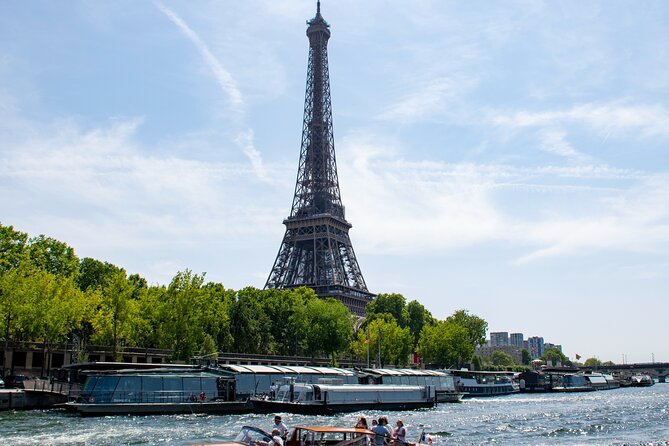
The final hour takes you to the Eiffel Tower, ending at the bottom of the monument on Avenue Gustave Eiffel. This is a satisfying finish because the tower is the one sight most people picture before arriving in Paris.
You get time to see it at ground level, take photographs, and listen to the guide’s final stories. The tour does not include entry or a climb. You are free to continue on your own after the official end, including crossing the river for views and photographs.
That ending gives you useful flexibility. If you want to go up the tower, you can plan it separately, though the tour information does not promise available tickets or extra time. If you are tired, you can simply enjoy the riverfront and make your own way elsewhere.
Finishing at the Eiffel Tower also keeps the route easy to understand. You begin in the north at Pigalle and work across the city, using the metro where needed, before ending at one of Paris’s clearest landmarks. There is no return to the starting point and no hotel transfer, so plan your evening from the 7th district.
What $370.18 buys you
At $370.18 per person, this is an expensive day if you think of it as transportation between five photo stops. The monuments are viewed from outside, lunch is not included, and you still need separate tickets for any interior visit.
The value comes from the organization and personal attention. You receive a local guide, metro transportation during the tour, a restaurant reservation, and insider stories. A group of no more than six gives the day a private-tour feel without requiring you to arrange every connection yourself.
I would judge the price by your first-day priorities. If you have only one day in Paris, want an overview, and prefer a guide to handle the route, the cost may be reasonable for the time saved. If you are comfortable using the metro and reading a map, you can see the exteriors on your own for much less.
The restaurant reservation is helpful, but it is not a meal. Ask what the reservation covers when you book, and plan to pay for lunch separately. The same applies to coffee and pastries in Montmartre.
Group discounts are available, so the per-person cost may work better for a larger booking within the tour’s six-person limit. The listed price is still high enough that you should compare it with a private guide or a smaller museum-focused experience before committing.
Pace, transport, and who will enjoy this day
This is a strong choice for a first visit, a short stay, or an arrival day when you want a clear sense of Paris before exploring on your own. It suits people who enjoy stories, neighborhood changes, and outdoor sightseeing more than long museum visits.
You will likely enjoy it most if you:
- Want the five headline sights in one organized day
- Prefer a local guide to explain what you are seeing
- Like walking mixed with metro rides
- Value a group capped at six people
- Can handle a long day with plenty of standing
- Plan to return to selected monuments later
It is less suitable if you want a slow, relaxed day. The route covers four districts and five major sights in roughly seven hours. It is also a poor match if Notre-Dame, the Louvre, or the Eiffel Tower is your main reason for visiting and you expect interior access.
The public transportation element is important. Paris is too spread out for a simple walk between all five stops within this schedule. Metro rides make the route possible, but you should still expect a great deal of walking around each district.
Confirmation arrives at booking. The meeting point is near public transportation, and most people can participate. There is no hotel pick-up or drop-off, so you must reach Pigalle independently and arrange your own way onward after the Eiffel Tower.
Cancellation is flexible up to 24 hours before the start time for a full refund. Changes or cancellations inside that window are not refunded, and the experience requires a minimum number of participants. If that minimum is not reached, you are offered another date or experience, or a full refund.
My call: book it for orientation, not admission
I would book this tour if I had one precious day in Paris and wanted a local guide, a small group, and a broad introduction to the city’s main districts. The route gives you more than five isolated landmarks, especially at Montmartre, Place Dauphine, and along the Seine.
I would skip it if I already know Paris, want museum time, or need the lowest-cost way to see the big sights. At this price, the absence of interior admission is a serious consideration.
The best plan is to treat this as a guided first look. Let the route show you where you want to return, then spend another day inside the Louvre, visiting Notre-Dame if access is available, or going up the Eiffel Tower. That approach makes the tour’s limits useful rather than disappointing.
FAQ
How long does the Paris highlights walking tour last?
The tour lasts approximately seven hours. It begins at 9:30 am and ends at the Eiffel Tower.
Where does the tour start and finish?
The meeting point is in Pigalle, Paris 75018. The tour finishes at the bottom of the Eiffel Tower on Avenue Gustave Eiffel in the 7th district.
Are admission tickets to the monuments included?
No. The tour does not include entry to Sacré-Coeur, Notre-Dame, the Louvre, the Arc de Triomphe, or the Eiffel Tower. The plan is based on seeing the sights from outside.
Is lunch included?
No. A restaurant reservation is included, but lunch is not. Coffee, pastries, and other food are also extra.
How many people can join the tour?
The maximum group size is six people. Group discounts are available.
Can I cancel for a full refund?
Yes. You can cancel at least 24 hours before the experience start time for a full refund. Cancellations or changes made less than 24 hours before the start time are not refunded or accepted.