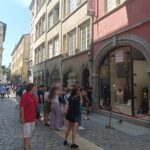
REVIEW · LYON
Unique Tour of Great Women in Lyon history
Book on Viator →Operated by Lyon Guided Tours · Bookable on Viator
Lyon has layers, and this walk connects them to women’s history. I like that the route moves through key Croix-Rousse streets tied to silk-worker revolts, then lands in the grand city center around Place des Terreaux and the Bartholdi fountain.
Two things I’d call out right away: you get a tight 1.5 to 2 hour format with a small group (max 10), and the storytelling leans into subjects many tours skip—German occupation in WWII and deportation—with a recommendation for ages 14 and up. One drawback: because the themes get heavy, it may feel intense if you want only light, scenic sightseeing.
In This Review
- Key highlights you’ll notice fast
- The point of this Great Women in Lyon history walk
- How long it takes, and what the pace feels like
- Stop 1: Place de la Croix-Rousse and the silk-worker revolts
- Stop 2: Montee de la Grande Cote, where the city tilts
- Stop 3: Amphitheater of the Three Gauls, a rare Gallo-Roman survivor
- Stops 4 and 5: Place Chardonnet, the passages, and the hidden church
- Stops 6 and 7: Place des Terreaux and the Bartholdi fountain finish
- The guide matters, and you’ll feel it in the storytelling
- Price and value: what $30.04 buys you on foot
- Who this tour suits best
- Practical planning tips before you go
- Should you book the Unique Tour of Great Women in Lyon history?
- FAQ
- How much does the tour cost?
- How long is the experience?
- Where do you start and end?
- Is the tour offered in English?
- What kind of ticket do I receive?
- What’s the recommended age and are there difficult topics?
Key highlights you’ll notice fast

- Croix-Rousse silk-worker revolt setting at Place de la Croix-Rousse
- Slope views and hillside alley life on the way up La Grande Côte and through typical passages
- Amphitheater of the Three Gauls, a rare Gallo-Roman survival in France
- A hidden church story tied to the siege of Lyon, including bombing history
- Place des Terreaux + city landmarks, finishing near the Bartholdi fountain
The point of this Great Women in Lyon history walk

This is a focused guided walk that pairs Lyon’s changing neighborhoods with stories centered on women. That sounds simple, but the impact comes from the way the city itself supports the narrative.
You start in Croix-Rousse, an area strongly linked to working life and the famous silk industry. Then you move through hillside geometry—steep streets, stair-like slopes, and narrow passages between buildings—before reaching central Lyon at Place des Terreaux. It’s a good reminder that history isn’t only in museums. Sometimes it’s built into street angles, square locations, and what survived (or got damaged) over time.
And yes, the tour doesn’t shy away from hard moments. It discusses the German occupation during World War II and deportation. If you can handle that and you want meaning behind the stones, you’ll likely find this tour hits a sweet spot.
You can also read our reviews of more historical tours in Lyon


How long it takes, and what the pace feels like

Plan on about 1 hour 30 minutes to 2 hours. That’s long enough to keep things coherent and short enough to fit into almost any Lyon itinerary—especially if you’re also doing museums or trying to squeeze in riverside time.
With a maximum of 10 travelers, the group size stays intimate. In practice, that usually means less waiting around and more room for questions. You’ll also move between multiple stops—most are around 10–20 minutes—so it won’t feel like one endless lecture.
Bring what you’d bring for a normal city walk: comfortable shoes and a weather layer. The tour notes it requires good weather, so if Lyon’s mood turns, plan flexibility.
Stop 1: Place de la Croix-Rousse and the silk-worker revolts

Place de la Croix-Rousse is your first stop, and it sets the tone. This square is described as the main area of Croix-Rousse and tied to the silk workers’ revolts—one of those local histories that helps Lyon’s reputation feel earned, not just branded.
Why I like this as a first stop: it anchors you before you start climbing. You get context about the neighborhood’s identity, and then the rest of the walk makes more sense. When your guide later points out hillside streets and passages, you’ll be thinking about movement of people, work, and social tension—not just architecture.
A small practical consideration: squares can be breezy. If you’re walking in early spring or late fall, have a light layer ready even if the sun is out.
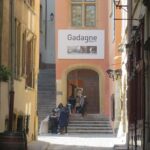
Stop 2: Montee de la Grande Cote, where the city tilts

Next comes Montee De La Grande Cote, the iconic street on the Croix-Rousse slopes. This is where you feel the geography, not just read about it.
Walking this stretch helps you understand why Croix-Rousse neighborhoods feel “stacked.” The slopes shape everything: routes people take, where buildings sit, and how communities organize themselves across elevation. If you’ve ever wondered why Lyon seems to have different “moods” within a short distance, this is one of the reasons.
The route includes stops where the time on each point is fairly short, which is good. You get the view and the story without draining your energy too early.
Stop 3: Amphitheater of the Three Gauls, a rare Gallo-Roman survivor

Then you hit the Amphitheater of the Three Gauls, described as a Gallo-Roman vestige unique in France. Even if you’re not a hardcore Roman-history person, an amphitheater gives you a built-in sense of scale—how crowds gathered, how public space functioned, and how older layers can frame newer ones.
I like that this stop breaks up the neighborhood walk. It’s a pivot moment from “working hillside Lyon” to “ancient Lyon survived here.” That contrast matters because the whole tour is about women’s stories shaped by eras, not one single timeline.
If you prefer lots of silent looking time at historical sites, this one may be more “listen and observe together” than “wander alone.” The guide’s narration is part of the deal.




Stops 4 and 5: Place Chardonnet, the passages, and the hidden church

After the amphitheater, you head to Place Chardonnet, then through a passage between buildings typical of the neighborhood. These are the kinds of spaces that make you slow down without realizing you’re slowing down. Narrow passages can feel like shortcuts, but they also act like time capsules—small corridors where the city’s older life still shows through.
Place Chardonnet works as a calmer pause. Place spaces help you reset your attention after a more visually dramatic sight like the amphitheater.
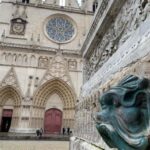
Then comes one of the most serious portions: a hidden church bombed during the siege of Lyon. The tour also discusses difficult topics including the German occupation during World War II and deportation. That combination is important: it positions Lyon’s wartime trauma as something that left marks, not just memories.
Practical tip for this segment: if you’re sensitive to historical violence, mentally prepare for it before you arrive. The narration is part of what makes the stop meaningful, so you won’t just get a quick sighting.
Stops 6 and 7: Place des Terreaux and the Bartholdi fountain finish

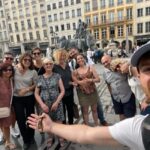
The walk ends at Place des Terreaux, described as the main square of the city, with landmarks including the city hall and the museum of fine arts, plus the Bartholdi fountain. This is a strong finish: you go from hillside textures to a more official, civic space.
La Fontaine Bartholdi (the Bartholdi fountain) is listed as an iconic sculpture here, and it’s a satisfying end point. It gives you a visual “stamp” for Lyon identity—public art in a place that feels central and ceremonial.
Finishing at Place des Terreaux also makes it easy to keep exploring. You’ll be in a part of the city where it’s simple to transition to cafés, museums, or a riverside stroll.
The guide matters, and you’ll feel it in the storytelling

You’re not just being walked from point to point. The tour is built around narrative, and the guide’s energy influences how much you retain.
One guide name shows up in feedback: Sherine, described as very cheerful. That matters with a topic as heavy as WWII occupation and deportation. A lighter delivery can still respect the subject while keeping the group engaged.
Since the tour is offered in English, plan to listen actively rather than multi-task on your phone. With a group of up to 10, the conversation flow is usually easier when everyone stays present.
Price and value: what $30.04 buys you on foot
At $30.04 per person, this tour is priced like a value city experience rather than a premium private guide. For me, the value comes from the blend: you get multiple neighborhood environments in under two hours, plus a story theme you don’t see every day.
What you’re paying for isn’t only entry to sights—many listed stops are free—but for context. Place history, street meaning, and a guided thread connecting women’s stories to Lyon’s physical spaces. In a city like Lyon, that context is the difference between “I saw it” and “I understand it.”
Also: the small group cap (max 10) is a real value enhancer. Even if you’re not paying for a private tour, you’re still getting a more personal feel than you might on bigger group walks.
Who this tour suits best
This one fits best if you:
- Want a walk that mixes neighborhoods instead of one museum-only block
- Like history that connects people and places, not just dates
- Are comfortable with difficult topics and want them handled in a guided, structured way
The tour recommends ages 14 and up, due to discussion of the German occupation during WWII and deportation. So if you’re traveling with younger kids and you hoped for gentle entertainment, this probably won’t match your goal.
Most travelers can participate, and service animals are allowed. It’s also near public transportation, which helps if you’re juggling a tight day.
Practical planning tips before you go
A few simple moves will help you enjoy this more:
- Wear shoes for slopes and cobbles, especially as you move through Croix-Rousse
- Bring a light layer and check weather closely, since the tour requires good weather
- Expect a mix of outdoor stops and story time; plan to listen rather than rush photos
- If you’re sensitive to WWII and deportation topics, consider whether you want that weight on the same day as a busy museum schedule
Also, it’s typically booked about 7 days in advance, so if you want specific timing, don’t wait until the last minute.
Should you book the Unique Tour of Great Women in Lyon history?
If you’re the kind of traveler who likes your sightseeing to mean something, I’d lean yes. You get a compact walk across Croix-Rousse and central Lyon, with a unique focus on women’s stories and a guide-driven narrative that uses the city’s layout as part of the lesson.
Book it if you’re okay with heavy WWII-era subject matter and you want a route that goes beyond “pretty streets.” Consider skipping or timing it carefully if you’re only in Lyon for light, scenic content.
FAQ
How much does the tour cost?
The tour costs $30.04 per person.
How long is the experience?
It runs about 1 hour 30 minutes to 2 hours.
Where do you start and end?
You start at Place de la Croix-Rousse (69004 Lyon) and end at Place des Terreaux (69001 Lyon).
Is the tour offered in English?
Yes, it’s offered in English.
What kind of ticket do I receive?
You receive a mobile ticket.
What’s the recommended age and are there difficult topics?
The tour recommends ages 14 and up because it discusses difficult subjects such as the German occupation during World War II and deportation.