REVIEW · STRASBOURG
Strasbourg: Premium Tour & Tasting | Official Local Guide
Book on GetYourGuide →Operated by Strasbourg Tours with Yann · Bookable on GetYourGuide
Strasbourg changes character when you hear the stories. This 2.5-hour premium walk with Yann (official licensed guide since 2012) turns UNESCO-listed lanes into something you can follow easily, with playful anecdotes and humor along the way. I love the cathedral-and-Petite France focus, and I also like how the route is paced for a human conversation—not a rushed checklist.
One key consideration: the tour does not include going inside the cathedral. You’ll get a guided look from the outside and learn the details, but interior access depends on renting pre-booked audiophones, so last-minute plans can’t count on it.
You’ll finish back at Place du Château, with time set aside for a simple but satisfying wine and cheese tasting and plenty of local guidance for what to do next.
In This Review
- Key Things That Make This Tour Worth Your Time
- Entering Strasbourg by Place du Château and the Cathedral Model
- Notre Dame Cathedral From the Outside: Spire Math and Strange Stories
- The Old Name Argentoratum and City Identity Shifts
- Gutenberg-Era Print Culture and Maison Kammerzell
- Saint-Thomas Church and Protestantism in Alsace
- Ponts Couverts: Covered Bridges and Water-Driven Thinking
- Barrage Vauban: Defensive Engineering You Can Still Read
- Petite France: Name Origin, Timber Framing, and Covered Passageways
- Pont du Corbeau and a Bridge With a Dark Past
- Wine and Cheese at Mon Oncle Malker de Munster: A Real Pause
- Practical Flow: How the Walking Stops Work Together
- Price and Value: Is $104 for 2.5 Hours Fair?
- Who This Tour Fits Best (and Who Might Want Another Option)
- What to Bring so the Walk Stays Comfortable
- Should You Book This Strasbourg Premium Tour & Tasting?
- FAQ
- How long is the Strasbourg Premium Tour & Tasting?
- Where do I meet the guide?
- Will I be able to visit the inside of the cathedral?
- Is there wine and cheese tasting included?
- Are dogs allowed on this tour?
- What languages are the guide tours offered in?
- Is the tour suitable for wheelchair users?
- Are video or audio recordings allowed?
Key Things That Make This Tour Worth Your Time
- Official guide experience since 2012: Yann’s style blends solid facts with humor, and he keeps the group moving at an easy pace.
- Cathedral stop with real “how is that even possible?” moments, like the spire-height connection to the square’s altitude and the centuries-long tallest-monument story.
- Printing and Protestantism in one arc, including Maison Kammerzell and the Church of Saint-Thomas, tied to Strasbourg’s role in Reformation-era life.
- Petite France isn’t just photogenic: you’ll hear the unexpected naming anecdote tied to public health, plus architectural details in the timber-framed houses.
- Defenses and city engineering you can actually see, from Ponts Couverts to the Vauban Dam and the bridge story at Pont du Corbeau.
- A tasting with a local address, where you’ll try a glass of wine with local cheeses (and non-alcoholic options for younger participants).
Entering Strasbourg by Place du Château and the Cathedral Model
The tour begins at Place du Château, right by the 3D bronze model of the Strasbourg Cathedral. That matters more than it sounds: it’s a fast way to get your bearings, so the rest of the walk makes sense while you’re still fresh.
Yann points out what to notice, not just what to photograph. He also helps you connect details you’ll see later—like how the old city’s layout and defensive logic still show up in the bridges and waterways. He’s easy to spot too, wearing a yellow and black cap or a yellow beanie, depending on the weather.
The group size stays small (about 8 to 12 people), so you can ask questions without shouting over a crowd. The pace is described as easy, adjusted to the group rhythm—good if you want culture without feeling like you’re sprinting between stops.
You can also read our reviews of more food & drink experiences in Strasbourg


Notre Dame Cathedral From the Outside: Spire Math and Strange Stories
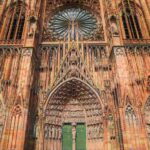
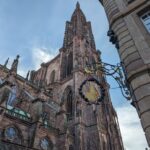
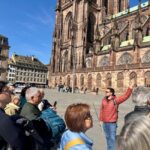
Your first real cathedral moment is a photo stop plus a guided explanation for about 20 minutes at Notre Dame. You won’t go inside on this tour, but you will learn enough outside that the building starts to feel personal.
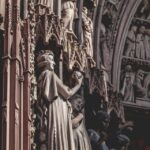
This is where you get some standout facts. You’ll hear about the Gothic facade and symbols, but the best bits are the odd connections that make you look twice. For example, you’ll learn about the connection between the height of the spire and the square’s altitude—and why that isn’t the kind of detail you’d guess from a quick look.
You’ll also get the story of how the cathedral’s spire was the tallest monument in Christendom for centuries. And yes, there’s an amusing angle too: the tale of the so-called Belly Measurer, which you’ll understand once you know where to look on the structure.
Even if you’ve seen photos online, this kind of guided “outside reading” can make the cathedral feel less like a monument and more like a document written in stone.
The Old Name Argentoratum and City Identity Shifts
Before you move far, Yann sets context with small but memorable historical hooks. One is the city’s old name, Argentoratum, and why it sounds so evocative. Another is a striking idea about identity changes: a person born in 1870 who could change nationality four times without ever leaving Strasbourg.
This kind of framing is genuinely useful. It gives you a lens for understanding why Strasbourg can feel both French and German in different eras, and why the city’s architecture and institutions reflect layers rather than one single storyline.
If you like history that you can “place” into real streets, this part is doing work. It turns the walk into a guided interpretation of what you’re seeing, not just a tour of sights.
Gutenberg-Era Print Culture and Maison Kammerzell
Next, the tour heads toward the area associated with printing and publishing, including Maison Kammerzell and a stop near Place Gutenberg. This is a smart pairing because it takes you from a striking historic building into the ideas that shaped how people read the world.
You’ll learn why Strasbourg is considered a cradle of printing, and the tour includes the key claims about early publications here: the first book printed in German and the first newspaper. That’s the kind of detail that makes the city feel more than scenic. It becomes influential.
Maison Kammerzell is the visual payoff. You’ll understand what you’re looking at on the facade, and why it belongs in the story of craft, commerce, and cultural change. If you tend to get bored with “the building is old,” this section is for you—the guide links beauty to purpose.
Saint-Thomas Church and Protestantism in Alsace
From the printing thread, you’ll move toward the Church of Saint-Thomas, where Protestantism in Alsace becomes part of the conversation. This stop is short—more of a focused photo stop with explanation—but it adds a major piece to the cultural map.
The goal isn’t to turn the tour into a theology lecture. It’s to show how Strasbourg’s religious and political shifts influenced who lived where, what institutions mattered, and why certain landmarks became central.
If you want a clear, street-level way to understand why Alsace has this distinct character, don’t skip this. It’s brief, but it helps the later neighborhoods click.
You can also read our reviews of more guided tours in Strasbourg
Ponts Couverts: Covered Bridges and Water-Driven Thinking
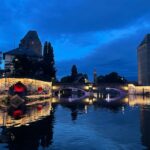
At Ponts Couverts, you’ll see Strasbourg’s covered bridges, which look charming from street level and also reveal the city’s practical mindset. Yann uses the stop to connect beauty with function.
This is where the tour’s humor and anecdote style helps again. A place that might otherwise be just “pretty arches” becomes a lesson in how Strasbourg used its water features as part of city design. You start thinking like a builder, not just a visitor.
If you’re traveling in cooler months, this is also a good time to take in textures and details before you hit the more open areas. Expect another quick photo-and-story rhythm rather than a long pause.
Barrage Vauban: Defensive Engineering You Can Still Read
The walk continues to the Vauban Dam (with about 10 minutes of guided time). This stop stands out because it’s not just architecture—it’s engineering.
Vauban’s work is often famous, but here you get it tied to what you can observe in the city’s layout. The tour frames these remains as defensive ingenuity. In other words: Strasbourg wasn’t only beautiful; it was prepared.
For me, that’s the value of including a dam on a walking tour. It changes how you see the neighborhoods that come after. Instead of thinking “old town,” you start thinking “old town that had to defend itself,” and the bridges and waterways feel more intentional.
Petite France: Name Origin, Timber Framing, and Covered Passageways
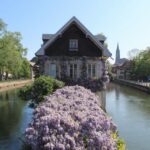
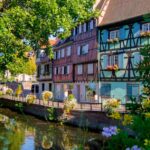
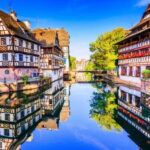
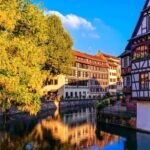
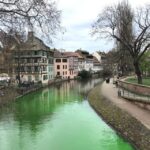
Petite France is the neighborhood everyone knows—and it’s also the neighborhood where guided context makes the biggest difference. You get about 10 minutes here, plus multiple photo moments in the surrounding area.
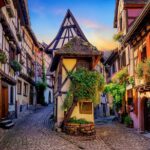
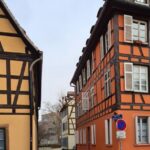
First, Yann explains the surprising anecdote behind the name Petite France. The connection is tied to public health, and it’s the kind of story that turns a postcard view into something human. You also learn about a timber-framed architectural feature and the trick behind it. Even if you don’t remember the technical wording later, you’ll spot the pattern and understand what it was meant to do.
You’ll also see the neighborhood’s bridges and the sense of passage—especially as the walk connects back to defensive elements. Petit France isn’t only romantic. It’s organized around the same water-and-stability logic that shows up elsewhere in Strasbourg.
If you’re the type who takes a lot of photos, this is your best stretch. If you’re not, it’s still worth it because the guide turns the area into a story you can retell.
Pont du Corbeau and a Bridge With a Dark Past
One stop that adds a jolt of drama is Pont du Corbeau. Yann shares that it was formerly known as the bridge of torture. That contrast—between the calm canal-side setting and the historical label—makes you slow down and look more carefully.
This isn’t a scare tactic. It’s more like a reminder that cities carry rough chapters inside their calm scenes. And that fits Strasbourg’s layered identity theme you started hearing earlier.
You’ll also get a short guided moment at the bridge (about 5 minutes), so don’t plan on reading everything there on your own. If you want the full meaning of the story, pay attention during the guide’s explanation.
Wine and Cheese at Mon Oncle Malker de Munster: A Real Pause
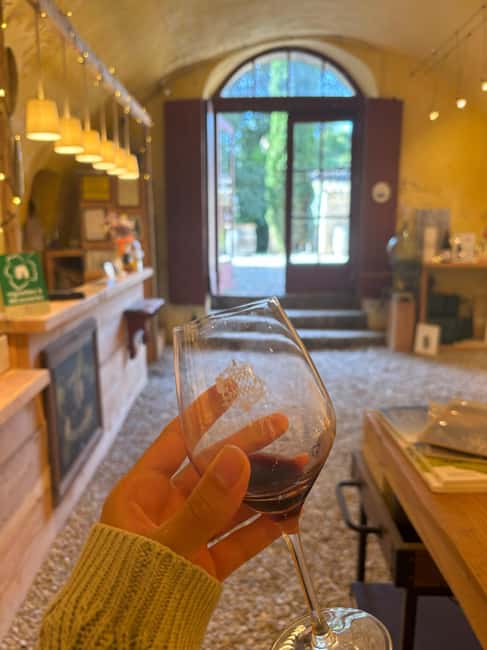
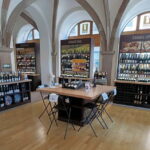
After Pont du Corbeau, you get a tasting stop: wine and cheese for about 15 minutes. The tour includes a glass of wine with local cheeses, and there’s a non-alcoholic drink offered to participants under 18 with an ID card.
This is a good length of tasting. Long enough to feel like a bonus, short enough to keep the walking momentum. It also gives you a break from cold or rain if weather turns.
One important detail: kids 13 and under get half off the tour, but they aren’t included in the tasting. They can get a soft drink if a parent asks at the start of the tour. So if you’re traveling with younger kids, it’s worth going in with that expectation.
Practical Flow: How the Walking Stops Work Together
The route is a mix of major landmarks and quicker photo stops. There are a few segments that are essentially: stop, listen, take a picture, then move on. That structure keeps the 150 minutes feeling full without dragging.
You’ll also notice that the itinerary builds from monument to neighborhood:
- Cathedral context first (so you understand the city’s “why”)
- Print culture and religious shifts next (so you understand the city’s “who”)
- Bridges and defenses next (so you understand the city’s “how”)
- Petite France and finishing at the cathedral (so you understand the city’s “feeling”)
Even if you only care about the highlights, the route order helps. You come away with both visuals and connections.
Price and Value: Is $104 for 2.5 Hours Fair?
At $104 per person for about 150 minutes, you’re paying for three things: an official licensed guide, a small-group format, and included tasting.
If you were to do this independently, you could certainly cobble together the sights. But you’d likely miss the “why” behind them—like the spire-and-altitude connection, the Belly Measurer story, and the surprisingly specific early printing claims. You’d also spend more time figuring out what to prioritize.
The tasting adds straightforward value: a glass of wine plus local cheeses, tied to a named local address. It’s not a huge meal, but it’s a real break and a memorable taste of the region.
Is it a bargain? No. But it feels priced like a premium experience: certified expertise, intimate group size, and interpretation that’s meant to be listened to, not just seen.
Who This Tour Fits Best (and Who Might Want Another Option)
This works best if you want a guided walk that feels like conversation. I’d point it toward:
- First-time visitors who want the core of Strasbourg fast, without skipping the meaning
- People who enjoy anecdotes with facts (humor is part of the format)
- Travelers who like small groups and don’t want to fight for attention
It’s not a great fit if you require wheelchair access, since the tour is not suitable for people in wheelchairs or those who have difficulty walking.
Also, if your top priority is cathedral interior views, you’ll need a different plan or earlier preparation for audiophones.
What to Bring so the Walk Stays Comfortable
Strasbourg weather can be unpredictable, so pack for the day you’re given. Bring:
- Comfortable shoes
- Water
- A sun hat and sunscreen when it’s bright
- An umbrella
- Weather-appropriate clothing
You’ll spend most of the time on foot, with an easy walking level, but still expect classic old-town surfaces. Keep luggage light: oversize luggage and large bags aren’t allowed.
One more practical note: audio recording and video recording aren’t allowed. So leave your camera-on-record mode off and focus on the guide’s spoken details.
Should You Book This Strasbourg Premium Tour & Tasting?
Book it if you want a guided Strasbourg experience where the cathedral, Ponts Couverts, Petite France, and the bridges come with context you’ll actually remember. The small-group size and Yann’s official guide background since 2012 make it feel more like a tailored story than a generic sightseeing loop. The included wine and cheese tasting is a nice bonus that helps you end the walk on a satisfying note.
Skip it—or plan a separate cathedral-interior strategy—if going inside Notre Dame is non-negotiable for you. Otherwise, this is one of the more “listen-and-learn” ways to see Strasbourg without turning it into a rushed checklist.
FAQ
How long is the Strasbourg Premium Tour & Tasting?
The tour lasts 150 minutes, roughly 2.5 hours.
Where do I meet the guide?
Meet at the 3D bronze model of the Strasbourg Cathedral at Place du Château.
Will I be able to visit the inside of the cathedral?
No. The tour does not include entering the cathedral. Interior visits require renting audiophones, which must be pre-booked several days in advance.
Is there wine and cheese tasting included?
Yes. You’ll get a glass of wine accompanied by local cheeses. A non-alcoholic drink is offered to participants under 18 with ID.
Are dogs allowed on this tour?
Yes. The tour is dog-friendly. Dogs are welcome on a leash, and participation is free of charge.
What languages are the guide tours offered in?
The tour is offered in French and English.
Is the tour suitable for wheelchair users?
No. It is not suitable for wheelchair users.
Are video or audio recordings allowed?
No. Video recording and audio recording are not allowed during the tour.