REVIEW · REIMS
Reims From Roman Ruins to World War II self-guided walking tour
Book on Viator →Operated by Tourific · Bookable on Viator
Reims history hits fast, right on the sidewalk. This self-guided walk strings together big moments—from French coronations at Notre-Dame to a Roman underground world and a WWII ending point—without you needing a human guide. You get audio plus a written guide, and you can use it offline once downloaded.
I like that the pacing is realistic for a 2-hour wander, and the story keeps connecting powers across centuries instead of feeling like random stops. I also like the practical app support: images to spot each location and an interactive map that helps you keep your bearings.
One caution: a few key sites may be closed or under repair at times, including ruins/palace areas and WWII-linked areas. It doesn’t ruin the tour’s value, but it can change what you can actually see in person that day.
In This Review
- Key highlights worth your time
- Starting at Notre-Dame: the coronation story begins in the open
- Roman underground gallery: cool, dark, and stubbornly preserved
- The Roman triumphal arch: empire symbolism in stone
- Royal square and hidden symbolism: the outstretched hand
- Royal backstage and coronation relics
- Art Deco rebuild in Reims: an American tycoon, books, and design
- WWII ending at the Franklin Roosevelt school: what you hear, even if you can’t see it all
- Great War memorial: bronze figures and a slower kind of remembering
- The medieval mansion clue: rebuilding history, but leaving a wing in ruins
- Price and value: why $7.32 can still feel like a bargain
- App features that actually help on the street
- Who this self-guided walk is best for
- Should you book this Reims walk?
- FAQ
- How long is the Reims From Roman Ruins to World War II self-guided walking tour?
- What does it cost, and is it per person?
- What language is the tour available in?
- Do I need internet to use the tour?
- What’s included with the experience?
- Are headphones provided?
- Where does the tour start and end?
- What hours is the experience available?
- Is this tour with other groups?
- What if I don’t like the tour?
Key highlights worth your time

- Offline audio for 1 year on iOS and Android, so you can replay as you walk
- Cathedral-to-coronation focus at Notre-Dame, where French kings were crowned
- Roman underground gallery that stays cool and preserved for nearly 2,000 years
- One of the oldest Roman triumphal arches you can visit right in town
- WWII Europe ending at a school site, with context about the surrender moment
- Memorial for the Great War with bronze figures that slow you down
Starting at Notre-Dame: the coronation story begins in the open
You start at the Cathedral of Notre-Dame of Reims, at Pl. du Cardinal Luçon. This is the kind of place where you don’t need extra drama—the building itself signals importance. Nearly every French king was crowned here, and the audio frames what that meant for the country’s identity and politics.
What I like is how the tour uses the cathedral as a reference point, so you’re not just admiring stone. You’re hearing why legends and sacred ideas matter in the way people understood power. The first stop also sets expectations: this walk is about how belief and authority shaped events.
Practical tip: give yourself a few minutes before you start the audio so you can look around. Even a quick scan helps later, when the tour asks you to notice details and symbolism.
You can also read our reviews of more walking tours in Reims



Roman underground gallery: cool, dark, and stubbornly preserved

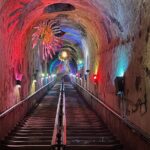
The next major moment pulls you underground to a Roman gallery built beneath Reims. The description is clear: it’s cool, shadowy, and preserved for nearly 2,000 years. That alone makes it feel different from typical outdoor ruins. You’re not just walking past stones—you’re stepping into a space the Romans designed and time mostly left alone.
This stop is a big value add because it changes the temperature and the mood. When you hear the guide’s explanations about what may have been stored there and why Reims holds one of the world’s rare examples, it feels like the city has a secret layer. And since it’s a self-guided experience, you control the pace—pause, listen again, then step back into the light.
Possible snag: if that area is closed for maintenance, you’ll want to keep moving. The tour still works as a “story route,” but obviously you lose the in-person payoff.
The Roman triumphal arch: empire symbolism in stone

You then stand beneath one of the oldest surviving Roman triumphal arches. Again, this is the kind of landmark that begs for context, not just a photo. The audio points you toward the naming link to the god of war, and it also tells you to watch for carved secrets in the stone.
What makes this stop click is the way it ties to the bigger pattern of the whole walk: symbols used by rulers to communicate dominance. You’re learning to read architecture like a message, not just admire it as craft.
If you’re the kind of traveler who likes noticing details, bring that brain here. Take your time with what the stones say—this is where the tour’s “look, then listen” approach pays off.
Royal square and hidden symbolism: the outstretched hand

Next comes a royal square where kings once stood tall. The guide nudges you to focus on one statue detail—an outstretched hand that hides layers of forgotten symbolism.
This is one of those stops that can be easy to miss if you rush. The value is that the audio turns what looks like a casual statue into a clue. You start to realize Reims wasn’t just a place where history happened; it was also a place where history was staged.
Practical tip: if the square is busy, don’t fight the crowds. Stand where the statue is visible, press play, and let the audio tell you what to look for.
Royal backstage and coronation relics

After the square, the walk shifts into a “backstage” feeling—an area tied to kings feasting, changing, and preparing for coronation. The tour description highlights that this space also hides one of France’s most sacred relics.
This stop helps you understand coronations as more than ceremony. You get a sense of the human process behind it—logistics, preparation, ritual—then you’re guided toward the sacred element that made the whole event bigger than politics.
One drawback to accept up front: these kinds of heritage areas can have restricted access, and at least one listener noted that some palace/courtyard elements were closed or under repair. If you can’t get inside, you can still take value from the audio explanation, but you’ll want to be flexible on what you physically see.
You can also read our reviews of more guided tours in Reims



Art Deco rebuild in Reims: an American tycoon, books, and design

The tour then moves into the modern story of survival and rebuilding. You’ll discover how an American steel tycoon helped rebuild war-torn Reims, and the twist is that it wasn’t weapons—it was books and bold Art Deco design.
This stop adds a hopeful kind of contrast. After centuries of power displays, you’re seeing power redirected into reconstruction and knowledge. It also gives the walk a 20th-century heartbeat, so WWII isn’t just a date on a plaque—it connects to how the city chose to recover.
If you like connections between people and place, this is one of those moments where the tour’s pacing pays off. You’re not jumping from Roman to war without a bridge.
WWII ending at the Franklin Roosevelt school: what you hear, even if you can’t see it all

The tour reaches a site that was once the nerve center of the Allied forces where World War II in Europe officially came to an end. The guide also raises an intriguing question: why Eisenhower wasn’t in the room when Germany surrendered.
This is a high-impact stop because it’s specific, not generic. You’re looking at a location tied to a turning point, and the audio format lets you absorb the context at your pace. If you’re the type who likes details, you’ll appreciate that the tour doesn’t just point at the site—it pushes you to understand what happened and what didn’t.
One thing to plan for: WWII-related sites and buildings may be harder to access during maintenance or closures. A listener flagged that the school stop was among areas that sometimes were not available. If that happens to you, still listen—often the explanation helps you make sense of what you can see outside.
Great War memorial: bronze figures and a slower kind of remembering

Then you reach a haunting memorial for the Great War. You’ll see bronze figures mourning and remembering the fallen.
This is where the tone changes. Up to now, the tour is largely about power, architecture, and events. Here, you’re guided to sit with grief and remembrance, and the bronze forms give you something concrete to focus on while you listen.
Practical tip: don’t rush this stop to “check it off.” If you give it an extra few minutes, it lands harder. The audio works well here because you don’t have to search for something new—you just need to pay attention.
The medieval mansion clue: rebuilding history, but leaving a wing in ruins
The final stretch leads to a medieval mansion where one person rebuilt history, yet left a wing in ruins on purpose. That contrast is the whole point: not every past gets fully restored, and sometimes damage is kept so meaning survives.
Even if you can’t access every room or wing, the tour’s framing can still be powerful. You’re not only learning what happened—you’re learning how decisions about restoration shape what future visitors understand.
This is a smart way to end a walk that began with coronations and moved through Rome and world war. The last question isn’t who ruled. It’s what survives—and why.
Price and value: why $7.32 can still feel like a bargain
At $7.32 per person for about 2 hours, this tour can be a great value—especially because it includes both audio and a written guide. The bigger win is that you get 1-year access on iOS and Android, plus offline use once you download it. That means you’re not paying just for one walk-day; you’re paying for something you can revisit if you’re in Reims again or you want to refresh your memory later.
It also works well if you hate wasting time. You’re not waiting for a meetup, and you can pause, rewind, and replay sections that don’t click the first time. One listener specifically praised the rewind ability and the way the tour helps you find locations fast, including pictures showing what you’re about to see.
Where it’s not as great: if you expect every site to be open every time, you might feel frustrated. One person rated it lower because multiple stages were closed or under repair. If you’re booking knowing some places might be shut, you’ll likely enjoy it more.
App features that actually help on the street
You don’t need special hardware, but you do need your own phone. The tour includes the mobile ticket, and the provider sends access instructions by email from Tourific. You also get an interactive map and images to identify stops.
Two small lessons from real-world use:
- The map can show your location, which makes it easier to recover when you wander a block or two.
- The experience is simple. Some people wished for more photo detail (circles/close-ups) and for updated museum hours, plus there was mention of a date-selection glitch. So treat this as a straightforward navigation tool, not a museum app.
Also, you should plan on using your own earbuds or phone audio since physical headphones aren’t included.
Who this self-guided walk is best for
This works best if you’re:
- Curious about how power changes form across centuries (cathedrals, Roman rule, wartime endings, rebuilding)
- Comfortable guiding yourself with an app and using short bursts of listening
- Traveling on a budget and want a strong “story route” rather than a long formal tour
It may be less ideal if you need a fully guided explanation in real time. This is a self-guided format with no human tour guide on site, though one listener did say that a narrator named Chris was very interesting and answered many questions. Just note that in general, you’re still relying on audio/written content rather than live Q&A.
Good news for planning: the tour is private for your group, service animals are allowed, and it’s near public transportation. It also says most travelers can participate, which makes it a flexible option for a short stop in Reims.
Should you book this Reims walk?
Book it if you want a compact, well-connected way to see Reims from Roman to WWII—with offline audio and an app that helps you locate each stop. At $7.32, the odds are good you’ll feel you got your money’s worth, especially if you like stories that connect landmarks instead of repeating generic facts.
Think twice if you’re traveling during a period when you expect a lot of closures. If you’re the type who gets annoyed when indoor stops aren’t available, you might want to build in backup time or pick a day with a flexible schedule.
Overall, this is a smart, low-cost way to experience Reims as a living timeline—one that you can rewind, replay, and walk through at your own pace.
FAQ
How long is the Reims From Roman Ruins to World War II self-guided walking tour?
It’s about 2 hours (approx.).
What does it cost, and is it per person?
The price is listed as $7.32 per person.
What language is the tour available in?
The tour is offered in English.
Do I need internet to use the tour?
No. After you download the tour, you can access it offline with no internet connection.
What’s included with the experience?
You get a mobile ticket, audio and a written guide, images to identify stops, an interactive map for navigation, and 1-year access on iOS and Android.
Are headphones provided?
No. Physical devices or headphones are not included.
Where does the tour start and end?
It starts at the Cathedral of Notre-Dame of Reims (Pl. du Cardinal Luçon) and ends at the Lycée polyvalent Franklin Roosevelt (10 Rue du Président Franklin Roosevelt).
What hours is the experience available?
The listed opening hours are 8:00 AM to 6:30 PM, Monday through Sunday, for the overall availability window shown.
Is this tour with other groups?
No. It’s private, meaning only your group participates.
What if I don’t like the tour?
There’s a 100% satisfaction guarantee. If you don’t love the tour, you can write to the provider for a full refund.