REVIEW · REIMS
The Connoisseurs from Reims (Private Half day Tour)
Book on Viator →Operated by Aÿ-Champagne Experience · Bookable on Viator
The best part of this half-day tour is its mix of Champagne landmarks and small family producers. You move from Dom Pérignon’s grave in Hautvillers to quiet vineyard viewpoints, then into working presses, cellars, and tasting rooms away from the grand commercial houses.
I like the private format, since your guide can explain Champagne at your pace. I also like the two-part tasting: three Premier Cru Champagnes first, followed by three Grand Cru Blanc de Blancs from the Côte des Blancs. The main drawback is the price, $669.09 per person, which makes the tour a serious splurge for only four and a half hours.
In This Review
- Key points at a glance
- Why this private Reims tour works
- Hautvillers, the birthplace of the Champagne story
- The Marne Valley viewpoint
- Inside a family producer’s cellar
- Entering the Côte des Blancs
- Oger and the Grand Cru Blanc de Blancs tasting
- Epernay’s Avenue of Champagne
- What the $669.09 price really buys
- Who should book this Champagne experience
- Should you book it?
- FAQ
- Where does the tour take place?
- How long does the tour last?
- Is pickup available?
- Is this a private activity?
- How many Champagnes are included?
- What kind of Champagne is tasted in the Côte des Blancs?
- Does the tour visit Dom Pérignon’s grave?
- What is the cancellation policy?
Key points at a glance
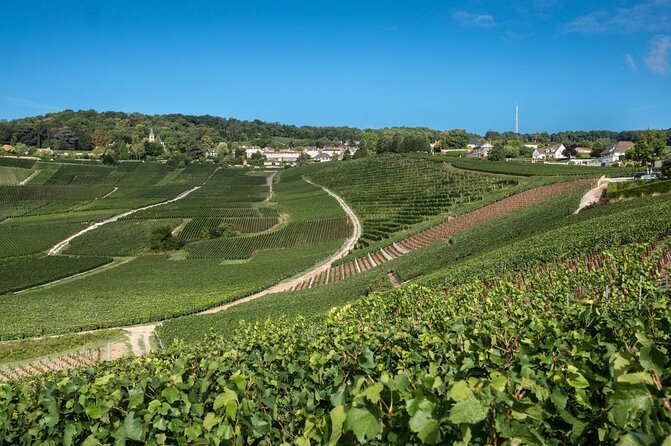
- Hautvillers and Dom Pérignon: Visit the church where the spiritual father of Champagne is buried, then look across the Marne Valley from the historic vineyard hillsides.
- Two independent producer families: See presses, wineries, and cellars instead of spending the whole tour in polished brand showrooms.
- Six serious tastings: Try three Premier Cru Champagnes and three Grand Cru wines, including Blanc de Blancs made from 100 percent Chardonnay.
- The Côte des Blancs: Pass through Cramant, Oger, Chouilly, and Avize, the heartland of Chardonnay Grand Cru Champagne.
- Epernay’s Avenue de Champagne: Learn about the grand mansions and the cellars beneath one of the region’s most celebrated streets.
- Private transport and pickup: Pickup is offered, and only your group takes part, with group discounts available.
Why this private Reims tour works
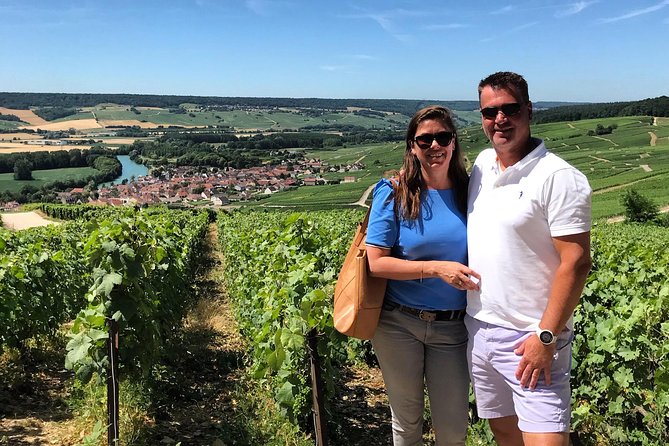
This is not a quick cellar stop with one glass and a sales pitch. It is a compact introduction to how Champagne is made, where it comes from, and why different villages produce wines with different character.
You begin in Reims and cross the Montagne de Reims, a forested stretch between the city and Epernay. The route matters. It gives you a sense of the region before the first tasting, and it connects Reims, Hautvillers, Epernay, and the Côte des Blancs in one well-planned outing.
The guide is central to the experience. Isabelle is named in the tour feedback, and her warmth, clear explanations, and patience with different English accents were singled out. That is useful here, since Champagne has its share of technical terms, from dosage to Grand Cru classifications. A good guide makes the difference between tasting six wines and understanding six wines.
Because this is a private activity, you are not tied to a large group’s pace. You can ask why one bottle is extra brut, how an old-vine Champagne differs, or why a wine aged in oak tastes different. That flexibility helps justify the high cost, especially for a small group sharing the experience.
You can also read our reviews of more private tours in Reims


Hautvillers, the birthplace of the Champagne story
Hautvillers is the emotional center of the tour. The village is known as the Cradle of Champagne, and the first stop is the Abbaye Saint-Pierre d’Hautvillers.
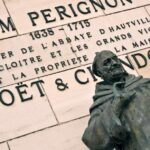
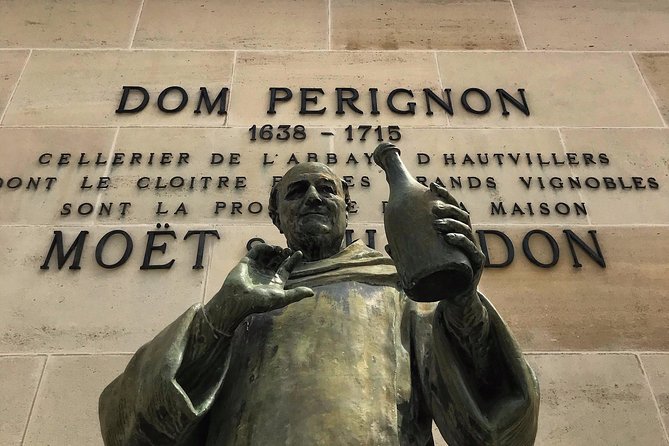
Inside the church, you see the grave of Dom Pérignon. The guide tells his story and addresses the familiar question: did he invent Champagne? The answer is more useful than the myth. Dom Pérignon is remembered as a major figure in the development and refinement of Champagne wine, but the popular claim that he single-handedly invented sparkling Champagne is too simple.
That short church visit lasts about 30 minutes and has no separate admission charge. It gives the rest of the outing some context. You are not simply tasting a product with a clever label. You are seeing the village tied to one of its most important early figures.
The stop is also a good reminder that Champagne is not only about grand houses and expensive bottles. Hautvillers is a village setting, and the church visit feels more personal than a large commercial attraction. You should expect a guided explanation rather than a long museum visit, so anyone wanting extensive religious art or architectural detail may find this part brief.
The Marne Valley viewpoint
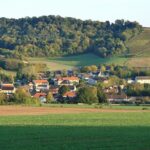
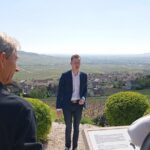
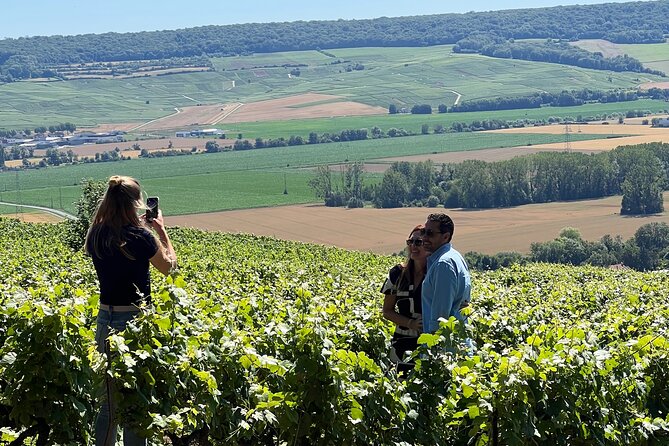
After the church, you stop in the UNESCO-listed historic hillsides of Champagne. From the vineyard viewpoint, you look over the Marne Valley and the surrounding vines.
This is one of the tour’s best photo stops, but it has more value than scenery. Your guide explains how the vineyards are managed and why the slope, exposure, and village location matter. You begin to see Champagne as a collection of small growing areas rather than one uniform wine region.
The view also connects Dom Pérignon to the place where he worked. The tour explains that he carried out winemaking experiments in this area, so the panorama is tied directly to the story you have just heard in the church.
Bring a little patience for the weather. The viewpoint is an outdoor stop, and the appeal depends on clear conditions. Still, even a short pause here breaks up the tastings and keeps the tour from feeling like four straight hours indoors.
Inside a family producer’s cellar
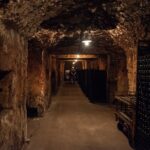
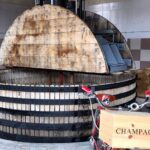
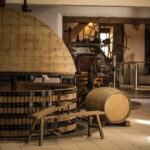
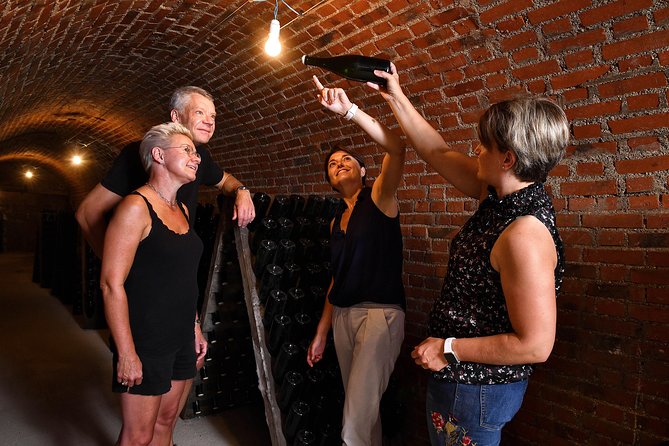
The first producer visit introduces you to an independent grower family. You see the presses, production areas, winery, and cellar, followed by a guided tasting of three Premier Cru Champagnes.
This is an important part of the tour for anyone trying to understand the difference between a famous Champagne house and a grower-producer. At a small family operation, the connection between vineyard and bottle is easier to follow. You can see where the grapes enter production and hear how the wine is handled before it reaches the glass.
The three Premier Cru wines let you compare bottles from a high-ranking village category without jumping immediately to the most prestigious Grand Cru examples. Your guide offers tasting advice, so you are not left to judge the wines by bubbles and sweetness alone.
The exact producer and village can change. Depending on the season and availability, this visit and tasting may take place in the Côte des Blancs or in Aÿ-Champagne. That flexibility is practical, but it means you should not treat the advertised stop as a guarantee of one particular family or cellar.
The tasting may also include Champagne-based alcohols and aperitifs as additional samples. The supplied details do not specify the number or style of these pours, so consider them an extra part of the visit rather than the main tasting promise.
Entering the Côte des Blancs
The route then turns toward the Côte des Blancs, the area best known for Grand Cru Chardonnay. You pass through Cramant, one of the celebrated Grand Cru villages, on the way to Oger.
This part is especially valuable if you enjoy Blanc de Blancs Champagne. Blanc de Blancs means the wine is made from white grapes, and here the focus is 100 percent Chardonnay. The tour makes that grape the main subject rather than treating it as a side note.
You also pass through Chouilly and Avize. The route includes a view of the largest Champagne bottle factory and a passage near Château de Saran, described as an ultra-private property. These are passing sights, not scheduled interior visits, so think of them as added context from the vehicle rather than attractions where you get out and explore.
The trip through the Côte des Blancs gives you a stronger sense of village identity. Cramant, Oger, Chouilly, and Avize are not interchangeable names on a map. They are part of the explanation for why Champagne labels often emphasize a village, grape, vineyard, or style.

Oger and the Grand Cru Blanc de Blancs tasting
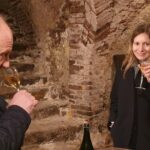
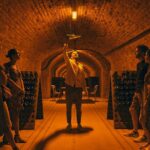
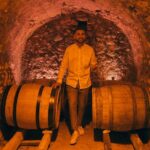
In Oger, you visit the second independent producer family. This stop includes another look at the presses, winery, and cellars, followed by three Grand Cru Champagnes of your choice.
The tasting is built around different expressions of Blanc de Blancs. You may compare natural Champagne without dosage, extra brut, wine from old vines, a vintage bottling, or a Champagne aged in oak barrels. The selection depends on availability, but the range shows how much style can change even when the grape remains 100 percent Chardonnay.
This is where the guide’s tasting advice matters most. A wine without dosage will present differently from an extra brut Champagne. A vintage wine has a different point of reference from a non-vintage blend, while oak aging can add another layer of texture and flavor. You do not need advanced wine knowledge to enjoy the comparison, but you should be ready to taste slowly and ask questions.
The second producer visit also adds balance to the first. Instead of seeing one small operation and assuming it represents the whole region, you get two family settings. The tour cannot show every production method in Champagne, but it gives you a useful look at how independent producers work.
The tasting schedule is generous for a four-and-a-half-hour tour. Six Champagnes, plus any additional aperitifs or spirits, can become a lot in a short time. Eat beforehand, pace yourself, and use the tasting as a lesson rather than a race.
Epernay’s Avenue of Champagne
The tour passes through the Avenue de Champagne in Epernay, the unofficial capital of the Champagne vineyard. This grand street is lined with Champagne houses, mansions, and production buildings connected to names such as Moët & Chandon, Perrier Jouët, and Pol Roger.
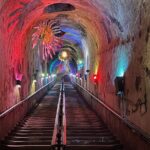
Beneath the avenue are about 100 kilometers of cellars holding around 200 million bottles. The street is often called the most expensive avenue in the world, a reference to the value stored underground rather than the price of its real estate.
You do not receive a full cellar tour here. Instead, the guide gives a commented passage through the avenue and explains the history of the buildings and the Champagne houses connected to them. That makes this stop a useful contrast with the family producers. The big houses show scale, prestige, and commercial reach. The independent growers show a smaller link between vineyard, production, and bottle.
If you want to visit a major Champagne house in depth, you would need a separate booking. This tour gives you an overview from the vehicle, which is the right use of time for a half-day route that already includes two production visits.
What the $669.09 price really buys
At $669.09 per person, this is expensive. The price may be easier to accept if you are traveling as a couple or a small private group and want transport, guiding, vineyard stops, two producer visits, and six tastings combined in one outing.
You are paying for privacy and time saved as much as for Champagne. Reaching Hautvillers, Oger, and the Côte des Blancs independently would require careful planning, and public transport would not give you the same access to small producers or the same explanation along the way.
The value drops if your main goal is simply to drink Champagne. Epernay has less costly tasting options, and a standard group tour can cover some of the same ground for far less. This experience makes the most sense if you care about the difference between Premier Cru and Grand Cru wines, want to see production sites, and prefer a guide focused on your group.
Pickup is offered, but the supplied details do not specify the exact pickup area or whether every starting point qualifies. Confirm that before paying. The tour is confirmed at booking, mobile tickets are accepted, and group discounts are available. Most people can participate, and the activity operates as a private tour for your group alone.
Free cancellation is available up to 24 hours before the start time. Changes or cancellations made less than 24 hours ahead are not accepted for a refund, with cut-off times based on local time.
Who should book this Champagne experience
I would choose this tour for someone staying in Reims who wants a focused introduction to the vineyard villages around Epernay without arranging several separate visits.
It suits wine lovers who want to compare styles, couples looking for a private day out, and small groups that value a personal guide. It is also a good fit if you want the story of Dom Pérignon and the UNESCO-listed hillsides alongside the tasting.
I would be more cautious if you have only a passing interest in Champagne or if your budget is tight. The price is hard to defend for a casual drinker, especially since the Avenue de Champagne is a drive-by commentary rather than an interior visit.
The tour is also compact. You see several places, but you do not get long free periods in Hautvillers or Epernay. If you want cafés, shopping, or a leisurely walk through each village, plan extra time on another day.
Should you book it?
Book this private tour if you want the Champagne region explained through its villages, growers, production rooms, and bottles. The strongest features are the private guide, the two independent producer visits, and the chance to compare three Premier Cru wines with three Grand Cru Blanc de Blancs.
Skip it if you mainly want the lowest-cost tasting or a full cellar tour at one major Champagne house. For the right small group, the premium buys a well-shaped route and a more personal introduction to Champagne than a basic tasting stop can provide.
FAQ
Where does the tour take place?
The experience begins in Reims and visits Hautvillers, Epernay, and the Côte des Blancs, including Cramant and Oger. The route also passes through Chouilly and Avize.
How long does the tour last?
The tour lasts approximately 4 hours and 30 minutes.
Is pickup available?
Yes, pickup is offered. The provided details do not specify the exact pickup locations, so confirm the pickup point when booking.
Is this a private activity?
Yes. Only your group participates in the tour.
How many Champagnes are included?
The planned tastings include six Champagnes: three Premier Cru Champagnes at the first producer and three Grand Cru Champagnes at the second producer.
What kind of Champagne is tasted in the Côte des Blancs?
The Côte des Blancs tasting focuses on 100 percent Chardonnay Grand Cru Blanc de Blancs Champagne. Possible styles include natural Champagne without dosage, extra brut, old-vine, vintage, and oak-aged wines, depending on availability.
Does the tour visit Dom Pérignon’s grave?
Yes. The tour includes a private guided visit to the Church of Saint-Pierre in Hautvillers, where Dom Pérignon is buried.
What is the cancellation policy?
You can cancel at least 24 hours before the experience starts for a full refund. Cancellations or changes made less than 24 hours before the start time are not accepted for a refund.