REVIEW · PARIS
Paris: Pompidou Center – Skip-the-Line Guided Tour 8 guests
Book on GetYourGuide →Operated by Babylon Tours Paris · Bookable on GetYourGuide
Modern art can finally feel organized. This small-group Pompidou tour uses the museum’s inside-out Renzo Piano design story to make sense of Cubism through Pop Art, and you also get time to climb up for a top-floor view of Paris. One catch: it’s not set up for most wheelchair users, unless you request a wheelchair-suitable version in advance.
I especially like how the tour keeps momentum without turning into a rushed slideshow. The guides (for example Anastasia, Dunya, Belen, and Tanya) have a knack for explaining art in plain language, and they’ve even been able to connect with mixed groups that include pre-teens. The biggest practical consideration for you is that there are no large bags allowed, so plan to travel light.
You’ll meet your guide by the blue parking sign at the corner of Rue Beaubourg and Rue Rambuteau, then start outside with the museum’s striking exterior before moving into the collections. Expect a strong focus on modern and contemporary art, plus some rules to follow inside like silent rooms where talking is off-limits.
In This Review
- Key things to know before you go
- Why the Pompidou’s inside-out design matters more than it sounds
- Where to meet and how to travel light
- The “3,200 works” problem and how this tour solves it
- A room-by-room guide to Cubism, Fauvism, and the art that broke rules
- Dada’s chaos and dark humor (and why it’s not just random)
- Surrealism and the spotlight on Salvador Dalí
- Pop Art, Warhol, and the art of modern life
- Bauhaus, Abstract Expressionism, and modern art beyond France
- Contemporary galleries: Fluxus, Minimalism, and Dubuffet’s winter garden
- Climb up for the rooftop Paris panorama
- Guides make the difference: Anastasia, Dunya, Belen, Tanya
- Price and value: is $384 for 150 minutes fair?
- Who this Pompidou tour is best for
- Should you book this Pompidou Center skip-the-line tour?
- FAQ
- Where do I meet the guide for this Pompidou Center tour?
- How long is the Pompidou Center skip-the-line guided tour?
- Is this tour small-group or private?
- What’s included in the price?
- What is not included?
- What language is the tour offered in?
- Can I bring luggage or a large bag?
- What do I need to bring with me?
- Is the tour wheelchair accessible?
- What happens if the museum closes or delays opening?
Key things to know before you go

- Max 8 guests for a more personal pace (and fewer people getting in the guide’s way)
- Skip-the-line entry so you spend time in galleries, not waiting
- Modern art overview with real turning points like Cubism, Dada, Surrealism, and Pop Art
- Contemporary stops covering themes like Fluxus and Minimalism
- Top-floor rooftop panorama for a Paris view you’ll actually remember
- No large luggage and occasional museum closures with limited refund/discount rules
Why the Pompidou’s inside-out design matters more than it sounds

Before you even reach the galleries, this tour starts with the Pompidou Center’s most famous idea: an inside-out building. Designed by Renzo Piano, the structure shows off its bones and function on the outside, with bright color and a clear sense of “how the place works,” not just how it looks.
That framing is the first value of the tour. Modern art can feel like it’s from a different planet until someone gives you the right lens. Here, the guide uses the building’s “outside shows the inside” concept to set expectations: modern and contemporary art often does the same thing, in its own way, by revealing the process, the shock, or the thinking behind the work.
If you’re the type who likes context, this approach helps. You don’t just see paintings; you hear how ideas evolve and why certain movements were reactions to their times.
You can also read our reviews of more guided tours in Paris


Where to meet and how to travel light

You meet at a very specific landmark: the blue parking sign on the corner of Rue Beaubourg and Rue Rambuteau. Show up a bit early so you can check in calmly. The meeting point is central and easy to find once you orient yourself to that corner.
Now, the logistics that can make or break the day. This tour does not allow luggage or large bags. If you’re doing other Paris stops that day, I’d plan to store big items before your Pompidou time. Bringing a passport or ID card is required, so toss that in your pocket or day bag.
Inside, be ready for museum-style rules. Some areas are designated silent rooms, where noise and talking aren’t allowed. That doesn’t ruin the experience, but it does mean you may have to keep your voice down even if you’re used to asking lots of questions everywhere.
The “3,200 works” problem and how this tour solves it

The Musée National d’Art Moderne collection is huge—nearly 3,200 works—so walking in on your own can feel like staring at a firehose. The tour’s job is to reduce the chaos into a clear path through the most important ideas.
In practice, that means you’re not trying to see everything. You’re learning how to recognize what changed when: style shifts, political shocks, and new ways of making meaning. If you’ve ever wondered why modern art suddenly looks the way it does, this tour is designed to answer that question directly.
This is where the small group matters. With up to 8 guests, the guide can actually steer the conversation, slow down when someone needs clarity, and move when you’re ready for the next movement. If you’re traveling with friends, it also helps that the group size stays intimate rather than becoming a crowd.
A room-by-room guide to Cubism, Fauvism, and the art that broke rules
The tour begins your modern art sweep with some of the movements that teach you the “language” of 20th-century art.
You’ll look at Cubism in front of a Picasso painting. The goal here isn’t to memorize art history terms. It’s to understand what Cubism is doing—breaking objects into parts and showing multiple views at once—so later movements make more sense.
Next comes Fauvism, discussed while admiring a Matisse work. Fauvism is often described as bold color, but the tour frames it as a choice: color as expression, not just description. That’s useful for you because it changes how you look when you’re standing there trying to interpret what you’re seeing.
From there, the guide connects artistic shifts to the world around them, including how the World Wars impacted the art world. That historical thread matters because modern art isn’t random. It’s tied to rupture—people trying to explain what they lived through, or refusing to explain it in old ways.
Dada’s chaos and dark humor (and why it’s not just random)

One of the most memorable sections is the movement that many people think they “don’t get” at first: Dada. In this tour, Dada is presented as a reaction to the gore of World War I, and as a response that uses chaos and dark humor instead of neat beauty.
That framing helps you stop treating Dada like a prank. You start to see it as a language born from disgust and disbelief. The guide’s job is to translate what you’re looking at into why it exists, and that translation is exactly what makes the hour feel like progress rather than confusion.
If you enjoy art that challenges your expectations, this is one of the tour’s best stretches. If you’re worried modern art will leave you cold, this is the part where you’ll likely start feeling it click.
A few more Paris tours and experiences worth a look



Surrealism and the spotlight on Salvador Dalí
After Dada, the tour moves into Surrealism, including a look at works by Salvador Dalí. Surrealism can feel like dream logic, which is exactly why it helps to have a guide connecting the dots.
You’re not just observing strange images. You’re learning what the movement is trying to do: disturb normal perception and reveal the power of the subconscious. For many people, Dalí is the gateway drug into surrealism because he’s so recognizable, but the guide’s explanation turns recognition into understanding.
Pop Art, Warhol, and the art of modern life
Then you shift into Pop Art, with stops that include Andy Warhol. Pop Art is often described as art about consumer culture and media, but the tour makes it feel more immediate. You get a sense of why artists would copy, remix, and repeat images instead of hiding behind traditional artistry.
What I like about including Pop Art in the same route as earlier movements is that you can see the through-line. The guide helps you notice that these aren’t isolated styles. They’re different reactions to how modern life works, how society communicates, and how meaning gets manufactured.
Bauhaus, Abstract Expressionism, and modern art beyond France
The tour doesn’t lock you into a single country or single label. You’ll also encounter Bauhaus and Abstract Expressionism, which broaden your understanding of what “modern” can mean.
And you’ll see a mix of French and international artists. The tour specifically mentions artists such as O’Keefe, Pollock, and Mondrian, which is a smart choice if your goal is to walk out with a real sense of the bigger map.
This matters for value. A tour that only sticks to one famous school can leave you with a narrow mental folder. Here, the selection supports an overview: the movements build on each other, but you also get enough variety to feel confident naming what you’re looking at afterward.
Contemporary galleries: Fluxus, Minimalism, and Dubuffet’s winter garden

After modern art, the tour shifts to contemporary galleries, where the tone changes. You’ll hear about more recent movements like Fluxus and Minimalism, which often confuse first-time museum-goers because they can look simple or unusual at first glance.
The guide’s job is to explain what’s being emphasized—sometimes it’s the idea, the process, or the choice to remove decoration rather than add it.
One standout mentioned in the tour format is Dubuffet’s winter garden installation. Installations are tricky to judge on your own because you might not know where to stand or what the artist intended you to notice. With a guide, you’re more likely to catch the structure of the work, not just the surface look.
Climb up for the rooftop Paris panorama
One of the best practical reasons to book this tour is what happens near the end: you spend time on the roof and enjoy a Paris panorama from the top area of the museum.
This is more than a nice photo stop. It gives you a physical break after art-heavy rooms and a sense of place. You get to reset your brain, then come back (or finish) with a clearer view of what you just learned.
If you’re the kind of person who needs a memory anchor, this rooftop moment does it. It turns the tour from a series of rooms into a full experience.
Guides make the difference: Anastasia, Dunya, Belen, Tanya
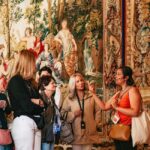
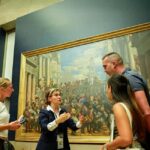
The tour’s content is strong, but the quality of the guide is what makes it stick. The guides who have led this experience in English-language sessions include Anastasia, Dunya, Belen, and Tanya, and the common thread in their approach is how they explain modern and contemporary art without sounding like a textbook.
Several of the guides are described as able to engage different ages, including families with pre-teens. That matters because modern art can be intimidating. When the guide can keep everyone on the same page, the tour feels like a shared conversation rather than a lecture.
Price and value: is $384 for 150 minutes fair?
At $384 per person for about 150 minutes, you’re paying for three things: skip-the-line access, a professional guide, and a focused route through major parts of the collection. You’re also paying for time efficiency—this museum is big, and modern art needs interpretation to feel rewarding.
If you’re the type who can wander a museum alone and enjoy random stops, you might feel this price is heavy. But if you want the “modern art map” in one sitting—Cubism to Dada to Surrealism to Pop Art to contemporary movements—this tour is designed to justify the cost.
I’d think of it like this: you’re buying clarity. Instead of spending your day trying to figure out what matters, your guide helps you see patterns fast, and you finish with the rooftop view that gives the day closure.
Who this Pompidou tour is best for
This tour is a great match if you:
- want a guided overview of modern and contemporary art movements
- like small groups and a guide who can keep energy up
- want to understand what you’re seeing, not just look at it
- care about ending with a rooftop panorama
It’s less ideal if you:
- rely on wheelchair-friendly routes (this tour is not set up for most mobility impairments, though wheelchair-suitable tours can be requested)
- need to bring large luggage (the tour does not allow it)
- hate museum quiet rules (silent rooms exist)
Should you book this Pompidou Center skip-the-line tour?
Book it if you want a time-efficient, guide-led overview that helps you “read” modern art. The mix of architecture storytelling, major movement highlights, and the rooftop Paris view gives you a complete arc rather than a scatter of rooms.
Skip it and go at your own pace if you’re comfortable planning your route through a huge collection and you don’t need help connecting movements to meaning. Also consider booking a different time if you expect complex mobility needs, since wheelchair-suitable options are only available on request.
If you’re ready to turn modern art from frustrating to understandable, this is one of the better ways to do it in Paris.
FAQ
Where do I meet the guide for this Pompidou Center tour?
Meet your guide by the blue parking sign on the corner of Rue Beaubourg and Rue Rambuteau.
How long is the Pompidou Center skip-the-line guided tour?
The duration is 150 minutes.
Is this tour small-group or private?
It’s offered as a private group experience, with a maximum of 8 guests.
What’s included in the price?
Entrance fee, skip-the-line entrance, a professional tour guide, and the museum tour are included.
What is not included?
Food and drinks and temporary exhibits are not included.
What language is the tour offered in?
The tour guide speaks English.
Can I bring luggage or a large bag?
No. Luggage or large bags are not allowed.
What do I need to bring with me?
Bring a passport or a valid ID card.
Is the tour wheelchair accessible?
The information is mixed: the activity notes it as wheelchair accessible, but it also says it is not suitable for mobility impairments or wheelchair users. It also states that wheelchair-suitable tours are available upon request only.
What happens if the museum closes or delays opening?
Occasional closures may happen without warning. If opening time is delayed more than 1 hour from the tour start, guests are provided an appropriate alternative, and refunds or discounts are not provided.