REVIEW · PARIS
Paris: Skip-the-Line Louvre Museum & Mona Lisa Guided Tour
Book on GetYourGuide →Operated by the tour guy · Bookable on GetYourGuide
Paris can be a museum overload. The Louvre helps, if you go in with a plan. This skip-the-line Louvre Museum & Mona Lisa guided tour is built for speed and focus: Fast Track entry through the glass pyramid plus a guide who turns huge rooms into clear stories.
I especially love the way the tour zeroes in on the museum’s headline works, from Venus de Milo to the Winged Victory of Samothrace, instead of wandering randomly. And I like the small group feel, which keeps the pace human and the questions flowing.
One consideration: even with skip-the-line ticket access, you can still face a security wait (up to about 20 minutes in high season), and the Louvre is not set up for wheelchairs on this particular format.
In This Review
- Key highlights you’ll feel right away
- Where this Louvre tour fits in your Paris plan
- Meeting point and getting inside with less stress
- The Louvre Pyramid photo stop: quick orientation, not wasted time
- A focused guided tour inside the museum
- Venus de Milo: why this statue still grabs attention
- Winged Victory of Samothrace: the drama is real
- The Mona Lisa story: fame, interpretation, and how to look
- Italian Renaissance stops: Botticelli, Veronese, and Raphael
- Timing and pacing: 2 hours of guidance, then your choice
- What you’ll pay (and why it can be worth it)
- Small group feel: easier than solo, smarter than big buses
- Security, rules, and what to bring (so nothing derails you)
- Who this tour is best for
- Book it or skip it: my call
- FAQ
- How long is the Louvre skip-the-line guided tour?
- Where do we meet for the tour?
- Does the tour include skip-the-line access?
- What major artworks are included?
- What languages are offered?
- Is food included in the price?
- Are bags and luggage allowed?
- Can I take photos inside the museum?
- After the guided part ends, can I stay in the Louvre?
Key highlights you’ll feel right away
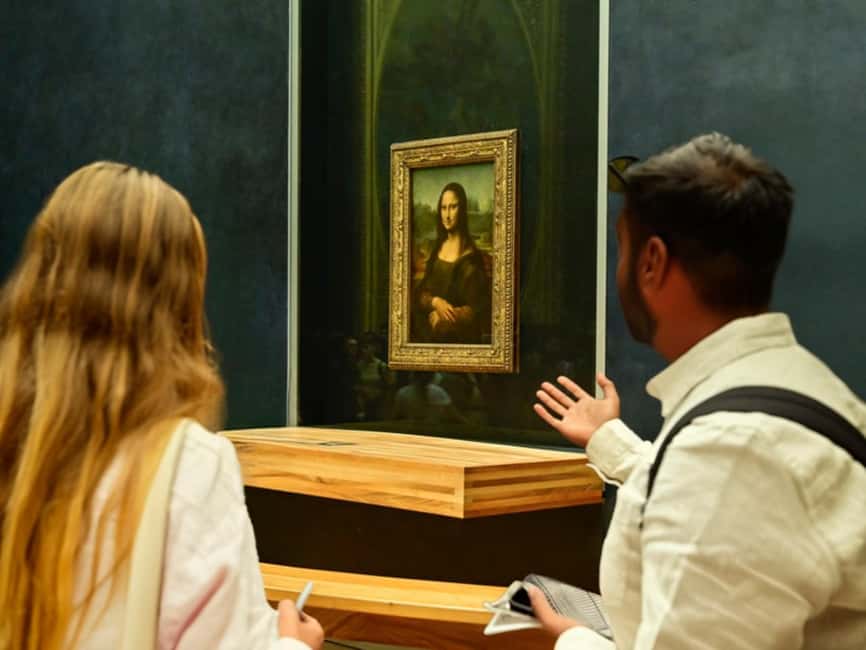
- Fast Track entry through the glass pyramid can save you real time at the start
- Mona Lisa context, including what people obsess over about her expression and the painting’s story
- Top sculpture hits like Venus de Milo and Winged Victory of Samothrace
- Italian Renaissance stops tied to artists like Botticelli, Veronese, and Raphael
- Small group pacing that’s easier to follow than doing it solo
- Stay after the tour guidance, with a clear rule about re-entering after you leave an artwork area
Where this Louvre tour fits in your Paris plan

The Louvre is one of those places where the building feels bigger than your itinerary. On your own, you’ll burn time just finding what matters. With this tour, the value is in triage: you get directed to the works people actually come to see, and you get the story hooks that make them stick.
This is not the kind of tour that tries to cover the entire museum. Instead, it’s about getting you oriented fast, then letting you enjoy the rest at your pace. The total time can run from 2 up to 8 hours, depending on the start time you choose and how long you spend in the museum areas with the guide.
If you’re a first-time Louvre visitor, or you have only one shot at it, this style makes a lot of sense. If you’re going deep into every wing, you’ll still want extra time on your own afterward—but at least you’ll start with a map in your head.
You can also read our reviews of more guided tours in Paris



Meeting point and getting inside with less stress

You meet at the equestrian statue of Louis XIV in front of the Louvre Pyramid. Your guide holds a sign with The Tour Guy on it. That matters more than it sounds. The Louvre area can be confusing, and your first job is not to waste energy circling the pyramid.
Once you’re with the group, the tour includes admission and skip-the-ticket-line access when that option is included. In practice, this helps most with the early bottleneck—the line most people picture when they think about the Louvre.
Still, don’t assume the day is line-free. Even with the ticket-line shortcut, there may be a wait at security. In high season, it can be up to about 20 minutes. The upside is that you’re not fighting a ticket line on top of it.
Tip that saves time: wear comfortable shoes. The Louvre is a lot of walking across galleries, stairs, and courtyards.
The Louvre Pyramid photo stop: quick orientation, not wasted time

Right near the Louvre Pyramid, you’ll do a brief photo stop and then pass in. This is more than just a snapshot moment. The Louvre’s layout can feel like a maze once you’re inside, so having one early landmark moment helps your brain lock onto where things are.
It also sets the tone: you’re about to enter a site where you’ll see ancient sculpture, Renaissance painting, and everything in between. Going in with that expectation keeps you from getting lost in the first rooms.
A focused guided tour inside the museum
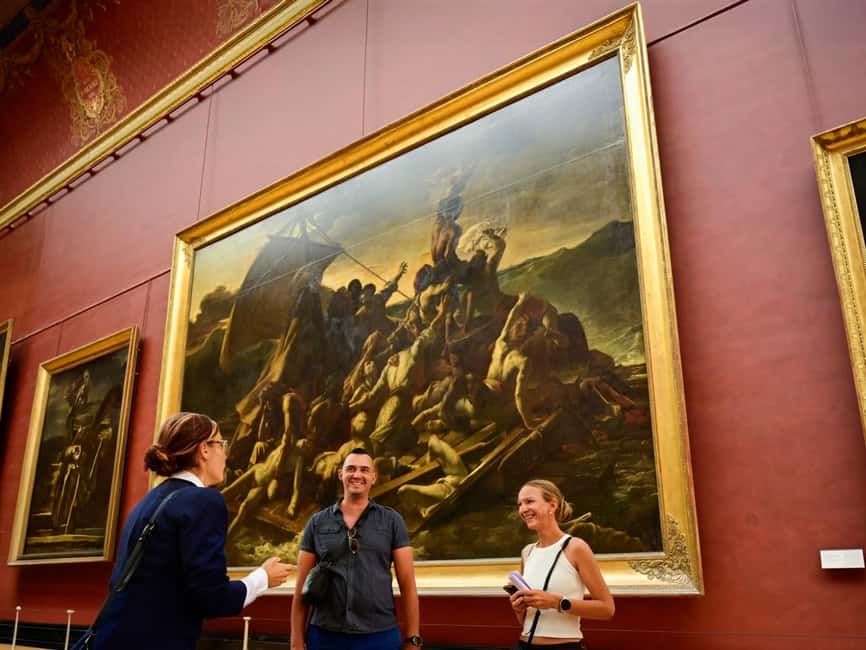
The core guided portion is about 2 hours. That’s a sweet spot for many people because it’s long enough to get meaningful stories, but short enough that you don’t feel trapped in a lecture.
The biggest benefit of going with a guide here is clarity. The Louvre has a massive collection (over 38,000 artworks), so walking on your own can turn into random seeing. With a guide, you get a thread: what you’re looking at, why it mattered, and what to notice next.
Also, you won’t be stuck flipping through a guidebook. The tour is set up around an English-speaking professional guide, and the format is designed to keep you moving between standout works without constant backtracking.
Venus de Milo: why this statue still grabs attention
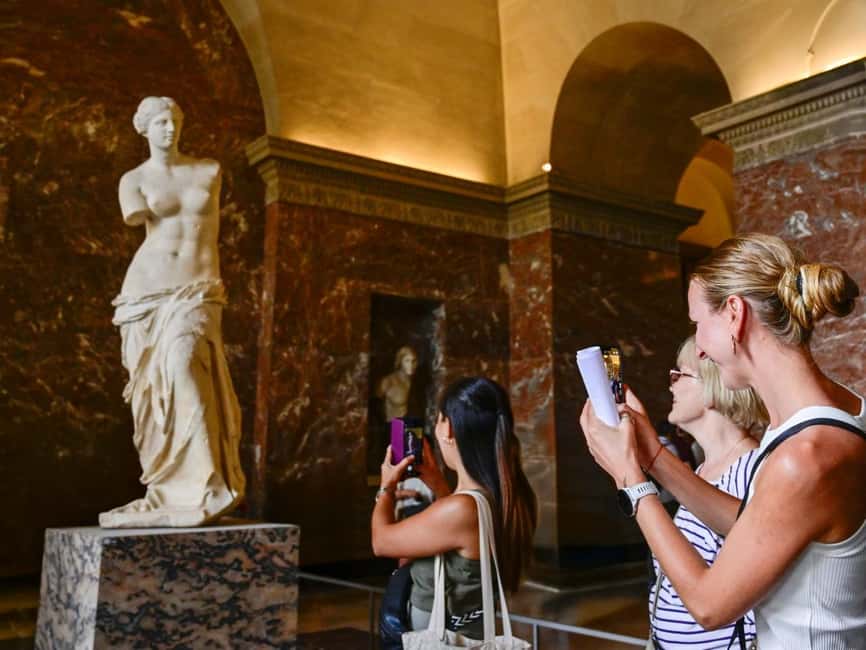
Next up is one of the Louvre’s most recognizable sculptures: Venus de Milo. Even if you think you know it from photos, seeing it in person changes the scale and the mood.
Your guide will help you understand why this statue has had such a lasting pull on artists and audiences. It’s one of those pieces where the storytelling matters: the mythological identity is only part of it. The rest is craft, pose, and how the missing elements have shaped decades of interpretation.
What I like about the way tours handle Venus here is that it’s not just a “look and move on” stop. You’re given enough context to see the sculpture like an artwork, not like a postcard.
You can also read our reviews of more museum experiences in Paris






Winged Victory of Samothrace: the drama is real
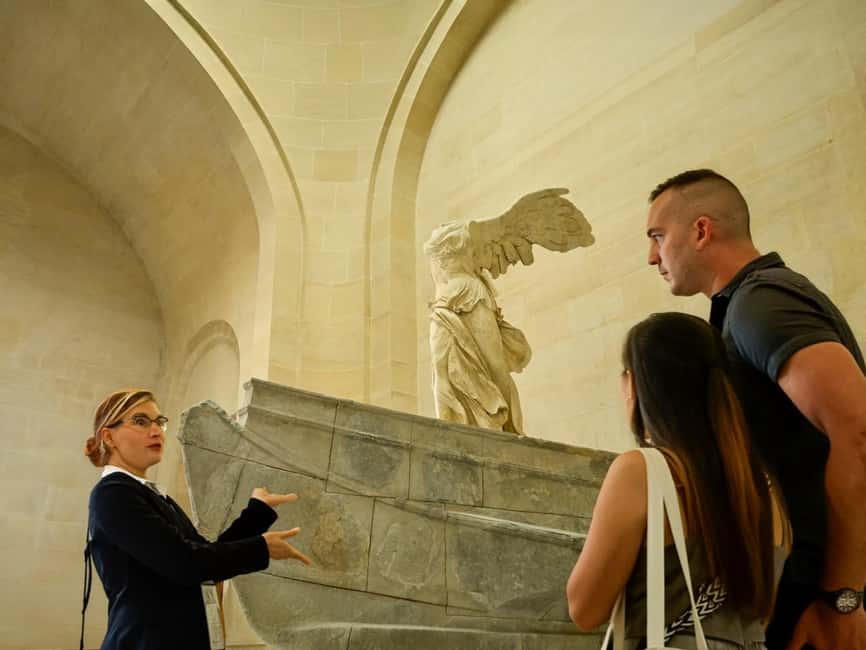
Then comes The Winged Victory of Samothrace—a Hellenistic statue portraying Nike, the Greek goddess of victory. This is the moment where the Louvre feels theatrical, even if you came in expecting dusty halls.
The guide’s job is to connect what you see to how it was made and what it was meant to convey. The “winged victory” idea is familiar, but the statue’s impact often lands harder in the museum than it does online. It looks like it’s caught mid-motion, like the figure is arriving rather than simply standing there.
A practical note: this is a popular stop. People gather. Going with the group helps you get there as part of the flow and not as a solo scramble.
The Mona Lisa story: fame, interpretation, and how to look

If you’ve got one Louvre celebrity on your list, it’s Leonardo da Vinci’s Mona Lisa—Lisa Gherardini, known as the Mona Lisa. The tour focuses on the painting’s history and why it became so famous.
One of the big discussion points is the face itself: is she happy or sad? Your guide will walk you through what’s behind that debate and why viewers keep circling back to the expression.
Here’s the practical payoff: instead of staring for five minutes and moving on with no idea what you’re looking at, you’ll know what to notice—details, mood, and the choices that make the portrait feel alive.
Also, keep your expectations realistic. The Louvre is a crowded museum, and even with ticket-line help, you might not get a private viewing. The tour helps you reach the work with context, and then it gets you moving before you lose the rest of the day.
Italian Renaissance stops: Botticelli, Veronese, and Raphael
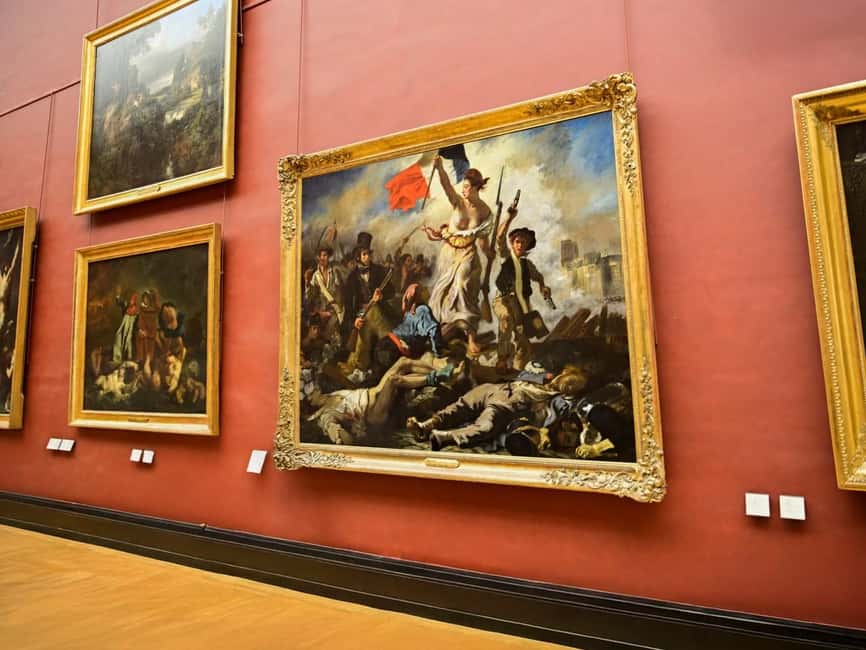
After the big headline works, the tour continues through more of the collection, including the Italian Renaissance collection. You’ll see pieces tied to Botticelli, Veronese, and Raphael.
This is valuable because it changes the Louvre experience from a collection of famous names into a connected era. When you learn how artists are related by time and influence, the museum becomes easier to navigate mentally. Suddenly the walls feel less random.
The Louvre’s sheer size can make Renaissance rooms feel like they blur together. A guide helps you focus on what matters and gives you “reason to care” instead of just “name to remember.”
Timing and pacing: 2 hours of guidance, then your choice
The tour includes the guided highlights and visits to the key works mentioned above, with the museum portion running around 2 hours. In other words, you’re not spending all day stuck in one line.
And then there’s a nice option after the tour ends: you can ask your guide for recommendations and, once your guide says goodbye, you’re allowed to stay inside the museum until closing time. One important rule: when you exit the area where the artwork is, you won’t be allowed to re-enter.
So plan your own “after” wisely. If you want to roam, do it right after the guided portion while you still have energy—and don’t treat this like you can pop out and come back later.
The tour finishes at Vedettes de Paris, which is a helpful drop-off if you want to connect your museum time to a Seine-area stroll afterward.
What you’ll pay (and why it can be worth it)
The price is listed at $80 per person. That number works out best when you value three things:
- Admission is included, so you’re not paying separately for the ticket.
- You get a professional English-speaking guide guiding you through the highlights.
- You get skip-the-ticket-line access when included in your option, which reduces the worst part of the “stand around” experience.
In a museum this massive, time has a cost even if your wallet is fine. If you’re trying to see the Mona Lisa, major sculptures, and more Renaissance works in one go, a guided format like this can help you feel like you “used your entry” instead of just surviving it.
Small group feel: easier than solo, smarter than big buses
A theme across the experience is that it’s designed for small groups. You’ll be able to move at a pace that lets you actually look. Also, you’ll spend less time waiting in bottlenecks compared with the classic uncontrolled walk-on-your-own approach.
Some groups have been reported as very small (around six people). When that happens, the guide can slow down just enough for explanations and questions. That kind of attention is rare inside a place where people typically get shuttled like luggage.
One more practical perk mentioned in the experience: the pace is efficient enough that you can add extra museum wandering afterward without feeling wrecked.
Security, rules, and what to bring (so nothing derails you)
This tour has clear “know before you go” rules that matter in the Louvre:
Bring:
- Passport or ID card
- Comfortable shoes
Not allowed:
- Weapons or sharp objects
- Baby strollers
- Smoking
- Luggage or large bags
Bag limits are strict: large bags, backpacks, luggage, umbrellas, tripods, and items exceeding 55 cm x 35 cm x 20 cm can’t be brought in. There’s no coat check on site for this style of tour, and lockers aren’t accessible to the small group as part of it—so leaving extra stuff at your accommodation is the smart move.
Photography note: photography and filming are strictly prohibited in the temporary exhibition rooms. If you care about photos, plan for the Louvre to have both “allowed” and “not allowed” zones.
Who this tour is best for
You’ll likely love this experience if:
- It’s your first trip to the Louvre and you want the key works without the maze
- You want clear stories for the Mona Lisa and major sculptures
- You prefer a small group pace over big-bus chaos
- You like the idea of guided highlights, then free time to wander afterward
You might want to rethink if:
- You need mobility accessibility support (this is listed as not suitable for people with mobility impairments)
- You’re traveling with lots of gear and don’t want to deal with bag restrictions
- You need total freedom to photograph everywhere (temporary exhibition rooms are off-limits)
Book it or skip it: my call
If your goal is to see the Louvre’s greatest hits—Mona Lisa plus heavyweight sculptures—this tour is a strong “yes.” The biggest reason is value for your limited time: fast entry through the Louvre Pyramid, a focused guided route, and enough context that the works feel more than famous labels.
But be honest with yourself about expectations. This won’t turn the Louvre into a private viewing, and security can still slow you down. If you want a long, slow art-lovers day covering everything, you’d probably need more time than the guided highlights provide.
If you want a smart first Louvre day with less stress and better looking, this is the kind of guided format that makes your entry feel worthwhile.
FAQ
How long is the Louvre skip-the-line guided tour?
The duration is listed as 2 to 8 hours, depending on the starting time you choose. The guided museum portion is described as about 2 hours.
Where do we meet for the tour?
Your guide meets you at the equestrian statue of Louis XIV in front of the Louvre Pyramid. The guide will have a sign with The Tour Guy on it.
Does the tour include skip-the-line access?
Yes. The tour includes skip-the-ticket-line access when that option is included. Even with that, there may still be a wait at security (up to about 20 minutes in high season).
What major artworks are included?
You’ll visit standout works such as Venus de Milo, The Winged Victory of Samothrace, and Leonardo da Vinci’s Mona Lisa, plus additional stops in the museum including parts of the Italian Renaissance collection.
What languages are offered?
The tour is offered with a live guide in English and Spanish.
Is food included in the price?
No. Food and drinks are not included.
Are bags and luggage allowed?
Large bags are not allowed. Items larger than 55 cm x 35 cm x 20 cm aren’t permitted, and there is no coat check and lockers aren’t accessible to this small group tour. It’s best to leave extra luggage at your hotel.
Can I take photos inside the museum?
Photography and filming are strictly prohibited in temporary exhibition rooms. The rules may vary by area, but temporary exhibition rooms are a hard no.
After the guided part ends, can I stay in the Louvre?
Yes. After your guide says goodbye, you’re allowed to stay inside until closing time. But once you exit the area where the artwork is, you can’t re-enter.