REVIEW · PARIS
Paris Napoleon Walking Tour with an Historian Guide
Book on Viator →Operated by Paris Trip Touring France · Bookable on Viator
Napoleon walked through Paris long before his legend did. This 3-hour outing ties his rise, rule, and ideas to real streets and stone. It’s built around a professional art historian guide and a tight route from Palais-Royal to Les Invalides.
I really like two things about it: the focus on clear storytelling that explains why these spots mattered, and the way the itinerary layers architecture and politics on the same walk. You’ll also get a chance to ask questions and hear answers in a way that makes the whole topic feel human.
One thing to consider: you’re moving for about 3 hours with limited time at each stop, so if you want long museum-style visits, you may feel a bit rushed—especially at places where entry isn’t included.
In This Review
- Key things to know before you go
- A Napoleon Walk That Feels Like Paris, Not a Lecture Hall
- Meeting at Librairie Delamain, Then Moving Into Napoleonic Paris
- Palais-Royal: Where Politics and Drama Happened Under the Arcades
- Rue Saint-Honoré Stroll: The Street as a Shortcut to “Napoleon’s Mood”
- Église Saint-Roch: Baroque Beauty and the Revolution-Empire Overlap
- Jardin des Tuileries: Napoleon’s Royal Promenade and Paris’s Built-By-Power Axis
- Hôtel de Salm (Musée de la Légion d’Honneur): How Honor Became an Institution
- Palais-Bourbon: Parliament Views and the Weight of Place de la Concorde
- Finishing at Les Invalides: Napoleon’s Tomb and the Grand Finale
- Price and What You’re Really Paying For ($226.39 for 3 Hours)
- The Guide Makes or Breaks It: Anja and Olivier as Proof of the Concept
- Who Should Book This Napoleon Walking Tour
- Should You Book It?
- FAQ
- How long is the Paris Napoleon Walking Tour?
- What language is the tour offered in?
- Is this tour private?
- Where does the tour start and end?
- What stops are included on the route?
- Is admission included for the stops?
- What’s included in the price?
- What’s not included?
- Is the tour convenient for public transportation?
- Is free cancellation available?
Key things to know before you go
- Historian-led route that connects Napoleon’s life to Paris landmarks, not just dates
- English speaking with mobile ticket convenience
- Designed for schedule flexibility with morning and afternoon options
- Most entry is free, with one notable exception at Hôtel de Salm
- Private tour format so your group stays together and questions don’t get lost
A Napoleon Walk That Feels Like Paris, Not a Lecture Hall
Paris makes it easy to romanticize Napoleon, because so many buildings still look like power. What this tour does well is the practical part: it gives you a walking line through the city’s main “story spaces,” then the historian guide turns each one into context you can actually picture.
You’ll cover a lot of ground in a short time. And because it’s guided by a professional art historian, you’re not just hearing facts. You’re learning how the art, layout, and purpose of each location shaped the way people lived—and the way Napoleon tried to steer the country.
If you love the moment when a city starts making sense—when streets stop being random—you’ll get a lot out of this format.
You can also read our reviews of more walking tours in Paris



Meeting at Librairie Delamain, Then Moving Into Napoleonic Paris

You start at Librairie Delamain, 155 Rue Saint-Honoré (75001). That’s a smart opening spot because Rue Saint-Honoré sits right in the center of where you can imagine elite Paris moving: shopping, influence, and the public face of power.
From the start, the pace is designed for orientation. You begin near major landmarks, then the route threads you through places that look calm now, but have held plenty of drama over the centuries.
It’s also a walking tour with a moderate physical fitness level requirement, so plan for steady time on your feet. The good news: it’s not an all-day trek, and you’re not forced into marathon distances.
Palais-Royal: Where Politics and Drama Happened Under the Arcades
Stop 1 is Palais-Royal, and it’s the kind of place that rewards you for slowing down for 10–15 minutes. Behind elegant arcades, this area has a reputation for intrigue—and not the polite kind.
Today you’ll see a quieter setting: gardens and boutiques. But the guide’s job is to remind you that the atmosphere wasn’t always serene. This is one of those locations where Paris history often runs in layers: gossip and public performance in one era, political pressure in another, and then the calmer façade you get in the present.
Why this stop matters for Napoleon context: Palais-Royal sits in the larger story of how ideas spread and how crowds formed. Napoleon didn’t rule from a vacuum. His rise came from a France that was changing fast, and places like this helped shape what people believed and feared.
Tip for your visit: don’t just look forward. Peek into the arcades and notice the way the space funnels movement. That layout matters in understanding why the location could feel charged.
Rue Saint-Honoré Stroll: The Street as a Shortcut to “Napoleon’s Mood”
Between major stops, you’ll take in Rue Saint-Honoré, once described like an artery of Napoleonic-era Paris. It’s still a high-end stretch of boutiques and perfumeries, but the fun is imagining what would have been happening here when generals and officials moved through the same corridor.
This is a quick stretch—enough time to re-orient, not enough to get stuck in side-streets. It works best if you treat it like a guided “mental map.” Listen for the guide’s connections between the street and the kind of public image Napoleon needed.
If you like history you can visualize, this part does a nice job bridging the gap between big emperors and everyday streets.
Église Saint-Roch: Baroque Beauty and the Revolution-Empire Overlap
Next is Église Saint-Roch, located along Rue Saint-Honoré. It’s a baroque church experience in a very specific historical context: the guide connects it to the reality that revolutionary and imperial eras didn’t live in neat compartments.
The church’s façade and setting are worth a quick pause. You’ll get a sense of how religious architecture can feel both grand and emotionally direct—exactly the kind of space where people would talk, pray, and remember.
Why it fits a Napoleon tour: the guide frames it as a place linked to both personal devotion and political violence. Even if you’re not a church person, that mix gives the building a sharper edge. It’s not just pretty; it’s historically charged.
Practical note: entry is listed as free, so you can plan to spend time inside if you want it.
You can also read our reviews of more guided tours in Paris





Jardin des Tuileries: Napoleon’s Royal Promenade and Paris’s Built-By-Power Axis
Stop 3 is Jardin des Tuileries, and this is one of the easiest “wow” moments on the walk. In about 30 minutes, you’re placed right in the middle of Paris’s grand east–west layout—an axis that helps you understand why the city feels ceremonial.
The Tuileries gardens are often described as elegant, and that’s true. Statues and fountains shape the experience. But what the tour leans into is the way Napoleon’s era treated space like messaging: where you place promenades, what you align in the distance, and how you make people feel like they’re in the center of national story.
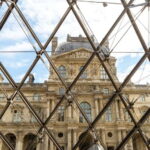
What you’ll notice on the ground: the sightlines. Standing where the guide points, you start seeing the Louvre and Arc de Triomphe du Carrousel directionally behind you, with other major landmarks pulling the eye forward. It’s geography that turns into interpretation.
If you like quick photo moments, this is a good one. If you dislike photos, it’s still a great place to listen—because you can feel the city’s planning logic.
Hôtel de Salm (Musée de la Légion d’Honneur): How Honor Became an Institution
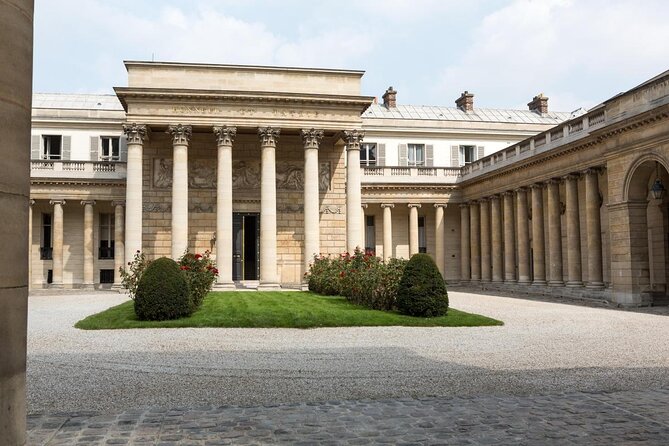
Stop 4 is outside Hôtel de Salm, now the Musée de la Légion d’Honneur. This is where the tour becomes especially relevant if you want Napoleon beyond battles and into systems.
The big idea: Napoleon created the Légion d’honneur, a high order of merit tied to loyalty and valor. The building is part of the message—an aristocratic palace turned into something like a temple for official recognition.
Important detail: admission here is not included, even though the stop itself is brief (15 minutes). That means you may only get an exterior or limited time from the walk, depending on how the guide handles scheduling at the museum.
Still, even if you don’t plan to pay for entry on this day, it’s a valuable stop because it shows you Napoleon’s “bureaucracy meets symbolism” style. He didn’t just conquer; he organized loyalty and turned service into status.
If you’re the type who loves how states use honors, medals, ceremonies, and buildings to shape identity, this is one of your best stops.
Palais-Bourbon: Parliament Views and the Weight of Place de la Concorde
Stop 5 takes you to the 7th Arr. – Palais-Bourbon, home to France’s National Assembly, with views toward Place de la Concorde and the Madeleine Church.
This part of the route is short (about 10 minutes), but it has an excellent payoff: you get a perspective shift. Napoleon’s legacy isn’t only about emperors and thrones. It’s also about how power structures changed over time, and how modern France sits on top of older political frameworks.
It’s also a great “think for a minute” pause. The guide sets up the context, then you can look out and connect the street-level environment to national governance. You’ll see a place of law and decisions, not just monuments.
Entry is listed as free, so you’re not forced into another ticket decision right here.
Finishing at Les Invalides: Napoleon’s Tomb and the Grand Finale
The tour ends at Les Invalides, specifically at Napoleon’s Tomb (129 Rue de Grenelle, 75007). You’re stepping into the grand church that houses the tomb, and that matters because it changes how the whole day lands.
During the walk, Napoleon can feel like an argument—history explained through locations. At the end, he becomes something else: a person sealed into national memory by architecture and ritual.
This is where you can feel the emotional weight of the subject. The guide’s wrap-up helps you connect what you saw earlier—promenades, institutions, churches—to the way the country chose to remember him.
If you’re staying in Paris for more than a day, I’d treat this finale as your “anchor moment.” It makes the rest of your sightseeing easier, because you’ll recognize more of Napoleon’s shadow around the city.
Price and What You’re Really Paying For ($226.39 for 3 Hours)
At $226.39 per person for an approximately 3-hour private walking tour, this isn’t the cheapest way to spend an afternoon in Paris. So here’s how to judge value.
You’re paying for:
- A professional art historian guide, not just a general guide
- A route that connects multiple major locations without you needing to plan the order
- A private tour/activity format where your group stays together
- A structure that keeps time tight, so you see a lot without burning a whole day
The tour also includes key convenience elements like a mobile ticket, and most stops have free admission listed in the itinerary. The only notable potential extra cost in the walk’s plan is the Hôtel de Salm / Musée de la Légion d’Honneur, where admission is not included.
If you like history and you tend to go through museums with a guide rather than “just reading plaques,” this price starts to make sense. If you’re more of a self-guided traveler who loves loose wandering, you might feel it’s more structured than you prefer.
The Guide Makes or Breaks It: Anja and Olivier as Proof of the Concept
The standout theme from past experiences with this tour is the guide quality. Named guides include Anja (also spelled Anya in one write-up) and Olivier. The pattern is the same: deep expertise, friendly delivery, and the patience to answer lots of questions clearly.
That’s not just pleasant. It’s practical. Napoleon is complicated: he’s not only a conqueror, and he’s not only a reformer. You need context to understand how people could admire him and also fear him.
When a historian guide explains multiple angles—personal, political, artistic—you come away wanting to read more. One of the best signs from earlier experiences is that people left inspired to pick up a Napoleon biography, which means the tour didn’t just inform; it created a hunger for follow-up.
If you’re the kind of person who asks questions (or wants to try not to ask questions but ends up asking anyway), a guide who can handle it calmly is a big value.
Who Should Book This Napoleon Walking Tour
This tour is a good fit if you:
- Want a tight 3-hour introduction to Napoleon’s impact through Paris locations
- Like architecture and public spaces as much as political history
- Prefer guided context over reading alone
- Want flexibility with morning or afternoon scheduling options
- Appreciate a private setting where your questions don’t get lost
It might be less ideal if you:
- Want long interior museum time at multiple sites in one go
- Dislike walking for around 3 hours with moderate fitness demands
- Prefer to pay only for the attractions that you fully control, not ones tied to the route’s structure
Should You Book It?
If your goal is to understand Napoleon’s France with real places as your study guide, I’d book this. The route is efficient, the stops are connected thematically, and the ending at Les Invalides gives you a meaningful payoff.
My only caution is about expectations. This is a walking tour, not a full museum day. You’ll get strong context at each stop, but you’ll also move on fairly quickly. If you want extended time inside every site, plan to add extra self-guided visits later.
If you want your Paris to feel like a story you can follow, this tour gives you a clear storyline—starting in the palace arcades and ending at the tomb. That’s a satisfying way to see the city.
FAQ
How long is the Paris Napoleon Walking Tour?
The tour is about 3 hours.
What language is the tour offered in?
It’s offered in English.
Is this tour private?
Yes. It’s listed as a private tour/activity, meaning only your group participates.
Where does the tour start and end?
It starts at Librairie Delamain, 155 Rue Saint-Honoré, 75001 Paris and ends at Napoleon’s Tomb (Les Invalides), 129 Rue de Grenelle, 75007 Paris.
What stops are included on the route?
The tour includes Palais-Royal, a Rue Saint-Honoré stroll, Église Saint-Roch, Jardin des Tuileries, Hôtel de Salm (Musée de la Légion d’Honneur), Palais-Bourbon, and it concludes at Les Invalides.
Is admission included for the stops?
Admission is listed as free for several stops, but Hôtel de Salm is noted as admission not included.
What’s included in the price?
The tour includes a professional art historian guide.
What’s not included?
It does not include food and drinks, and it does not include hotel pickup and drop-off.
Is the tour convenient for public transportation?
Yes, it’s listed as near public transportation.
Is free cancellation available?
Yes. You can cancel up to 24 hours in advance for a full refund.