REVIEW · PARIS
Paris – Montmartre Small Group Walking Tour with a True Local
Book on Viator →Operated by LM Tours · Bookable on Viator
Montmartre makes the most sense when someone who grew up there leads you uphill. Corentin’s small-group walk links famous sights with local stories, from the Moulin Rouge and Vincent van Gogh’s Paris years to the old cabarets, artists’ studios, and a city vineyard many visitors miss.
I like the maximum group size of six, which gives you room to ask questions in Montmartre’s noisy streets. I also like the relaxed route and the mix of art, film, literature, and neighborhood lore. The main drawback is that the tour lasts only about 1 hour 45 minutes, so most stops are outside views rather than inside visits.
In This Review
- Key points to know before booking
- Starting near the Moulin Rouge at Place Blanche
- Following Montmartre’s artists from van Gogh to Renoir
- Local stories at Le Passe-Muraille and the Montmartre vineyard
- Au Lapin Agile and Montmartre’s cabaret past
- Climbing toward Sacré-Cœur
- Ending at Place du Tertre
- Why the group size changes the experience
- Corentin’s style and language skills
- Timing, meeting point, and physical effort
- Who will get the most from this walk
- Cancellation and booking details
- Should you book Corentin’s Montmartre walk?
- FAQ
- How long does the Montmartre walking tour last?
- How many people can join the tour?
- Who guides the tour?
- What languages does Corentin speak?
- Where does the tour begin?
- Where does the tour end?
- Does the tour enter the Moulin Rouge or other buildings?
- Is the tour suitable for people with limited mobility?
- Can I cancel for a full refund?
Key points to know before booking
- A true local guide: Corentin was born and raised in Montmartre and leads the walk with personal knowledge of the neighborhood.
- A small group of six or fewer: This matters on crowded lanes and makes it easier to hear the guide.
- A downhill-to-uphill route through Montmartre: You begin near Place Blanche and finish at Sacré-Cœur, with some walking on slopes and stairs.
- Artists, cabarets, and odd local tales: The route covers van Gogh, Renoir, Picasso, Marcel Aymé, the Moulin Rouge, and the famous donkey artist story.
- A strong family option: Children as young as ten have enjoyed the stories, and older children have been able to keep up with the pace.
- Outdoor sightseeing only: Entry to buildings is not included, and the Moulin Rouge admission ticket is separate.
Starting near the Moulin Rouge at Place Blanche
The tour begins outside Five Guys at 3 Place Blanche, near the Moulin Rouge. This is a handy starting point for a first look at Montmartre’s lower slopes, though it is not the quietest part of the neighborhood.
The Moulin Rouge is an ideal opening stop. Its red windmill and cabaret name are famous around the world, but a guide can give the setting more meaning by explaining its Belle Époque roots and its role in Parisian nightlife. You spend about ten minutes here, enough for exterior views and photographs.
You do not enter the cabaret on this walk. Admission is not included, so book this tour for the story and setting, not for a show.
From here, you pass the Café des Deux Moulins, known as the workplace of Amélie Poulain in the film Amélie. It is a quick pass-by rather than a café visit, but film fans will appreciate seeing the real place. If you want to eat or have a drink there, plan separate time before or after the walk.
You can also read our reviews of more walking tours in Paris



Following Montmartre’s artists from van Gogh to Renoir
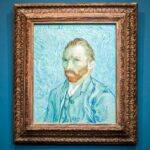
The route then turns toward the artistic side of Montmartre. At the former apartment of Vincent and Théo van Gogh, Corentin explains Vincent’s time in Paris and how the neighborhood affected his work. This is a useful reminder that van Gogh’s career was shaped not only by distant fields and later paintings, but also by his years among Paris artists.
The stop lasts roughly ten minutes and is viewed from outside. You will not tour the apartment, but the location gives the story a clear physical anchor.
Next comes Le Moulin de la Galette. The place has a darker past than its cheerful name may suggest, and it became an important setting in Montmartre’s art world. Renoir painted Le Bal du Moulin de la Galette, one of the best-known scenes of Parisian social life.
This stop is especially useful if you enjoy art but do not want a formal museum lecture. Corentin connects the building, the artists, and the neighborhood in a short explanation. You get context without spending an hour studying one painting.
The route also includes Le Bateau-Lavoir, the former home and studio center linked with Pablo Picasso and other artists of the early twentieth century. This was one of the places where new ideas in modern art took shape. Again, expect an exterior stop rather than an interior visit.
I like this section because the sights are not treated as isolated photo stops. The walk shows how artists, cafés, cabarets, and cheap working spaces helped make Montmartre a place where new art could develop.
Local stories at Le Passe-Muraille and the Montmartre vineyard
One of the more unusual stops is Le Passe-Muraille, a statue of a man appearing to pass through a wall. It comes from Marcel Aymé’s story about a man with that strange ability.
You spend about five minutes here. It is a small sight, but it adds a playful literary note to the route. If you only follow the main tourist circuit, you could easily walk past without knowing why the figure is there.
The Vigne du Clos Montmartre offers another change of pace. This historic vineyard sits in the city and reflects Montmartre’s older connection with wine production. The stop also shows that the neighborhood is more than painted facades and souvenir shops.
The vineyard is seen from outside, and the visit takes about five minutes. Do not expect a wine tasting or a winery tour. Its value is in the story and the surprise of finding vines on a Paris hill.
These short stops work best for people who enjoy details that make a neighborhood feel lived in. They are not major monuments, but they help you see Montmartre as a place with local customs and odd corners, not just a backdrop for photographs.
Au Lapin Agile and Montmartre’s cabaret past
Au Lapin Agile is described as Montmartre’s oldest cabaret and has long been associated with performers and artists. Corentin uses the stop to tell stories about the venue and the people connected with it.
You spend around five minutes here. Like the Moulin Rouge, it is an exterior visit. The appeal is not access to a performance, but the chance to understand how cabarets helped shape the neighborhood’s character.
The cabaret stops give the tour a good balance. The Moulin Rouge represents grand, famous Paris nightlife. Au Lapin Agile offers a smaller and older setting tied to artists and local anecdotes. Together, they show two different sides of Montmartre’s entertainment history.
Corentin’s storytelling seems to be a central part of the experience. The most memorable tales are not always the famous ones. One especially unusual anecdote concerns a donkey artist, a simple story that gives the walk a lighter tone and helps break up the art history.
Climbing toward Sacré-Cœur
The route continues uphill toward the Basilica of the Sacred Heart. Sacré-Cœur is the tour’s largest landmark and the natural climax of the walk.
The basilica is free to view from the outside, but this experience does not include access to buildings. The stated stop lasts about ten minutes, so you should not expect a full interior visit or a separate climb to the dome.
The reward is the view from Montmartre hill. Paris spreads out below the basilica, and Corentin allows time for photographs and a pause to take in the setting. That break matters. Montmartre’s slopes can feel demanding if you rush them, especially in warm weather.
You should wear comfortable shoes and bring water. The tour requires moderate physical fitness, and the route is not advised for older people or people with reduced mobility. The listing does not give a precise stair count or total distance, so anyone with mobility concerns should contact the provider before booking.





Ending at Place du Tertre
The walk ends at Place du Tertre, the famous square where artists display paintings and draw portraits. It is one of the most recognizable corners of Montmartre, and it can be crowded, but it makes sense as a final stop after hearing about the area’s artistic past.
The stop itself lasts about five minutes. That is enough to orient you and see the artists at work, but not enough for a long browsing session. If you want a portrait or time to inspect the art, stay after the tour ends.
Finishing here also gives you a practical advantage. You can continue exploring independently, visit nearby streets, or return toward Sacré-Cœur. The tour does not return you to Place Blanche, so plan your next stop from the basilica area.
Why the group size changes the experience
A group of no more than six is a major part of the tour’s value. Montmartre has narrow streets, traffic noise, and busy public squares. With a large group, you can spend much of the walk trying to hear or waiting for people to gather.
A small group lets you ask about Parisian history, local customs, artists, or places you see along the way. Corentin can respond to individual interests instead of delivering only a fixed speech.
The small size also helps with family groups. Children around ten to fourteen have enjoyed the walk, especially when the guide mixes stories with famous names and unusual characters. The route is not designed as a children’s tour, but the short stops and varied subjects can hold younger attention better than a long museum visit.
The tradeoff is price. At $80, this is not a budget walk, especially since it does not include building access or food. For one person, the cost is high compared with a large public tour. For a couple or family that values a private-feeling group and direct access to a local guide, the price is easier to justify.
Corentin’s style and language skills
Corentin presents himself as a Montmartre native, and that personal connection is the main reason to choose this walk. He can point out places beyond the standard route and answer questions about the neighborhood in a more personal way than a recorded guide can.
He speaks French, English, and Spanish. That makes the experience useful for mixed-language groups and for anyone who wants a tour in clear English or Spanish while seeing Paris through a French local’s perspective.
The strongest part of his style is the combination of facts and anecdotes. You get information about van Gogh, Renoir, Picasso, and the cabarets, but also stories about lesser-known people and places. The result should feel more like a walk with an informed local than a formal lecture.
One practical note deserves attention. A scheduling mistake once left a booked group waiting without the guide, and a full refund was issued afterward. That appears to be an isolated failure rather than the normal pattern, but it is still a fair reason to confirm the meeting time and place carefully before the day of the tour.
Timing, meeting point, and physical effort
The listed duration is approximately 1 hour 45 minutes. That is enough for a useful introduction to Montmartre, but not enough to explore every lane or enter several attractions.
The route begins at Place Blanche and ends at 1 Parvis du Sacré-Cœur. Since the endpoint differs from the starting point, you should not leave anything at the start or assume you will return there. Both locations are near public transportation.
The pace is described as comfortable, with pauses for photographs and views. Even so, Montmartre is built on a hill. You should expect uneven streets, uphill walking, and the possibility of stairs. Comfortable footwear is more important here than dressing for a polished city outing.
The mobile ticket is convenient, but keep your phone charged and have the meeting details easy to find. Because the group is so small, arriving on time matters. A late arrival can be harder to absorb into a six-person group than into a large tour.
Who will get the most from this walk
I would choose this tour if you want Montmartre explained through local stories rather than checked off as a set of monuments. It fits a first visit to the neighborhood, especially if you want help finding your bearings before exploring on your own.
It is a good match for:
- Couples who want a personal introduction to Montmartre
- Families with older children who enjoy stories and unusual facts
- Art fans interested in the links between the neighborhood and modern painting
- Film fans who want to see the Café des Deux Moulins
- Visitors who prefer a small group to a crowded walking tour
- Anyone who wants English, French, or Spanish
I would think twice if you want extensive interior sightseeing. The tour does not include admission to buildings, and several stops are brief exterior explanations. It is also not a good choice for anyone who struggles with hills, uneven ground, or a moderate amount of walking.
Cancellation and booking details
Free cancellation is available up to 24 hours before the scheduled start time for a full refund. Cancellations or changes made less than 24 hours before the start are not refunded or accepted.
The experience requires a minimum number of participants. If the provider cancels because that minimum is not met, you are offered another date or experience, or a full refund.
The published score is 4.7, with 92 percent recommending the experience. The overall pattern points to strong satisfaction with Corentin’s warmth, storytelling, language ability, and local perspective, while the missed appointment is a serious service concern worth keeping in mind.
Should you book Corentin’s Montmartre walk?
Book it if you want a focused, personal introduction to Montmartre and value the guide more than included admissions. The small group, the local access, and the mix of art history with strange neighborhood stories make $80 reasonable for couples or families who want a more tailored walk.
Skip it if you need a fully accessible route, a longer tour, or guaranteed interior visits. For most fit visitors who want to understand why Montmartre feels different from the rest of Paris, this is a smart way to spend the first 1 hour 45 minutes in the neighborhood. Confirm the meeting details, wear good shoes, and leave time afterward at Place du Tertre and Sacré-Cœur.
FAQ
How long does the Montmartre walking tour last?
The tour lasts approximately 1 hour 45 minutes.
How many people can join the tour?
The group has a maximum of six travelers.
Who guides the tour?
The guide is Corentin, who was born and raised in Montmartre and has personal knowledge of the neighborhood.
What languages does Corentin speak?
Corentin speaks French, English, and Spanish.
Where does the tour begin?
The meeting point is Five Guys, 3 Place Blanche, 75009 Paris, France.
Where does the tour end?
The tour ends at 1 Parvis du Sacré-Cœur, 75018 Paris, France.
Does the tour enter the Moulin Rouge or other buildings?
No. Access to buildings is not included. Admission to the Moulin Rouge is also not included.
Is the tour suitable for people with limited mobility?
The activity is not advised for people with reduced mobility or older people, and it requires a moderate level of physical fitness.
Can I cancel for a full refund?
Yes. You can cancel at least 24 hours before the start time for a full refund. Cancellations made less than 24 hours before the start time are not refunded.