REVIEW · PARIS
Paris: Millefeuille baking class with a chef
Book on GetYourGuide →Operated by Ateliers Parisiens · Bookable on GetYourGuide
The best part of this Paris class is that you do not simply eat a millefeuille, you learn why its crisp layers and smooth cream work together. In a small group of up to eight, a professional pastry chef guides you through puff pastry and pastry cream, then helps you build the finished dessert.
I like the hands-on format and the chance to personalize your pastry with decorative touches. I also like the practical extras: tea, coffee, water, a digital recipe, and packaging for carrying your creation home. The main consideration is time. At 150 minutes, this is a focused workshop, not a long, leisurely cooking session, and the finished pastry may be delicate to transport.
In This Review
- Key points at a glance
- Why millefeuille makes a good Paris pastry class
- What happens during the 150-minute workshop
- Learning puff pastry without guessing
- Building smooth pastry cream
- Decorating and assembling your millefeuille
- The small-group format and chef instruction
- Is the $159 price fair?
- Who should book this Paris baking class?
- Final call: book it for the technique, not just the dessert
- FAQ
- How long does the millefeuille class last?
- What will I make during the class?
- Is the class taught in English?
- How many people can join the workshop?
- Are baking ingredients included?
- Are drinks included?
- Can I take my millefeuille home?
- Do I receive the recipe?
- Is transportation to the workshop included?
Key points at a glance
- Small class size: Up to eight participants means the chef can offer direct guidance.
- Two core techniques: You work on both laminated puff pastry and silky pastry cream.
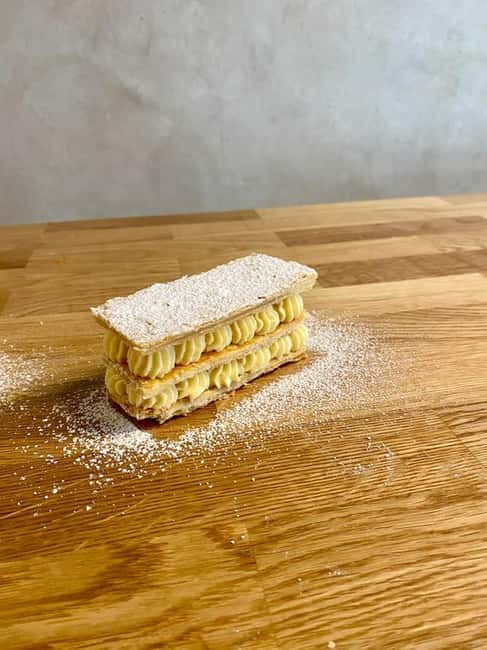
- Your own millefeuille: You make, decorate, bake, and assemble a dessert to take home.
- English instruction: The class is taught in English, useful for international visitors.
- Good for mixed skill levels: Beginners can learn the basics, while experienced bakers can refine technique.
- Useful take-home extras: Ingredients, drinks, transport packaging, and a digital recipe are included.
Why millefeuille makes a good Paris pastry class
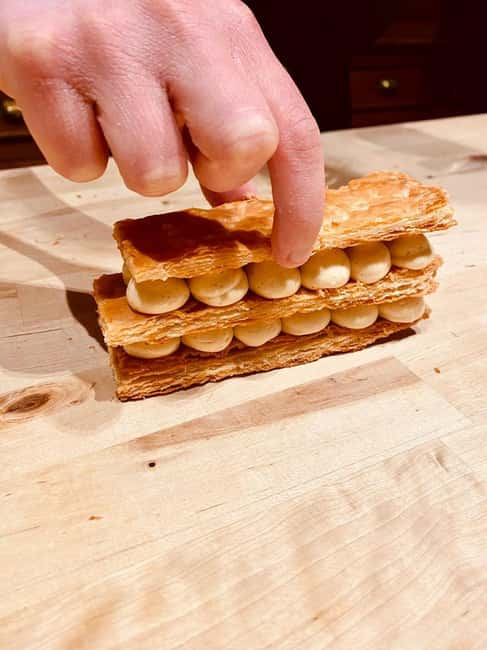
Millefeuille is a fine choice for a baking workshop because it looks simple but demands care. Its name refers to the many layers of pastry, and the dessert depends on contrast: crisp pastry against soft cream, with enough structure to cut cleanly.
The class focuses on the two parts that matter most. You learn how to handle puff pastry and how to prepare pastry cream with the right texture. These are useful skills beyond this one dessert. Puff pastry appears in many French pastries, while pastry cream is a basic building block for tarts, choux pastries, and layered desserts.
The workshop also gives you context for the pastry itself. Millefeuille, also known as Napoleon, is linked with French pastry tradition and is often associated with François Pierre de la Varenne, an 18th-century French chef. You are not just following a recipe. You are learning the logic behind a classic: layers must stay delicate, cream must hold its shape, and the finished dessert needs balance.
I like this approach because it turns a familiar bakery item into a practical lesson. You leave with something to eat, but also with a clearer idea of what separates a good millefeuille from a soggy or heavy one.
You can also read our reviews of more cooking classes in Paris
What happens during the 150-minute workshop
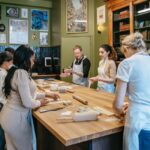
The class is built around making your dessert from scratch. The chef takes you through the process step by step, from preparing the components to decorating and assembling the final millefeuille.
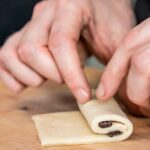
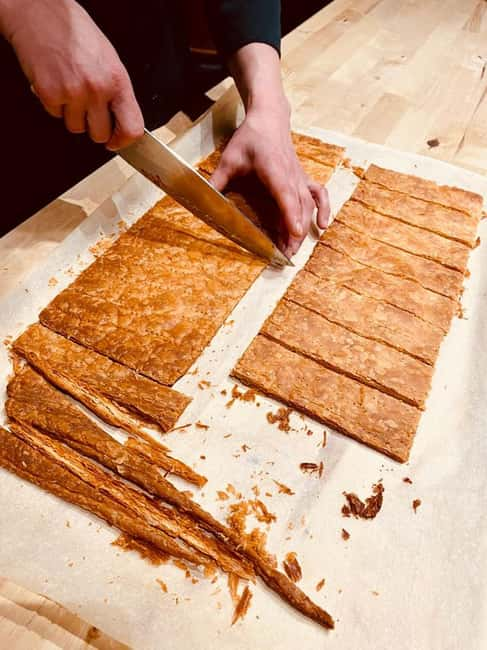
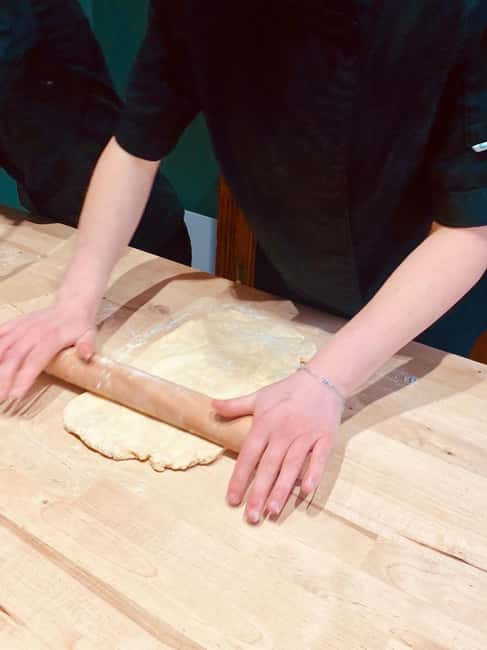
The first major task is puff pastry. This is the part that requires patience and careful handling. The dough needs to be folded properly so it develops thin layers. You can expect the chef to explain how to work the dough and what texture to look for at each stage.
For a first-time baker, this guidance matters. Written recipes often tell you to fold, roll, or chill the dough without showing what the dough should feel like. Here, you can watch the technique and ask questions as you work.
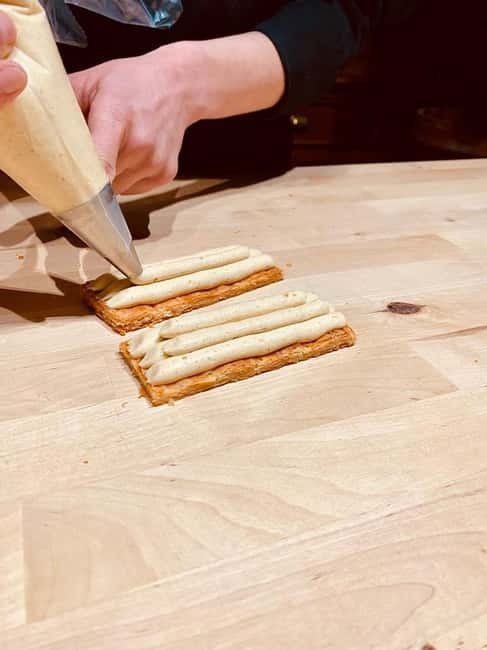
The second main task is pastry cream. You learn how to create the smooth, rich filling that sits between the pastry layers. Texture is the key point. It needs to be creamy and substantial enough to hold the millefeuille together, but not so firm that it feels heavy.
After the components are prepared, you get to add decorative touches before baking and assembling the dessert. This is a small but welcome creative element. You are not producing an identical pastry with every other participant. The decoration gives you some room to make the result your own.
The class ends with assembly and tasting. You create your millefeuille, enjoy it after the session, and package it for transport. The information describes the workshop as 150 minutes, so expect a compact, active class with little room for a slow pace.
One useful point is that the experience may vary slightly with the group. A one-to-one booking resulted in one participant making three millefeuilles, but that should not be treated as a standard promise for every session. The small maximum group size gives the chef room to adjust help according to the people attending.
Learning puff pastry without guessing
Puff pastry can be frustrating at home because small mistakes affect the final layers. Too much pressure, uneven rolling, or poor handling can reduce the lift and leave you with a dense pastry.
This class gives you a chef beside you while you work. You can see the folding method, learn how to manage the dough, and get tips at the point where they are useful. That direct correction is one of the strongest reasons to book a class instead of simply buying a French pastry cookbook.
You should still expect some work. The workshop is hands-on, not a demonstration where you watch someone else produce a perfect pastry. You will need to follow instructions and pay attention to the dough.
For experienced home bakers, the value is different. You may already know the basic steps, but the chef can help you refine texture, handling, and presentation. The class is therefore suitable for beginners and for bakers who want to improve their technique.
The workshop includes the ingredients, so you do not need to arrive with a shopping list or bring baking supplies. That makes the experience easier to fit into a Paris trip.
Building smooth pastry cream
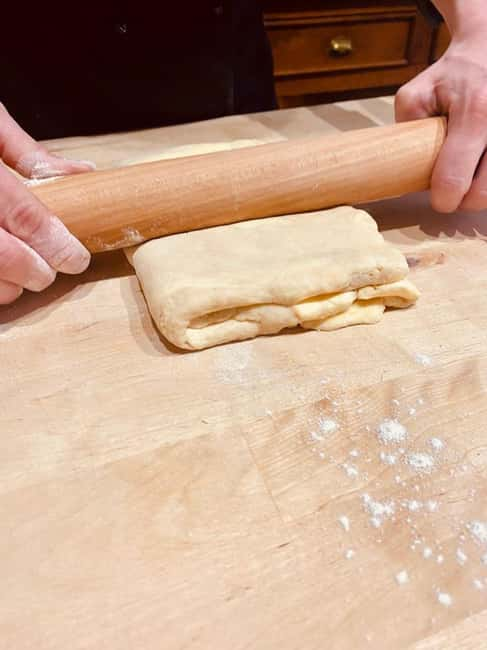
Pastry cream is less showy than puff pastry, but it has just as much influence on the final dessert. If it is too loose, the layers slide. If it is too firm, the millefeuille loses its soft, creamy character.
The chef explains the process in detail and shares practical tips as you go. This is especially helpful if you have tried making pastry cream before and ended up with lumps or an uneven texture. The class gives you a chance to connect the written method with the visual result.
I like that the workshop treats the cream as a technique worth learning, not just a filling handed to you at the end. You work on the main parts of the dessert yourself, which makes the finished pastry more satisfying.
The setting is also friendly to mixed groups. One family booking found the chef patient and personable, a useful sign for parents or couples who want a shared activity rather than a highly technical baking exam. Still, because the class is conducted in English, you should feel comfortable following spoken instruction in English.
Decorating and assembling your millefeuille
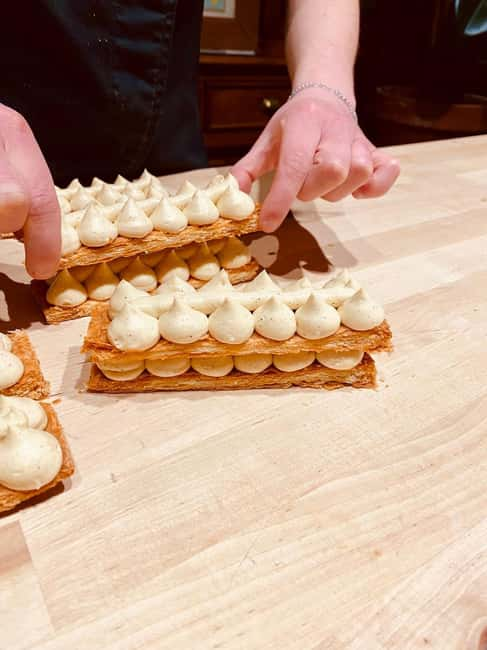
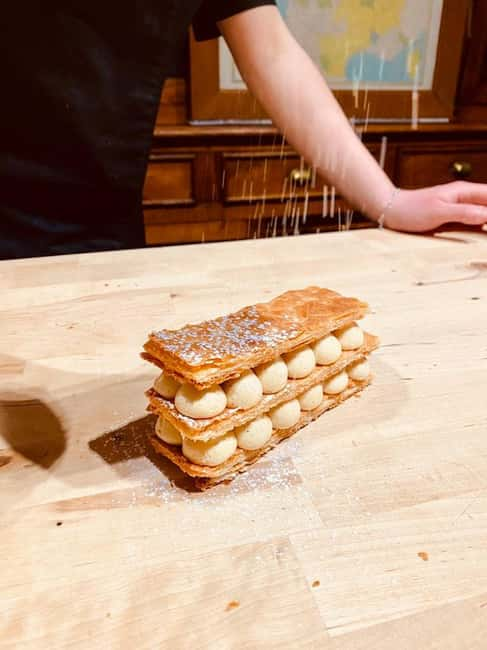
Once the pastry and cream are ready, the dessert begins to look like a millefeuille. Assembly is where the separate parts become one. You place the layers, add the pastry cream, and finish the top with decorative details.
This stage has practical value. You learn how much filling to use, how to keep the layers aligned, and how presentation affects the dessert. The decoration also gives the class a personal touch without turning it into a separate cake-decorating course.
You should keep your expectations sensible. Millefeuille is delicate by nature. Even with transport packaging, it is not the easiest Paris souvenir to carry across town or pack into luggage. The provided packaging should help you get it home safely, but plan to keep it level and avoid rough handling.
You can enjoy the dessert after the session, so you do not have to wait until the end of your trip. That is a useful advantage over a food souvenir that must survive several days before you can taste it.
A few more Paris tours and experiences worth a look


The small-group format and chef instruction
The workshop accepts up to eight participants. That is small enough to feel personal while still allowing you to meet other pastry enthusiasts.
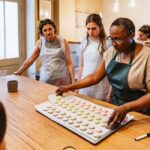
The chef works directly with the group and guides you through each step. The strongest praise focuses on the teaching style: warm, patient, engaging, and generous with tips. Those qualities matter in baking because timing and texture can be hard to explain quickly.
A small class is particularly useful during the folding, cream-making, and assembly stages. You can ask for help instead of waiting behind a large crowd. The one-to-one session reported from the experience also shows that the format can support very personal instruction when availability allows, though you should not assume a private class unless your booking specifically confirms it.
There is no guide name provided, so I would not book this for a particular chef personality. Book it for the format: professional instruction, English guidance, and a limited group.
Tea, coffee, and water are available throughout the session. These drinks are included, but additional food or drinks outside the workshop are not. This is a pastry class, not a full meal, so have realistic expectations if you are booking it around lunch or dinner.
Is the $159 price fair?
At $159 per person, this is not a cheap snack stop. You are paying for 150 minutes of instruction, ingredients, a finished millefeuille, drinks during class, transport packaging, and a digital recipe.
The value depends on what you want from a Paris food experience. If you only want to taste a millefeuille, a bakery will cost far less. If you want to understand how the pastry is made and practice the technique with a chef nearby, the price becomes easier to justify.
A private or one-to-one format, when available, can make the cost feel stronger for someone seeking close instruction. In a small group, the experience is likely better suited to people who value learning and participation over maximum quantity of food.
The digital recipe adds value after the trip. It lets you try the dessert again at home, though you should remember that professional pastry work often takes practice. Your first home attempt may not match the class result, especially with puff pastry.
For a family, couple, or serious pastry fan, the price may be reasonable as a special Paris activity. For a budget-minded visitor who already bakes millefeuille confidently, it is harder to defend.
Who should book this Paris baking class?
I would recommend this workshop to you if you like food experiences that keep your hands busy. It suits beginners who want patient instruction, home bakers who want to improve puff pastry, and families looking for a shared activity in English.
It is also a good choice if you want a Paris memory you can recreate later. The recipe and techniques have more lasting value than a single tasting, and the class gives you a better understanding of a pastry you will see in French bakeries.
The experience may not suit you if you want a relaxed food tour, a full meal, or a quick demonstration. You need to take part, listen closely, and work through several stages within a fixed 150-minute period.
Wheelchair access is provided, but the workshop does not include transportation to the location. You need to make your own way there, and the activity information describes it as easily accessible in Paris. Check the meeting details at booking so you can allow enough time to arrive.
Free cancellation is available up to 24 hours in advance, and you can reserve now and pay later. Those terms are useful if your Paris plans are still shifting, but you should still check the exact availability and start time before committing.
Final call: book it for the technique, not just the dessert
I would book this class if you want to learn the craft behind a classic French pastry and enjoy a small, practical activity in Paris. The combination of chef instruction, puff pastry, pastry cream, decoration, and a take-home creation gives the session more substance than a simple tasting.
The strongest reasons to choose it are the small group, patient teaching style, and chance to make the whole millefeuille yourself. The main limits are the $159 price, the fixed 150-minute schedule, and the fact that a fragile pastry is not an effortless souvenir.
If you are happy to pay for instruction and hands-on time, this is a worthwhile pick for pastry lovers. If your priority is low cost or a full meal, visit a bakery instead and spend the difference on several pastries.
FAQ
How long does the millefeuille class last?
The workshop lasts 150 minutes.
What will I make during the class?
You will make a millefeuille from scratch, including the puff pastry and pastry cream. You will also decorate and assemble the dessert.
Is the class taught in English?
Yes. The instructor language is English.
How many people can join the workshop?
The class is limited to eight participants.
Are baking ingredients included?
Yes. All ingredients needed for the workshop are provided.
Are drinks included?
Tea, coffee, and water are available during the class. Additional food or drinks outside the workshop are not included.
Can I take my millefeuille home?
Yes. Transport packaging is provided so you can carry your finished creation with you.
Do I receive the recipe?
Yes. A digital recipe for the workshop is provided.
Is transportation to the workshop included?
No. You are responsible for getting to the workshop location. The activity information describes it as easily accessible in Paris.