REVIEW · PARIS
Paris: Local Secrets and Passageways Walking Tour
Book on GetYourGuide →Operated by Dayin · Bookable on GetYourGuide
Paris keeps some of its best architecture behind ordinary street doors. This two-hour walk leads you through covered arcades, old commercial passages, and grand public spaces from Rue Cadet to Passage du Grand Cerf. Galerie Vivienne and Passage des Panoramas supply the main visual treats, while the stories about artists, writers, and intellectuals give the route its purpose.
I like the six-person group limit, which should make it easier to hear the guide and ask questions. I also like the route’s practical design: it is mostly sheltered, making it a smart choice on a wet Paris day. The main drawback is the price, $91 per person for two hours, so the value depends heavily on the quality of your guide and your interest in architecture and city stories.
In This Review
- Key details before you book
- Why Paris’s passageways are worth two hours
- From Rue Cadet to Passage Verdeau
- Passage Jouffroy and the 19th-century mood
- Twenty minutes at Passage des Panoramas
- Palais Brongniart and the city of finance
- Galerie Vivienne, the visual centerpiece
- Palais-Royal and Galerie Véro-Dodat
- Bourse de Commerce, Saint-Eustache, and Les Halles
- Finishing at Passage du Grand Cerf
- Small groups, guide quality, and pace
- Is $91 a fair price?
- Rainy-day planning and practical fit
- Should you book this Paris walk?
- FAQ
- How long does the Paris passageways tour last?
- Where does the tour begin?
- Where does the tour finish?
- How much does the tour cost?
- What languages are available?
- How many people can join the small group?
- Is the tour suitable for a rainy day?
- Is the tour wheelchair accessible?
- Can I cancel for a refund?
Key details before you book
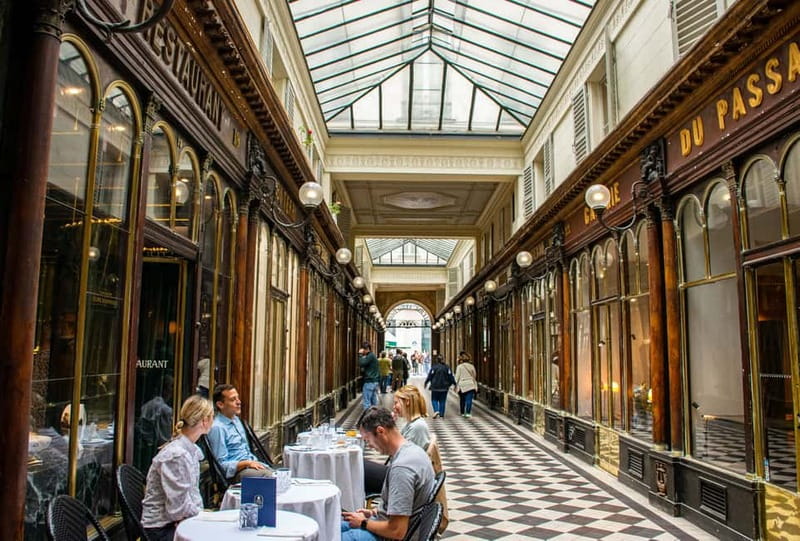
- The route links several covered passages: Passage Verdeau, Passage Jouffroy, Passage des Panoramas, Galerie Vivienne, Galerie Véro-Dodat, and Passage du Grand Cerf.
- The group is capped at six people: You can also book a private option if wheelchair access or a more personal pace matters.
- The tour covers central Paris history in a compact format: Palais Brongniart, Palais-Royal, Bourse de Commerce, Saint-Eustache Church, and Les Halles are all included.
- Rain is less of a problem here: Much of the route uses roofed arcades and indoor passageways, though you should still dress for walking between them.
- Benoir is one named guide: The available feedback singles out his friendly manner and ability to make the places interesting.
- The end point needs checking: The route finishes at Passage du Grand Cerf, while the meeting information also says the activity ends back at the meeting point.
Why Paris’s passageways are worth two hours
Paris is famous for its boulevards, monuments, and museums. Its covered passages offer a smaller-scale view of the city, with tiled floors, glass roofs, shopfronts, cafés, and narrow corridors that feel removed from the traffic outside.
These passages grew important in the 19th century, when Parisians wanted places to shop and socialize away from mud and bad weather. They also provided a setting for printers, booksellers, restaurants, and small businesses. On this walk, you are not simply ticking off pretty interiors. You are seeing how commerce and city life once fit into a string of elegant pedestrian lanes.
I find this kind of tour most useful early in a Paris stay. The guide gives you a sense of the central districts, and the included tip about navigating the city afterward can help you understand where you are in relation to the surrounding neighborhoods.
The experience is also a good change of pace from major sights. You will not enter the Louvre or climb the Eiffel Tower. Instead, you will notice details that are easy to miss when moving quickly through Paris: a passage entrance, a decorated ceiling, a historic building line, or a quiet shop tucked behind a busy street.
You can also read our reviews of more walking tours in Paris


From Rue Cadet to Passage Verdeau
The walk begins at 26 Rue Cadet, in front of the Optic 2000 shop. That meeting point is specific, so I would make sure you have the exact address ready rather than relying on a general map pin.
From there, the first listed stop is Passage Verdeau. You have about 10 minutes for a visit, guided explanation, and photographs. This short stop introduces the covered-passage format without asking you to spend too long in one place at the start.
Passage Verdeau is connected with the world of antique shops and old book dealers, though the tour’s exact focus can vary with the guide. You might find the passage more subdued than the grander galleries later in the route. That is part of its appeal, since the walk is not limited to the most polished interiors.
Passage Jouffroy and the 19th-century mood
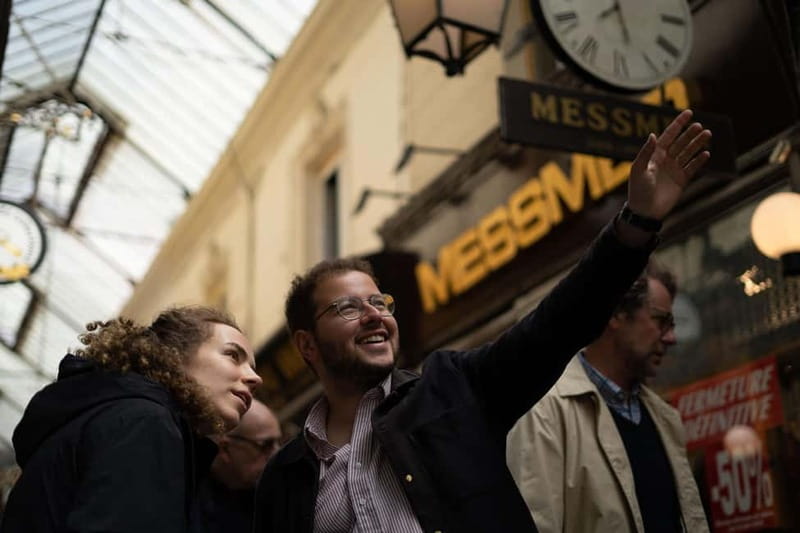
Next comes Passage Jouffroy, with another 10-minute stop. The passage helps show the changing character of these arcades, from practical shopping corridors to places designed to make browsing feel special.
The stated theme of the walk is 19th-century elegance, and Passage Jouffroy is a useful place for that discussion. Look for the narrow proportions, shop windows, and covered design. You may also hear about the artists, writers, and intellectuals who spent time in these central Paris locations.
The timing is brisk. Ten minutes is enough for an introduction and photographs, but not for a long independent browse. If you are hoping to shop, treat the passage as part of the guided route rather than as a dedicated retail stop.
Twenty minutes at Passage des Panoramas
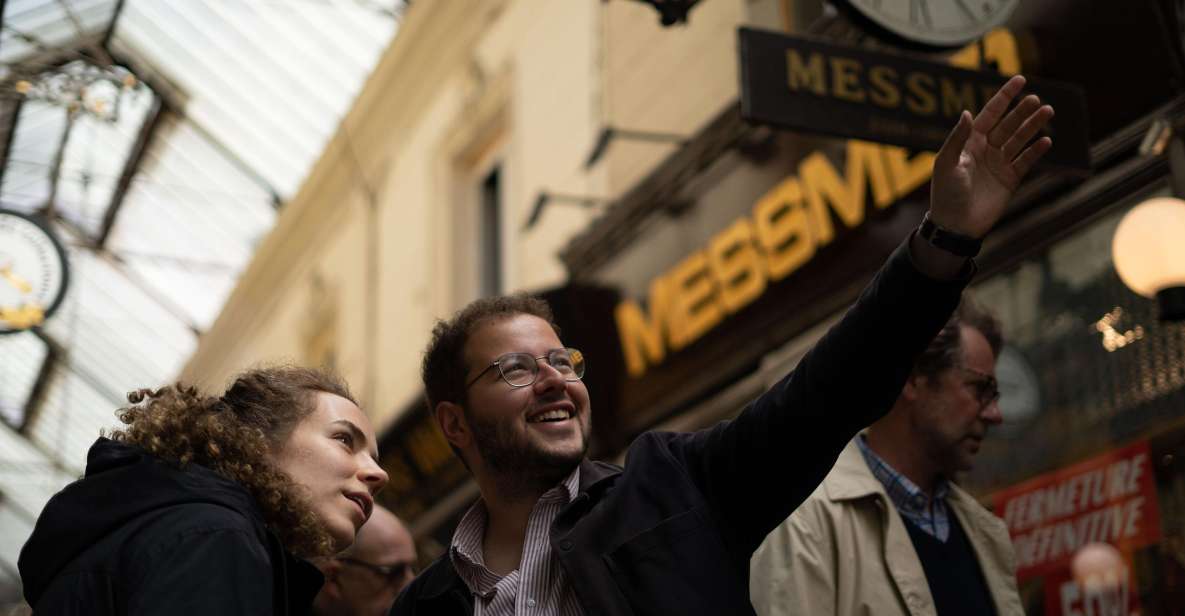
Passage des Panoramas receives the longest early stop, at 20 minutes. That extra time makes sense because it is one of the route’s essential passages and a major reason to choose this experience.
This is the place to slow down and take in the covered arcade, the shopfronts, and the sense of an older Paris preserved within the modern city. Your guide may connect the passage to the people and cultural life that shaped the area. The tour description specifically points to artists, writers, and intellectuals, so expect the storytelling to matter as much as the architecture.
I would keep your camera ready, but do not spend the whole stop looking through it. The charm here comes from the combination of details: the roof overhead, the close-set businesses, the paving underfoot, and the contrast between the quiet interior and the busy streets outside.
Palais Brongniart and the city of finance
The route then moves to Palais Brongniart for about 10 minutes. This stop shifts the subject from shopping arcades to public power and finance.
The building is connected to Paris’s former stock exchange, making it a useful counterpoint to the passages. You can see how the walk moves through different kinds of central Paris space: private commercial corridors, grand civic architecture, and public squares.
The stop is described as a photo stop and guided visit, not an interior tour. Do not book this expecting extended access inside the building. Its value is in the exterior setting and the guide’s explanation of how the area fits into the city.




Galerie Vivienne, the visual centerpiece
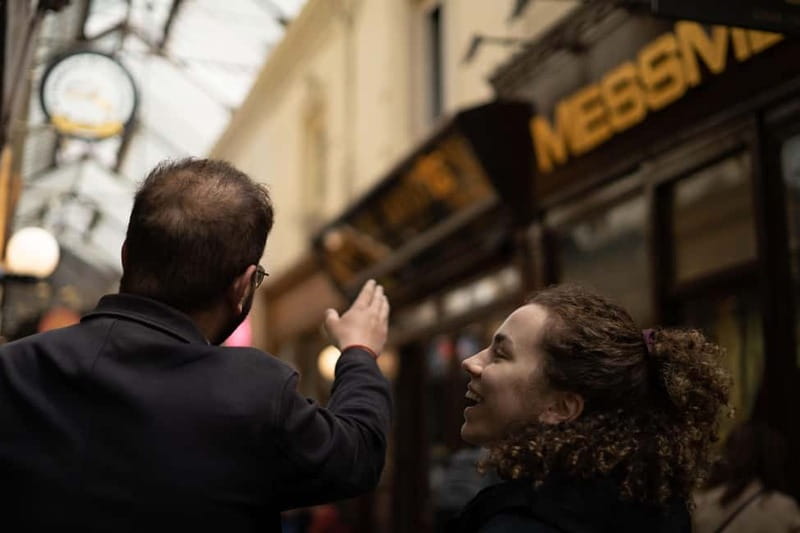
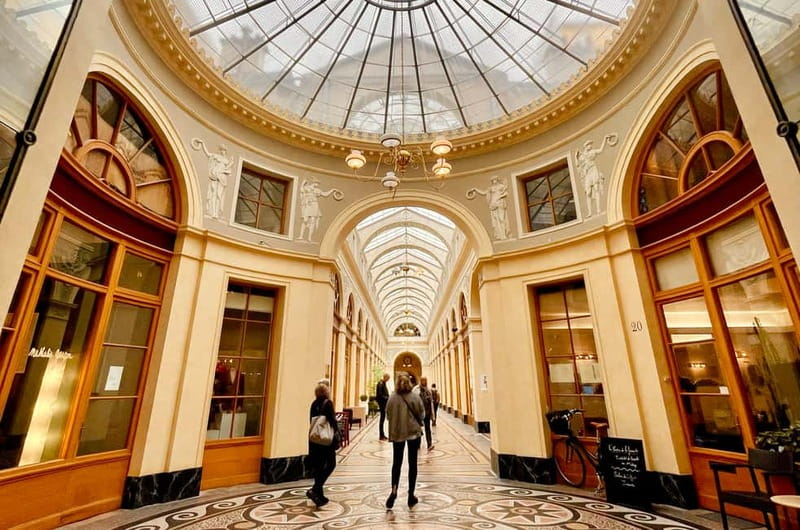
Galerie Vivienne gets 15 minutes and is likely to be one of the prettiest stops of the day. It is the passage most closely associated with the tour’s promise of 19th-century elegance.
This is where I would pay close attention to the decorative details and overall design. The gallery’s appeal comes from the feeling of entering a refined indoor street, complete with boutiques and places to pause. It offers a sharper, more formal look than the quieter passages at the start.
Fifteen minutes is a reasonable compromise for a route with many stops. You will get an explanation and time for pictures, but you will not have much time to linger over every shop. If Galerie Vivienne is your main interest, you may want to return independently after the tour.
Palais-Royal and Galerie Véro-Dodat
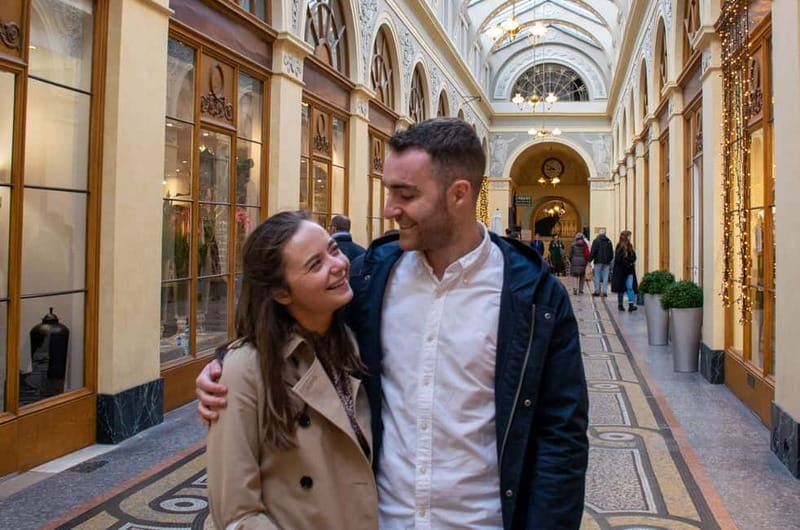
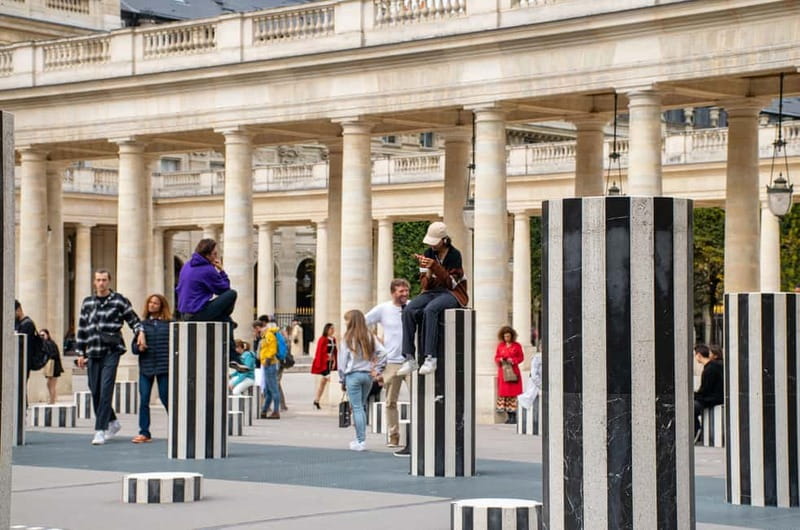
Palais-Royal follows with a 20-minute guided stop. This gives the tour room to move beyond passageways and explain one of central Paris’s major historic settings.
The value here is contrast. After several enclosed galleries, Palais-Royal opens the route into a larger public space with grand architecture around it. You can compare the controlled intimacy of the arcades with the scale and formality of a royal complex.
The guide’s stories should help connect the locations rather than treating them as unrelated photo stops. That is important on a short tour. Without context, the route could feel like a string of attractive corridors. With good commentary, you can understand how shopping, politics, culture, and public life overlap in this part of Paris.
The next stop, Galerie Véro-Dodat, lasts about 10 minutes. It returns you to the covered-passage theme, but with a different mood from Galerie Vivienne. I would treat this as a detail-focused stop. The visit is short, so listen for the guide’s explanation and take a few photographs rather than planning a long browse.
Bourse de Commerce, Saint-Eustache, and Les Halles
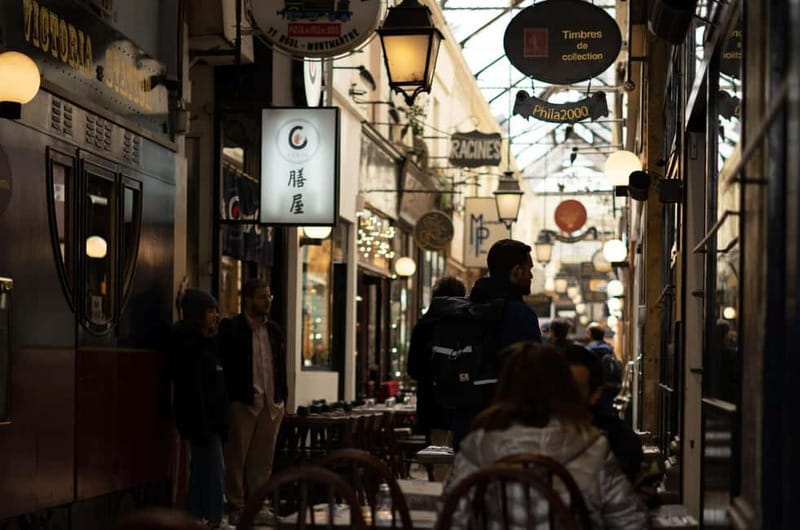
Bourse de Commerce is scheduled for another 10-minute visit. Like Palais Brongniart, it broadens the tour beyond decorative arcades and points to Paris’s commercial past.
The route then continues to Saint-Eustache Church for 10 minutes. This stop adds a religious and architectural note to the walk. A brief visit cannot cover everything about the church, but it gives the guide another way to show how many layers of Paris sit close together.
The final listed stop is Les Halles de Paris, also with about 10 minutes. Les Halles has long been associated with food, markets, and everyday city life, so it provides a fitting contrast to the polished galleries earlier in the walk.
This sequence is one of the tour’s strengths. You see more than one narrow category of Paris. The walk includes shopping passages, government and finance, religious architecture, and a major market district. That variety helps you understand the center as a working part of the city, not just a collection of monuments.
Finishing at Passage du Grand Cerf
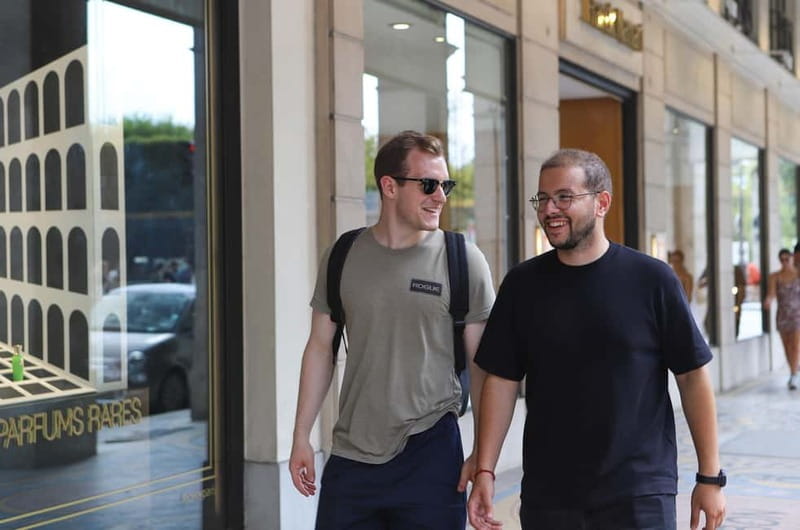
The itinerary ends at Passage du Grand Cerf. This is another covered arcade and a suitable final stop after the route’s progression through the passageways of central Paris.
The booking information also says the activity ends back at the meeting point, so I would confirm the exact finish location before setting a tight lunch or museum appointment. The difference matters: Passage du Grand Cerf and Rue Cadet are not presented as the same place in the route details.
The walk is listed as two hours. Because there are many stops, the guide will need to keep things moving. You should expect short explanations at several locations, with longer attention at Passage des Panoramas and Palais-Royal. This format suits you if you prefer a clear overview to a slow architectural study.
Small groups, guide quality, and pace
A group of six is a real advantage in Paris. You should be able to stay close to the guide in narrow arcades, hear the stories more easily, and ask questions without interrupting a large crowd.
Private and small-group options are available. The private format is the only option identified as wheelchair accessible, so this is an important point to settle before booking if mobility is a concern.
The guide speaks English, French, or Spanish. Benoir is one guide associated with the experience, and the strongest available feedback praises his ability to make the entire route enjoyable and the places interesting. That is exactly what this tour needs. The passageways are attractive, but the guide’s stories are what turn them into a worthwhile two hours.
The pace may feel quick if you want extensive shopping or long stops for coffee. This is a guided overview, not a leisurely afternoon of browsing. Wear comfortable shoes, even though much of the route is covered.
Is $91 a fair price?
At $91 per person, this is not a budget walk. You are paying for a local guide, a maximum group of six, a carefully linked route, and the convenience of seeing many central locations in two hours.
The price makes more sense if you value personal attention and would otherwise struggle to find the passages on your own. It is less compelling if you mainly want to walk through Galerie Vivienne and Passage des Panoramas independently. The tour does not include hotel pickup, drop-off, meals, or shopping, so the fee is centered on guiding and interpretation.
I would judge the value by your interests. If you enjoy architecture, Parisian social history, old commercial spaces, and compact city walks, the small group can justify the cost. If you prefer major monuments, museum interiors, or plenty of free time, you may find the price high for the duration.
Free cancellation up to 24 hours before the tour and the reserve-now, pay-later option reduce some booking risk. The activity may be canceled if fewer than two people book, so keep that possibility in mind when building a tightly timed day.
Rainy-day planning and practical fit
This is one of the better Paris choices for unsettled weather. Covered arcades protect you for much of the route, and the experience is specifically suited to rainy days. You will still walk between passages and outdoor sites, so bring a raincoat or umbrella rather than assuming you will stay indoors.
The tour is a strong fit for:
- First-time visitors who want orientation beyond the major sights
- Repeat visitors looking for a quieter side of central Paris
- Architecture and city-history fans
- Couples or solo visitors who prefer small groups
- Anyone with a rainy morning or afternoon to fill
It is less suitable if you want a full meal, extensive shopping, hotel transport, or a tour designed around wheelchair access without booking privately.
Should you book this Paris walk?
Book it if you want a compact, story-led look at Parisian passageways and prefer a small group over a large city tour. The route offers plenty of variety, and the covered sections make it especially useful when the weather is poor.
I would be more cautious if $91 feels steep for two hours or if you want to spend real time inside each passage. Before paying, confirm the finish point, choose your language, and check whether the private option is needed for wheelchair access.
For the right audience, this is a smart way to see central Paris at walking speed, with enough architecture and local stories to make the route feel like more than a series of pretty corridors.
FAQ
How long does the Paris passageways tour last?
The tour lasts two hours.
Where does the tour begin?
Meet the guide at 26 Rue Cadet, in front of the Optic 2000 shop.
Where does the tour finish?
The route details list Passage du Grand Cerf as the finish. The meeting information also says the activity ends back at the meeting point, so confirm the exact end location before booking other plans.
How much does the tour cost?
The listed price is $91 per person.
What languages are available?
The live guide is available in English, French, and Spanish.
How many people can join the small group?
The intimate group option allows a maximum of six people. A private option is also available.
Is the tour suitable for a rainy day?
Yes. The route uses covered passageways and is specifically described as suitable for rainy days. You will still need to walk between some locations.
Is the tour wheelchair accessible?
It is wheelchair accessible only with the private option.
Can I cancel for a refund?
You can cancel up to 24 hours in advance for a full refund. You can also reserve now and pay later.