REVIEW · PARIS
Paris – Historic City Center Walking Tour
Book on Viator →Operated by StellarTours · Bookable on Viator
Paris can feel like a maze.
This tour gives you a clean line through the historic city center, centered on Île de la Cité and the bridges and squares that connect the big landmarks. I love how the guide strings together major turning points, from Notre-Dame’s early construction to the 2019 fire, and I also like the way you stop for the small, specific details like the WWII bullet holes on Pont Saint-Michel.
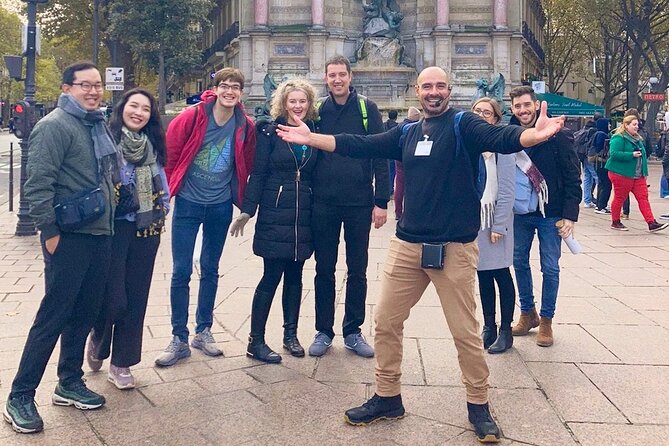
Another thing I like is how practical the guide makes it: you get clear context as you walk, plus real-world suggestions for restaurants and what to do next. Guides you might get include Michael, Daniel, and Alberto, and the reviews highlight how easy their English is to follow and how energetic they can be.
One consideration: this is not a museum-entry route. You’ll learn about big places like the Louvre, but the tour does not include going inside. If your priority is time inside museum galleries, you’ll need a separate plan for that.
In This Review
- Key things to know before you go
- The smart route from Île de la Cité to the Tuileries
- Start on Île de la Cité: Paris’s original power center
- Notre-Dame: from 1163 to 2019, with the key turning points
- Fontaine Saint-Michel: why Paris rebuilt itself
- Pont Saint-Michel: the WWII details that most people miss
- Place Dauphine: a calmer pocket near the action
- The Henri IV statue and the Seine views
- Pont Neuf: the oldest bridge, plus its legend-layer stories
- Louvre context without entering: what you can do afterward
- Arc de Triomphe du Carrousel and Napoleon’s European story
- Tuileries Garden: royal gardens and the Versailles link
- Eiffel Tower views from the Tuileries edge
- Price and pacing: is $156.01 worth it?
- Who this tour suits best
- Should you book this Île de la Cité to Tuileries walk?
- FAQ
- FAQ
- How long is the Paris Historic City Center Walking Tour?
- Where does the tour start and where does it end?
- Is this tour private?
- What language is the tour offered in?
- Does the tour include entry to Notre-Dame or the Louvre?
- Are pick-up and drop-off included?
- What’s included in the price?
- Is there free cancellation?
- Is the tour near public transportation?
Key things to know before you go
- Île de la Cité focus: you start in the true heart of old Paris and build outward from there
- Notre-Dame timeline storytelling: you’ll hear the story from 1163 through the 2019 fire, plus the French Revolution and Napoleon’s era
- Seine bridges with real-world scars: Pont Saint-Michel includes WW2 bullet-hole history, explained in context
- Henri IV walking-route payoffs: Place Dauphine and an equestrian Henri IV statue give you both people and skyline views
- Big landmarks, no heavy tickets: most stops are admission-free viewing moments, and the Louvre is discussed without entry
- A strong ending for onward travel: the tour finishes near Tuileries Garden and public transit so you can keep moving
The smart route from Île de la Cité to the Tuileries
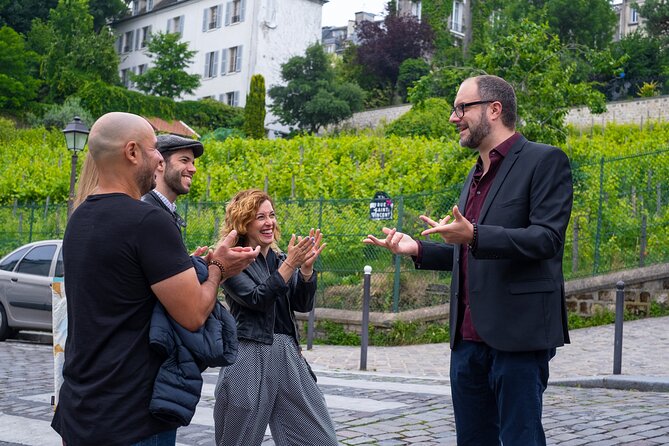
This is a classic Paris “spine” walk. You start on Île de la Cité, the island that has been the center of attention for centuries, and you move along the Seine edge into some of Paris’s most recognizable viewpoints. The best part is that the route doesn’t treat landmarks like photo props. You’re walked through why each place matters, with the guide turning geography into story.
The pacing is built for a 2 hours 30 minutes rhythm: short stops, quick orientation, and enough time at key places to understand what you’re actually looking at. Because it’s a private walking tour (your group only), the guide can also adjust to what you care about most—history details, where to eat nearby, or what to do later the same day.
At $156.01 per person, you’re paying for guide-led interpretation plus a focused route. It’s not cheap, but it can be good value if you’ll use the expertise—especially if you’d otherwise bounce from sight to sight without a coherent storyline.
You can also read our reviews of more walking tours in Paris



Start on Île de la Cité: Paris’s original power center
You begin on Île de la Cité, the island where the Parisii tribe established temples more than 2000 years ago—before Rome changed the rules of power. Starting here matters because the rest of central Paris makes more sense once you understand the island’s role as the early center.
This stop is about orientation. You’re not just seeing a landmark; you’re getting a mental map for what came first and why later developments followed. The tour frames the island as the heart of Paris, and once you accept that idea, the surrounding bridges and streets start feeling like they all connect for a reason.
Admission note: the stop is listed as ticket-free for the guided viewing, so you can focus on the walk and the explanations rather than “waiting for lines” energy.
Notre-Dame: from 1163 to 2019, with the key turning points
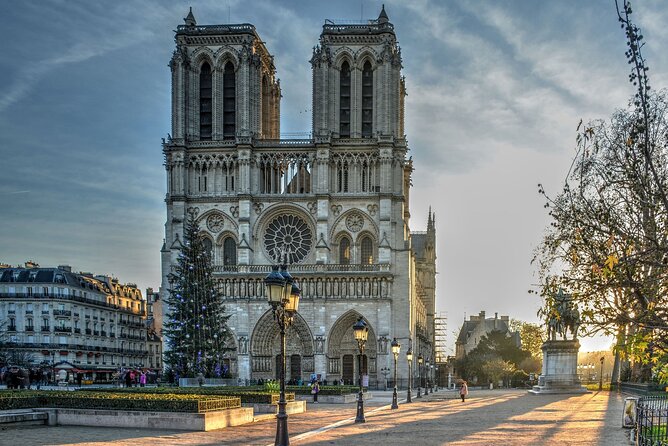
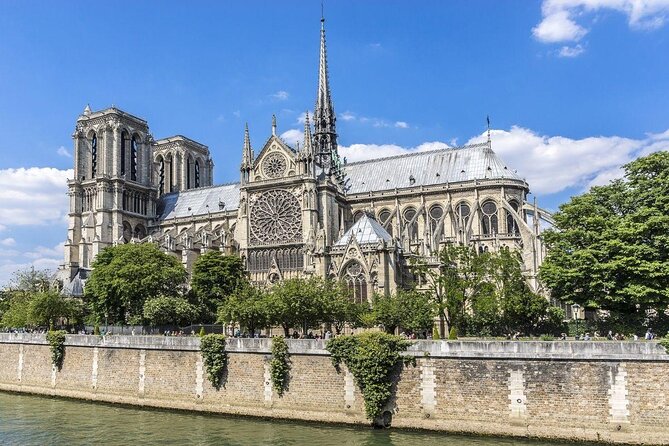
Next comes Cathedrale Notre-Dame de Paris. The tour’s approach is a timeline walk around one of Europe’s best-known churches, starting with construction in 1163 and continuing all the way through the 2019 fires. The guide also ties in the French Revolution and Napoleon’s coronation, so Notre-Dame becomes more than architecture—it becomes a stage for major political moments.
Why this helps you: if you’ve ever stared at Notre-Dame and thought, Okay, it’s beautiful… but what am I missing?—this tour gives you the missing structure. You learn what to notice, like how different eras left their mark and how historical events reshaped the meaning of the building.
The downside is time pressure. Your stop length is short (about 14 minutes), so you won’t have long “sit and stare” time. This is best for people who want strong context fast and then follow up later with a longer personal visit if the building really pulls you in.
Admission note: the cathedral stop is also marked ticket-free for the experience, meaning your time is spent learning and viewing, not buying entry as part of the tour.
Fontaine Saint-Michel: why Paris rebuilt itself
At Fontaine Saint-Michel, you’re looking at a fountain built during the grand reconstruction of Paris. This is the kind of stop that’s easy to skip on your own—fountains can blend into the street scene—but here it becomes a clue to a bigger theme: Paris doesn’t just preserve history. It rebuilds it, often with a clear plan.
The practical value: the guide helps you connect street-level beauty to city-scale decisions. When you’re walking through central Paris, it’s easy to assume everything is ancient. This stop reminds you that many “classic Paris” elements were shaped by later rebuilding projects.
It’s also a good reset point. After Notre-Dame’s heavy story, you get something lighter but still meaningful—about how the city decided what it wanted to look like and what it wanted to project.
Pont Saint-Michel: the WWII details that most people miss
One of the tour’s most memorable moments is Pont Saint-Michel. From this bridge, you observe bullet holes from WW2, while your guide explains why Paris wasn’t destroyed during the war.
This is one of those stops where a short explanation can change your whole perspective. A bridge is a bridge until you learn what marks are still there, and then you start seeing the city as a living record of conflict and survival.
I like that the guide doesn’t drop the detail and run. It’s framed so you understand the why, not just the what. That makes the bullet holes feel less like morbid trivia and more like a lesson in resilience.
Admission note: this is a viewing stop with free admission for the experience, so you don’t have to plan around tickets.
You can also read our reviews of more city tours in Paris






Place Dauphine: a calmer pocket near the action
Then you get to Place Dauphine, and the tour includes walking inside the square. This is one of Paris’s early projects of Henri IV, and it’s known for restaurants. The tour frames it as a tranquil lunch option after the walk, which is exactly the right use for the space.
Why this works: you’re still near major sights, but Place Dauphine gives you a more human scale. It’s where you can break the “monument treadmill” and reset. If you’re planning to eat after the tour, the guide’s restaurant suggestions can be helpful here—especially because the area is tourist-friendly, but not every menu option will match your pace and budget.
If you’re traveling with kids or anyone who’s more sensitive to crowds, this pause inside the square can feel like a win.
The Henri IV statue and the Seine views
Next is the equestrian statue of Henri IV. The tour pairs this with river views, so you’re not just learning about a king—you’re also using the vantage point to understand how the city opens up around the Seine.
This stop is about a “short but meaningful reign” framing. The guide’s job here is to help you connect the person to the places you’ve been seeing—especially since Henri IV appears again in the route through Place Dauphine and later in Pont Neuf.
It’s a nice mid-walk moment to get your bearings. You’ll likely leave this stop with a better sense of how the Seine curves, where key bridges sit, and why the skyline looks the way it does from river level.
Pont Neuf: the oldest bridge, plus its legend-layer stories
At Pont Neuf, you get stunning views and a history layer that you rarely hear when you’re just using the bridge as a shortcut. The tour explains that Henry IV finished the bridge in 1607, and you’ll also hear stories such as the tooth pullers of Paris.
Even if some of the stories are more folklore than textbook facts, that’s part of the fun—Pont Neuf becomes a place where daily life and legend mix. It’s a bridge you can treat like a time machine: you cross it and learn what kinds of people once moved through the same lines of sight.
Again, admission is free for the guided viewing, so you’re not spending your limited time on planning and paying. You’re spending it on understanding what you’re seeing.
Louvre context without entering: what you can do afterward
The tour includes a Louvre Museum stop, but with an important twist: you do not enter the museum. Instead, the guide focuses on stories and context, including the connection between the Louvre and Leonardo da Vinci, plus Francis I, the king associated with building the foundations of the Louvre as a fortress and palace.
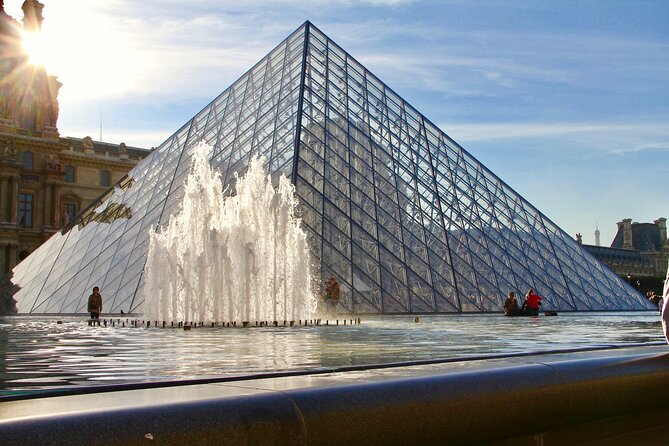
This approach is for the traveler who wants the meaning behind the walls, not a full museum session. You also get views of the glass pyramid while your guide explains its mysteries.
The catch: if you were hoping to spend hours in galleries, this tour won’t satisfy that goal. What it does do is set you up so a later Louvre visit feels smarter. You’ll know what to look for and why certain artworks or building choices matter.
If you’re only in Paris for a short stay, this can be a good “orientation” option. Then, if you decide you want the Louvre inside, you’ll have a better game plan for your ticket and your route through the museum.
Arc de Triomphe du Carrousel and Napoleon’s European story
From the Louvre area, the tour stops at the Arc de Triomphe du Carrousel. The guide connects it to Napoleon, treating the arc as a symbol of his rise and his ambitions across Europe.
This stop is brief, but it helps you connect the “Napoleon Paris” theme that pops up around central landmarks. Paris loves to repeat its political symbolism in different materials and scales. A short stop like this can give you a lens for noticing those repeats later on your own.
Admission is again listed as free for the experience, so you keep your time for the walking story rather than ticket logistics.
Tuileries Garden: royal gardens and the Versailles link
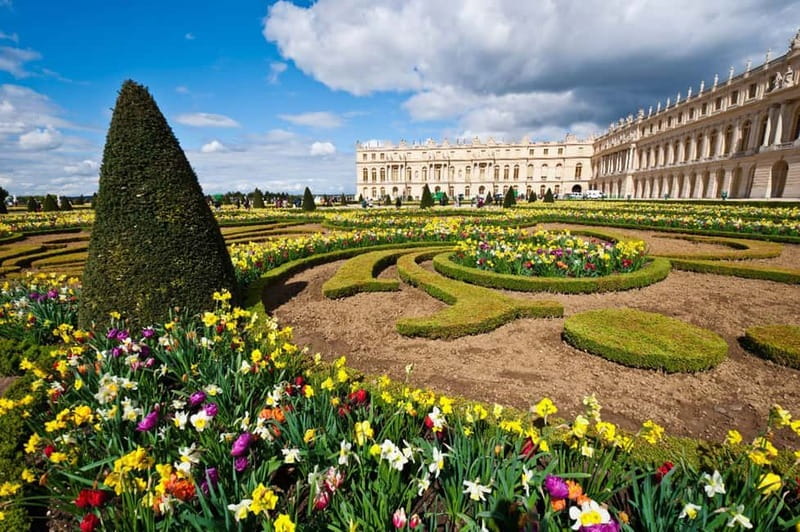
Then you move to the Tuileries area—described as a route “from tile factory to royal gardens.” The guide points out statues, sculptures, and fountains, and connects the design to the same landscape artist behind the gardens of Versailles (as described in the tour).
This part is about setting a tone. The Tuileries are where Paris often feels more like a planned stage than a chaotic city street. After the heavier history beats, this gives you softer visuals and calmer spacing.
Practical note: your tour ends in the broader Tuileries Garden area, so you’ll likely be positioned well for a post-tour stroll, a coffee break, or easy public transport.
Eiffel Tower views from the Tuileries edge
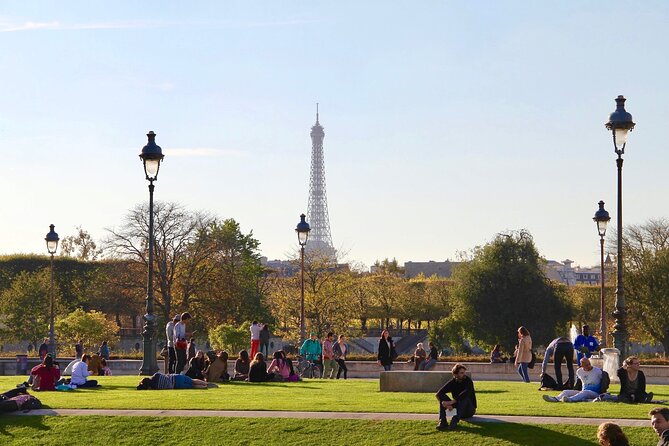
Finally, you get a viewpoint for the Eiffel Tower. From the Tuileries gardens, the guide sets you up for those “there it is” views and explains how Gustave Eiffel pulled off the construction in 1889.
Even if you’ve seen photos of the Eiffel Tower a hundred times, the value here is the connection between the structure and the engineering story. The tour turns a view into a conversation about how that tower became possible and why it mattered.
This is a satisfying finish because it’s both iconic and placed in a context you’ve been building for hours. By the time you see Eiffel, you’ve already traveled through early Paris, revolution-era shifts, and Napoleon symbolism. Eiffel feels like one more chapter in a long timeline.
Price and pacing: is $156.01 worth it?
Let’s talk value. $156.01 per person is a premium price for a walking tour, so you want to know what you’re really buying.
Here’s what you get that justifies the spend:
- A certified expert guide who can connect big events to specific places
- A focused route across the Seine edge, saving you from piecing together your own timeline
- A private format, meaning your group’s pace and questions can shape the experience
- English service, plus the practical side of guidance (restaurants and activities)
When it might not be worth it:
- If you’re already planning to spend hours in museums that same day, you may prefer a shorter walk with fewer major-history stops
- If you want deep time inside the Louvre or other sites, remember this route doesn’t include museum entry
For many people, the best “value move” is pairing this tour with a follow-up visit later. Use the walk to learn what matters, then spend your ticket time on the places you feel pulled toward.
Who this tour suits best
This tour is a great match if you like:
- Straightforward walking tours with a clear storyline
- History that links politics, architecture, and city changes
- Getting practical suggestions for where to eat and what to do next
It’s also a solid choice for first-time visitors who want to get bearings fast in central Paris. The route is concentrated and your ending near Tuileries helps you keep moving without extra transport planning.
If your group wants long museum time, consider other options—or plan museum entry separately.
Should you book this Île de la Cité to Tuileries walk?
I’d book it if you want a guided “timeline route” through the most historically loaded area of Paris, without wasting time trying to figure out what you’re looking at. The guide-led focus—from Notre-Dame’s major eras to the WWII marks on Pont Saint-Michel—makes central Paris feel less random and more understandable.
I’d hesitate only if your top priority is to enter major museums during the same outing. Since the Louvre is discussed but not entered, you’ll want a separate plan if you’re serious about museum hours.
If you’re traveling in English, want a private format, and like history you can see with your own eyes, this one fits the bill.
FAQ
FAQ
How long is the Paris Historic City Center Walking Tour?
It runs for about 2 hours 30 minutes.
Where does the tour start and where does it end?
It starts at Cité 75004 Paris, France and ends very close to Tuileries Garden 75001 Paris, France.
Is this tour private?
Yes. It’s a private tour/activity, so only your group participates.
What language is the tour offered in?
The tour is offered in English.
Does the tour include entry to Notre-Dame or the Louvre?
The stops are listed as admission ticket free for the experience, but the tour specifically does not enter the Louvre museum.
Are pick-up and drop-off included?
No. The tour does not include pick-up or drop-off of guests.
What’s included in the price?
The tour includes a certified expert guide and a private walking tour.
Is there free cancellation?
Yes. You can cancel for a full refund up to 24 hours in advance.
Is the tour near public transportation?
Yes. The tour ends very close to public transportation, including metro, bus, and bike stations.