REVIEW · PARIS
Paris : Highlights of Parisians’ Paris guided tour
Book on GetYourGuide →Operated by CONNECTING FRANCE · Bookable on GetYourGuide
Paris saves some of its best contrasts for the right bank. In two hours, this walk takes you from the medieval starting point of Hôtel de Ville through old market streets, a preserved covered passage, the calm arcades of Palais Royal, the polished storefronts around Place Vendôme, and the grand Opéra district. It is a compact look at how commerce, royal power, luxury, and style shaped Paris.
I like the small maximum group of 11, which gives a guide room to explain details without turning the walk into a flag-following exercise. I also like the route itself: it links famous names with lesser-known corners, including a covered passage dating from 1826. The main drawback is pace. You cover a lot of ground in two hours, and this is not a museum tour with interior visits at every stop.
In This Review
- Key points at a glance
- From Paris’s first market to the city of luxury
- Les Halles: old market energy in a modern district
- The preserved covered passage and Palais Royal
- Place Vendôme and the polished face of Paris
- Palais Garnier: a grand stop viewed from the route
- Galeries Lafayette and the famous dome
- What $66 buys you in two hours
- Timing, meeting point, and walking comfort
- Who will get the most from this Paris walk?
- Should you book it?
- FAQ
- Where does the tour begin?
- Which metro station is closest?
- How long does the tour last?
- What language is the tour conducted in?
- How large is the group?
- Does the price include monument or museum admission?
- Are food and drinks included?
- Is the route suitable for wheelchair users?
- What should you bring?
Key points at a glance
- Hôtel de Ville sets the story: Begin where Paris’s first major market helped draw merchants to the right bank.
- A 1826 covered passage adds character: The Halles section includes a preserved passageway away from the main avenues.
- Palais Royal offers a change of mood: Expect an atmospheric stop among elegant surroundings after the lively streets of Les Halles.
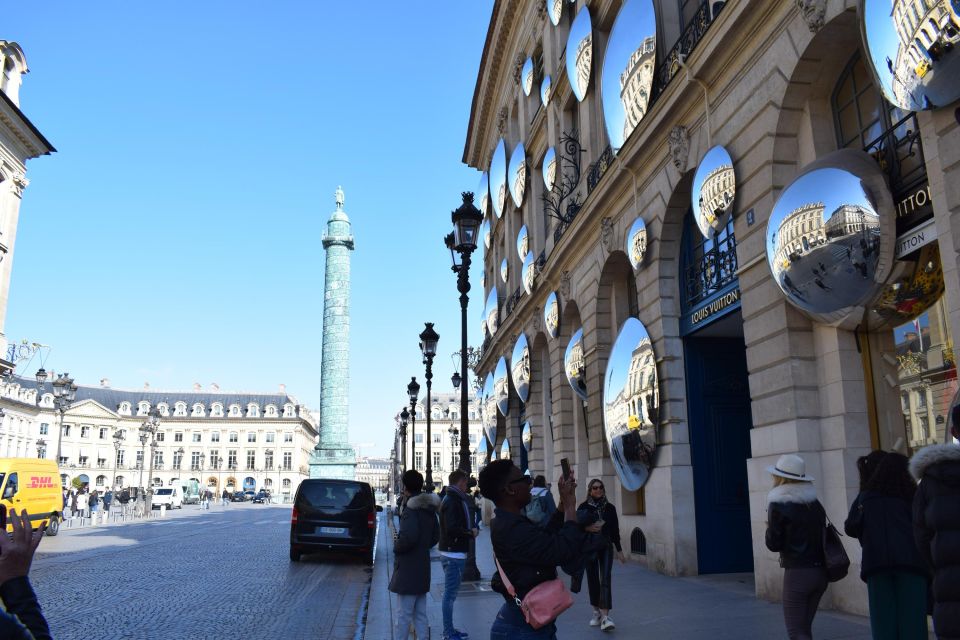
- Place Vendôme brings the luxury theme into focus: Cartier, Chanel, Louis Vuitton, the Ritz, and Napoleon’s statue appear along this stretch.
- Opéra and Galeries Lafayette finish the walk: See Palais Garnier and visit the department store for its famous dome and upper-level views.
- The practical format is simple: Two hours, English only, a maximum of 11 people, and no accommodation pickup or monument admission.
From Paris’s first market to the city of luxury
The walk begins near the river side of Place de l’Hôtel de Ville, in front of Bistrot Marguerite. Your guide carries a sign marked Connecting France, and the nearest metro stop is Hôtel de Ville on Lines 1 and 11.
This starting point matters. The tour uses Hôtel de Ville as the place where the story of this side of Paris begins, reaching back to the sixth century and to the first market that attracted merchants. You are not simply ticking off landmarks. You are following the movement of trade and money from an early market district toward the grand streets of royal and modern luxury.
That theme gives the walk a clear shape. Les Halles represents commerce and everyday movement. Palais Royal brings in royal power and refined public space. Place Vendôme shows luxury at its most concentrated. Opéra and Galeries Lafayette point toward nineteenth-century Paris and the city’s love of spectacle.
The guide’s job is especially important here. The buildings and storefronts are easy enough to see on your own, but the links between them are less obvious. Benjamin has received especially strong praise for explaining Parisian history with energy and detail, and Antoine has also been singled out for lively, well-informed storytelling. Your guide may be someone else, but the best version of this tour depends on turning the route into a connected story rather than a list of addresses.
You can also read our reviews of more guided tours in Paris



Les Halles: old market energy in a modern district
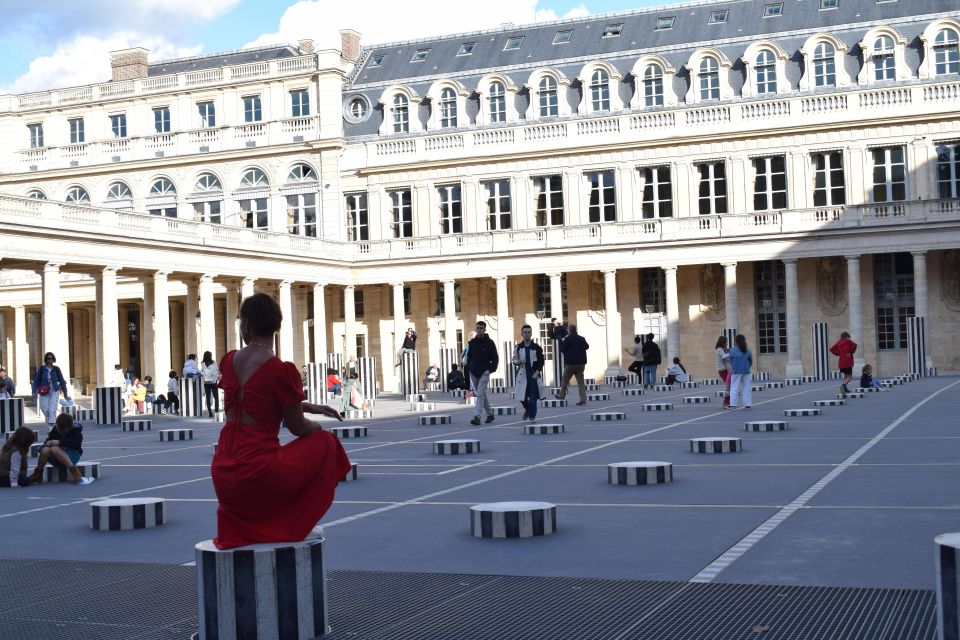
After Hôtel de Ville, you walk toward the Les Halles area. The route includes about ten minutes of walking, so comfortable shoes are not a polite suggestion. They are the right equipment for the morning or afternoon.
Les Halles is useful early in the tour because it gives you a sense of Paris as a commercial city. The first market drew merchants, and the area’s role helps explain why wealth gathered on the right bank. Your guide tells this story while leading you through smaller streets, where the setting feels more intimate than the broad avenues later in the route.
I like this part because it gives context before the luxury sights arrive. You learn why the route is moving from market life toward grand shopping streets. It also keeps the tour from becoming just a parade of famous brand names.
The tradeoff is that the tour does not promise a market tasting or a food stop. Food and drinks are not included, and there is no planned refreshment break. If you want a pastry or coffee, plan it before the meeting time or after the walk, rather than expecting the tour to pause for one.
The preserved covered passage and Palais Royal
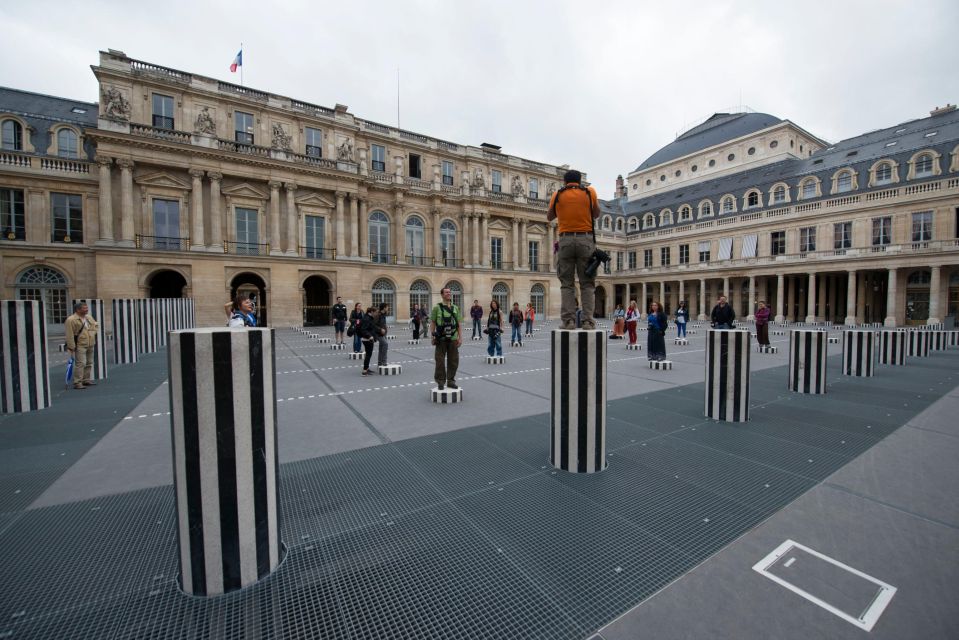
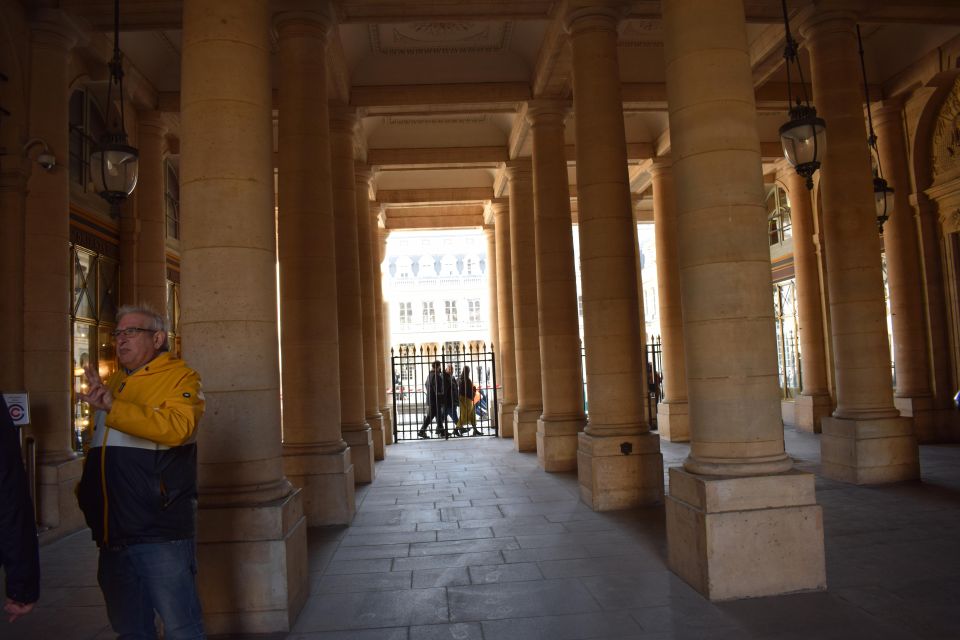
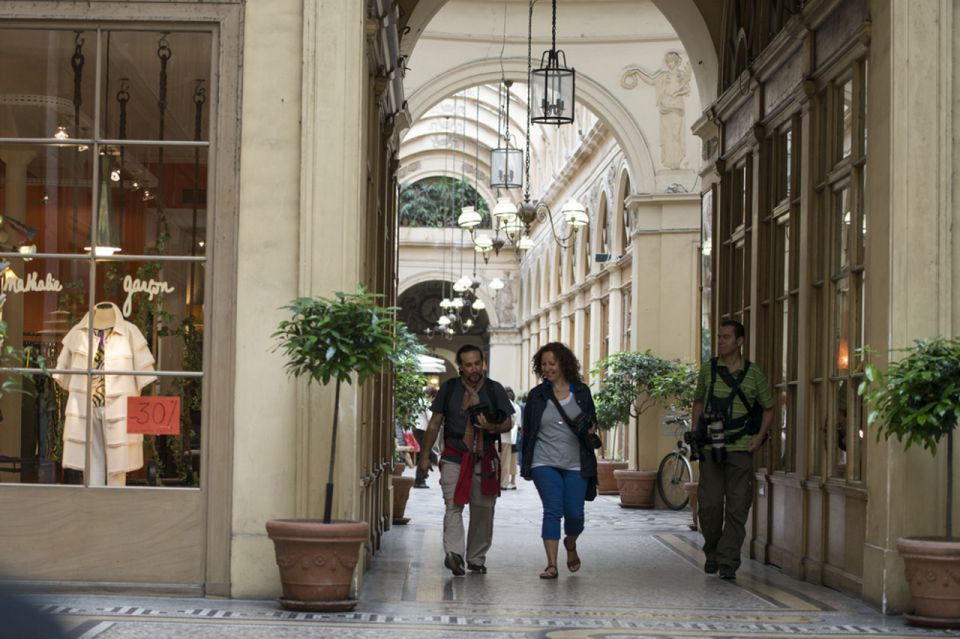
The Halles section includes a covered passage dating from 1826, kept in excellent condition. This is one of the more distinctive parts of the walk. Paris has many grand avenues, but these passages offer a different view of city life, with a more enclosed and old-fashioned atmosphere.
The passage also makes a good guide stop. Its date gives your guide a firm point from which to explain how Paris’s commercial spaces developed. You get a sense of a city designed not only for monuments and palaces, but also for strolling, shopping, and shelter from the weather.
Next comes Palais Royal, reached after another roughly ten-minute walk. The stop lasts about 15 minutes, enough to look around and hear the story without pretending you have explored the whole complex. The palace and its surroundings bring a quieter, more refined mood to the route.
I like the way Palais Royal breaks up the walk. After the tight streets and commercial roots of Les Halles, the atmosphere changes. You can pause, look around, and understand the connection between royal Paris and the later culture of elegance that fills the route.
Still, keep your expectations realistic. This is a sightseeing stop, not a full palace visit. Admission to monuments and museums is not included, and the two-hour schedule does not leave room for extended interior exploration.
Place Vendôme and the polished face of Paris
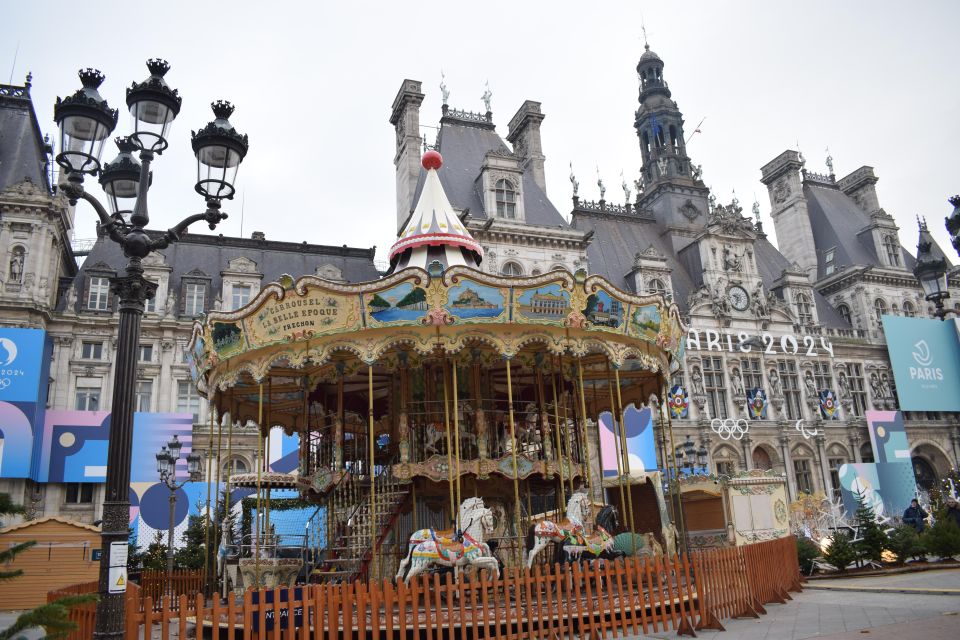
From Palais Royal, the walk continues toward Place Vendôme. This section takes about ten minutes on foot, followed by around 15 minutes of sightseeing and walking around the square.
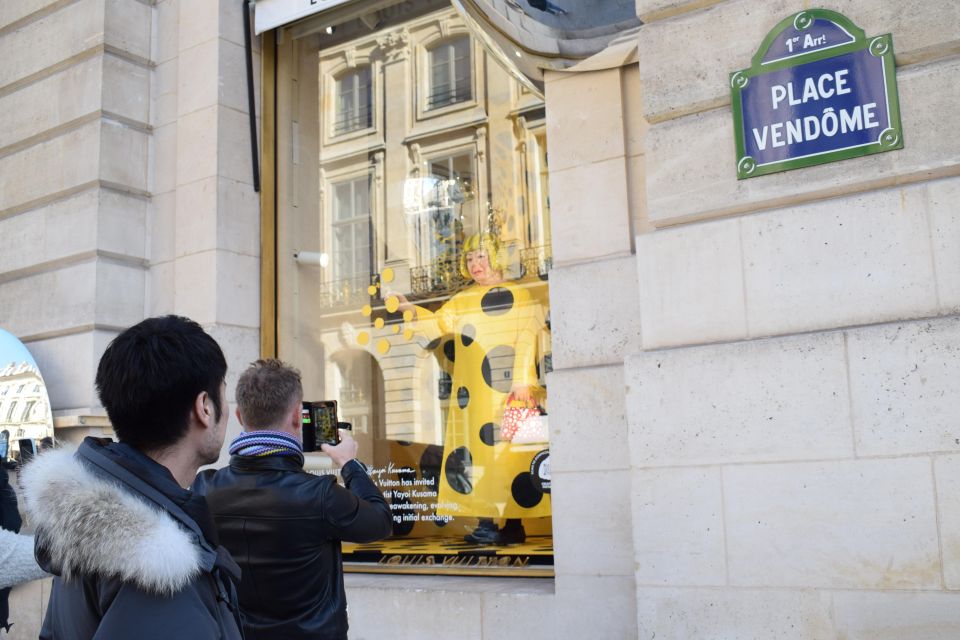
Place Vendôme is where the tour’s theme of wealth and glamour becomes most visible. The square was built by Louis XIV and is associated with Napoleon’s statue. The route also passes some of the most famous luxury names in Paris, including Cartier, Chanel, Louis Vuitton, and the Ritz.
You do not need to shop to appreciate this part. In fact, the value is in seeing how concentrated the luxury trade is in a few elegant streets. Storefronts, hotels, and the square itself show how Paris has made refinement part of its public image.
I would describe this as polished rather than intimate. If your main goal is neighborhood life, small food shops, or a look at residential Paris, Place Vendôme may feel too formal. If you want to understand why Paris is linked with fashion, jewelry, grand hotels, and ceremony, it fits the tour perfectly.
The guide adds the most value here by explaining the history behind the setting. Without context, you see expensive storefronts. With context, you see a route from royal planning to modern luxury.
Palais Garnier: a grand stop viewed from the route
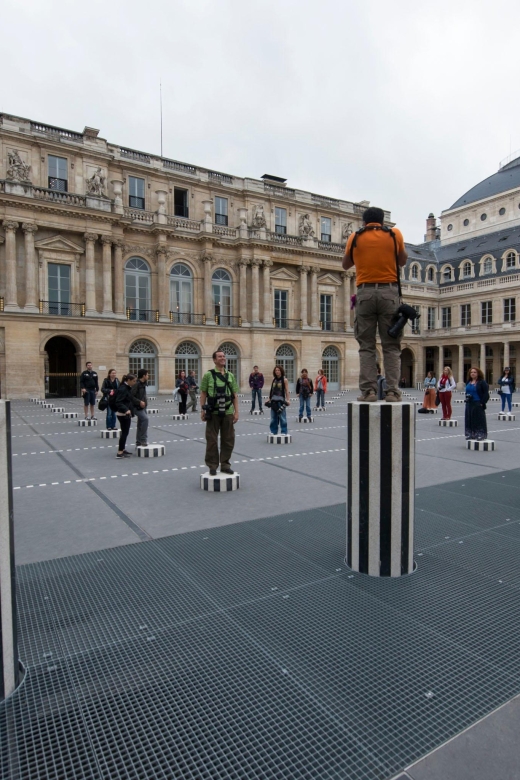
After Place Vendôme, a short five-minute walk brings you to Palais Garnier, the Paris opera house. The planned stop lasts about ten minutes and is described as sightseeing and passing by.
That distinction matters. You should expect to see the exterior and hear the story of the opera house, not a full guided tour inside. Admission to monuments is not included. If Palais Garnier is a major priority, you may want to return separately for an interior visit.
Even from outside, the opera house works well in this sequence. Place Vendôme presents luxury through fashion, jewelry, and hotels. Palais Garnier presents it through performance, architecture, and public spectacle. The walk shows how Paris uses grand settings to turn culture into part of everyday city life.
The short stop also keeps the tour moving toward its final destination. You get the story without spending the entire two-hour experience in one place.





Galeries Lafayette and the famous dome
The final walk takes about five minutes, leading to Galeries Lafayette. The stop lasts around 20 minutes and includes sightseeing, shopping, and scenic views along the way.
The department store is a fitting finish. After seeing royal squares, luxury boutiques, and the opera district, you enter one of Paris’s best-known shopping landmarks. The main visual reward is the dome, described as one of the city’s most beautiful. Your guide takes you through the store so you can see it rather than merely pass the building from the street.
This is also where the tour’s commercial story reaches its modern form. Les Halles introduced the importance of merchants and markets. Galeries Lafayette shows the later Parisian idea of shopping as a grand public experience.
Do not assume the stop includes a purchase, meal, or extended shopping period. Food, drinks, and personal purchases are not part of the price. Twenty minutes is enough to see the dome and take in the setting, but not enough for a relaxed department-store visit if you want to browse every floor.
For many people, the finish is convenient. You end near a major Paris shopping destination rather than returning to the starting point. The walk does not include accommodation drop-off, so you will make your own way onward from Galeries Lafayette.
What $66 buys you in two hours
At $66 per person, this is not the cheapest way to walk across central Paris. You are paying for a professional English-speaking guide, a small group capped at 11 people, and a route that connects several high-profile areas in a short time.
The value is strongest if you want structure and explanation. You could walk from Hôtel de Ville to Galeries Lafayette on your own, but you would need to research the historical connection between the market district, Palais Royal, Place Vendôme, Opéra, and modern luxury shopping. The guide does that work while keeping you moving.
The price is less compelling if you only want exterior photographs. Much of the tour takes place outdoors, and entry fees for monuments and museums are not included. You also pay separately for food and drinks.
I see this as a good orientation walk for a first or second visit to Paris. It gives you a framework for returning later to Palais Royal, Place Vendôme, Palais Garnier, or Galeries Lafayette on your own. For repeat visitors, the historical detail can still make the route worthwhile. One strong example comes from Benjamin’s tour, where people already familiar with the main Paris sights still learned new historical details.
The small group is another reason the price may make sense. A maximum of 11 is much more personal than a large coach group, while still costing less than a fully private guide. You should confirm the exact group arrangement when booking, since the experience may be semi-private or private depending on the reservation.
Timing, meeting point, and walking comfort
The tour lasts two hours and starts at Place de l’Hôtel de Ville. Meet near the river side, in front of Bistrot Marguerite. Look for the Connecting France sign, and allow a little extra time to locate the guide. One person had trouble finding the guide at the start, so arriving early is a sensible move.
The route is described as flat walking. That helps with hills, but it does not make the tour suitable for everyone. The experience is not suitable for wheelchair users or people with mobility impairments. You will be on foot for the full two hours, with repeated walks between stops.
Wear comfortable shoes, and consider the weather because this is an outdoor walking tour with indoor moments rather than a fully sheltered activity. The route includes about ten minutes between Hôtel de Ville and Palais Royal, another ten minutes to Place Vendôme, five minutes to Palais Garnier, and five minutes to Galeries Lafayette.
The official tour language is English. The guide is live rather than recorded, which is useful if you want to ask questions or need a point explained in a different way.
You can cancel up to 24 hours before the tour for a full refund, and the reserve-now, pay-later option keeps your plans flexible. Those terms are useful in Paris, where weather and changing schedules can affect a walking day.
Who will get the most from this Paris walk?
I would choose this tour for a first-time visitor who wants to understand the right bank beyond the Eiffel Tower and the Louvre. It suits you if you enjoy history, city design, luxury shopping, royal stories, and grand architecture, but only have two hours available.
It also fits a visitor who prefers a small group and a guide’s narrative to an audio app. The route is short enough to fit around other plans, and the finish at Galeries Lafayette makes sense for an afternoon of shopping or sightseeing.
I would be more cautious if you want deep interior visits. You pass Palais Garnier and visit Galeries Lafayette, but the monuments and museums along the way do not come with admission. The tour is also not a good choice if you need a wheelchair-accessible route or cannot walk continuously for two hours.
Families with older children may find the changing subjects helpful. The story moves from markets to palaces, luxury brands, Napoleon, opera, and a department-store dome. Very young children may find the historical explanations long, especially since there is no built-in food or activity break.
Should you book it?
Book this walk if you want a well-paced introduction to elegant central Paris, with a guide to explain why the route matters. Benjamin and Antoine are names associated with especially strong historical storytelling, and the small group gives you a better chance of hearing the guide clearly and asking questions.
Skip it if your priority is entering major monuments, sampling food, or exploring ordinary residential neighborhoods. At $66, the tour earns its price through the guide, route design, and limited group size, not through included admissions or refreshments.
For the right visitor, it is a useful two-hour slice of Paris: market origins at Hôtel de Ville, commercial streets around Les Halles, royal atmosphere at Palais Royal, luxury at Place Vendôme, opera at Palais Garnier, and the grand dome of Galeries Lafayette.
FAQ
Where does the tour begin?
The meeting point is Place de l’Hôtel de Ville, near the river side and in front of Bistrot Marguerite. Your guide will carry a Connecting France sign.
Which metro station is closest?
The closest station is Hôtel de Ville, served by Metro Lines 1 and 11.
How long does the tour last?
The guided walking tour lasts two hours.
What language is the tour conducted in?
The live tour guide speaks English.
How large is the group?
The tour is semi-private or private, with a maximum of 11 people.
Does the price include monument or museum admission?
No. Entrance fees to monuments and museums in the area are not included.
Are food and drinks included?
No. Food and beverages are not included in the tour price.
Is the route suitable for wheelchair users?
No. The tour is not suitable for wheelchair users or people with mobility impairments.
What should you bring?
Bring comfortable shoes. The route is flat but requires walking for the full two-hour experience.