REVIEW · PARIS
Paris French Baking Class Baguettes and Croissants in a Bakery
Book on Viator →Operated by Meeting the French · Bookable on Viator
A Paris bakery workshop is a smart switch from museums and lines. This class takes you behind the scenes with a real baker, and you’ll shape and bake baguettes and croissants in a small group.
I love that it’s practical from the first minutes: you’re working dough, not just watching. I also like the English-speaking support (including a translator named Luz in many sessions), plus the focus on technique you can repeat at home.
One possible drawback: it’s not designed for people with sensitive airborne allergies, and the class involves flour and active baking smells.
In This Review
- Key things to know before you go
- French Baking Class in Paris: what you’re actually signing up for
- What you’ll make (and why it’s a good pairing)
- Meet the baker in a real Paris bakery (Oberkampf/Bastille area)
- The dough lesson for baguettes: technique, timing, and shaping
- What you’ll do during the baguette part
- Why this matters for value
- Possible drawback to consider
- Croissant lamination and handling: learning the flaky dough craft
- What you’ll learn and practice
- The payoff
- Warm tastings and the real joy of eating what you made
- Recipes to take home: what you can realistically repeat
- Timing, group size, and who should book this class
- Duration and schedule fit
- Group size: why max 10 is a big deal
- Price and value check
- Best match
- Less ideal for
- Logistics that can affect your day (without ruining the fun)
- Should you book this Paris baguette and croissant class?
- FAQ
- Where is the meeting point for the class?
- How long is the Paris French baking class?
- What time should I plan for, morning or afternoon?
- Is the class offered in English?
- What will I be making during the workshop?
- Is hotel pickup included?
- What’s the minimum age?
- Is it safe for travelers with allergies?
- Can I cancel for a refund?
Key things to know before you go
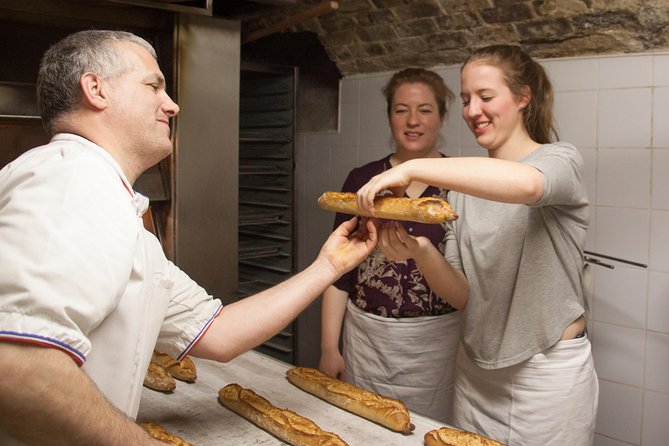
- Small group size (max 10) keeps the lesson personal and gives you time at the counter.
- Baguettes first, croissants right alongside means you’ll learn more than one French staple.
- Baker-led, hands-on instruction while dough is moving and the oven is hot.
- Warm tasting payoff: you take out what you made and eat it still fresh from the oven.
- Recipes included so you can try again in your kitchen later.
- Meeting at a working bakery in the 11th (Oberkampf/Bastille area) keeps the vibe authentic and local.
French Baking Class in Paris: what you’re actually signing up for
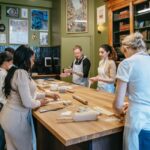
This isn’t a theater-style cooking show. It’s a working bakery experience where the schedule revolves around bread and dough, not a scripted slideshow.
The format is about 2 hours 30 minutes, and you choose a morning or afternoon class to fit your day. The group cap is 10 people, which matters more than you might think in food classes. In a bigger group, hands-on time gets diluted. Here, you’re more likely to get direct correction when your shaping or handling is off.
You’ll meet at Boulangerie Pâtisserie Le Petit Mitron à Oberkampf Bastille, 8 Rue Oberkampf, 75011 Paris. From there, you head into the kitchen area for the real lesson. Expect an English experience with a translator on hand (Luz is specifically mentioned in multiple accounts), so you won’t be stuck guessing what the baker is saying.
You can also read our reviews of more cooking classes in Paris
What you’ll make (and why it’s a good pairing)
You’ll work on two core French staples: classic baguettes and buttery, flaky croissants. That pair is great because they teach very different dough skills.
- Baguettes usually mean thinking about dough feel, fermentation timing, and shaping for structure.
- Croissants teach lamination basics—how thin layers form and how to handle dough so it bakes into that flaky texture.
You’ll also taste the results, including croissants, and you’ll leave with recipes to help you repeat the process at home.
Meet the baker in a real Paris bakery (Oberkampf/Bastille area)
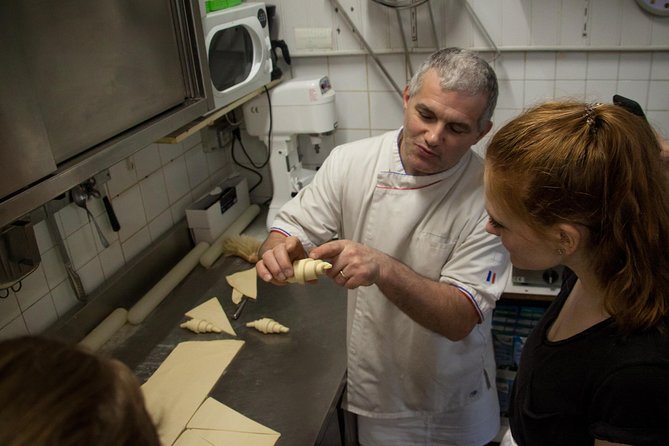
The address is your anchor: 8 Rue Oberkampf, 75011 Paris. This area is convenient for public transport, and the class is designed around showing up to the bakery itself rather than meeting at a hotel and getting bused in.
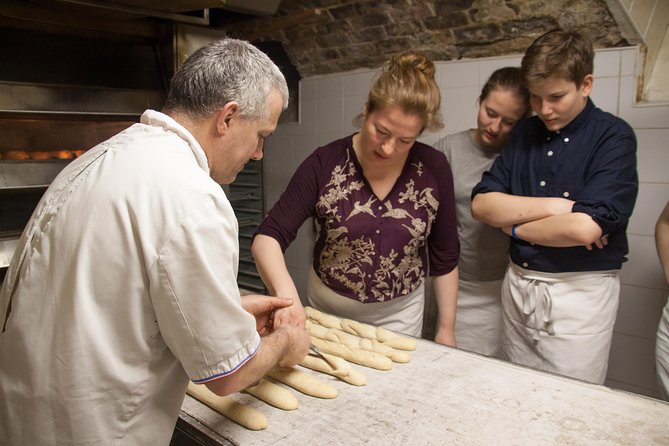
When you arrive, the experience feels like you’re stepping into a working family setup. Many people highlight the baker’s personality and humor, and that’s not just a nice-to-have. In a hands-on dough class, good teaching keeps things calm while you’re working with something finicky.
You’ll start with the basics from the baker—often including how his approach connects to traditional breadmaking—and then you shift to your hands. The translator (often Luz) helps keep things clear and interactive, including tips you can actually use.
The dough lesson for baguettes: technique, timing, and shaping
If you’re picturing a class where you instantly become a baguette artist, adjust expectations slightly. The bread portion takes real attention, because baguettes demand consistency.
What you’ll do during the baguette part
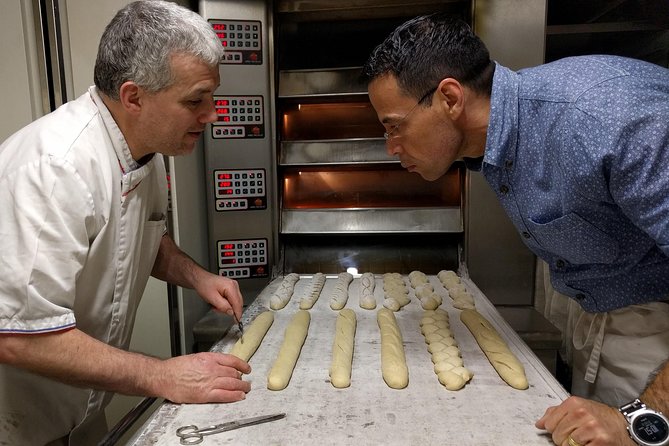
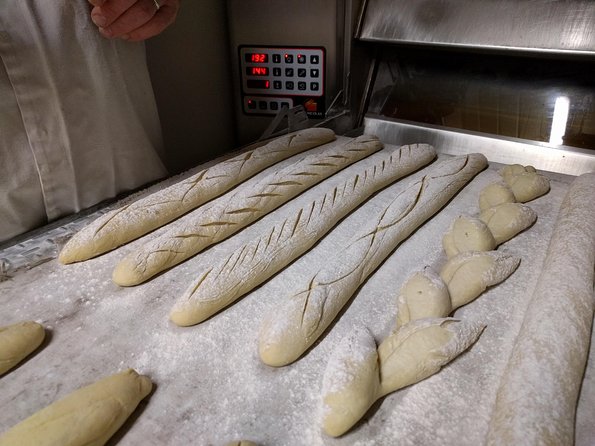
You’ll watch the baker demonstrate proper dough handling and then get your turn. You’ll learn how shaping affects the finished loaf: where the dough holds tension, how the surface is handled, and how you prepare dough so it bakes properly.
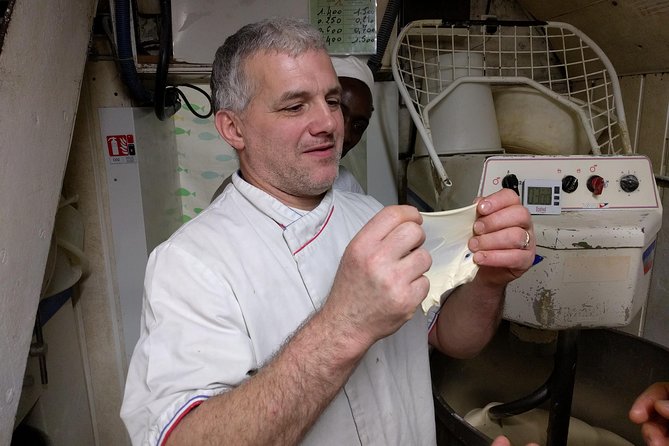
A strong theme in the instruction is not just what to do, but why your dough behaves the way it does. The baker talks ingredients and process, and the translation helps you follow along even if your French is limited.
A few more Paris tours and experiences worth a look




Why this matters for value
A lot of baking classes end up teaching you one trick. This one aims to teach skills. Even if your baguette isn’t bakery-perfect on the first try, you’ll come home with a better feel for dough and shaping.
One detail that comes up in accounts of this bakery: the baker mills his own flour on site. That’s a big deal in breadmaking culture, and it also reinforces the lesson: bread is sensitive to ingredients and process. When a teacher is serious about where flour comes from, you tend to get less fluff and more practical technique.
Possible drawback to consider
Baguettes take time. One caution you’ll be happy you noticed upfront is that a good chunk of the class revolves around baguettes rather than spending most of the time on croissant rolling. That’s not a deal-breaker—it’s actually a smart approach—but it matters if you’re mainly here for croissants.
Croissant lamination and handling: learning the flaky dough craft
Croissants look dramatic. The good news is that the lesson focuses on what you can do with your hands, not just what you can admire.
What you’ll learn and practice
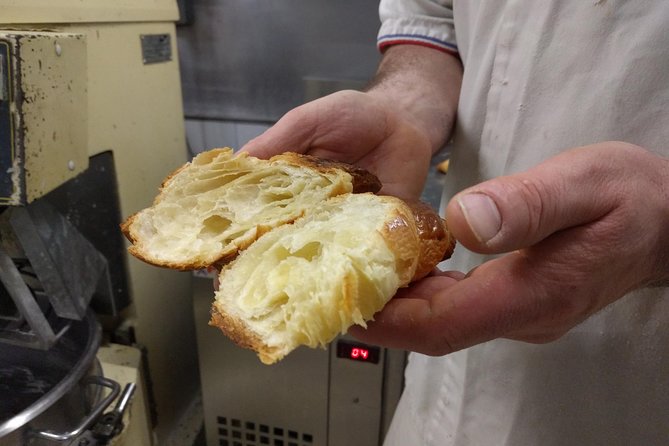
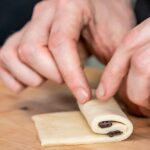
You’ll get instruction on croissant dough—how to handle it, how lamination works in practical terms, and how to roll and shape so you don’t wreck the layers.
Multiple accounts praise the teacher’s clarity while working close-up. If the baker is doing it quickly, the translator helps slow it down with explanations you can follow while you’re moving between steps.
And yes, you’ll do hands-on shaping and rolling. That’s the part that makes a croissant lesson more than a culinary souvenir photo.
The payoff
The best moment is usually when the croissants and baguettes come out warm. You don’t just taste something someone else made earlier. You get the payoff of your own work: bread still hot, fragrance filling the room, and the satisfaction of seeing how your dough transformed.
Warm tastings and the real joy of eating what you made
In a perfect world, you’d eat your first bite in Paris with the baker’s hands still fresh in your memory. Here, that’s part of the experience.
You’ll have tastings that center on the bread you made, including croissants. And the tasting isn’t random. It’s the check: did your handling and shaping lead to what you were aiming for?
If you like food that rewards attention—texture, crust, and that flaky separation in croissant layers—this is where you feel it. Even if your first baguette isn’t perfect, tasting your own warm result is how your brain connects instructions to real-world outcomes.
Recipes to take home: what you can realistically repeat
The class includes recipes to take home, which is where many cooking classes either shine or fall flat. Here, the lesson is designed so you can actually try again.
A useful mindset: think of this as method training. You’ll learn which parts require care and which parts can be adjusted with typical home tools. Even accounts that mention extra support after the class point to the same idea: you won’t leave with nothing but a vague memory.
A good tip for home success: don’t treat this like a one-time recipe. Treat it like a repeatable practice session. If you bake again within a few weeks, your memory of the dough feel will still be there.
Timing, group size, and who should book this class
Duration and schedule fit
Plan for about 2 hours 30 minutes. You’ll pick the time slot (morning or afternoon). Since you’ll be standing and working around active bread prep, treat it as a main activity, not a quick stop between things.
Group size: why max 10 is a big deal
With up to 10 travelers, you’ll spend less time waiting and more time practicing. In short classes, waiting is where you lose energy. Here, the small group helps keep the pace educational.
Price and value check
At $264.95 per person for a 2.5-hour hands-on workshop, it’s not a budget activity. But the value is in the full package:
- real dough time (baguettes and croissants),
- guided instruction with English support,
- and leaving with recipes plus warm tastings.
If you’re the type who likes learning a skill you can redo, the cost makes more sense than it does for a purely eating-focused experience.
Best match
This works well for:
- food lovers who want a hands-on skill, not just a tour,
- families with kids old enough to focus for about 2.5 hours (minimum age is 6, and minors must be with an adult),
- travelers who want a break from monuments and museum circuits.
Less ideal for
It may not be the best fit if:
- you have sensitive airborne allergies (the flour and baking scents are part of the experience),
- you want a croissant-only workshop with minimal baguette time.
Logistics that can affect your day (without ruining the fun)
The class does not include hotel pickup and drop-off, so you’ll want to plan to reach 8 Rue Oberkampf by public transport. The meeting point is near transit, which helps.
You’ll receive a confirmation unless you book within 2 days of travel, in which case confirmation is expected within 48 hours subject to availability. The ticket is mobile, so have it ready on your phone when you arrive.
One thing to watch: the experience requires a minimum number of travelers. In rare cases, it can be canceled if minimum numbers aren’t met, but you’ll be offered an alternative date/experience or a full refund.
Should you book this Paris baguette and croissant class?
If you want a true Paris food moment you can’t just copy at home by walking into a bakery, I think this is a great booking. The hands-on format matters, the group size keeps it friendly, and the warm tasting makes it feel real.
Book it if you:
- like structured instruction you can use later,
- want to learn both baguette shaping and croissant handling,
- want an English-friendly workshop in a working bakery.
Skip it if you:
- have airborne allergy concerns,
- only care about croissants and don’t want baguette time,
- need hotel pickup or very “low-activity” sightseeing.
If you’re flexible and you enjoy rolling up your sleeves (literally), this is one of those Paris activities that turns into a story you’ll still tell when you’re back home.
FAQ
Where is the meeting point for the class?
The class meets at Boulangerie Pâtisserie Le Petit Mitron à Oberkampf Bastille, 8 Rue Oberkampf, 75011 Paris, France. The activity ends back at the meeting point.
How long is the Paris French baking class?
It’s approximately 2 hours 30 minutes.
What time should I plan for, morning or afternoon?
The class offers morning or afternoon options, depending on the session you book.
Is the class offered in English?
Yes. The class is offered in English, and a translator is available during the workshop.
What will I be making during the workshop?
You’ll learn to make classic French baguettes and croissants and you’ll also have tastings of baguettes and pastries.
Is hotel pickup included?
No. Hotel pickup and drop-off aren’t included.
What’s the minimum age?
The minimum age is 6 years old. Minors must be accompanied by an adult.
Is it safe for travelers with allergies?
It’s not recommended for travelers with sensitive airborne allergies.
Can I cancel for a refund?
Free cancellation is available up to 24 hours in advance for a full refund.