REVIEW · PARIS
Paris: Creepy Middle Ages Walking Tour
Book on GetYourGuide →Operated by Vlad Paris Guide · Bookable on GetYourGuide
Medieval Paris, but with teeth. This tour is a guided walk through the city’s oldest layers, from Roman remains to Middle Ages paranoia, with stories that make stone feel alive. I really like the way it ties big events (Vikings, Attila, Richard the Lionheart) to places you can actually stand in, and I love the emphasis on the Knights Templar and the darker side of medieval life, like witch hunts and the Black Death. A possible drawback: it’s dense with names, dates, and side stories, so if you want a very fast pace, you may need to pick what you focus on.
I also like the payoff after the walk. You get a PDF with 15 extra “what to do next” stops in Paris, so you can keep exploring without hunting through tabs on your phone. Plus, the route works well even for people who don’t speak much French because you’ll have a live guide in English or Russian (and on at least some days, the group can be small enough to feel personal).
Expect a practical, mostly outdoor experience: comfortable shoes, water, and weather-ready clothing matter. The tour is about 2 hours (sometimes up to 3), starting near Le Petit Panthéon and finishing around Pont Neuf—an easy shape for fitting into a day of sightseeing.
In This Review
- Key highlights you’ll feel fast
- Starting in the oldest quarter: Le Petit Panthéon and Arènes de Lutèce
- La Sorbonne: where learning and power talk to each other
- Musée de Cluny and the Thermes: the Roman-to-medieval bridge
- A secret stop you’ll be glad you didn’t miss
- Pantheon area: seeing the city’s long shadow
- Notre-Dame de Paris: legend meets the story of building
- Pont Neuf finish: a clean ending with great framing
- Price and value: is $58 worth it?
- Pace, group size, and the one thing to watch for
- What you’ll learn (and why it feels fun, not grim)
- Who should book the Creepy Middle Ages walking tour
- Should you book this tour?
- FAQ
- How long is the Creepy Middle Ages walking tour?
- Where does the tour start and end?
- What languages is the tour offered in?
- What’s included in the price?
- Is food included?
- What should I bring?
Key highlights you’ll feel fast

- Arènes de Lutèce as your time machine: Roman bones of Paris that set the tone before the Middle Ages stories kick in
- Templars and secret organization lore: you’ll hear why their legend still matters when you’re looking at medieval Paris
- Notre-Dame de Paris creation stories: you get the myth plus the building narrative tied to what you see
- Black Death and the oldest hospital thread: the tour connects fear, care, and the city’s survival instincts
- Pont Neuf photo moment: a clear closing point with great framing for your memories
- Small-group energy (often): weekday walks can feel more like a focused conversation than a crowded bus ride
Starting in the oldest quarter: Le Petit Panthéon and Arènes de Lutèce

Most “medieval Paris” tours start with churches. This one starts with the kind of evidence that makes you sit up: the Roman-era setting around Arènes de Lutèce. You begin near Le Petit Panthéon, a practical meeting area, and you’ll walk into the mood quickly because Arènes de Lutèce is exactly the sort of place where the timeline feels physical—stone and history, not just posters and captions.
This stop matters because it changes how you read everything after it. When you see Roman remains first, medieval Paris doesn’t feel like a random jump centuries later. It feels like the same city reusing space, reshaping power, and building new identities on older foundations.
You’ll also get an early set of “how did we get here” storytelling beats—Vikings, defense, and conquest themes that set you up for the Middle Ages section without turning the walk into a history class.
You can also read our reviews of more walking tours in Paris



La Sorbonne: where learning and power talk to each other

Next, you move into the area around La Sorbonne, and the point here isn’t that you’re touring every hall like a museum. It’s that you’re seeing how medieval Paris thought about learning, institutions, and influence.
This is one of those stops where you’ll notice the guide’s storytelling style. If your guide likes to connect themes—religion, education, politics—you’ll feel it here. And if your guide answers questions as you go, this is a good place for them. The Sorbonne area gives you a natural bridge between the city as a physical place and the city as an idea.
One thing to consider: if you prefer very short explanations and minimal detours, keep an eye on your energy level. In this tour style, the “why” often gets as much airtime as the “what.”
Musée de Cluny and the Thermes: the Roman-to-medieval bridge

Then you head to Musée National du Moyen Age – Thermes et hôtel de Cluny. The name alone tells you what you’re in for: a site built around that overlap between Roman warmth and medieval survival. You don’t just hear that Paris had layers—you move through the evidence of those layers.
This stop is valuable because it lets the tour do something rare. Instead of treating Roman Paris and medieval Paris like separate postcards, it treats them like chapters of the same book. That connection helps a lot when you’re trying to remember names like Julius Caesar or stories about Paris defense, because the guide can keep anchoring them to surroundings.
If you’re the kind of traveler who likes to “see the logic” behind what you’re learning, you’ll appreciate this. The theme becomes easier to follow: old ruins, then oldest churches, then the city’s fear cycles and power structures.
A secret stop you’ll be glad you didn’t miss

At one point you’ll reach a secret stop. The tour doesn’t oversell this part with fluff, which is the right move. The fun is that it interrupts your expectations and adds an extra layer to the story—exactly what you want from a Creepy Middle Ages theme.
What you should expect, practically, is a brief but focused moment where the guide tightens the story. You’re not just collecting landmarks; you’re getting a narrative turn. If you like urban ghost stories but want them grounded in real places and time periods, this is where the tour’s tone clicks.
Wear shoes that can handle uneven ground. These “special stops” often work because they’re close to the main path but still require a little attention.
Pantheon area: seeing the city’s long shadow

The walk continues toward the Pantheon area. Even if you don’t go deep into the building, the surrounding streets give you perspective on how Paris presents power across centuries. This is where medieval themes start to connect to later Parisian identity, and you can feel the shift from “survival of the city” to “Paris as an idea.”
The guide also uses this stretch to link the Middle Ages stories together—Richard the Lionheart comes up as the tour frames medieval knighthood and politics, while other threads like Attila and the Huns help explain why defense and fear were everyday topics, not just dramatic legends.
If you’re a photo person, look for quick angles along the streets as you walk. The tour has designated photo time later too, but you’ll have more options now if you’re ready with your camera before the crowd energy builds.






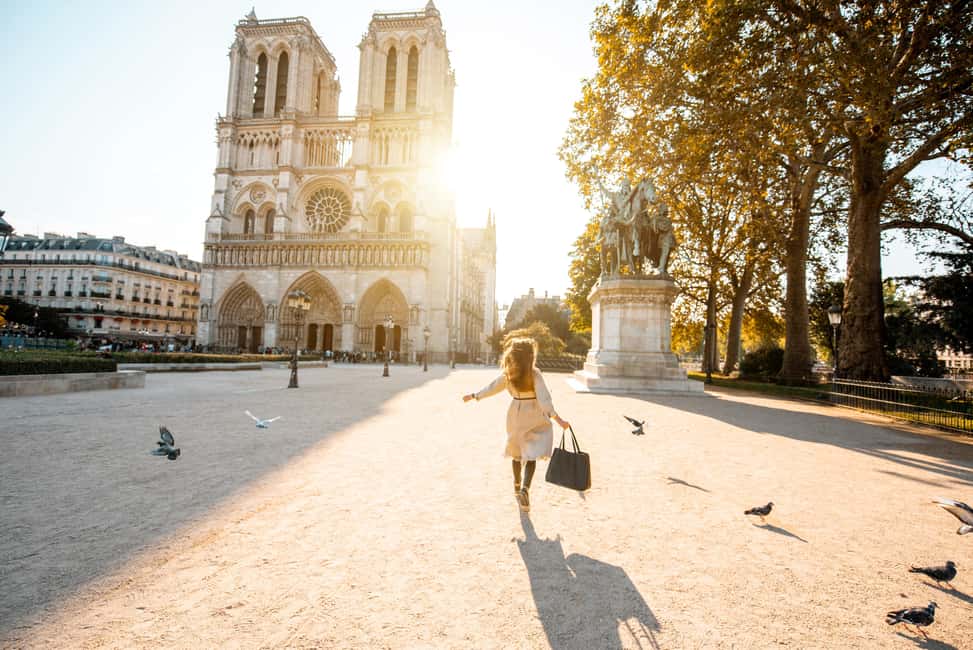
Notre-Dame de Paris: legend meets the story of building
No surprise: Notre-Dame Cathedral is a highlight. What makes this stop more than a standard photo stop is the way it’s framed. You’ll hear the creation story behind the legendary Notre-Dame de Paris and how the building became part of the cultural memory of the city.
This is also a good moment to listen for how the guide connects architectural choices to the themes of the tour. When the Middle Ages section is done well, the cathedral doesn’t feel like a standalone monument. It feels like the visual language of that era—faith, fear, authority, and community all packed into stone.
Tip: at Notre-Dame, pace yourself. The area can be busy, and you’ll want a few calm seconds to look up and actually take it in while the guide’s story is landing. If you’re mentally “collecting facts” the whole walk, this stop is where you let the place do some work for you.
Pont Neuf finish: a clean ending with great framing

The tour wraps with Pont Neuf and a photo stop, then finishes around 15 Pl. du Pont Neuf. Pont Neuf is a smart closing choice because it gives you a clear geographic bookend. You end in a spot that feels central and photogenic, which makes it easy to keep your day moving afterward.
This is where you’ll likely feel the tour’s theme most clearly: medieval fear and mysticism, yes, but also the practical need for roads, bridges, markets, and movement. Pont Neuf is the “how people actually live” kind of landmark, even when you’re thinking about Knights Templar mysteries.
If the weather cooperates, this is an excellent place to grab a final wide shot that shows how the city flows beyond the sites you just learned about.
Price and value: is $58 worth it?

$58 per person for a 2-hour guided walking tour is a fair price point for Paris, especially because you’re getting more than a general “here’s a church” loop.
Here’s where the value really comes from:
- You’re paying for a professional local guide who gives the story thread you’d struggle to assemble on your own.
- You cover high-impact spots tied to the tour’s theme: Roman ruins, medieval churches/streets, Notre-Dame, and a finishing scene at Pont Neuf.
- You get a PDF with 15 extra Paris stops after payment. That matters because it turns the tour into a planning tool, not just an afternoon activity.
If you’re deciding between a themed tour and doing things independently, a good rule is this: if you want the “why” behind the places you’re seeing, this ticket price starts to look like a bargain. If you just want photos and basic facts, you could cobble together a self-guided route cheaper—but you’d lose the narrative connections that make the creepy theme work.
Pace, group size, and the one thing to watch for
This is a story-forward walking tour, not a minimalist “3 stops and done” experience. That’s great if you love details and question-friendly guides.
The only real caution is pacing and information density. On at least some days, the tour can include tangential explanations that may feel like information overload if you’re looking for a sharper, faster route. If you’re the kind of traveler who likes to ask follow-ups, you’ll probably enjoy the extra attention. If you’d rather skim through, you might want to mentally note what you care about most—Templars, Black Death, witches, or Attila—and gently ignore the rest.
Group size can vary. On weekdays, you may find it’s a more personal experience. Small groups also help when you want better listening without standing shoulder-to-shoulder the whole time.
What you’ll learn (and why it feels fun, not grim)
This tour doesn’t just throw dark topics at you. It uses them to explain how medieval people interpreted the world.
You’ll hear stories and themes like:
- How Julius Caesar conquered Gaul
- How Paris defended itself from Viking invasion
- How Notre-Dame de Paris became legendary
- Richard the Lionheart as a central medieval figure
- The Knights Templar and their mysteries
- How Paris hunted witches and sorcerers
- How Parisians dealt with the Black Death, plus the tour’s claim about the oldest hospital in the world
- How Paris survived threats like the Huns led by Attila
- What daily life might have looked like, including what people ate and how they entertained themselves
Why this works: it shifts “creepy” from pure shock value into a framework for understanding fear, faith, and survival. You’ll walk away seeing medieval Paris as a city with routines, institutions, and coping strategies—plus plenty of reasons people believed myths.
And yes, the humor helps. One guide named Slava has been called out for mixing sharp medieval context with a funny delivery and strong answers to questions. Even when the topics are heavy, the tone stays human.
Who should book the Creepy Middle Ages walking tour
This is a great fit if you:
- Love themed tours where the story actually connects the stops
- Want medieval Paris without spending your whole day reading museum panels
- Enjoy macabre topics like plague, witch hunts, and secret orders, but still want them tied to real locations
- Prefer walking tours because you like getting oriented on foot
- Can handle a route that packs a lot into a short time
It may not be your perfect match if you:
- Want a super quick highlights tour with minimal talking
- Prefer strict “stop, photo, move” pacing
- Get overwhelmed by long explanations with many names and dates
Should you book this tour?
If your goal is to understand medieval Paris through the places themselves, I’d lean yes. The route hits Roman foundations, medieval institutions, Notre-Dame, and a smooth finish at Pont Neuf, all wrapped in a story that makes the Middle Ages feel like a lived reality, not a distant costume.
Book it if you’re the type who likes asking questions and staying curious while you walk. Skip it if you want a lightweight sightseeing shuffle. For most people, though, the $58 price is a smart trade: you’re buying a guided story thread plus a planner-friendly PDF you can use after the walk.
FAQ
How long is the Creepy Middle Ages walking tour?
It runs for about 2 hours, with some timing described as 2–3 hours depending on the schedule.
Where does the tour start and end?
You meet near Le Petit Panthéon, by Arènes de Lutèce, and the tour finishes at 15 Pl. du Pont Neuf.
What languages is the tour offered in?
The live guide is available in English and Russian.
What’s included in the price?
You get a 2–3 hour guided walking tour with a professional local guide, a PDF with 15 additional Paris suggestions after payment, and visits that include ancient Roman ruins plus medieval Paris exploration and photo opportunities.
Is food included?
No. Food and drinks are not included.
What should I bring?
Bring comfortable shoes and water, plus weather-appropriate clothing.