REVIEW · PARIS
Paris City Center w/ Notre Dame interior | Exclusive Walking Tour
Book on Viator →Operated by Babylon Tours Paris · Bookable on Viator
Notre-Dame, then the Louvre area on foot. I love how this tour keeps a comfortable pace while you learn the story behind the big landmarks. I also like the mix: walking + short stops that help you connect the islands of Île de la Cité to the grand boulevards. One thing to plan for is that Notre-Dame’s interior is included but unguided because regulations limit how guides can operate inside.
You’ll start at the heart of the city on Île de la Cité, take in famous Gothic sights like Sainte-Chapelle, and then work your way across some of Paris’s most photogenic bridges. After that, you’ll pass the Louvre and slip through quieter royal-era scenery before ending at Place de la Concorde and the start of the Champs-Elysées.
It’s rain or shine and it’s a real walk (moderate fitness helps). Come with comfortable shoes, a bottle of water, and an umbrella or hat depending on the season. Also note: no large bags or suitcases allowed.
In This Review
- Quick hits before you go
- From Île de la Cité to Notre-Dame: what makes this start work
- Sainte-Chapelle and the Conciergerie: Gothic beauty meets hard history
- The Seine bridges: Pont Neuf and Pont des Arts for people who love city structure
- Passing the Louvre (without spending a whole museum day)
- Palais-Royal and the Tuileries: from power to calm
- Place de la Concorde: ending with Revolution history and a view to the Champs-Élysées
- Price and value: why $59.69 for 2.5 hours can make sense
- What it’s really like on the day: pace, shoes, and guide energy
- Who should book this Notre-Dame to Tuileries walk
- Should you book this Paris City Center tour with Notre-Dame interior?
- FAQ
- What’s the duration of the tour?
- Is this tour private?
- Does it include Notre-Dame Cathedral interior access?
- Are tickets for other sights included?
- What stops can I expect during the walk?
- Does the tour run in bad weather?
- How physically demanding is it?
Quick hits before you go
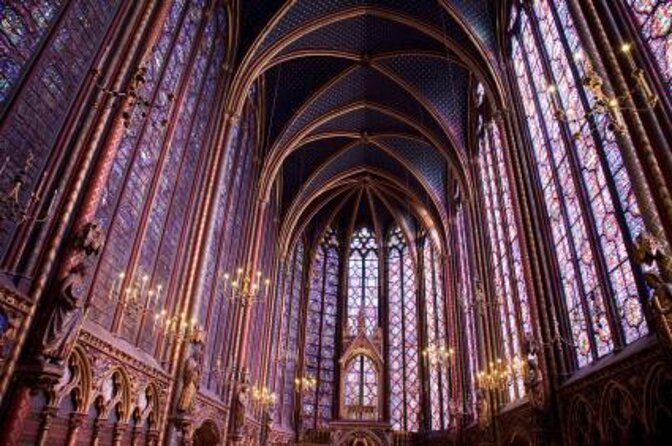
- Notre-Dame interior, but unguided: you’ll still get expert context outside, then enter on your own.
- A paced city-center route: see a lot without feeling crammed into the busiest angles.
- Gothic Paris in close-up: Sainte-Chapelle’s history and the Conciergerie’s Revolutionary past.
- Seine bridges with real backstory: Pont Neuf (UNESCO-listed banks), Pont des Arts, and the Henri IV statue.
- Royal calm near the Louvre: Palais-Royal gardens and sculptures without needing a full museum day.
- End at Place de la Concorde: execution-site history tied directly to the walk toward Champs-Elysées.
From Île de la Cité to Notre-Dame: what makes this start work
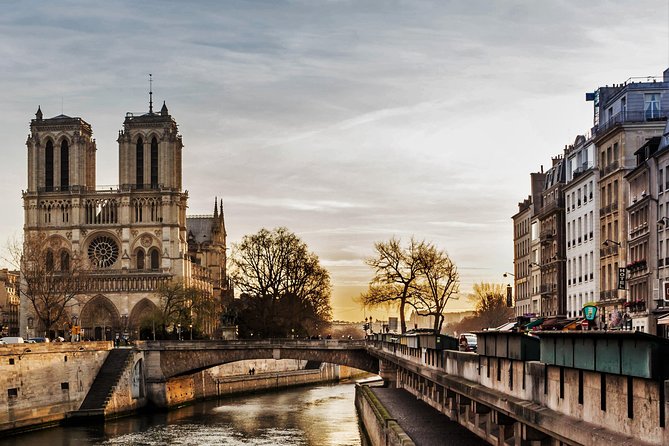
This tour starts where Paris began: Île de la Cité. You meet at Cité 75004 and get a short orientation in the area, which matters because the geography here is confusing if you haven’t seen it before. Lutetia, the old Roman predecessor of Paris, is part of the story your guide puts into place right away.
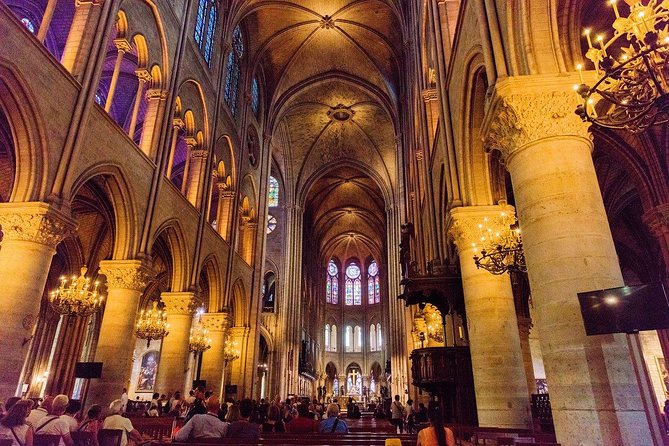
Then you head to Notre-Dame Cathedral. You’ll tour the outside with your guide first, so when you go in, you’re not looking at random stone details—you understand what you’re seeing and why it’s famous. The cathedral is described as newly restored after the 2019 fire, and it’s treated here as a living symbol of Paris, not just a photo stop.
You do get time for the interior visit, and it’s free and open to all. The key catch is that the interior visit is unguided due to regulations. Practically, that means you should treat the interior segment as your chance to go in, look around, and take in the restored space on your own while the guide’s interpretation stays focused on what you learned outside. It’s still worth it, because Notre-Dame is one of those places where being there changes how you read the city.
You can also read our reviews of more walking tours in Paris



Sainte-Chapelle and the Conciergerie: Gothic beauty meets hard history
One of the best parts of this route is that it doesn’t treat Gothic architecture like a postcard. Sainte-Chapelle shows you the “why” behind the style. The chapel was built in just seven years, and it was intended to house precious Christian relics, including Christ’s crown of thorns acquired by Saint Louis. That timeline gives Sainte-Chapelle a sense of urgency—this wasn’t a slow craft project. It was built because relics mattered deeply.
And then you move to the Conciergerie, which is the oldest remaining part of the Palais de la Cité. This stop is all about contrast. The building became one of the most notorious prisons in France, housing more than a thousand “enemies of the Revolution.” Famous names like Marie Antoinette are linked to the prison’s story. If you like history that feels human and specific, this is where the tour tightens.
A practical note: Sainte-Chapelle and the Conciergerie are listed as admission ticket not included, so you may want to budget extra if you plan to enter. Your guide helps with context either way, but if you want the full payoff, plan on tickets.
The Seine bridges: Pont Neuf and Pont des Arts for people who love city structure
After Île de la Cité, you start crossing Paris in a way that makes the city feel like one continuous story. Pont Neuf is next, and it’s not just an old bridge for selfies. It’s considered the oldest stone bridge in Paris, and the Seine riverbanks are listed as a UNESCO World Heritage site—so you’re not only seeing a crossing, you’re seeing a protected slice of the city’s shape and heritage.
In the middle of Pont Neuf, you’ll see the equestrian statue of King Henri IV. The version you see today is a replica, because the original was destroyed during the French Revolution. That detail is the kind of thing a good walking guide makes stick: you look up, see the statue, and suddenly you’re thinking about how political power reshapes even monuments.
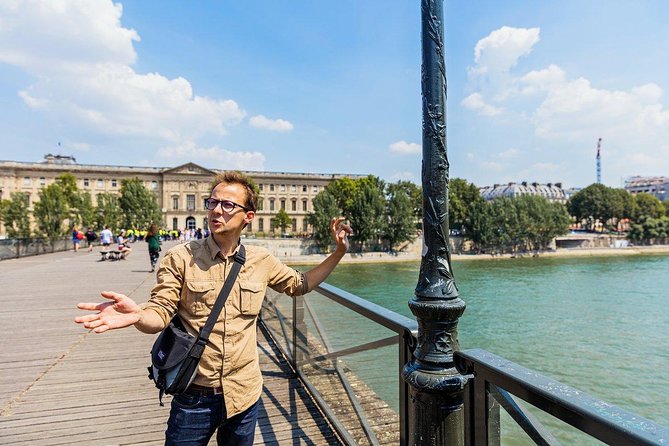
Next comes Pont des Arts, connecting the Institut de France and the Louvre. It’s described as built between 1801 and 1804 and as the first iron bridge in Paris. That’s a small technical point that makes you see the city’s engineering evolution as part of its cultural evolution. It’s also a nice reset point before you step into the Louvre area, because bridges slow you down naturally—you get space to look and photograph without feeling like you’re “inside” a ticket line.
Passing the Louvre (without spending a whole museum day)
You don’t do the Louvre as a full, ticketed museum marathon here. Instead, the tour gets you situated so you can navigate it better later. You’ll pass through the Cour Carrée, one of the Louvre’s main courtyards, and see the Louvre Pyramid, the main entrance design by I.M. Pei.
This style of stop is a smart fit for first-timers. The Louvre is so big that you can spend hours wandering and still feel lost. By seeing the courtyards and getting your bearings, you’ll understand where the main flows are. Then, if you want to return for a deeper dive on your own, you’ll have a mental map.
Louvre admission is not included, so if you want to enter the museum during your visit, you’ll need your own ticket. The tour time is focused on orientation and history in the exterior/approach zone, which is exactly why it works as a 2.5-hour day plan.
Palais-Royal and the Tuileries: from power to calm
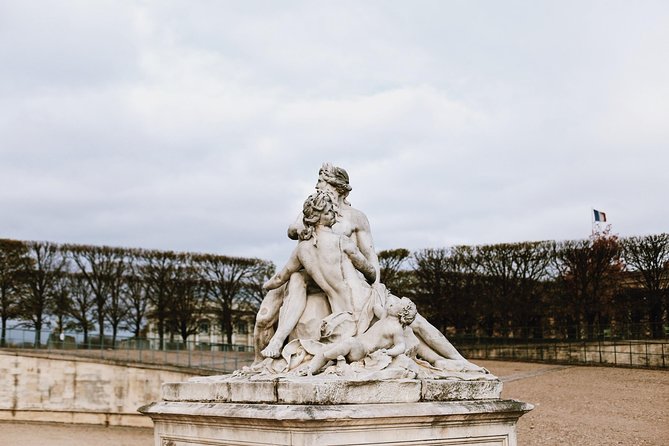
After the Louvre area, you shift into a different Paris mood: quieter, more garden-like, still central. You’ll head to Domaine National du Palais-Royal, created by Cardinal Richelieu in 1633. The palace was home to royal families until Versailles became the center of power. That detail helps you understand why this area feels like “court life” even though it’s now an urban zone.
The stop also includes the Palais-Royal gardens, described as peaceful and surrounded by futuristic architecture with contemporary sculptures. If you like modern art and you also want to rest your feet, this is a good match. It’s not the kind of place where you have to commit to a long indoor visit; it’s a break that still feels Parisian.
From there you walk into the Tuileries Gardens. These gardens are called the oldest park in Paris with history dating back to the 17th century. You’ll move through manicured flower beds and see the gardens as a long, elegant walkway between major landmarks—perfect for a recovery moment in a walking tour.
There’s even a practical, charming stop on your way: the Tuileries Gardens Bookstore. It’s a small detail, but it’s exactly the sort of local texture that turns a sight-focused walk into something more personal. If you like landscape and gardening design books, this is where you’ll actually want to slow down.
You can also read our reviews of more city tours in Paris






Place de la Concorde: ending with Revolution history and a view to the Champs-Élysées
You finish at Place de la Concorde. This square used to be an execution site during the French Revolution, and it now marks the start of the Champs-Elysées. Ending here is a smart way to leave the tour with a clear “big Paris” direction. You’re not just stepping out at random—you’re ending at a major axis that helps you plan the rest of your day.
It also ties the tour’s theme together. You started with Gothic grandeur and medieval symbolism, moved through relic history and prison history, and then you close with the Revolution’s public power. The geography helps, too: the route naturally leads you from Île de la Cité outward into Paris’s more monumental spaces.
Price and value: why $59.69 for 2.5 hours can make sense
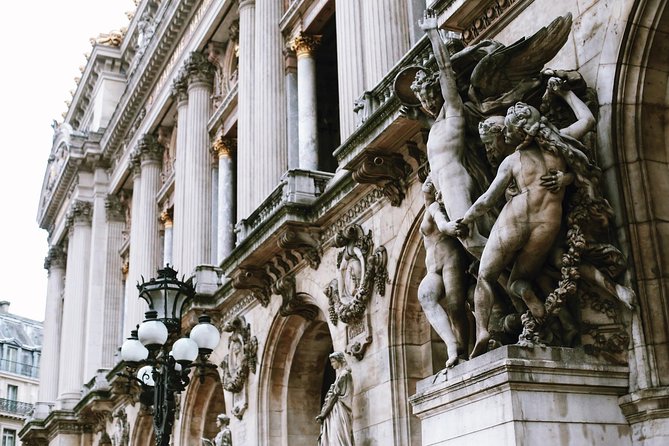
At $59.69 per person for about 2 hours 40 minutes (around 2.5 hours), this tour sits in the “serious sightseeing” category rather than the “quick highlight walk.”
Here’s the value equation I think matters:
- You’re paying for a guide who can connect themes. Instead of seeing Notre-Dame, Sainte-Chapelle, and the Louvre area as unrelated attractions, you get the story threads: medieval architecture, royal power, prisons and Revolution, then the city’s shift into modern grandeur.
- You’re paying to avoid uncomfortable crowd chaos. The tour is designed to set the pace and help you avoid the worst press of people. That doesn’t mean you’ll have empty sidewalks, but it does mean you’ll spend less time stuck and more time learning.
- You’re paying for time efficiency. In 2.5 hours, you cover enough ground that you can return later to museums or deeper stops with less guesswork.
What might make it feel less “all-inclusive” is the ticket situation. Notre-Dame interior access is included, but other major stops list admission tickets not included. So your final cost can vary based on whether you want to enter Sainte-Chapelle, the Conciergerie, and whether you add Louvre entry.
If you do just the included viewing and rely on context from the guide, you’ll likely still feel you got your money’s worth. If you enter every ticketed site listed, you’ll spend more on top—but you’ll also get a fuller day from a structured start.
What it’s really like on the day: pace, shoes, and guide energy
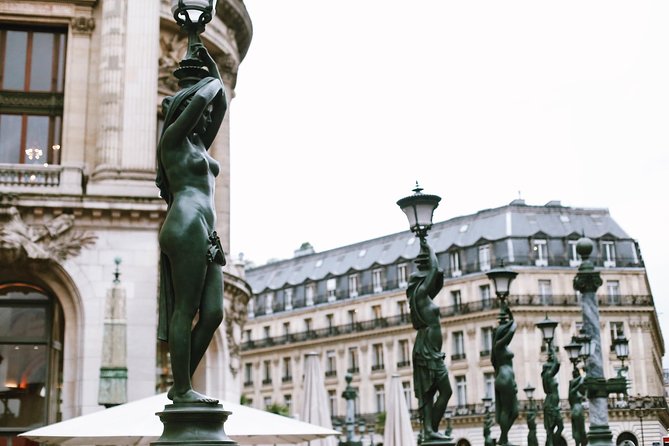
This is described as a private walking tour, which means it’s only your group. That’s the part that usually makes people happy: you can ask questions without trying to compete with strangers’ conversations, and you can keep a steady walking rhythm.
You’ll notice the guide focus in the small details. Past guides named in experiences include Eden, Maria, Jay C., Francois, Hugo, Adrien, Georgia, Angeline, Agustina, Sergio, Augustine, and Marcel. Different personalities, same goal: explain what you’re seeing and how it links to Paris today.
The pacing is gentle enough for moderate fitness, but it’s still a walking plan. Expect repeated short walks and standing time at major viewpoints. Come prepared to keep moving.
Also keep in mind: some attractions can’t be visited from the inside because of security measures. The tour focuses on what you can do, not what you wish you could do.
Finally, you’ll need to provide a mobile phone number (with country code). The tour also uses a mobile ticket, and confirmation comes at booking time.
Who should book this Notre-Dame to Tuileries walk
This tour is a great fit if you want a “best of Paris history” day without spending the whole trip in ticket lines and museum galleries. It’s especially good for:
- First-time visitors who want major sites plus a workable understanding of the city layout.
- Travelers who like architecture but also want the political and social stories behind it.
- People who prefer a private pace, with fewer awkward crowd squeezes.
- Anyone who wants a shorter program that still feels substantial, ending near major shopping and walking options on the Champs-Elysées.
It might not be the best match if you want a long, timed museum experience at the Louvre or if you prefer a fully guided interior for every major stop. Notre-Dame is guided outside and unguided inside, and other interiors may not be accessible during the route.
Should you book this Paris City Center tour with Notre-Dame interior?
If your goal is to understand Paris fast—without doing a 7-hour marathon—this is a strong choice. The Notre-Dame interior included piece is the biggest lure, and the rest of the route fills in the context so you don’t just collect landmarks. Ending at Place de la Concorde also sets you up for the next part of your day.
Book it if you’re excited by history that links places together: Sainte-Chapelle’s relic-era purpose, the Conciergerie’s Revolution prison reality, and the bridges and squares that show how Paris evolved. I’d even say it’s a smart early booking for your trip, since it gives you a map you’ll use all week.
If you’re only interested in entering every monument and spending hours inside grand interiors, you might want a different tour style. But for most people, this is a practical, high-value way to get your bearings, learn what matters, and still enjoy a real Paris walk.
FAQ
What’s the duration of the tour?
The tour runs about 2 hours 40 minutes (listed as 2.5 hours).
Is this tour private?
Yes, it’s a private walking tour, with only your group participating. There’s also an option mentioned as SAVE! BOOK SEMI-PRIVATE that changes what’s included regarding exclusivity.
Does it include Notre-Dame Cathedral interior access?
Yes, the Notre-Dame Cathedral interior visit is included. However, it’s unguided due to regulations, even though entry is free and open to all.
Are tickets for other sights included?
Admission tickets are not included for several stops such as Palais de Justice, Sainte-Chapelle, the Conciergerie, the Louvre Museum, and the Palais-Royal area as listed.
What stops can I expect during the walk?
You’ll start on Île de la Cité near Notre-Dame and then see key areas including Pont Neuf, Pont des Arts, the Louvre courtyards, Palais-Royal gardens, the Tuileries Gardens, and end at Place de la Concorde.
Does the tour run in bad weather?
Yes, it runs rain or shine. Dress appropriately for the weather.
How physically demanding is it?
It’s a walking tour with a route that requires a moderate physical fitness level. Comfortable shoes help.
If you want, tell me your travel dates and whether you plan to enter the Louvre or Sainte-Chapelle. I can suggest how to sequence tickets with this walk so your day flows.