REVIEW · PARIS
OMAHA Beach – Day trip from Paris to Normandy in a small group (3/7 pax)
Book on Viator →Operated by ADRIAN ROADS · Bookable on Viator
The most moving part of this Normandy day trip is the hour spent around Omaha Beach, where you can walk on the sand, see the landing monuments, and connect the battle maps to the ground beneath your feet. The visit to the American Cemetery adds a quiet, solemn counterpoint, with its rows of white crosses overlooking the beach.
I like the small group of no more than seven, which gives the guide room to explain details and answer questions. I also like that the Overlord Museum entry is included, since its tanks, guns, personal objects, and reconstructed scenes help make the military story easier to follow. The drawback is the long day: you leave Paris at 6:30 am and spend about 13 to 14 hours on the road and at the sites.
In This Review
- Key points to know before booking
- Why this small Normandy trip works from Paris
- The National Guard Monument at WN72
- Walking the Easy Green sector at Omaha Beach
- Reading the battle through the Overlord Museum
- The 1st US Infantry Division Memorial at WN62
- A quiet hour at the American Cemetery
- What the day feels like with a guide
- Who should book this tour
- Booking, cancellation, and practical details
- Should you book this Omaha Beach day trip?
- FAQ
- Where does the Normandy tour begin?
- Where does the tour end?
- How long does the tour last?
- How many people can join the tour?
- Is the tour offered in English?
- Is admission to the Overlord Museum included?
- Is lunch included?
- Can I cancel for a full refund?
Key points to know before booking
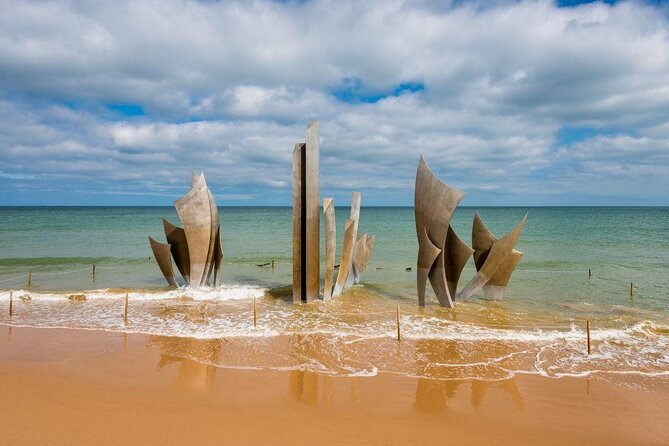
- Omaha Beach is the heart of the day, with time to walk at the Easy Green sector and see The Braves and Signal of the Liberation monuments.
- The American Cemetery visit is built into the schedule, including the Walls of the Missing, memorial chapel, maps, and views toward the beach.
- The Overlord Museum admission is included, with more than 35 vehicles, tanks, and guns connected to the Normandy campaign.
- The group is limited to seven people, a useful advantage on a full-day trip with a long drive from Paris.
- Regis has received especially warm praise as a guide, with strong English, a calm manner, and detailed commentary.
- Lunch is not included, so plan for that cost and ask the guide how the day handles the meal break.
Why this small Normandy trip works from Paris
Normandy is far enough from Paris that a day trip requires an early start and a late return. That tradeoff is clear here, but the small vehicle and tight group make the long day more manageable than a large coach outing.
You meet at Théâtre du Lido on the Champs-Élysées at 6:30 am. The central location is practical if you are staying in Paris and can reach the 1st Arrondissement area by public transport. Hotel pickup is not included, so you need to get yourself to the meeting point.
The tour uses an air-conditioned vehicle, and the group limit is seven people. That matters on a day with several stops. You can hear the guide without a microphone, ask questions without waiting through a crowd, and move between the memorials with less fuss.
The advertised price is $300.40 per person. That is a serious day-trip expense, but it covers transportation from Paris, the guide, and admission to the Overlord Museum. You are paying mainly for the time saved and the historical guidance. Organizing the same route by train, local transport, and separate tickets would take more planning and would make it harder to fit all five main stops into one day.
Lunch is extra, and hotel drop-off is not part of the stated inclusions. The activity ends back at the meeting point, so budget for an evening return to your accommodation.
A few more Paris tours and experiences worth a look



The National Guard Monument at WN72
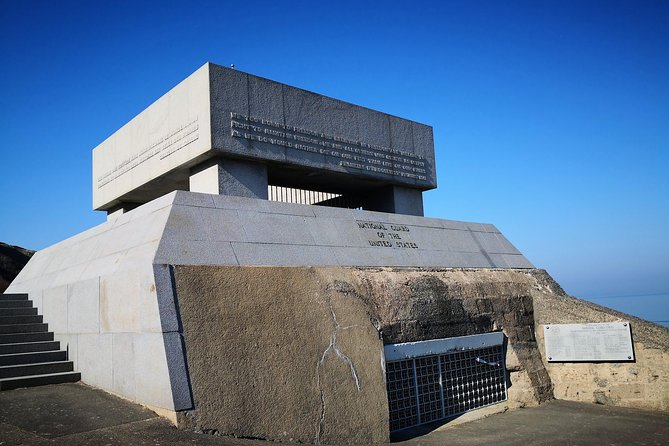
The first stop is the National Guard Monument, located at WN72, the position where the 29th National Guard Division broke through German defenses on June 6, 1944. The monument sits above an original bunker, giving the site a physical link to the defensive system that faced the Allied landing.
You spend about 30 minutes here. That is enough time to look at the monument, hear the guide explain the position, and begin placing the day’s story on a map of the Normandy coast.
This stop is less visually famous than Omaha Beach or the cemetery, but it gives useful context. D-Day was not just a single dramatic rush onto the sand. It involved fortified positions, difficult advances, and separate units pushing through different points along the coast.
Admission is free. The stop is maintained by the National Guard European Forces, with the purpose of honoring National Guard members who served in the European theater. If you have a family connection to the military, you may find this opening stop especially meaningful.
Walking the Easy Green sector at Omaha Beach
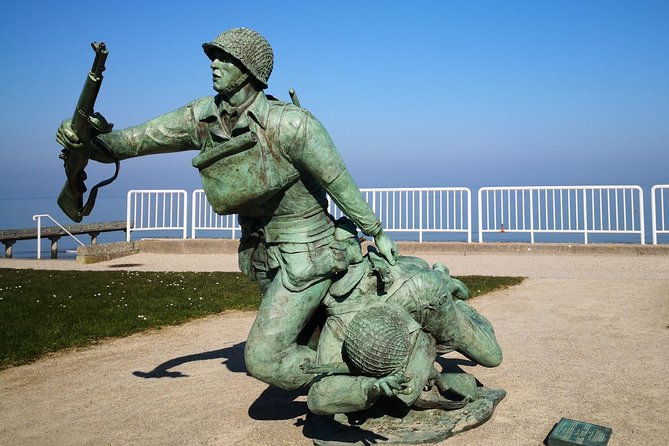
The tour then gives you about an hour at Omaha Beach’s Easy Green sector. This is your chance to leave the vehicle, walk along the beach, and see the memorials facing the water.
The Signal of the Liberation commemorates the Allied landing on June 6, 1944 and the liberation of Europe. Its two frescoes honor the 1st US Infantry Division and the 116th Regimental Combat Team of the 29th US Infantry Division.
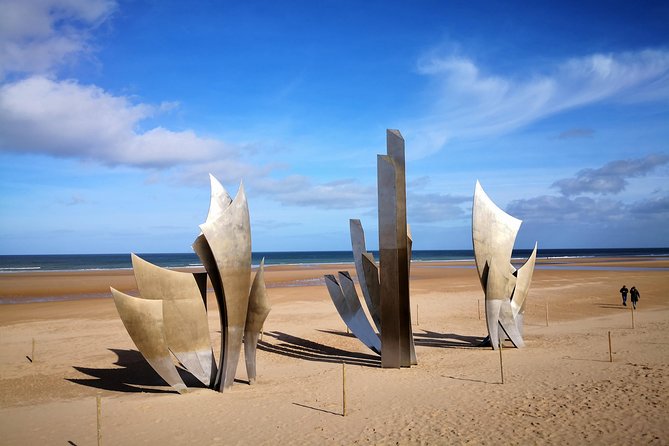
You will also see The Braves, a modern sculpture by Anilore Banon dedicated to the courage of the Allied soldiers. Its scale and position on the beach make it a strong photo subject, but the setting also invites a quieter response. The sand, water, open horizon, and memorials create a sharp contrast with the violence that took place here.
The guide allows some free time to walk and possibly collect a small amount of sand in a tiny glass container as a souvenir. That detail gives the stop a personal touch, though you should keep the souvenir modest and follow any local rules about removing material from the beach.
The hour passes quickly. You can take photographs, walk, listen to the guide, and pause on your own, but this is not a long beach visit. Wear shoes that can handle sand and uneven ground, and dress for exposure to wind or rain. The tour requires good weather, and conditions can affect the schedule or lead to cancellation.
Reading the battle through the Overlord Museum
The Overlord Museum is the main indoor stop, with about an hour inside and admission included in the price. It covers the Allied landing through the liberation of Paris, so it gives the day a wider frame than Omaha Beach alone.
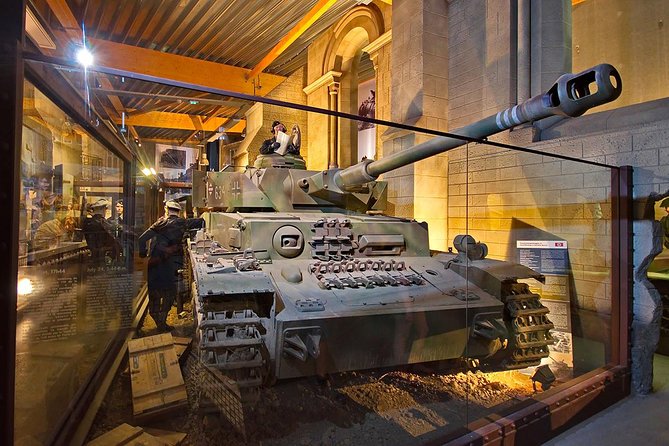
The collection includes more than 35 vehicles, tanks, and guns from the six armies involved in Normandy. Personal items from individual soldiers are presented alongside reconstructed scenes. This combination helps you connect large military movements with the people who lived through them.
I find a museum like this useful after visiting the beach. At the shore, you see the terrain and memorials. Inside, you can study the equipment and objects that explain how the campaign unfolded. The two experiences support each other.
One hour is a practical amount of time, but it does not allow for a slow reading of every display. If military hardware is your main interest, you may wish for longer. If you prefer a focused introduction before the cemetery, the timing should feel balanced.
The museum is also helpful if you are traveling with someone who needs a break from outdoor sites. It offers shelter and a change of pace during a long day. Because entry is included, you do not have to decide on the spot whether the extra visit is worth an added ticket.
The 1st US Infantry Division Memorial at WN62
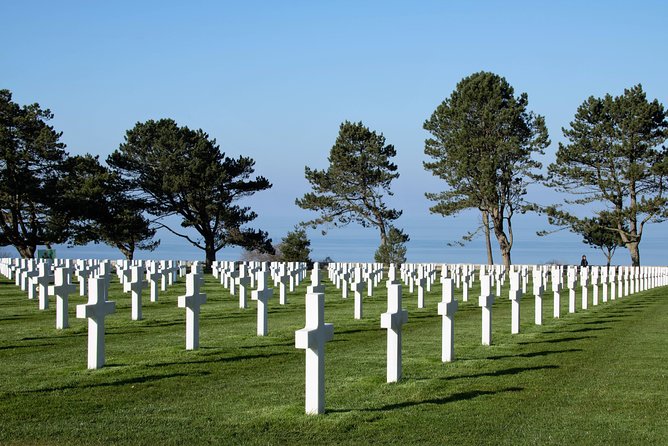
The next stop is the 1st US Infantry Division Memorial, an obelisk in the former WN62 defensive position. You have about 30 minutes here.
WN62 overlooked the Easy Red and Fox Green sectors and was one of the strongest German positions along this part of Omaha Beach. The location helps explain why the beach was so difficult for the Allied forces. From a high defensive position, the shoreline could be watched and protected.
This stop gives the guide a chance to connect military geography with the events described at the museum. You can look toward the beach and understand the relationship between the defensive position, the open sand, and the landing area.
It is also a brief stop, not a long hike or a full battlefield walk. The value comes from the explanation and the view rather than from a large visitor facility. If you want a detailed study of every bunker and firing position, this tour will only provide an introduction.





A quiet hour at the American Cemetery
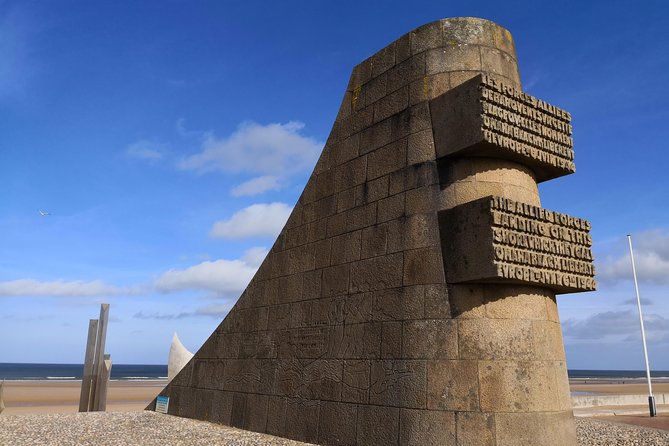
The American Cemetery at Colleville-sur-Mer is the emotional center of the day. The 180-acre site contains 9,387 white crosses, along with Stars of David, a memorial chapel, the Walls of the Missing, and broad views toward Omaha Beach.
You have about an hour here. That is enough time to walk among the graves, visit the memorial area, and reflect on the scale of the loss. The precise rows are powerful, but the site does not feel rushed when the guide gives you time to pause.
The guide explains the stories of soldiers who fought nearby and received the highest military decorations for gallantry. Those individual accounts keep the cemetery from becoming only a vast number. A name, a unit, and a short story can make the wider battle easier to grasp.
The Walls of the Missing contain 1,557 names. Rosettes mark those whose remains were later recovered and identified. The detail is easy to miss if you walk quickly, so listen for the guide’s explanation and allow time to look closely.
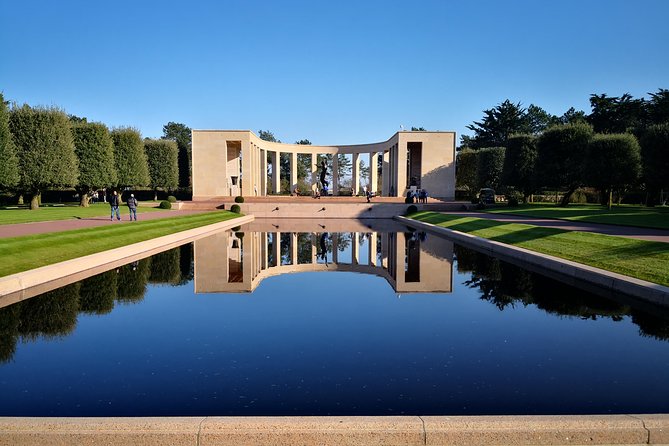
At the memorial, a semicircular colonnade contains large maps and written accounts of the military operations. The bronze statue, Spirit of American Youth Rising from the Waves, provides the central focus. An orientation table overlooks the beach, helping you see the connection between the cemetery and the landing area.
The cemetery is beautifully maintained, but it is not a casual sightseeing stop. Keep your voice low, dress respectfully, and give yourself room for quiet. Photography may be possible in parts of the grounds, but the mood should guide your behavior.
This is also where the value of an English-speaking historian guide becomes most apparent. A guide such as Regis can connect the memorial, the battlefield, and the individual stories without turning the visit into a simple list of dates.
What the day feels like with a guide
You spend much of the day with the same guide and a very small group, so personality matters. The guide’s English, patience, and ability to explain military details will shape the experience as much as the stops themselves.
Regis has earned particular praise for being pleasant to spend time with during the long journey, while also giving detailed commentary from pickup through the return to Paris. That is important because you are together for roughly twelve hours, even though the formal duration is listed at 13 to 14 hours.
A good guide should help you understand why each site matters, not simply point out monuments. At WN72 and WN62, that means explaining defensive positions. At Omaha Beach, it means connecting the monuments to the units that landed. At the cemetery, it means sharing personal stories with care.
The small group also gives you some flexibility in conversation. You can ask about a unit, a memorial, or a detail from the museum while it is fresh in your mind. In a much larger group, those questions often get lost.
One caution: the experience is offered in English, and confirmation of the guide’s name is not guaranteed at booking. Regis is the named guide associated with the strongest praise, but you should not book on the assumption that he will personally lead every departure.
Who should book this tour
I would recommend this trip to you if you have only one day available for Normandy and want the main American D-Day sites arranged for you from Paris. The route includes a useful mix of beach time, battlefield positions, museum displays, and the American Cemetery.
It is also a good fit if you value personal explanation over independent wandering. The tour gives you a historical framework that would be difficult to build on your own during a single day, especially when traveling between Paris and the coast.
Military-history enthusiasts may appreciate the combination of the Overlord Museum and the WN62 and WN72 positions. Families may find the cemetery and beach powerful, though younger children may find the long day and solemn subject demanding.
I would think twice if you dislike early starts, long road journeys, or fixed schedules. You do not get a full day at each site, and lunch is not included. This is a concentrated introduction, not a slow Normandy stay.
The experience is listed for most people to participate in and is near public transportation at the Paris meeting point. Still, the itinerary includes beach walking and outdoor memorial grounds, so choose practical shoes and clothing for changing weather.
Booking, cancellation, and practical details
Confirmation is provided at booking, and the tour is offered in English with a mobile ticket. You meet at Théâtre du Lido, 116 Avenue des Champs-Élysées, at 6:30 am, and return to that same meeting point.
Free cancellation is available up to 24 hours before the start time for a full refund. Changes or cancellations made less than 24 hours before the start are not accepted for a refund.
The tour requires good weather and a minimum number of participants. If poor weather or low enrollment causes cancellation, you are offered another date or experience, or a full refund.
Because the activity averages booking well ahead of time, I would reserve early if your Paris dates are fixed. That is especially sensible for a small group capped at seven people.
Should you book this Omaha Beach day trip?
Book it if you want a focused, guided Normandy day from Paris and accept the early start, long return, and extra cost of convenience. The strongest reasons are the group size, the included museum admission, the careful cemetery visit, and the chance to walk directly on Omaha Beach.
Choose a longer Normandy stay instead if you want more time at each battlefield, a leisurely lunch, or a broader route beyond the American sector. But for one demanding day, this tour covers the essential Omaha Beach story with a sensible mix of outdoor sites and museum time. If Regis is guiding your departure, his patient manner and strong English would be an added benefit, but the tour’s core value remains the route, the small group, and the historical context.
FAQ
Where does the Normandy tour begin?
It begins at Théâtre du Lido, 116 Avenue des Champs-Élysées, 75008 Paris, at 6:30 am.
Where does the tour end?
The activity ends back at the meeting point in Paris.
How long does the tour last?
The total duration is approximately 13 to 14 hours.
How many people can join the tour?
The activity has a maximum of seven participants. The tour is also described as a small-group experience for three to seven people.
Is the tour offered in English?
Yes. The tour is offered in English.
Is admission to the Overlord Museum included?
Yes. Admission to the Overlord Museum is included in the tour price.
Is lunch included?
No. Lunch is not included.
Can I cancel for a full refund?
Yes. You can cancel at least 24 hours before the experience start time for a full refund. Cancellations or changes made less than 24 hours before the start are not accepted for a refund.