REVIEW · PARIS
Normandy D-Day Sites & Cemetery Day Trip from Paris with Lunch
Book on Viator →Operated by City Wonders Ltd · Bookable on Viator
D-Day feels real fast on these beaches. This long day from Paris is built around the places where the June 6, 1944 landings actually unfolded, with an English-speaking guide who keeps the story clear and human, not textbook. I especially loved the Utah Beach Museum, set inside an original bunker, because it makes the scale feel personal.
My second big win was the combo of Pointe du Hoc and time at the American Cemetery at Colleville-sur-Mer. You get drama on the cliffs, then quiet on the overlooking grounds where nearly 10,000 U.S. service members are remembered.
One thing to weigh: it’s a packed schedule, so the day can feel long and timing can be tight—especially if weather turns cold and wet.
In This Review
- Key highlights worth getting excited about
- A one-day D-Day plan that still feels focused
- Getting to Normandy: the coach ride is half the day
- Utah Beach Museum: a bunker museum that hits in a good way
- Utah Beach itself: seeing the western landing’s advantage
- Lunch in a Normandy port town: helpful, but not guaranteed to be perfect
- Pointe du Hoc: cliffs, bunkers, and a Ranger story you can picture
- Omaha Beach: where the fight gets personal
- The American Cemetery at Colleville-sur-Mer: sea air and real names
- Guides that make or break a long day
- Price and value: what $120.93 buys you in real terms
- Who should book this trip (and who should consider two days)
- Should you book this Normandy D-Day day trip from Paris?
- FAQ
- How long is the Normandy D-Day day trip from Paris?
- What are the main stops on the tour?
- Is lunch included, and what does it include?
- Is the tour in English?
- What admissions are included?
- Where do you meet, and where do you end?
- What’s the group size limit?
- Do I need a certain fitness level?
Key highlights worth getting excited about
- Utah Beach Museum in a bunker: real artifacts and soldier letters help you picture what people lived through
- Guided Ranger story at Pointe du Hoc: original bunkers and craters on the cliffs, with a leader explaining the fight
- Omaha Beach free time: time to walk the shore and absorb the scale without feeling rushed through a script
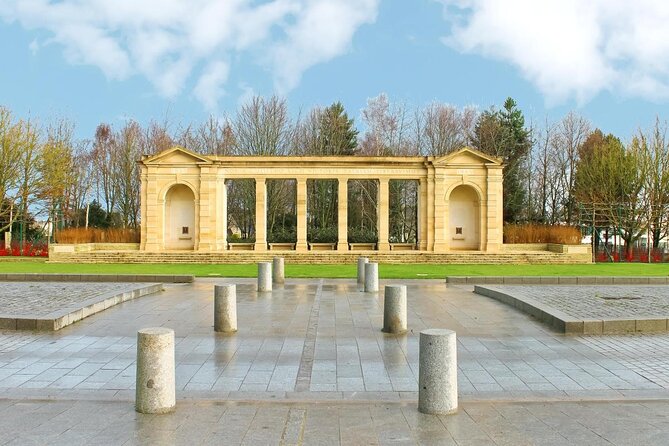
- Colleville-sur-Mer cemetery with sea views: a reflective stop that hits hard in the best possible way
- Lunch with a pre-booked 2-course meal and Norman cider: fewer headaches than hunting for food mid-route
- Max group size of 50: a decent human scale for a single-day coach tour
A one-day D-Day plan that still feels focused

This is the kind of Normandy day trip that’s perfect when you want the headline sites without planning your own transport. You meet in Paris at 7:00 am, then the coach takes you over to Normandy for a full loop of the most meaningful stops. Expect an approximately 14-hour day total, and yes, you should treat it like a long day—because it is.
The reason this works is simple: you’re not bouncing between places on your own schedule. Everything is arranged around the driving time and the time you’ll have at each site, with an English expert guiding the whole journey so you understand what you’re seeing while you’re there.
If you’re a WWII history buff, this is also a strong “first Normandy day” because it covers both American and Allied angles: Utah Beach, Omaha Beach, the Ranger assault at Pointe du Hoc, and the American Cemetery at Colleville-sur-Mer.
A few more Paris tours and experiences worth a look



Getting to Normandy: the coach ride is half the day
You’re traveling from Paris by air-conditioned coach. That’s a comfort win compared with doing multiple transfers, but you’re still looking at a lot of time on the road. One past schedule experience notes about four hours each way, plus a break somewhere along the route.
Here’s how to make the bus part easier on you:
- Bring a layer. Even with heat inside, cold weather can still make the group uncomfortable.
- Pack water and a light snack for peace of mind. The day is long, and you may appreciate extra calories beyond lunch.
Also, note the tour ends at Place de la Porte Maillot in Paris. That’s convenient if you’re in that area, but it’s a different location than where you started, so plan your return accordingly.
Utah Beach Museum: a bunker museum that hits in a good way
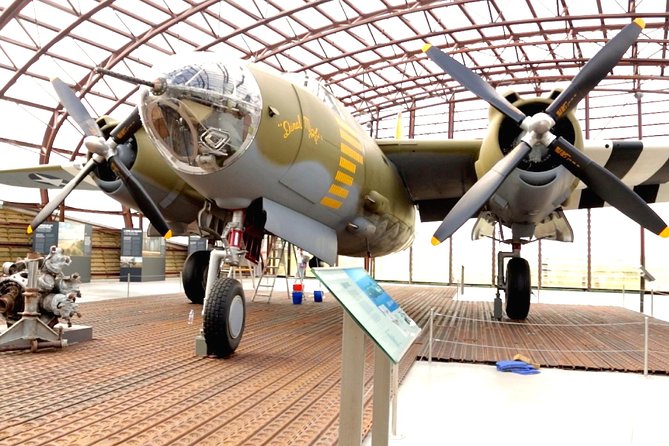
Your first real stop is the Musee du Debarquement Utah Beach. You’ll get admission included and about 45 minutes on-site. The museum sits in an old German bunker on the landing beach itself, which means you’re not just looking at history—you’re standing inside a piece of the setting.
What I like about this stop is that it doesn’t only talk strategy and dates. It helps you grasp the human side of the operation through items tied to soldiers—letters home, for example—and exhibits that bring home how massive the assault was while still keeping people at the center.
Time can feel a little short here if you read everything slowly. But it’s usually enough to get your bearings and leave with real context for the next stop.
Utah Beach itself: seeing the western landing’s advantage
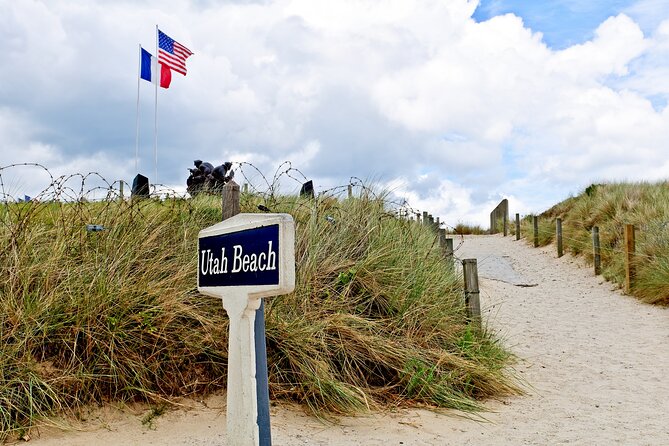
After the museum, you’ll have time right on Utah Beach. This is where the tour shifts from indoor storytelling to open-air reality—sand, coastline, and that big feeling of scale you can’t fully recreate in a photo.
Utah Beach was the westernmost landing site on D-Day, and it played a crucial role in helping Allied forces push inland. The advantage here, compared with Omaha, was lighter resistance, which meant troops could move and secure strategic positions sooner.
You’ll get about 30 minutes to take in the shoreline and reflect. I like this length because it’s long enough to walk a bit and settle, but not so long that you lose the rest of the day to one stop.
Lunch in a Normandy port town: helpful, but not guaranteed to be perfect

Lunch is pre-booked, which is a big deal on a day trip like this. Small towns can have limited options, and searching for food mid-route can steal time from the places you came to see. Here, you’re scheduled for an included 2-course lunch plus a glass of Norman cider.
That said, lunch quality is the one place where real-world experiences can vary. Some people report the restaurant meal as disappointing or cold, and a couple of accounts mention service problems that turned lunch into a stressful detour. Most likely you’ll be fine, but keep your expectations realistic: this lunch is about convenience and speed as much as it is about food perfection.
If lunch is important to you, I’d still pack a simple backup snack for the road so the day stays smooth even if the meal isn’t your favorite.
A few more Paris tours and experiences worth a look





Pointe du Hoc: cliffs, bunkers, and a Ranger story you can picture
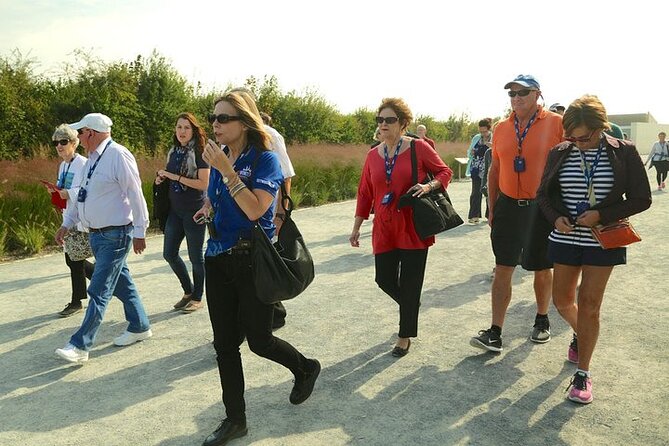
Pointe du Hoc is one of the most dramatic D-Day sites, and it’s timed as a guided stop. You’ll get about 1 hour and the battlefield visit is guided, with free admission not mentioned but the visit and guidance are included.
The place itself does half the work. The site sits on steep cliffs above the English Channel, and it was heavily fortified. What you’re walking through today includes original German bunkers, bomb craters, and shattered defensive structures. It’s not a polished experience—more like a rugged reminder that war rarely looks clean in real life.
The guided piece matters here because you’ll hear what the Rangers faced and why the fight was so critical. You’ll also understand why the terrain was such an obstacle and why taking those heights was so dangerous.
The main downside? This is not a “stroll and snack” stop. Expect some uneven ground and real walking. Moderate fitness is recommended, and comfortable shoes are non-negotiable.
Omaha Beach: where the fight gets personal
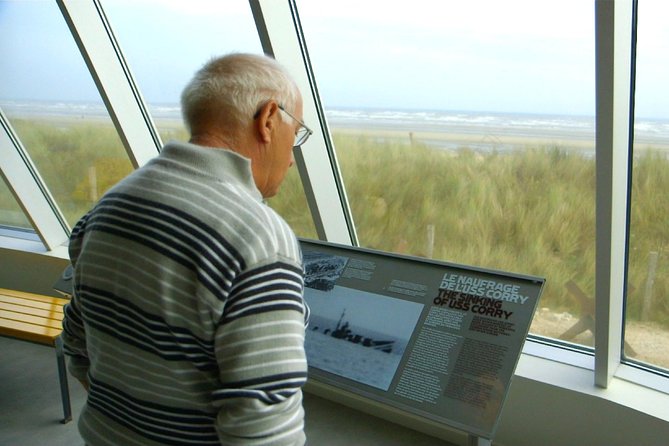
Omaha Beach is the stop most people recognize, and for good reason. This was where American forces faced some of the fiercest resistance on D-Day, with heavy casualties as they worked to secure the beach.
You’ll have about 30 minutes here with free time. I think that’s a smart balance: you get the beach without a long guided script, so you can absorb the shoreline in your own way. Standing there, it becomes easier to understand why Omaha is remembered as a turning point—and why the cemetery stop that comes next is so heavy.
If you’re prone to getting emotional on memorial sites, give yourself a moment of space. Omaha can stir strong feelings fast, especially when the view is wide and the air is calm.
The American Cemetery at Colleville-sur-Mer: sea air and real names

The final stop is the Cimetiere Americain de Colleville-sur-Mer, with guided tour plus free time. You’ll have about 1 hour 15 minutes. This cemetery overlooks Omaha Beach, which adds a haunting layer—because you’re looking at the place where so many didn’t come back.
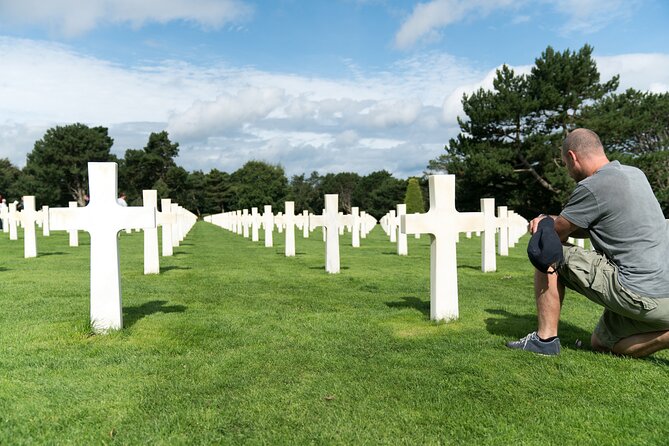
This is the kind of site where the layout does the storytelling. Rows of white crosses and Stars of David stretch across the grounds, and the memorial elements—like the reflecting pool and chapel—encourage a slow, respectful pace. With nearly 10,000 U.S. soldiers remembered from the Normandy landings, it’s not just history; it’s a scale you feel in your body.
The guided portion helps you understand what you’re looking at, but the free time is what allows it to land. I recommend taking a quiet minute somewhere before you start checking directions or photos. If you try to do everything at once, you’ll miss the point.
Guides that make or break a long day
This tour runs with an English-speaking expert guide for the full day, and that matters because the schedule is intense. A great guide turns time pressure into clarity: what happened, why it happened, and what you should notice at each stop.
The names that have come up in past departures include Sam, Raymond, Maja, John, and Thelma. Across those accounts, the common thread is strong storytelling and good pacing. One person even praised how the guide spaced things out so it didn’t feel overwhelming, which is exactly what you want when you’re moving all day from beach to bunker to cemetery.
So if you’re the type who likes to ask questions, this is a good fit. The guide is there to answer, and it can turn your experience from seeing locations into understanding the operation.
Price and value: what $120.93 buys you in real terms
At $120.93 per person, this isn’t a budget option, but it’s also not trying to be. You’re paying for:
- Return transportation from Paris by air-conditioned coach
- An English-speaking expert guide all day
- Admission and visit at the Utah Beach Museum
- A guided visit at Pointe du Hoc
- Free time at Omaha Beach
- Guided visit and free time at the American Cemetery
- An included 2-course lunch plus a glass of Norman cider
The value logic is that one-day logistics in Normandy can get complicated fast. If you try to plan it alone, you’d be juggling timing, car or rail options, and entry costs while also spending extra time figuring things out. Here, your main friction points are reduced: you get a structured route and pre-set time windows.
That said, you’re still on a coach for most of the day and you’re not getting a slow, deep exploration. If you crave more time per site, you might eventually want an overnight in Normandy. But for a first trip, this price can feel fair for what’s included—especially when you compare the cost of museum tickets, transport, and guided interpretation.
Who should book this trip (and who should consider two days)
This tour makes the most sense if:
- You want a single-day Normandy hit covering Utah Beach, Pointe du Hoc, Omaha Beach, and the American Cemetery
- You’re traveling with limited time in Paris
- You value a guide to connect the dots across multiple stops
- You’re okay with a moderate fitness level and some walking on uneven terrain
It’s less ideal if:
- You want long, unhurried time at each site
- You’re sensitive to cold or weather swings, since the day can be tough when conditions are rough
- You’re a “one stop at a time” person who hates tight timing
Should you book this Normandy D-Day day trip from Paris?
If you’re wondering whether this is worth it, I’d say yes—with smart expectations.
Book it if you want a high-impact day with an expert guide and you’re okay with a schedule that keeps moving. This is a good way to see the core sites and leave Paris with the kind of context that makes the beaches and memorials hit harder.
Skip it or consider a slower plan if your priority is sitting with one location for a long time or if a long coach day doesn’t sound fun. Normandy deserves time, and this tour is built for people who can’t spare that.
Bottom line: for most first-timers, this is a strong, practical way to experience the key D-Day sites in one shot.
FAQ
How long is the Normandy D-Day day trip from Paris?
It runs for about 14 hours, starting at 7:00 am from Paris and finishing back in the city at Porte Maillot.
What are the main stops on the tour?
You’ll visit Utah Beach and the Utah Beach Museum, Pointe du Hoc, Omaha Beach, and the American Cemetery at Colleville-sur-Mer.
Is lunch included, and what does it include?
Yes. You get a pre-booked 2-course lunch and a glass of Norman cider. Extra drinks are not included.
Is the tour in English?
Yes. The tour includes an English-speaking expert guide.
What admissions are included?
Admission and the visit to the Utah Beach Museum are included. The Pointe du Hoc battlefield visit and cemetery time are guided as part of the tour.
Where do you meet, and where do you end?
You start at Église Notre-Dame de Compassion on Pl. du Général Kœnig in Paris. You end at Place de la Porte Maillot in Paris.
What’s the group size limit?
The tour has a maximum of 50 travelers.
Do I need a certain fitness level?
A moderate physical fitness level is recommended, since you’ll do some walking at multiple stops, including rugged ground at Pointe du Hoc.