REVIEW · PARIS
Paris Small Group Guided Bike Tour of Must-See Sights
Book on Viator →Operated by PARIS BIKE TOUR · Bookable on Viator
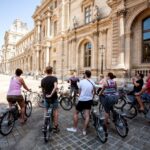
It’s a fast way to see Paris the fun way. This small-group guided bike tour hits the classic sights while also giving you time to glide along the Seine River with a guide who explains what you’re seeing. You’ll appreciate the short, focused stops—great for orientation and photos—but if you’re hoping for long museum or cathedral time, plan for a slower follow-up on your own.
Two things I really like: first, the group stays tiny (15 people max), so the ride doesn’t feel like a moving crowd. Second, you’re not just standing and staring—you’re cycling past real neighborhoods and river landmarks, which changes how the city clicks in your head. One consideration: most stops are around 5 to 10 minutes, so treat this as a highlights-and-context tour, not a deep visit.
The setup is also practical for a first-time trip. You get a bike and a helmet, and it runs in English (multilingual guides may be available). It’s a good fit for most ages (minimum age 12), but it’s not recommended if you have a serious medical condition, and the day depends on good weather.
In This Review
- Key Points to Know Before You Ride
- Why Cycling the Seine Feels Smarter Than Standing in Line
- The Real-World Logistics: Where You Meet and How the Ride Starts
- Eiffel Tower in Ten Minutes: Iron Lady Secrets and Photo Timing
- Notre-Dame and Île de la Cité: How the Old Heart of Paris Reads
- Louvre Museum Without the Full Museum Day: Best Use of Short Time
- Place de la Concorde: A Royal Square, a Big Obelisk, Fast Context
- Tuileries, Grand Palais, and Pont Alexandre III: The Grand Paris Sweep
- The River Runs Through Everything: Old Bridges, Modern Stops, and Quick Views
- Musée du quai Branly – Jacques Chirac: A Cultural Pause That Breaks the “Only Paris Icons” Pattern
- How Much Cycling Is It, Really? Pace, Safety, and Comfort
- Price and Value: What $53.92 Really Buys You
- Who This Bike Tour Is Best For
- Should You Book This Paris Small-Group Bike Tour?
- FAQ
- How long is the Paris small-group bike tour?
- How many people are on the tour?
- What’s included in the price?
- Is the tour offered in English?
- Where do I meet, and does the tour end nearby?
- What if the weather is bad?
Key Points to Know Before You Ride

- 15 people max means less waiting and more chances to ask questions.
- Seine cycling on both banks turns famous monuments into part of the journey.
- Quick landmark stops are ideal for orientation and photo angles.
- Helmet + bike included keeps the logistics simple.
- Free admission tickets are listed for the major sights you stop for.
- A relaxed pace helps if you want time to look closely through your camera lens.
Why Cycling the Seine Feels Smarter Than Standing in Line

Paris can overwhelm you fast. You step off the metro, see a huge monument, and then lose 45 minutes to crowds or getting oriented. This kind of bike tour helps you do something different: you move through the city, so the sights feel connected instead of chopped into separate postcards.
I like how the ride itself becomes part of the sightseeing. When you’re cycling along the Seine, the view changes every few minutes—bridges slide by, riverfront buildings reveal their details, and the city starts to look like one big system rather than a list. And when your guide points out what to watch for, you get that quick “oh, that’s why it matters” moment.
There’s also a value angle. At roughly 3 hours and around $53.92 per person, you’re paying for transportation (bike), safety gear (helmet), and a live guide who can translate what you’re seeing into something you’ll actually remember.
You can also read our reviews of more cycling tours in Paris
The Real-World Logistics: Where You Meet and How the Ride Starts
You start at 13 Rue Brantôme, 75003 Paris, and the tour ends back at the same meeting point. That matters more than people think. A round-trip that returns you to where you started makes it easier to plan dinner afterward, and you’re not left hunting for transit at the end of a long day.
You’ll also want to show up ready to ride. The tour is near public transportation, so arriving doesn’t need to be a complicated mission. Still, bring your confirmation details and be prepared for basic verification, because staff may check your booking if needed.
On days when timing matters, a bike tour is only as smooth as the group start. Since the maximum group size is 15 travelers, the organizers can usually keep things organized—but your best move is to arrive a little early so everyone rolls out together.
Eiffel Tower in Ten Minutes: Iron Lady Secrets and Photo Timing

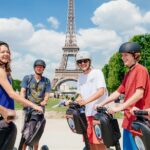
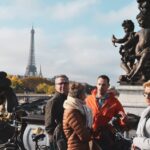
The tour starts with a stop focused on the Eiffel Tower. It’s a classic choice for a reason: you get an iconic view early in the ride, and the guide uses the time to explain the monument with little details that most people never notice from the ground.
The stop is about 10 minutes, which is exactly long enough for three things:
- Get your bearings and see the tower from a good angle
- Listen to the story so the tower feels more than just a photo background
- Catch a quick set of shots before the bike motion pulls you onward
A drawback of a short stop is obvious: you won’t get a long moment at every angle. But the trade-off is that you’ll see more of the city in the same half-day energy.
If you’re the type who likes to photograph architecture, this is where you’ll benefit most. A guide pointing you toward the right viewing direction can save you from walking around later in circles.
Notre-Dame and Île de la Cité: How the Old Heart of Paris Reads

From there, you move toward Cathedral Notre-Dame de Paris, with another 10-minute stop for history and context. Even if you’ve seen pictures before, Notre-Dame works better when you understand its role in the city, not just its look.
This part of the experience is tied to the feeling of being in historic Île de la Cité. When you ride nearby, you can sense that the river here has shaped how people gathered, moved, traded, and worshipped over centuries. It’s not a museum-quiet moment. It’s a live city moment.
What you gain with a guided stop is clarity. A few minutes of explanation can make the cathedral’s presence feel grounded instead of abstract. You’ll also be better positioned for whatever you do next—whether that’s returning on foot for more time, or just appreciating the area as you pass through.
Louvre Museum Without the Full Museum Day: Best Use of Short Time

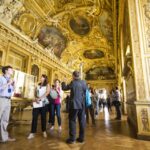
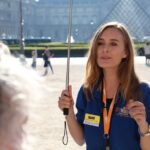
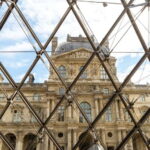
Then you head toward the Louvre Museum for a quick guided orientation, also listed at about 10 minutes. You’re not doing a full museum circuit here. You’re using the time to learn how the museum fits into Paris and what to notice if you ever return for a longer visit.
This is one of those choices that makes sense for a bike tour. The Louvre is huge. If you tried to do it like a normal day ticket, the bike tour would fall apart. By keeping it brief, the tour gives you the story and a sense of scale, which can help you plan your own Louvre day later.
If you’re deciding whether to add a separate Louvre visit, this stop is a useful preview. You’ll know faster whether you want to go deep on your own time, or whether you’d rather spend that energy on other neighborhoods.
You can also read our reviews of more guided tours in Paris


Place de la Concorde: A Royal Square, a Big Obelisk, Fast Context

Next up is Place de la Concorde, where you’ll get the story of the square and its famous obelisk. This stop is short—around 10 minutes—but the guide’s job here is to connect the geometry of the place with what happened around it.
Why this matters: some Paris squares feel like empty open-air stages. With context, they stop feeling random. You begin to understand why these open spaces were laid out, what power symbolized in the planning, and how people used them.
Also, Concorde is a good example of how the bike tour balances walking stops with riding time. You get the best of both worlds: a quick explanation while you’re within sight of a major landmark, then you’re back moving and seeing more.
Tuileries, Grand Palais, and Pont Alexandre III: The Grand Paris Sweep
After Concorde, you ride into the Jardin des Tuileries, again with a 10-minute stop. This is a great pause because it’s calmer than the big monuments around it. You can look at the garden layout and get a sense of Paris as a designed city, not just a set of famous buildings.
Then comes Grand Palais, described as the big brother of Petit Palais, with another 10-minute window to learn about the monument. Big architecture can be hard to read when you’re rushing. A short guided stop helps you notice key features and understand the building’s role.
After that, you stop at Pont Alexandre III for about 5 minutes. This is one of the most visually dramatic bridges in Paris, and you’ll be quick to see why it earned its reputation. The guide points out what you’re seeing—especially the lion details—so your photos won’t just look like random bridge shots.
The River Runs Through Everything: Old Bridges, Modern Stops, and Quick Views
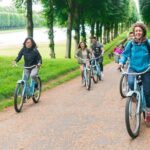
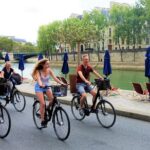
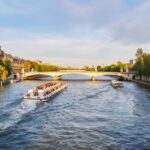
Between the landmarks, the tour does something smart: it keeps moving you along the Seine and lets the river act like a thread. You cycle along the right and left banks, so you get different angles on the same ideas—how buildings face the water, how bridges connect neighborhoods, and how the city’s layout shows itself from the bike lane.
At some point you cross the oldest bridge in Paris, which is a memorable moment because it’s not just the view—it’s the sense of continuity. You’re riding through modern traffic, yet the bridge links you to older city patterns.
You also pass through moments that feel more intimate than you’d expect from a “big sights” tour. The tour includes time for views and photo moments on an island in the Seine, plus the story behind the Lovers’ Bridge. Even if you’re not obsessed with romantic folklore, these stops add texture. Paris isn’t only monuments. It’s also the small traditions people attach to the spaces between them.
Musée du quai Branly – Jacques Chirac: A Cultural Pause That Breaks the “Only Paris Icons” Pattern
The tour ends with a short stop at Musée du quai Branly – Jacques Chirac, about 5 minutes. The focus here is on cultures from Africa, Asia, and the Americas. It’s a nice change of pace late in the ride because it shifts you away from the standard Eiffel Tower-Louvre loop.
Because the stop is brief, think of it as a prompt. You’ll leave with enough context to understand what the museum aims to do, and you’ll know whether you want to return for a longer visit on another day.
If your Paris plans are packed, this kind of stop is valuable. It adds variety without stealing half your day.
How Much Cycling Is It, Really? Pace, Safety, and Comfort
This is an active tour. You’re cycling, wearing a helmet, and riding through busy areas. The good news is that it’s designed for most people: most travelers can participate, there’s a minimum age of 12, and the tour keeps things organized with a small group.
The caution is also clear. It’s not recommended for participants with serious medical conditions, and it requires good weather. If it’s rainy, you could have a cancellation or a reschedule, so you’ll want flexible plans for that day.
In terms of ride style, the vibe is relaxed. One standout theme from the experience is that the guide keeps space for questions and adapts to the group’s rhythm. If you’re the type who likes to stop and look at details through your camera lens, you’ll probably enjoy the breathing room.
Price and Value: What $53.92 Really Buys You
At $53.92 per person for about 3 hours, this tour is priced for people who want quality without spending an entire day in transit or waiting. You get a professional guide, a bicycle, and a helmet—three big costs that many DIY plans forget to account for.
There’s also the “time efficiency” factor. In three hours, you’ll cover multiple world-famous sights and the river stretch between them. That’s hard to replicate solo unless you’re willing to invest time in route planning, bike logistics, and stopping for orientation.
One more value point: the stops list admission tickets marked as free for the key sites you visit. That can reduce friction for your day, especially if you’re traveling with limited time or you’re not sure what tickets you’ll want to pursue later.
The main drawback on value is built into the format: because stops are short, you’ll get context and highlights, not deep self-guided exploration. If your top goal is “spend hours inside museums,” you’ll likely need an extra day.
Who This Bike Tour Is Best For
This tour fits you if:
- You’re visiting Paris for the first time and want fast orientation
- You like photography and want good angles without hiking everywhere
- You want guided explanations so landmarks mean something
- You prefer a small group and a smoother, less chaotic experience
You might skip or choose a different format if:
- You want long time inside the Louvre or any major interior visit
- You’re dealing with a serious medical issue that makes cycling risky
- You can’t ride outdoors on a day that needs good weather
Should You Book This Paris Small-Group Bike Tour?
If you want a practical introduction to Paris that mixes iconic monuments with real river views, I think this is a smart booking. The 15-person cap, the bike-and-helmet setup, and the way the Seine ride connects everything make it feel efficient without feeling rushed.
My final advice: book it early in your trip if you can. Use it to learn the city layout and get the stories behind the big sights. Then you’ll know exactly what to return to—on foot or with museum time—because you’ll already understand where everything sits and why it matters to the city’s shape.
FAQ
How long is the Paris small-group bike tour?
It lasts about 3 hours.
How many people are on the tour?
The tour is capped at a maximum of 15 travelers.
What’s included in the price?
The tour includes a professional guide, bicycle use, and a helmet.
Is the tour offered in English?
Yes, it’s offered in English (and it may be operated by a multilingual guide).
Where do I meet, and does the tour end nearby?
You meet at 13 Rue Brantôme, 75003 Paris, and the activity ends back at the meeting point.
What if the weather is bad?
The experience requires good weather. If it’s canceled due to poor weather, you’ll be offered a different date or a full refund.