REVIEW · PARIS
Normandy D-Day Landing Beaches Guided Tour from Paris by minivan
Book on Viator →Operated by France Tourisme · Bookable on Viator
One day, three places you will not forget. I like the small group limit (8 travelers) and the chance to see Omaha Beach up close, with stops that make the story easier to understand. The main drawback is pacing: it’s a long day, and some stops can feel short, especially if you want deeper museum time.
This trip is built for meaning, not shopping. You’ll ride out of Paris early, then connect the dots between Operation Overlord, the losses of June 6, and what the landscape looks like now. Still, the day depends on your guide’s storytelling and the van setup—some people found the guide more of a driver than a full lecturer.
Expect a busy route with real walking. The tour has a 7:15 am departure window, returns in the evening, and asks for moderate physical fitness since you’ll walk at fortifications and memorial grounds. Lunch is not included, and you’ll want to plan for limited time at each stop.
In This Review
- Key Things to Know Before You Go
- Why This Normandy D-Day Day Starts So Early in Paris
- Small Group Minivan Comfort: Good for 8, Tight for Some Seats
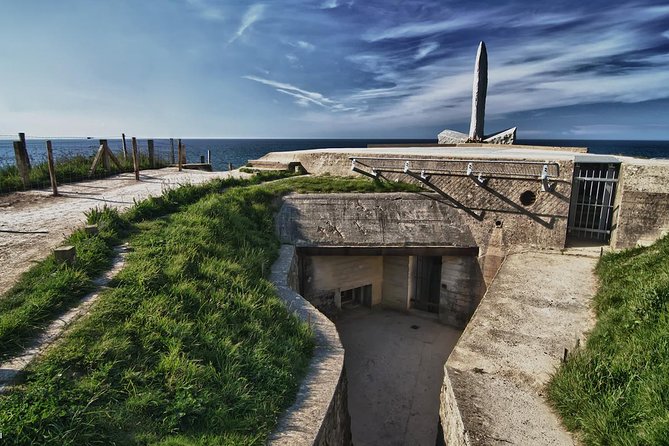
- Pointe du Hoc: Walking a Fortification With Real Craters
- Omaha Beach and the Normandy American Cemetery: A Paired Story
- Arromanches and the Mulberry Harbor Remains: The Engineering Stop You’ll Appreciate
- The Guide on the Microphone: When the Story Hits and When It Gets Lost
- How Good Is the Value at About $227 for 12.5 Hours?
- Who This Tour Fits Best (and Who May Want More Time)
- Should You Book This Normandy D-Day Landing Beaches Tour?
- FAQ
- What is the duration of the Normandy D-Day Landing Beaches guided tour from Paris?
- Where do I meet in Paris, and when does the tour start?
- Is lunch included?
- What sites are included in the guided portion?
- How big is the group?
- What languages does the guide speak?
- Is the transportation air-conditioned?
- What is the physical fitness level needed?
- What if the weather is poor?
- Does the tour end back at the meeting point in Paris?
Key Things to Know Before You Go
- Small group of up to 8 means more attention, and less van chaos than big buses
- Air-conditioned minivan helps on the long highway stretch from Paris
- Pointe du Hoc gives you the dramatic views over the English Channel plus preserved bunkers and bomb craters
- Omaha Beach + the American Cemetery makes it easier to pair geography with what happened there on D-Day
- Arromanches and the Mulberry harbor remains add the engineering piece of the invasion story
- Timing is tight for a 12.5-hour day, so you’ll need to prioritize what you want to see most
Why This Normandy D-Day Day Starts So Early in Paris
The day begins with discipline. You meet at 6 Rue de l’Amiral de Coligny (75001), then the trip departs around 7:15 am, with the activity listed as starting at 7:00 am. That early start matters because Normandy is more than a quick hop from Paris, and you’re trying to fit multiple key sites into one day.
The big trade-off is obvious: you’re committing to a long, full-day circuit. Some departures can involve roughly 3.5 to 4 hours each way, so you’re essentially giving up part of your time to the drive. If you love rushing to museums, this isn’t that kind of tour. This is more like a guided route where you’ll absorb key moments along the way.
A practical tip: be on time at the meeting point. One recent guest called out punctuality because delays compound fast on long day trips like this. If you’re coming from a hotel, give yourself buffer time for getting to the meeting street.
You can also read our reviews of more guided tours in Paris



Small Group Minivan Comfort: Good for 8, Tight for Some Seats
This tour keeps group size small—maximum 8 travelers. That’s one of the strongest reasons to choose it if you hate being trapped shoulder-to-shoulder with strangers on a big bus.
Transport is by air-conditioned minivan with round-trip transport from central Paris. In comfort terms, most people like the size and the vibe. But there’s a recurring theme: seating can be tight depending on where you end up in the van. Several guests mentioned cramped legroom, especially for people in the back rows or in awkward seat positions.
Here’s how I’d handle it if you book:
- If the van has assigned or effective seating, choose the front or a more open seat if you can.
- If you’re sensitive to sound, sit closer to where the guide speaks (more on that in a second).
Also, keep your expectations realistic about van-scale. You’re going to be in one vehicle for a long time, even if you’re grateful for the convenience once you’re there.
Pointe du Hoc: Walking a Fortification With Real Craters
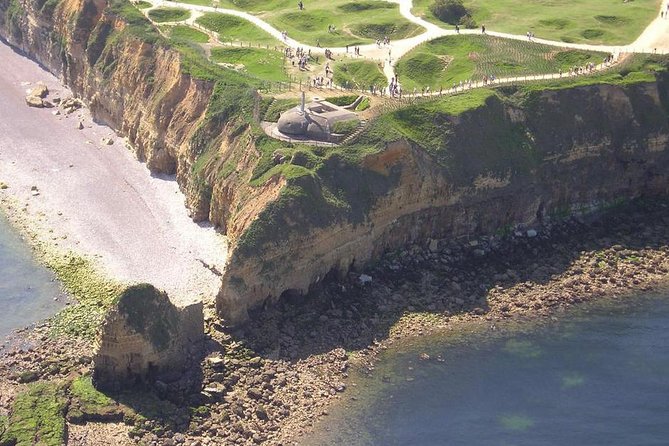
Pointe du Hoc is the kind of stop that changes your brain from tourist mode to history mode. You walk among preserved bunkers and bomb craters, and the views over the English Channel make the geography feel immediate.
The emotional power here is in the contrast: a preserved, rugged site that’s now calm and peaceful, but clearly isn’t gentle in its story. One strong value of the stop is that it’s not only scenic—you’re stepping onto a strategic German fortification that was assaulted by U.S. Rangers on D-Day.
Time can vary, but some guests reported a shorter window (around half an hour on one schedule). If that’s your situation, don’t try to do everything. Decide what matters most to you before you arrive: the bunkers themselves, the crater fields, or simply the viewpoint.
Practical advice for this stop:
- Wear comfortable shoes with grip. You’ll be walking at a preserved fortification site.
- Bring a layer. Even when weather looks fine in Paris, Normandy conditions can shift, and the experience is listed as requiring good weather.
If you want a place where the “why” is visible in the terrain, Pointe du Hoc is usually the highlight.
Omaha Beach and the Normandy American Cemetery: A Paired Story

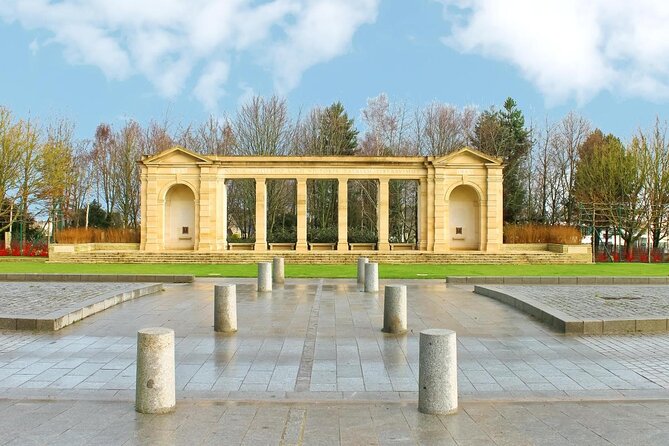
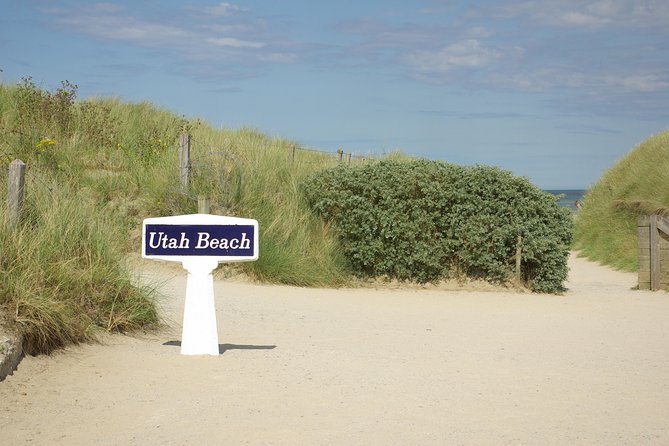
Omaha Beach is one of the best-known names in D-Day. This tour gives you time at the beach and then brings you to the Normandy American Cemetery overlooking Omaha Beach. That pairing is smart because it links the shoreline with the human cost.
At Omaha Beach, you’re seeing the coastline as it is today—peaceful, wide, and open—while your guide explains what happened there. This is one of the stops where people often want more time, because even a short visit can feel like snapping a memory photo in a place that deserves time for reflection. Some guests described Omaha Beach time as brief, while others found it satisfying within the day’s limits.
Then comes the American Cemetery. This is where the tone of the day deepens quickly. It’s a solemn final resting place for thousands of American soldiers, and the cemetery sits with commanding views over Omaha Beach.
You may also visit the modern visitor center with exhibitions, films, and personal stories. If you care about context—why decisions were made, how people lived through the day—this is the part where you’ll likely get the most learning per minute. The challenge is that cemetery time can be short on a one-day schedule; one guest mentioned only about an hour at the cemetery and museum area.
My suggestion: choose your priority at the cemetery.
- If you want the graves and the atmosphere first, keep your museum time tighter.
- If you want the visitor center exhibits, be ready to accept less free wandering elsewhere.
Either way, Omaha Beach plus the American Cemetery is a powerful one-two. It turns a headline event into a real location you can stand inside.
Arromanches and the Mulberry Harbor Remains: The Engineering Stop You’ll Appreciate

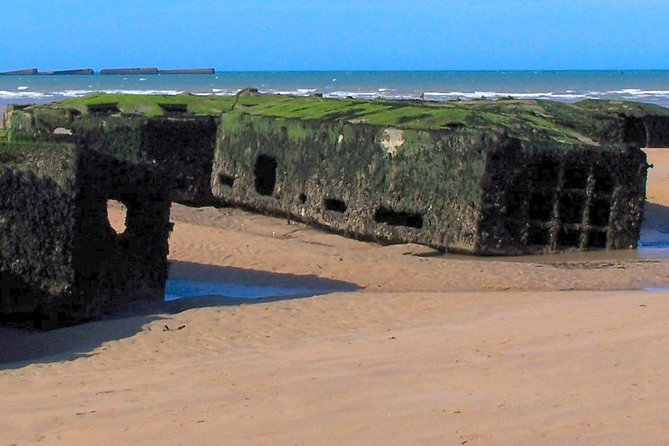
Arromanches is where the story changes from soldiers and shorelines to logistics and engineering. The tour passes through Arromanches and focuses on the remains of the Mulberry artificial harbor—an engineering achievement that played a crucial role in the Allied invasion’s success.
This stop can feel quieter than the battle sites, but that’s part of the point. You’re seeing the infrastructure that helped supplies reach land even when conditions were brutal. If you’ve ever wondered how an invasion could keep moving after the initial landings, this is the answer in concrete terms.
There’s another real-world detail: lunch time often lands around this area, and lunch is not included. Some guests said restaurant options were closed when they arrived, and others had to manage split time between lunch and seeing ruins nearby. That’s the practical side of Arromanches on a day trip—food logistics may not be as smooth as you’d like.
So, if you’re the type who hates surprise hunger, plan for it:
- Bring water.
- Consider snack backup before you commit to a sit-down lunch.
- Have a flexible idea of what a quick lunch will look like.
Even with limited time, Arromanches adds a missing piece. It’s not only what happened on the beaches; it’s how the operation was kept alive afterward.






The Guide on the Microphone: When the Story Hits and When It Gets Lost
A tour like this lives or dies with the guide’s delivery. Your guide is listed as professional trilingual (EN/ES/FR), and reviews include several standout guide names and styles. Some guests described guides like Reza as starting explanations right away in the van, translating between languages fluently, and keeping the day smooth. Other names that came up include Max, Dmitri, and Faybien—each praised for different degrees of clarity and effort.
But there’s also a valid concern: not every departure gives the same kind of storytelling. Some guests said the driver was more of a driver than a full guide, with fewer historical details than they expected. Another repeated point was audio: a few travelers mentioned difficulty hearing the guide from the back of the van, and others noted there wasn’t an audio system.
How to protect yourself:
- Sit closer to the front if you can, especially if you’re sensitive to hearing.
- If you’re the quiet type, don’t assume you’ll catch everything from the far seats. Bring the expectation that you might miss a bit of the van narration.
- Ask your guide a question at the first stop if you’re hungry for more context. A good guide tends to brighten when asked.
In a one-day format, the guide can make the difference between a checklist of famous places and a connected story you actually remember.
How Good Is the Value at About $227 for 12.5 Hours?
At $227.58 per person, you’re paying for convenience and concentration: round-trip transport from central Paris, an air-conditioned minivan, a professional trilingual guide, and guided visits to Pointe du Hoc, Omaha Beach, and the American Cemetery. Lunch and personal expenses are not included.
Is it a bargain? It’s not a budget tour. But compared to trying to piece together Normandy transportation yourself for a same-day hit of multiple sites, the price starts to make sense. You’re buying time efficiency and a structured route.
The value gets better if:
- You want the big-name sites handled with interpretation.
- You prefer a small group.
- You’d rather not manage schedules, parking, and transfers across rural roads.
The value gets worse if you’re expecting museum-heavy time or long stops. Several guests felt the day moved quickly, with limited time for deeper museum visits. If you’re a history nut who wants lots of indoor exhibits and longer reading time, you may prefer a multi-day plan instead.
This is the honest way to think about it: you’re paying to visit the places. How much you learn inside them depends partly on the guide and partly on how you spend the limited minutes you’re given.
Who This Tour Fits Best (and Who May Want More Time)
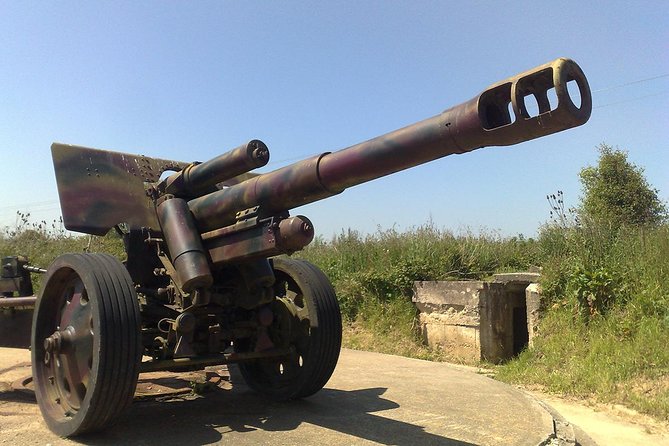
This trip is a great match if you want a first-time Normandy D-Day overview with a guided backbone. It works especially well if you care about seeing the terrain—beachline, cliffs, bunkers, and cemetery grounds—rather than only reading about it later.
It’s also a decent family choice because the route is clear, and the group size stays small. One guest even described the experience as a way to teach kids and share the significance of what happened in 1944.
But it may not be your best choice if:
- You want extensive museum time at each location.
- You’re the type who needs long, unhurried walking and reading.
- You strongly prefer a broader Allied-focused narrative beyond the American landing emphasis.
And here’s an important detail: some guests reported extra stops like Bayeux on their schedule, while others said Bayeux wasn’t included even though it appeared in their expectations. If Bayeux matters to you, check your confirmation carefully before you go and don’t rely on assumptions.
Should You Book This Normandy D-Day Landing Beaches Tour?
Book it if you want a focused, one-day route that hits Pointe du Hoc, Omaha Beach, and the Normandy American Cemetery with small-group comfort from Paris. This is also a smart pick if you’re short on time and want a guide to connect geography with what happened on June 6.
Skip it or consider a longer itinerary if you hate being rushed. In a 12+ hour day, you can only do so much. If your top priority is museums and extended time inside visitor centers, you’ll likely want a multi-day option instead of a single packed circuit.
My final nudge: go in with the right expectations. Arrive ready for a moving day, bring comfortable shoes, plan for lunch on your own, and be ready to listen hard from your seat. When the guide is strong—and in many cases, they are—it’s one of the most meaningful day trips you can take from Paris.
FAQ
What is the duration of the Normandy D-Day Landing Beaches guided tour from Paris?
The tour is listed at about 12 hours 30 minutes.
Where do I meet in Paris, and when does the tour start?
You meet at 6 Rue de l’Amiral de Coligny, 75001 Paris. The activity start time is listed as 7:00 am, with departure around 7:15 am.
Is lunch included?
No. Lunch is not included.
What sites are included in the guided portion?
The tour includes visits to Pointe du Hoc, Omaha Beach, and the Normandy American Cemetery. It also passes through Arromanches.
How big is the group?
The tour has a maximum of 8 travelers.
What languages does the guide speak?
The guide is listed as professional trilingual (English, Spanish, and French).
Is the transportation air-conditioned?
Yes. You travel by air-conditioned minivan.
What is the physical fitness level needed?
The tour is described as requiring moderate physical fitness.
What if the weather is poor?
The experience requires good weather. If it’s canceled due to poor weather, you’ll be offered a different date or a full refund.
Does the tour end back at the meeting point in Paris?
Yes. The activity ends back at the meeting point.