REVIEW · UZES
Roman aqueduct FULL DAY TOUR (Nîmes Uzès Pont du Gard)
Book on GetYourGuide →Operated by Time 4 Provence · Bookable on GetYourGuide
The clever idea here is to follow one Roman water system from end to end. You begin in Nîmes, see its grand amphitheatre and Maison Carrée, walk through medieval Uzès, visit the spring where the aqueduct began, then finish at the Pont du Gard. It turns Roman ruins into one connected story rather than a string of unrelated stops.
I like the small group of eight and the amount of time at the major sites. I also like that transport, a professional guide, bottled water, and two important entry tickets are covered. The main drawback is the long day, with plenty of walking and no wheelchair access.
In This Review
- Key points to know before booking
- Why following the aqueduct makes this day work
- Nîmes, where Roman power feels close
- Uzès, a medieval pause between Roman sites
- The spring of l’Eure and the start of the water route
- Pont du Gard, the grand finish
- What the small minivan group changes
- Price, included tickets, and the value of a full day
- Who will get the most from this tour
- Small details that help you plan
- Should you book the Roman aqueduct full-day tour?
- FAQ
- How long does the Roman aqueduct tour last?
- Where does the tour meet?
- What languages are available?
- How large is the group?
- Is transportation included?
- Is entry to the Nîmes Roman Amphitheatre included?
- Is entry to Pont du Gard included?
- How much time is spent in Uzès?
- Does the tour visit the source of the aqueduct?
- Is the tour suitable for wheelchair users?
Key points to know before booking
- One Roman aqueduct, three very different places: Nîmes supplies the Roman city setting, Uzès adds medieval streets, and Pont du Gard shows the aqueduct at its grandest.
- The Roman amphitheatre ticket is included: You can enter the arena rather than stopping only for an outside photograph.
- Uzès gets about two and a half hours: That includes free time for lunch and, from April 1 through November 1, a chance to see the town from an old tower.
- The source at l’Eure is a quick but meaningful stop: You spend about 30 minutes at the spring where the aqueduct began.
- Pont du Gard receives up to two hours: That gives you time to take in the bridge over the valley and Gardon River without rushing through.
- The format is intimate: English and French guiding is available, and the minivan group is limited to eight people.
Why following the aqueduct makes this day work
Roman sites can blur together when you visit them one after another. This route avoids that problem. You see the aqueduct as a working system, beginning at the spring of l’Eure near Uzès and ending with the towering bridge at Pont du Gard.
Nîmes gives you the urban side of Roman life. Uzès shows the later medieval town built in the same broad area. Pont du Gard then brings the engineering into focus, with its long stone structure crossing a valley and the Gardon River.
That sequence is the tour’s best feature. You are not only looking at old stones. You are seeing the setting, purpose, and scale of a 2,000-year-old water route.
The day lasts 570 minutes, or nine and a half hours. That is a serious outing, but it also allows time for three major stops, a town visit, a lunch break, and transport between them. A shorter tour would need to cut either Uzès or the Pont du Gard.
Nîmes, where Roman power feels close
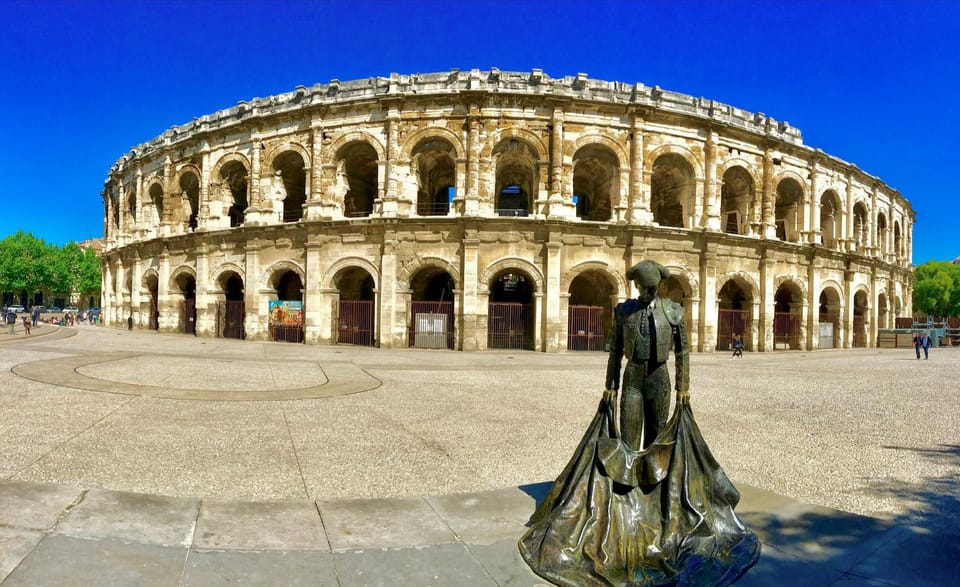
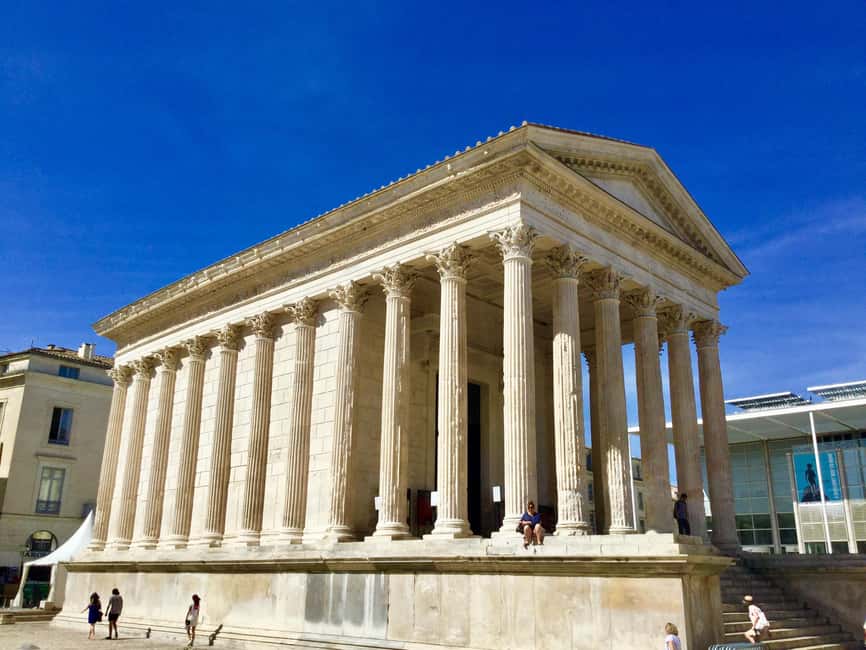
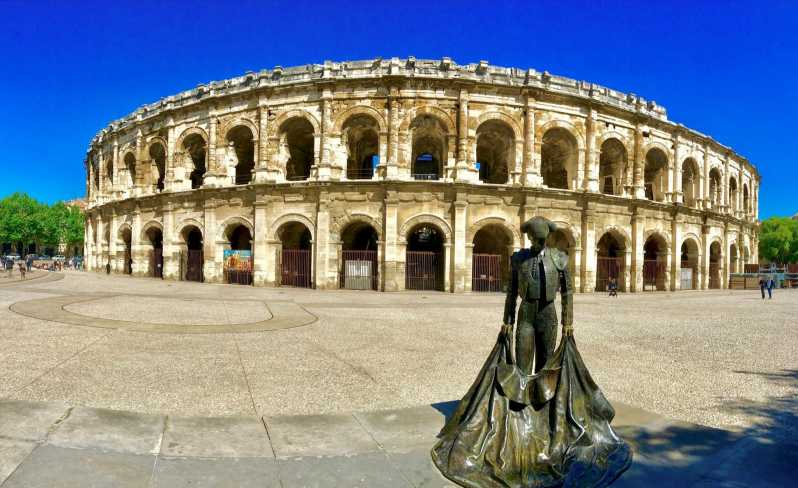
The Nîmes portion includes photo stops at the Jardin de la Fontaine and Maison Carrée, followed by a visit inside the Roman amphitheatre. This is a useful mix. You get a little open-air setting, a look at a Roman temple, and time in the best-known arena.
The Jardin de la Fontaine provides a calmer first view of the city. It helps you get your bearings before moving into the denser historic center. The stop at Maison Carrée focuses on one of Nîmes’ most important Roman monuments, a temple with UNESCO recognition according to the tour details.
The amphitheatre is the main paid visit in Nîmes, and admission is included. That matters because you are not left peering through an entrance or making a separate ticket decision during a tightly timed day.
An arena visit also gives the Roman story a human scale. Aqueducts are technical achievements, but an amphitheatre helps you picture the public life that Roman infrastructure supported. You can expect commentary from the guide and time to explore the interior, with the exact balance depending on the group and the day’s pace.
The Nîmes stop is not presented as a full city tour. You should think of it as a focused introduction to Roman Nîmes, with photographs at two important locations and an included visit to the amphitheatre. If you want several hours of museums and independent wandering, this schedule will feel too brief.
Uzès, a medieval pause between Roman sites

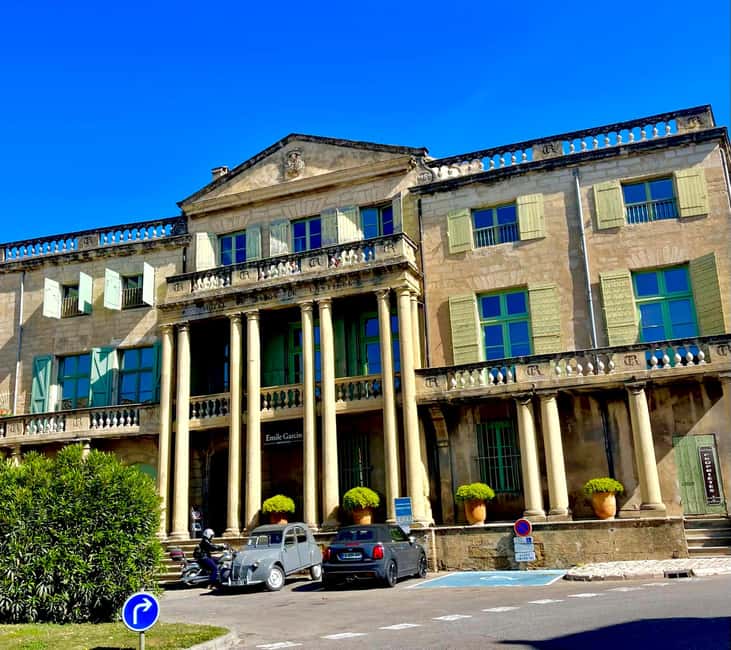
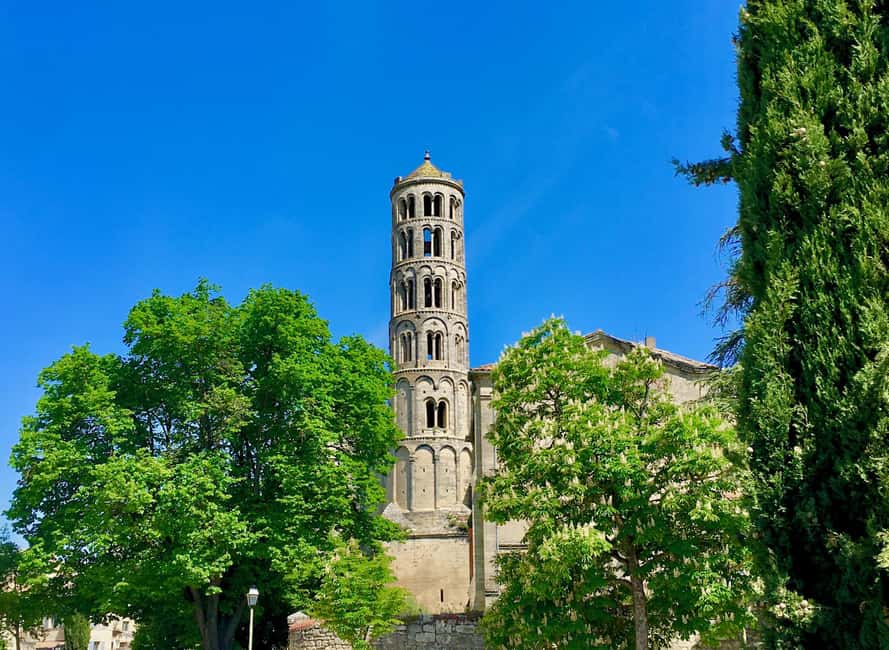
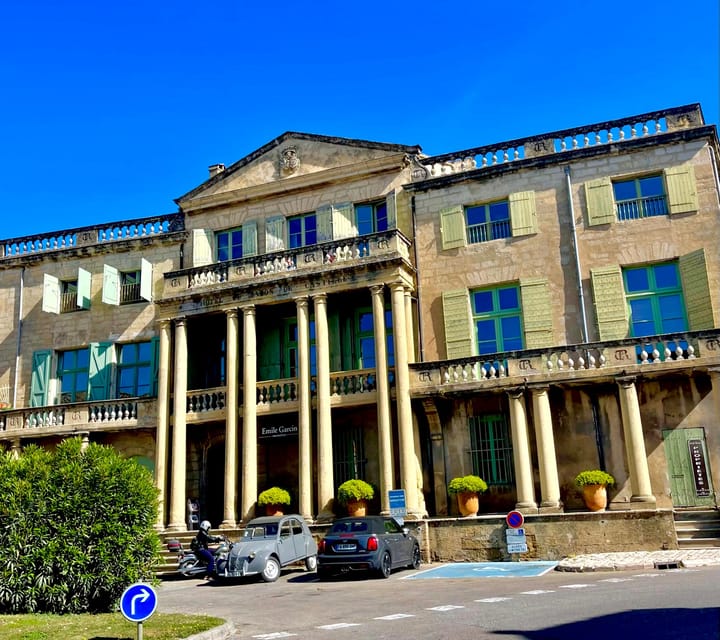
After Nîmes, the tour shifts tone in Uzès. This is a charming medieval town recognized as a City of Art and History, and it is described as the first Duchy of France.
You get around two and a half hours here in total. That is enough time to walk with the guide, enjoy free time for lunch, and see more of the town at your own pace. From April 1 through November 1, the plan also includes the possibility of viewing the town from an old tower.
This is an important break in a day dominated by ancient monuments. The narrow streets, town views, and lunch time give you room to slow down. You are not simply moving from one archaeological site to another.
Market days are Wednesday and Saturday. If your tour falls on one of those days, Uzès may offer a more active town visit, though the supplied details do not promise a particular market schedule or market stop. Plan to use the free time for lunch and local exploration rather than expecting a long restaurant meal.
The two and a half hours are generous compared with the quick photo stops elsewhere. Still, you will need to watch the time. A medieval town invites wandering, and it is easy to spend too long browsing a square or sitting over lunch.
The spring of l’Eure and the start of the water route

The stop at the spring of l’Eure lasts about 30 minutes. This is where the aqueduct started, making it more than a random scenic pause.
The spring helps explain the Roman engineering choice. Before you see the aqueduct crossing the Gardon River, you see the source that made the project worthwhile. The guide can connect this quiet starting point with the much larger structure waiting later in the day.
Thirty minutes is enough for a look and an explanation, but not for a long walk or an extended visit. That is a good trade-off in a full-day route. You get the geographic beginning of the story without sacrificing the time needed at Pont du Gard.
If your main interest is dramatic architecture, this may be the least exciting stop at first glance. Its value comes from context. Once you reach the bridge, you will understand why seeing the aqueduct’s beginning makes the final stop more satisfying.
Pont du Gard, the grand finish

The tour allows up to two hours at Pont du Gard. Entry is included, so you can spend that time looking rather than dealing with another admission purchase.
This is the most visually powerful stop. The aqueduct crosses a valley and the Gardon River, and it is one of the best-preserved Roman aqueducts in the world. The scale is easy to appreciate from below and from the surrounding viewpoints.
You should allow yourself time to simply look at the structure. The bridge is not just a wall of stone. It shows how Roman builders carried water across difficult ground while maintaining the route’s required slope.
The two-hour allotment is one of the tour’s strongest planning choices. A quick stop would give you a photograph but little sense of place. Here, you have time to see the bridge, walk around the site, and take in the river setting.
There is a practical point to remember: this is another stop where you will be on your feet. The full day includes Nîmes, Uzès, the spring, and Pont du Gard, so comfortable shoes will make a real difference. The experience is not suitable for wheelchair users, and anyone who finds long walking days difficult should consider that before booking.
What the small minivan group changes
The group is limited to eight people, and transport is by air-conditioned minivan. This is a much better fit for a route with several stops than a large coach would be.
With fewer people, the guide can keep the day moving without long waits for boarding or head counts. You can also ask questions as the Roman sites begin to connect. The reviews describe the guide service as friendly and informative, with Kelsey singled out for a personable approach.
That personal style matters on a history-heavy day. A dry list of dates would make the aqueduct feel remote. Clear explanations can help you see why the spring, the city, and the bridge belong in one itinerary.
The minivan also keeps the transport practical. You are not responsible for driving between Nîmes, Uzès, and Pont du Gard, and the air conditioning will be welcome during warmer months. Bottled water is included, though you should still bring any food or drinks you need for the full day.
The small group does not mean the tour is private. You share the vehicle and the guide with up to seven other participants. That is a good middle ground for people who want conversation and guidance without a large tour crowd.
Price, included tickets, and the value of a full day

The price is $165 per person. That is not a bargain-basement excursion, but the value becomes clearer when you count what is bundled together.
You receive transport in an air-conditioned minivan, a driver and guide, professional guiding, bottled water, admission to the Nîmes Roman Amphitheatre, and admission to the Pont du Gard. The day also covers the structure of the route, including the spring of l’Eure and the guided portion of Uzès.
The two included entries are important. Pont du Gard is the major finale, and the Nîmes amphitheatre is the principal Roman interior visit. Paying for both separately would add cost and planning work, while the tour keeps the day under one schedule.
I would consider this good value if you want to see all three places in one day and prefer not to arrange regional transport yourself. It is less compelling if you plan to spend several days in Nîmes or Uzès, since an organized route will limit your independent time.
The price also pays for continuity. You are not just buying a vehicle from one town to another. You are getting a guide to explain the Roman water system, frame the UNESCO sites, and keep the schedule together.
Who will get the most from this tour
This outing suits you if Roman engineering interests you, but you also want a medieval town and a proper lunch break. It is especially useful if you are based in the area and want to cover Nîmes, Uzès, and Pont du Gard without piecing together several transport plans.
It also works well for first-time visitors to the region. The route gives you a broad introduction in one day, and the small group format leaves room for questions. The positive feedback specifically highlights clear background information, a friendly guide, and enough time to explore the sites.
You should be comfortable with a long day and repeated walking. The schedule is full, and the experience is not suitable for wheelchair users. If you prefer slow mornings, long museum visits, or extended meals, this may feel too structured.
English and French live guiding is available. When booking, check the available starting time and confirm that your preferred language is offered on that departure.
Small details that help you plan
The meeting point is the Tourism Office. Since the exact departure time depends on availability, check the start time carefully before arranging the rest of your day.
Smoking, alcohol, and drugs are not allowed in the vehicle. Alcoholic drinks are also not permitted in the minivan. These rules are simple, but they matter on a nine-and-a-half-hour shared outing.
Free cancellation is available up to 24 hours in advance for a full refund, and you can reserve now and pay later. That gives you some flexibility if your South of France plans are still shifting.
The tour includes bottled water, but the details do not specify a full meal. Use the free time in Uzès to arrange lunch, and plan for a full day away from your base.
Should you book the Roman aqueduct full-day tour?
Book it if you want a well-planned Roman heritage day with a small group, included admission, and enough time to appreciate Pont du Gard properly. The connected route from Nîmes to Uzès, l’Eure, and the aqueduct bridge gives the day a clear purpose.
I would be especially inclined to book if you are staying near the meeting point and do not have a car. You get the arena, Maison Carrée, a medieval town, the aqueduct’s source, and Pont du Gard without handling the driving.
Skip it if you want to linger in one place, avoid walking, or need wheelchair access. For everyone else, $165 buys a long but well-shaped day, with the spectacular Pont du Gard saved for the finish.
FAQ
How long does the Roman aqueduct tour last?
The tour lasts 570 minutes, which is nine and a half hours.
Where does the tour meet?
The meeting point is the Tourism Office.
What languages are available?
Live guiding is available in English and French.
How large is the group?
The tour is limited to eight participants.
Is transportation included?
Yes. Transport is provided in an air-conditioned minivan.
Is entry to the Nîmes Roman Amphitheatre included?
Yes. Admission to the Nîmes Roman Amphitheatre is included.
Is entry to Pont du Gard included?
Yes. Entry to the Pont du Gard is included.
How much time is spent in Uzès?
You spend 2.5 hours in Uzès in total, including the walking tour, free time for lunch, and time to see the town. From April 1 through November 1, the schedule includes the chance to view the town from an old tower.
Does the tour visit the source of the aqueduct?
Yes. The tour stops for about 30 minutes at the spring of l’Eure, where the aqueduct started.
Is the tour suitable for wheelchair users?
No. The tour is not suitable for wheelchair users.