REVIEW · PARIS
Montmartre Walking Tour
Book on GetYourGuide →Operated by Soul Tours · Bookable on GetYourGuide
Montmartre is at its best when you connect the dots: cabaret at the Moulin Rouge, Van Gogh’s Paris home, Picasso’s early work, old churches, and the broad view from Sacré-Cœur’s steps. This 90-minute walk follows that story through some of the neighborhood’s most recognizable corners.
I like the focus on Van Gogh and Picasso, rather than a simple photo stop at the basilica. I also like the small-group format, which should give you room to ask questions and get help with group photos. The serious drawback is reliability: two bookings recorded a guide who never arrived, with no response to calls or messages. That problem needs to be weighed before you pay.
In This Review
- Key points at a glance
- Why this Montmartre route has real appeal
- Starting at the Moulin Rouge
- Place des Abbesses and the Love Wall
- Rue Lepic and Van Gogh’s Paris address
- Place du Tertre and the working artist tradition
- Picasso at the Bateau-Lavoir
- Saint-Pierre de Montmartre and the older hilltop story
- Finishing at Sacré-Cœur Basilica
- What the 90-minute timing means
- Walking conditions and what to bring
- Is $28 a fair price?
- Who should book this walk?
- Should you book the Montmartre Walking Tour?
- FAQ
- How long does the Montmartre Walking Tour last?
- What languages are available?
- What landmarks does the tour visit?
- Does the tour include food or drinks?
- What should I bring?
- Is the tour suitable for wheelchair users?
- Can I cancel for a refund?
Key points at a glance
- Picasso’s Bateau-Lavoir: Learn about Picasso’s early career at 13 Rue Ravignan and the creation of Les Demoiselles d’Avignon.
- Van Gogh on Rue Lepic: Stop outside No. 54, where Vincent van Gogh lived with his brother Theo.
- The Love Wall: See Le Mur des Je t’aime near Place des Abbesses, with I love you written in more than 300 languages.
- Two historic churches: Compare the Romanesque Saint-Pierre de Montmartre with the later Sacré-Cœur Basilica.
- A 90-minute uphill route: Comfortable shoes matter, especially as the walk finishes at the summit of Montmartre.
- Important service warning: Recorded bookings describe a missed meeting and unanswered messages, so confirm the tour carefully before setting out.
Why this Montmartre route has real appeal
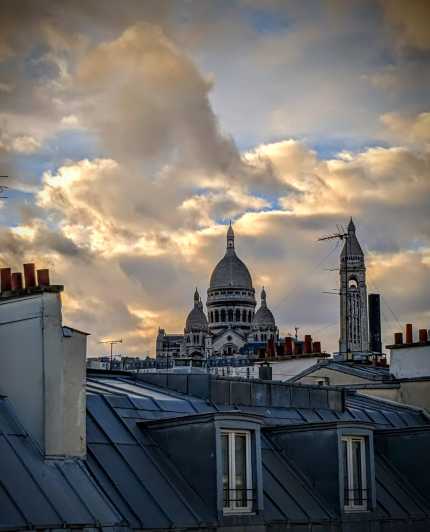
Montmartre can feel like two different places. Down below, the Moulin Rouge belongs to Paris nightlife and grand entertainment. Higher up, quiet streets, old churches, painters, and the white dome of Sacré-Cœur tell a different story.
This tour links both sides in a short time. You are not simply taken to a viewpoint, then sent home. The route uses artists and buildings to explain why Montmartre became such an important part of Parisian culture.
The price is $28 per person. That is fair if the guide arrives, keeps the group moving, and adds useful context at each stop. You are paying for interpretation, not entry tickets or a meal. Since the main attractions are viewed from outside or discussed during the walk, the value depends heavily on the guide’s preparation and reliability.
The stated group size is small, which is a meaningful advantage here. Montmartre’s lanes and squares can be crowded, and a compact group is easier to keep together. You should also be able to ask about the artists, architecture, and local stories instead of listening from the back of a large crowd.
Still, the poor service record cannot be brushed aside. Two separate bookings describe arriving early, waiting beyond the meeting time, receiving no answer, and missing the tour entirely. One party was caught in the rain before contacting the booking platform for a refund. That is not a minor inconvenience. If you book, save the meeting details, bring a charged phone, and know how to contact the booking platform quickly.
You can also read our reviews of more walking tours in Paris



Starting at the Moulin Rouge
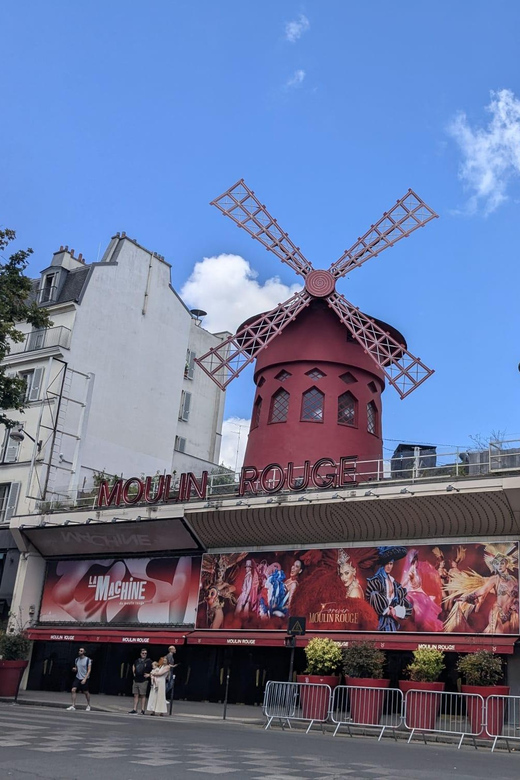
The walk begins at the Moulin Rouge, the famous cabaret founded in 1889. Its red windmill and long connection with French entertainment make it an easy opening point for a discussion of Montmartre’s public image.
You can expect the guide to explain the cabaret’s place in French culture before the route turns toward the hill. This opening is useful because it shows how Montmartre has long attracted performers, artists, and curious visitors.
Do not expect a cabaret performance as part of the tour. The Moulin Rouge is a starting landmark, not an included show. The useful thing here is the setting and the story, while the main artistic focus comes later in the walk.
Place des Abbesses and the Love Wall
Place des Abbesses gives the route a more local neighborhood feel. Its art nouveau metro entrance is one of the area’s most recognizable pieces of street design, and it makes a good photo stop.
Nearby, Le Mur des Je t’aime presents the phrase I love you in more than 300 languages. It is a simple idea, but an effective one. You can take a short break, look for familiar writing, and photograph one of Montmartre’s more modern public artworks.
This stop also helps break up the historical material. The tour is not only about famous painters and old churches. It includes a public art project that connects the neighborhood to a wider audience.
The precise amount of time at each stop is not given, so you should not count on a long visit at every location. A 90-minute tour has to keep a steady pace, especially with the climb ahead.
Rue Lepic and Van Gogh’s Paris address
Rue Lepic is one of the most useful stops for anyone interested in Van Gogh. At No. 54, Vincent van Gogh lived with his brother Theo during his Paris years.
The guide can use this address to explain Van Gogh’s life and work in the city. Paris mattered to his artistic development, and discussing his time here adds a personal thread to the walk. You are seeing a real address tied to the artist, not just hearing his name in a general list of famous Montmartre figures.
This is also a good reminder that artists did not experience Montmartre as a museum. They lived, worked, and built friendships in ordinary streets. The value of the stop comes from connecting an actual building with the person behind the paintings.
You will be viewing the address from the route. The description does not promise entry into the building, so expect an exterior explanation and discussion rather than an indoor visit.
Place du Tertre and the working artist tradition
Place du Tertre is the stop most likely to match the popular image of Montmartre. Artists paint and sell their work around the square, which keeps a visible link to the area’s creative past.
The square was once the center of Montmartre’s artistic community. Here, the guide is scheduled to discuss artists such as Picasso and the stories connected with the neighborhood.
I like this stop because it lets you compare past and present. The area’s artistic identity is not only a story from old Paris. You can still see painters working in the square, even though the atmosphere today is shaped by tourism as well as art.
That mix can be both appealing and busy. The square may be more crowded than the quieter streets on the route, and you may need to stay close to the guide. A small group helps, but you should still keep an eye on the meeting point if you stop for a photograph.





Picasso at the Bateau-Lavoir
At 13 Rue Ravignan, the tour reaches the Bateau-Lavoir, the building where Picasso lived and worked. This is the most important stop for understanding Picasso’s early Montmartre years.
The guide will discuss his early career and the creation of Les Demoiselles d’Avignon. That makes the stop more substantial than a quick mention of a famous painter. You get a direct link between a particular building, Picasso’s working life, and a major work in modern art.
The Bateau-Lavoir is especially useful for visitors who want art explained in plain language. You do not need a specialist background to follow the basic story. The guide’s role is to connect the place with the choices, experiments, and artistic changes associated with Picasso.
Again, this is an exterior stop based on the information provided. The experience is the explanation at the address, not a promised museum visit or chance to see the original painting.
Saint-Pierre de Montmartre and the older hilltop story
Saint-Pierre de Montmartre offers a change of pace. It is one of Paris’s oldest churches and dates from the 12th century.
The tour highlights its Romanesque architecture and historical importance. That matters because the church gives you a sense of Montmartre before the cabarets, studios, and famous artists made the hill widely known.
Look for the contrast between the church’s age and the more recent cultural history discussed earlier. The route moves from modern public art and 19th and 20th-century painters to a medieval religious building.
The description does not state that you will enter the church, so plan for an architectural and historical stop rather than an assured interior visit. If seeing the inside is important to you, check the guide’s current arrangements before booking.
Finishing at Sacré-Cœur Basilica
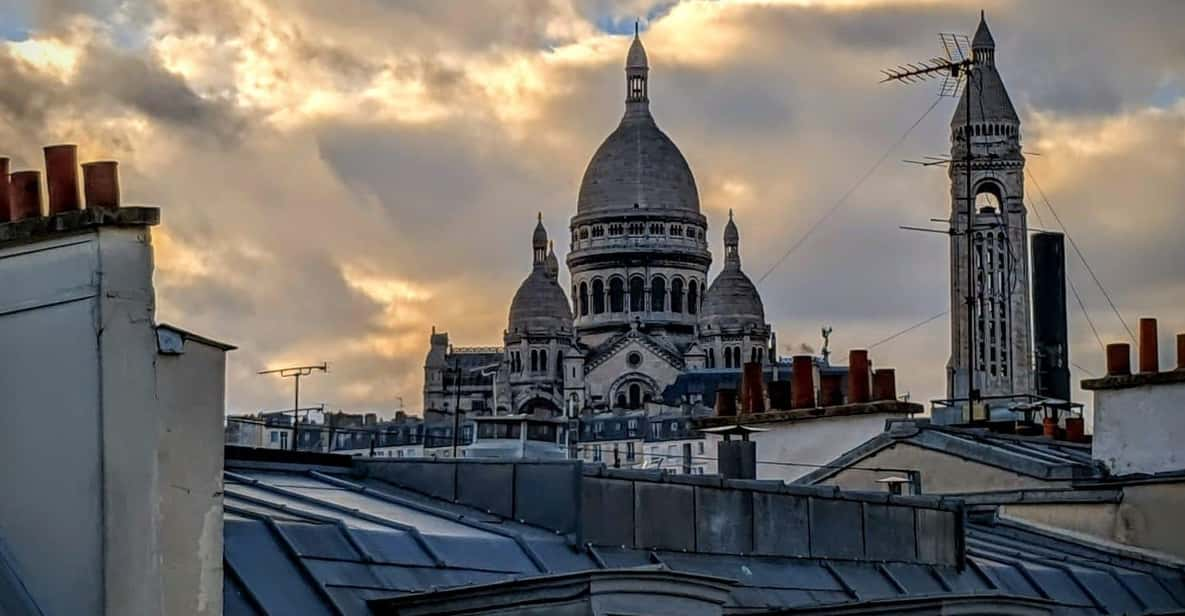
The walk finishes at Sacré-Cœur Basilica, at the summit of Montmartre. This is the payoff of the uphill route: from the steps, you get a panoramic view across Paris.
The guide will discuss the basilica’s history and architecture. Its white exterior is instantly recognizable, but a short explanation can make the landmark more meaningful than a quick photograph.
The steps are also a practical ending point. You can pause for the view after the guided portion, take pictures, and decide what to do next. The tour does not include food or drinks, so bring your own water or plan to buy something afterward.
The route’s finish is worth considering when planning the rest of your day. You end high on the hill, not back at the Moulin Rouge. The information provided does not specify onward transport or a return walk, so you will need to arrange your next stop yourself.
What the 90-minute timing means
An hour and a half is enough for an introduction to Montmartre, but it is not enough for long visits at every location. The route includes at least eight named stops, several artist addresses, two churches, and the final viewpoint.
You should expect short explanations, photo pauses, and steady walking. The guide speaks English, Spanish, or French, and the stated live-tour languages make the experience suitable for people who prefer one of those languages.
This format works best if you want orientation on your first day in Montmartre. You will hear the main stories, learn where the key landmarks are, and then have the option of returning to places that deserve more time.
It is less suitable if you want to enter every church, spend an hour painting at Place du Tertre, or study Picasso in depth. For that, you would need a longer visit or separate museum time.
Walking conditions and what to bring
Comfortable shoes are essential. Montmartre is a hill, and this route finishes at its summit. Even without knowing the exact number of steps or slopes, the itinerary makes clear that you will be walking uphill through streets and public squares.
The tour is not suitable for wheelchair users. That restriction is important to take seriously, since the route includes a hilltop finish and several historic areas where access may be difficult.
Bring a phone with enough charge to contact the provider if needed. This advice is especially important because of the missed meeting incidents described above. It is also sensible to check the weather, since the tour takes place outdoors and the activity does not include food, drinks, or indoor shelter.
A small group can make the walk more personal. It also means the guide can answer questions about the artists, architecture, and places you are seeing. The promised languages are English, Spanish, and French, so select the language that lets you ask questions comfortably.
Is $28 a fair price?
At $28, the tour sits in a reasonable range for a guided 90-minute walk in Paris. The route covers several major sights, and the guide’s commentary can save you from piecing together the neighborhood’s art and history on your own.
The price includes a professional guide, historical explanations, photo stops, help with group pictures, and a small-group format. It does not include food, drinks, entry tickets, or a cab back down the hill.
The value is strongest for a first visit. You get a clear route through the Moulin Rouge, Abbesses, Rue Lepic, Place du Tertre, the Bateau-Lavoir, Saint-Pierre, and Sacré-Cœur without having to plan each stop yourself.
The value drops sharply if the meeting fails. Since two recorded bookings describe a guide who did not arrive and did not answer messages, I would not treat the low price as the only factor. Free cancellation up to 24 hours before the start and the option to reserve now and pay later reduce financial risk, but they do not recover a lost morning or a wet wait in the rain.
Who should book this walk?
I would consider it for someone who wants a short, art-focused introduction to Montmartre and is comfortable walking uphill. It suits anyone interested in Van Gogh, Picasso, public art, old churches, and Paris views.
It also works for people who prefer a guide who can explain the setting in English, Spanish, or French. The small-group plan is helpful if you enjoy asking questions instead of following a large crowd.
I would be cautious if you have limited mobility, need a fully dependable schedule, or want extended interior visits. Wheelchair users should choose another route, and anyone with a tight timetable should think carefully about the documented no-show problem.
If you do book, confirm the meeting details shortly before departure and keep the booking platform’s contact information close. That simple step will not fix a poor operation, but it gives you a faster path to help or a refund if the guide does not appear.
Should you book the Montmartre Walking Tour?
The route itself is appealing. In 90 minutes, it connects the Moulin Rouge, the Love Wall, Van Gogh’s former address, Picasso’s Bateau-Lavoir, Place du Tertre, two historic churches, and the view from Sacré-Cœur.
The content is a better reason to book than the price alone. You get a useful introduction to Montmartre’s art and architecture, with particular attention to Van Gogh and Picasso.
But the service warning is substantial. Two bookings ended with no guide, no answer, and a refund request. I would book only if the flexible cancellation terms suit your plans and you can confirm the meeting shortly before the start. If a missed tour would disrupt an important day in Paris, choose a more dependable option.
FAQ
How long does the Montmartre Walking Tour last?
The tour lasts 1.5 hours, or 90 minutes. Starting times vary, so check availability when choosing a date.
What languages are available?
The live guide is available in English, Spanish, and French.
What landmarks does the tour visit?
The route includes the Moulin Rouge, Place des Abbesses, Le Mur des Je t’aime, Rue Lepic, Place du Tertre, Le Bateau-Lavoir at 13 Rue Ravignan, Saint-Pierre de Montmartre, and Sacré-Cœur Basilica.
Does the tour include food or drinks?
No. Food and drinks purchased during the walk are not included.
What should I bring?
Bring comfortable shoes. The route involves walking through Montmartre and finishes at the summit near Sacré-Cœur.
Is the tour suitable for wheelchair users?
No. The activity is not suitable for wheelchair users.
Can I cancel for a refund?
Yes. You can cancel up to 24 hours in advance for a full refund. You can also reserve now and pay later.