REVIEW · PARIS
Montmarte painting session and walking tour for kids !
Book on GetYourGuide →Operated by Trivial Guides · Bookable on GetYourGuide
Montmartre becomes a giant outdoor art class on this two-hour tour for children. Instead of asking kids to trail behind a guide, Billy turns the neighborhood into a game of puzzles, mazes, artist stories, and creative missions, ending with painting above Paris. It is a smart way to give young minds a real connection to one of Paris’s most famous quarters.
I especially like the hands-on format, which keeps the focus on children rather than treating them as small adults on a standard walking tour. I also like that the painting session uses a proper big canvas, a smaller sketching canvas, paints, brushes, pencils, and crayons, not just a quick worksheet.
The main thing to consider is the terrain. Montmartre has steep streets, and this is an outdoor walk, not a relaxed seated activity. There are no drinks or snacks, and the tour does not enter the landmarks along the route, so bring water and expect to spend the full two hours outside.
In This Review
- Key points at a glance
- Why Montmartre works so well for a children’s art tour
- Meeting at Montmartre Cemetery
- Turning the walk into a series of challenges
- Meeting the artists of Montmartre
- The uphill streets and the practical reality of walking
- Painting above Paris
- The prize and the sense of finishing a mission
- What $35 per person really buys
- Who will enjoy this most
- Timing, weather, and booking flexibility
- Should you book this Montmartre activity?
- FAQ
- Where does the Montmartre children’s tour meet?
- How long does the activity last?
- Which languages are available?
- Is painting material included?
- Does the tour include food or drinks?
- Do you go inside Montmartre’s landmarks?
- Are the streets difficult to walk?
Key points at a glance
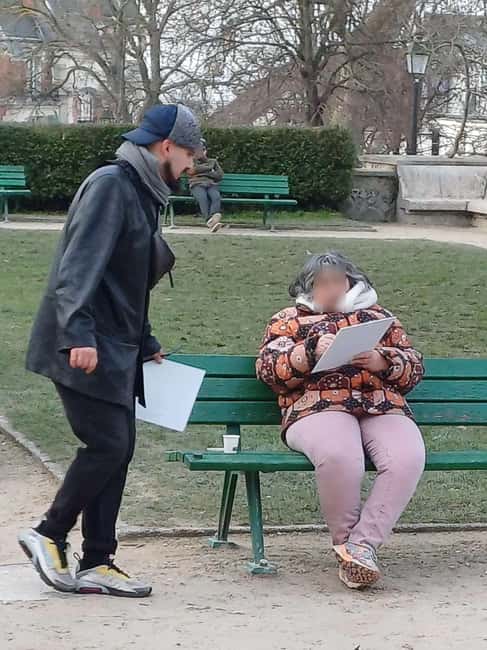
- Billy’s child-focused guiding: The guide uses games, riddles, and stories to keep children involved rather than simply talking over their heads.
- Artists brought to life: Kids learn about Picasso, Van Gogh, and Utrillo while walking through the streets linked with Montmartre’s art scene.
- A real painting session: The final activity includes a large canvas, a sketch canvas, paint, brushes, pencils, and crayons.
- A panoramic finish: Children create their artwork from a beautiful viewpoint overlooking Paris.
- A prize at the end: Each child receives a small reward after completing the challenges.
- A clear practical limit: The route is outdoors, includes uphill walking, and does not include food, drinks, or indoor landmark visits.
Why Montmartre works so well for a children’s art tour
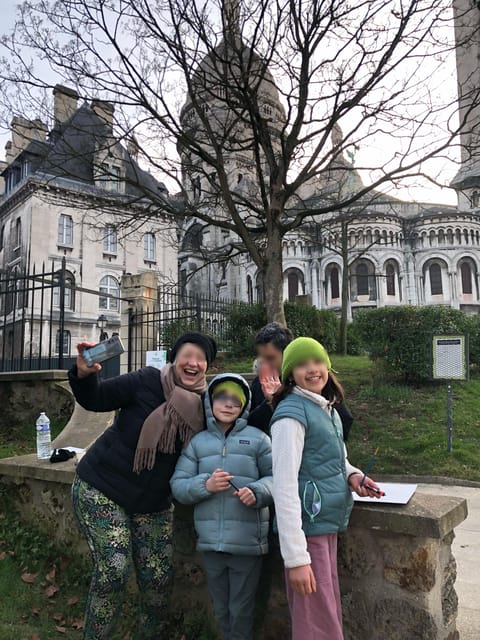
Montmartre is one of the few Paris neighborhoods where an art lesson can happen simply by walking down the street. Its cobbled lanes, old studios, steep stairways, and famous viewpoints give children something to look at while they learn.
That matters because young children often lose interest when a guide points out buildings and delivers a long string of dates. Here, the streets become part of the activity. A maze can turn a confusing lane into a challenge, while a question about an artist gives children a reason to notice the neighborhood around them.
The tour connects the area with Picasso, Van Gogh, and Utrillo. The information is presented through games and short stories, so you should expect an introduction to Montmartre’s artists rather than a detailed art lecture. That is the right balance for a family activity. Children leave with a few names, images, and ideas they can remember.
I also like the way the tour links old artistic traditions with a child’s own work. Your child is not only hearing that painters once came to Montmartre. At the end, they get to sit with art materials and make something of their own.
You can also read our reviews of more walking tours in Paris



Meeting at Montmartre Cemetery
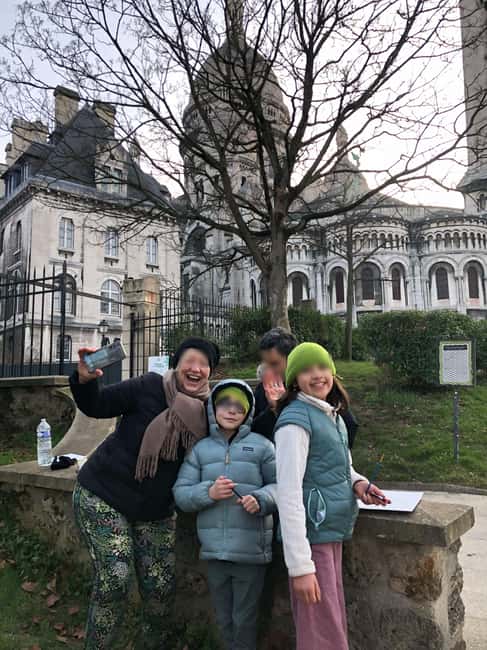
The meeting point is directly in front of the Montmartre Cemetery entrance. This gives you a clear place to find the guide, but it is worth allowing a little extra time to get there, especially if you are managing young children.
The cemetery area also puts you on the edge of the Montmartre neighborhood before the climb into its more famous streets. The tour begins outdoors and stays outdoors. You will not be going inside the cemetery or other listed landmarks as part of the activity.
Look for the guide, Billy, if he is leading your session. His approach is a major part of the tour’s appeal. He is described as kind, accommodating, and particularly good at connecting with children, including a seven-year-old and a nine-year-old who found the activity especially engaging.
The language choices are English, French, and Spanish. That makes the tour useful for families who want children to follow the stories without depending on adult translation.
Turning the walk into a series of challenges
The walking portion uses printed games and mazes for children to complete and color. This is a small but important detail. A printed challenge gives a child something concrete to do while walking, and it helps keep the pace from feeling like an adult sightseeing tour.
Expect a mix of riddles, puzzles, artistic missions, and surprises. The exact order can vary with the guide and the group, but the basic idea is clear: children solve tasks as they move through Montmartre, learning about the neighborhood along the way.
I like this format because it gives children a reason to look closely. A maze asks them to pay attention to streets and choices. An artist challenge encourages them to think about what they see. A riddle turns a stop into a small victory instead of another pause while adults take photographs.
The activities also help families move at a shared pace. Children have a task, adults can listen to the stories, and the guide can respond to the group. One of the strongest details about this tour is its small-scale feel, which allows the guide to interact with the children rather than addressing a large crowd.
Still, you should set reasonable expectations. The tour is not a private art lesson with unlimited time at every stop. The walk, games, history, and final painting all fit into two hours. Some children will race through the puzzles, while others will want to linger over every drawing. Billy’s ability to adapt is helpful, but the schedule still needs to keep moving.
Meeting the artists of Montmartre
The artist stories are the bridge between the neighborhood and the children’s own creativity. Picasso, Van Gogh, and Utrillo are introduced as people connected with Montmartre’s artistic world, giving kids a simple way to understand why this part of Paris matters.
For adults, the names will be familiar. For children, the value comes from hearing about artists while standing in the same neighborhood that inspired generations of painters. The setting makes the lesson easier to remember than a museum label or a paragraph in a guidebook.
This is not a substitute for visiting a major Paris art museum. The tour does not offer an indoor collection, a formal art lecture, or a close study of individual paintings. Instead, it provides context and a sense of place. That makes it a good choice on a day when your family wants to see Montmartre but needs more structure than simply wandering around.
Parents may also appreciate that the stories are designed to spark curiosity. A child does not need to understand every detail of an artist’s career to begin asking questions about how people paint, where they work, or why one view might inspire a picture.
The uphill streets and the practical reality of walking
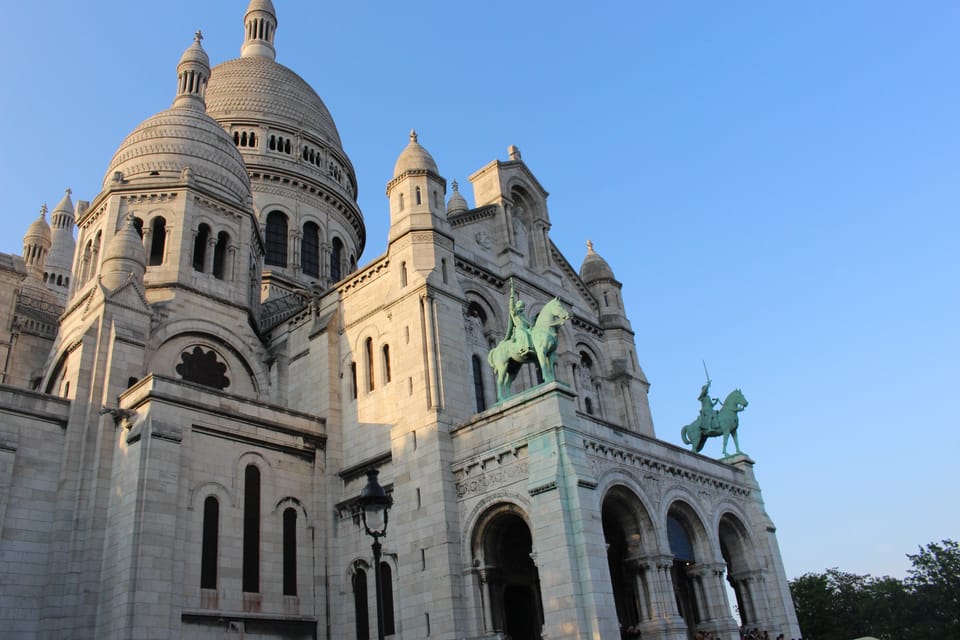
Montmartre is not flat. The tour information clearly warns about steep streets, and you should take that seriously if your child tires quickly or dislikes hills.
The route is described as a lovely walk filled with history, but it still requires energy. Comfortable shoes are important. Bring water because no beverages are provided, and pack any snacks your family will need before or after the activity.
There is no promise of indoor rest time, air conditioning, or shelter from the weather. One family completed the experience in the rain and still found it worthwhile, but rain can make cobblestones less comfortable and painting materials harder to manage. Check the forecast and dress your child for the conditions.
The uphill walking is also part of what makes the final viewpoint special. You are not simply transported to a painting table. The walk leads to a place where children can see Paris from above, giving the final activity a sense of arrival.






Painting above Paris
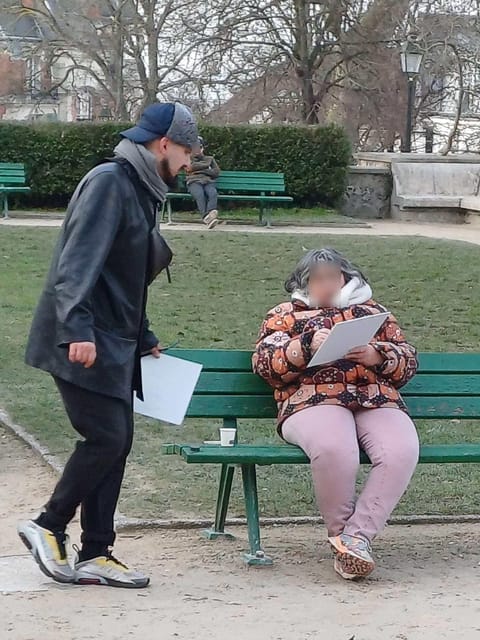
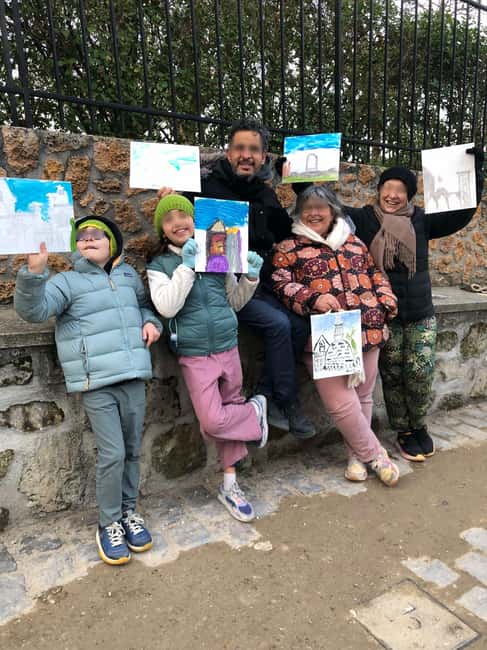
The final painting session is the heart of the experience. Children settle at a panoramic spot overlooking Paris and create their own work, following the example of the artists they have just learned about.
The supplied materials are generous for a two-hour family tour:
- A large canvas for painting
- A smaller canvas for sketching
- Paint
- Painting brushes
- A sketching pencil
- Colored crayons
- Printed games and mazes to complete and color
That equipment makes the $35 price easier to assess. You are not paying only for a walking guide. The fee also covers a guided activity, printed materials, two canvases, and art supplies, plus a prize for the child at the end.
Of course, the value depends on your family. If your child dislikes drawing, the painting portion may not justify the cost on its own. But children who enjoy making things get a proper creative finish rather than a quick souvenir photograph.
The setting adds plenty. A panoramic view of Paris gives children something to interpret, even if their painting turns into an imaginative version of the city. There is no judgment about artistic skill, and that is important. The point is to let children experiment in a place associated with painters, not to produce a museum-quality picture.
Parents can take part too. One adult described the painting as enjoyable for all ages, which suggests that you do not have to stand at the side while your child works. Just remember that the activity is designed first for young explorers, so the guide’s attention will center on them.
The prize and the sense of finishing a mission
A prize is awarded to each child at the end. It may sound like a small detail, but it gives the puzzles and missions a clear purpose.
Children often respond well to a visible finish line. They can complete the maze, take part in the art tasks, make their painting, and then receive a reward. This structure is especially useful for younger children who need a little encouragement during an uphill walk.
The prize also turns the tour into a memory they can retell. They did not simply visit Montmartre with their parents. They solved challenges, learned about artists, painted above Paris, and earned something at the end.
What $35 per person really buys
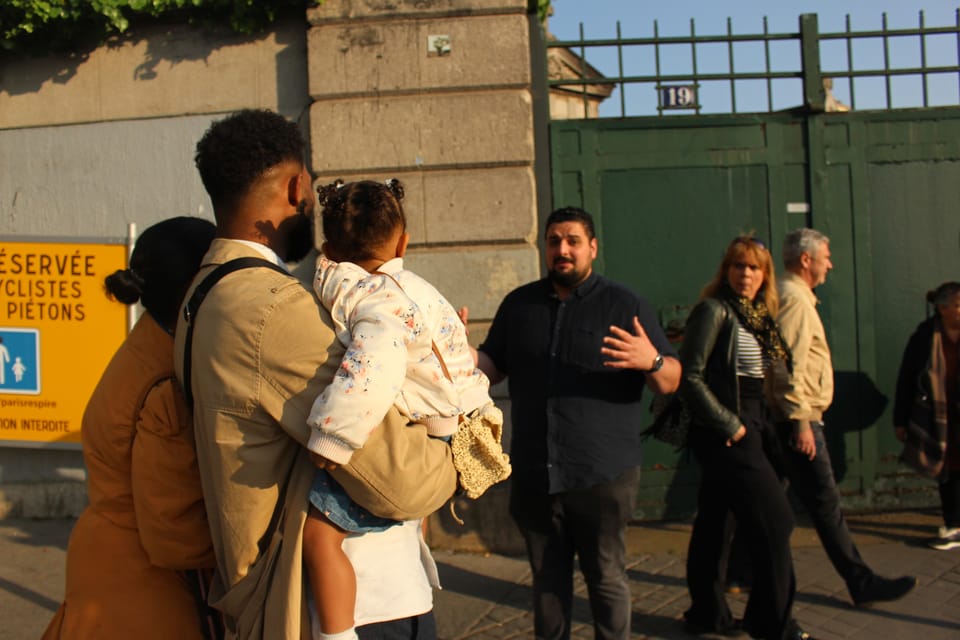
At $35 per person, this is not the cheapest way to walk through Montmartre. You can explore the streets for free, and families can bring their own pencils and sketchbooks.
The price makes more sense if you want a planned activity with a live guide who knows how to involve children. You are paying for the structure, the stories, the games, the art equipment, and the effort of leading a child-friendly route through a hilly neighborhood.
I would compare it with the cost of a standard adult walking tour. A normal tour may offer more historical detail, but it may not give children anything to do. Here, the value is in keeping the family together and making Montmartre meaningful to the youngest members of your group.
The small-group style is another point in its favor. A guide who can speak directly with the children is more useful than a large group where kids stand at the back and hear only fragments. Billy’s personal approach appears to be a key reason the experience works so well.
If you have two children who both enjoy art and puzzles, the fee can represent good value. If only one child is interested and the others are too young to walk uphill, the calculation is less favorable.
Who will enjoy this most
I would choose this tour for families with children who enjoy drawing, games, stories, and active sightseeing. It suits parents who want to see Montmartre but do not want to spend two hours persuading a bored child to keep walking.
The experience has worked well for children around seven to nine years old, based on the ages specifically described. Older children may also enjoy it, particularly if they like art and want to paint, but the playful challenges may feel young to teenagers looking for detailed art history.
It is also a good fit for a family that wants an activity in English, French, or Spanish. The live guide can help children engage directly rather than making parents translate every explanation.
I would think twice if your child has difficulty with hills, needs regular indoor breaks, or is not interested in art. The tour is flexible in spirit, but it cannot remove Montmartre’s slopes or turn an outdoor walk into a museum visit.
Timing, weather, and booking flexibility
The activity lasts two hours, with starting times depending on availability. That is long enough to feel substantial without taking over an entire day in Paris.
You can cancel up to 24 hours in advance for a full refund. You can also reserve now and pay later, which is useful when you are arranging several family activities and want to keep your plans flexible.
Because the tour depends on walking and painting outdoors, weather deserves attention. A light rain may not ruin the day, but you should bring suitable clothing and protect the art materials as needed. On a bright day, the viewpoint and painting session should be the natural highlight, so avoid scheduling another rushed attraction immediately afterward.
Should you book this Montmartre activity?
Book it if you want Montmartre to be more than a photo stop, and if your child likes solving puzzles or making art. The combination of Billy’s child-friendly guiding, artist stories, printed challenges, a panoramic painting session, and a final prize gives the neighborhood a clear shape for young visitors.
Skip it if you want indoor sightseeing, a serious adult art lecture, or a flat and easy walk. You will need to supply your own drinks and snacks, and you should be comfortable with two hours outside on steep streets.
For families who want children to remember Paris as a place where they took part rather than simply looked around, this is a strong choice. The painting is the big draw, but the real value comes from giving kids a reason to notice Montmartre, ask questions, and make their own mark on an artistic corner of the city.
FAQ
Where does the Montmartre children’s tour meet?
The meeting point is directly in front of the entrance to Montmartre Cemetery.
How long does the activity last?
The tour lasts two hours. Starting times depend on availability.
Which languages are available?
The live tour guide can lead the activity in English, French, or Spanish.
Is painting material included?
Yes. The activity includes a large painting canvas, a smaller sketching canvas, paint, brushes, a sketching pencil, and colored crayons.
Does the tour include food or drinks?
No. Food and beverages are not provided, so bring what your child may need.
Do you go inside Montmartre’s landmarks?
No. This is an outdoor activity, and the listed landmarks are not visited inside.
Are the streets difficult to walk?
Montmartre has some steep streets. The activity is intended for people who enjoy walking and can manage a route with uphill sections.