REVIEW · PARIS
Mille Feuille Napoléon Pastry Class in Paris
Book on Viator →Operated by Maison Fleuret — The Baking School · Bookable on Viator
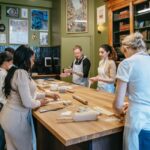
The best part of this Paris class is that you do not simply eat a mille-feuille, you learn why it works. At Maison Fleuret, you’ll build the pastry from crisp, caramelized puff pastry and smooth vanilla cream, then taste the result while it is still fresh.
I like the small group size, capped at six, because pastry work needs close attention. I also like the English instruction and the chance to ask practical questions, with teachers such as Julie and Chef Minel offering clear, friendly guidance.
The main consideration is the price: $132.45 per person for about two and a half hours. That is a fair fit if you want a hands-on baking lesson, but it is more than you would pay for a pastry and coffee at a Paris bakery.
In This Review
- Key Points for Your Paris Pastry Plans
- Why Mille-Feuille Makes a Good Paris Cooking Class
- At 7 Rue de Béarn, the Lesson Begins
- Caramelizing the Puff Pastry
- Making the Vanilla Cream
- Layering, Piping, and Building Your Napoleon
- Coffee, Tea, and the Finished Dessert
- What the Two and a Half Hours Are Worth
- Who Will Enjoy This Class Most
- Practical Details Before You Book
- Should You Book the Mille-Feuille Class?
- FAQ
- Where does the Mille-Feuille pastry class take place?
- How long does the class last?
- How much does the class cost?
- Is the class offered in English?
- How many people can join the class?
- What pastry will I make?
- What does the class include?
- Is transportation included?
- Are service animals allowed?
- What is the cancellation policy?
Key Points for Your Paris Pastry Plans

- Make the classic French mille-feuille: Learn the layers of crisp puff pastry and vanilla custard behind this famous dessert.
- Work in a group of no more than six: The compact class allows room for questions and personal help.
- Learn from English-speaking pastry teachers: Julie and Chef Minel have been praised for clear instruction and useful baking tips.
- Expect a hands-on lesson: You will practice pastry preparation, cream work, piping, layering, and final assembly.
- Finish with coffee or tea: The class includes a drink to enjoy with the finished dessert.
- Meet in the Marais: The class begins and ends at 7 Rue de Béarn, in Paris’s 3rd arrondissement.
Why Mille-Feuille Makes a Good Paris Cooking Class

Mille-feuille is one of the better choices for a short pastry class because it teaches several core French baking skills in one dessert. The name means a thousand leaves, a nod to the many thin layers in the pastry. In the United States, you may know it as a Napoleon.
The finished dessert depends on contrast. The pastry should be crisp and lightly caramelized. The vanilla cream should be smooth and soft. Too much cream makes the layers collapse. Too little leaves the pastry dry. The pleasure comes from getting those textures to work together.
This class also gives you a useful look at French pastry beyond the display case. A bakery counter can make complicated desserts seem effortless. Here, you get to see the care behind the clean layers and neat finish.
You should not expect a broad cooking tour with several dishes. This is a focused pastry lesson built around one dessert. That focus is its strength if you want to learn a specific French classic. It may feel narrow if you prefer a full meal or a class with several recipes.
A few more Paris tours and experiences worth a look


At 7 Rue de Béarn, the Lesson Begins
The meeting point is 7 Rue de Béarn, 75003 Paris, and the activity returns there when the class ends. The location is near public transportation, so you can reach it without arranging a private transfer. Transportation is not included, which is normal for a city cooking class and keeps the format simple.
Once the lesson starts, the teacher introduces the pastry and its place in French baking. The class explains how mille-feuille developed as a French dessert in the 19th century, then connects that background to the work in front of you.
I like this kind of short introduction because it gives the dessert a little context without turning the class into a lecture. You learn what you are making, then move quickly to the useful part: how to make it.
The class is offered in English. That matters when a recipe depends on small changes in texture, timing, and consistency. You can ask about the dough, the cream, and the final assembly as you work instead of trying to follow a demonstration from a distance.
Caramelizing the Puff Pastry

The puff pastry is the foundation of the dessert. Its many layers must bake into something crisp enough to hold the cream but not so hard that the dessert becomes awkward to eat. Caramelization adds color, sweetness, and a light crackle.
The lesson gives you a chance to understand this balance instead of treating puff pastry as a mystery. You will work with the pastry and learn why each stage matters. The exact class sequence may vary with the day’s preparation, but the central goal is clear: produce pastry that is golden, crisp, and suited to layering.
This is one place where a teacher’s practical advice can save you trouble at home. A class is useful not only for showing the ideal result, but also for pointing out what can go wrong. The feedback from this experience highlights step-by-step explanations and helpful baking tips, especially for people who do not normally bake.
The finished pastry is also rich. One person described the result as especially good for anyone who likes butter. That is a useful warning, not a complaint. Mille-feuille is not a light fruit dessert. It is a classic butter-forward pastry with a rich cream filling.
Making the Vanilla Cream
The second major element is the vanilla custard, sometimes described in the lesson as crème anglaise work. You learn how the cream should look and behave before it goes between the pastry layers.
The cream must be smooth enough to pipe and firm enough to stay in place. That makes this part more than a simple mixing exercise. You are learning a basic pastry skill that can apply to other desserts, even if you never make mille-feuille again.
The class is especially useful here for solo participants. One solo student had individual attention from the teacher and plenty of time to ask questions while working on puff pastry and cream piping. A small class cannot guarantee a private lesson, but a maximum of six people gives you a better chance to receive direct help than a large demonstration class.
If you are bringing children, the format can also work well as a family activity. Julie has been praised for speaking excellent English and keeping the class relaxed and down to earth. Families should still remember that this is a baking lesson, not a play session, and the dessert involves careful steps.
Layering, Piping, and Building Your Napoleon
Once the pastry and cream are ready, the class brings them together. You pipe the cream, place the pastry, and build the layers that give mille-feuille its familiar shape.
This is where neat technique matters. Uneven cream can make the pastry tilt. Heavy handling can break the crisp layers. The goal is not just to make something edible, but to create a dessert with a clean balance of pastry and filling in every bite.
You will get to put the skills from the lesson into practice by making your own mille-feuille. That gives the class a satisfying finish. You are not only watching a chef assemble a perfect example, then receiving a prepared portion. Your own hands are part of the final result.
Do not judge your pastry too harshly. French pastry cases make every mille-feuille look identical, but a first attempt may have a few rough edges. The point is to understand the process, gain confidence, and leave with a dessert you helped create.
The class also teaches you how to appreciate the finished pastry. Notice the crisp first bite, the soft cream, and the way the sweetness changes as the layers mix. A dessert that looks simple can offer a surprising amount to think about.





Coffee, Tea, and the Finished Dessert
Coffee and tea are included, giving you something to drink with the finished mille-feuille. This final pause is a small but welcome part of the class. You can sit with the result, taste the contrast of textures, and talk with the instructor or the rest of the group.
The drink is not a full meal, so plan your day accordingly. The menu lists dessert only, specifically 1000 Leaves or Napoleon. If you need lunch or dinner, arrange that separately.
Some of the most useful guidance may come at this stage. The teachers have also helped participants with restaurant suggestions in Paris. That is not a formal part of the menu, and you should not book the class expecting a dining consultation, but a friendly recommendation can be a nice extra when you are deciding where to eat afterward.
What the Two and a Half Hours Are Worth

The class lasts about two hours and thirty minutes. That is long enough for a real lesson, but short enough to fit into a busy Paris day. You can place it between neighborhood walks, museum time, or a meal.
At $132.45 per person, the value depends on what you want from Paris. If your aim is the cheapest possible dessert, this is not the right choice. A pastry and coffee will cost far less.
If you want instruction, hands-on work, and a dessert you make yourself, the price makes more sense. You are paying for the teacher’s time, the ingredients, the baking space, and a class limited to six people. The smaller group is important because pastry questions are often personal: your dough may behave differently, your cream may need adjustment, or your piping may need a quick correction.
The experience also gives you a skill to take home. You may not reproduce a professional bakery finish on your first attempt, but you will understand the main parts of the process. That makes the class more valuable than a tasting alone.
The booking pattern suggests that people often reserve around 27 days ahead. I would not treat that as a rule, but it is sensible to plan early if this class is important to your schedule, especially because the group is small.
Who Will Enjoy This Class Most

I would recommend this experience to people who enjoy baking, want a focused French food activity, or prefer making something over sitting through a standard tasting. It suits solo participants, couples, and families who can stay engaged with a careful pastry lesson.
It is also a good option if you want an English-speaking class with direct contact with the teacher. The setting is intimate, and the instruction has been described as clear, warm, and practical. The teachers’ willingness to explain each step is a major part of the value.
You may want to choose another activity if you dislike rich desserts, need a full meal, or want a class covering several French recipes. Mille-feuille contains plenty of butter and cream, and the menu is centered on one dessert.
People with very limited time should also consider the full two-and-a-half-hour commitment. The class itself is not a quick bakery stop. It is a structured activity with preparation, assembly, and tasting.
Practical Details Before You Book
You receive confirmation when you book. The activity accepts mobile tickets, and service animals are allowed. It is near public transportation, but private transportation is not included.
The class begins and ends at 7 Rue de Béarn. Since the return point is the same as the starting point, you can plan your next stop from the Marais area without arranging a separate ride.
Free cancellation is available if you cancel at least 24 hours before the local start time. A cancellation made within 24 hours is not refunded, and changes within that period are not accepted. Keep that deadline in mind before booking theater tickets, restaurant reservations, or other timed plans.
The maximum group size is six. That is one of the clearest reasons to reserve ahead rather than assume you can find space on the day.
Should You Book the Mille-Feuille Class?
Book it if you want a hands-on French pastry lesson rather than a simple food stop. The small group, English instruction, personal guidance, and focus on one classic dessert create a clear, useful experience.
I would especially choose it for a couple, a solo baker, or a family looking for a memorable indoor activity in Paris. The teachers, including Julie and Chef Minel, have been praised for friendly instruction and practical tips, and the class gives you something to eat and a technique to remember.
Skip it if $132.45 feels too high for a single dessert, or if you want savory cooking and a complete meal. For everyone else, making your own crisp, creamy mille-feuille in Paris is a tasty way to spend two and a half hours, with just enough challenge to make the final bite feel earned.
FAQ
Where does the Mille-Feuille pastry class take place?
The class begins at 7 Rue de Béarn, 75003 Paris, France, and ends back at the same meeting point.
How long does the class last?
The activity lasts approximately two hours and thirty minutes.
How much does the class cost?
The listed price is $132.45 per person.
Is the class offered in English?
Yes. The class is offered in English.
How many people can join the class?
The activity has a maximum of six participants.
What pastry will I make?
You will make mille-feuille, also known as Napoleon in the United States. The menu identifies it as 1000 Leaves or Napoleon.
What does the class include?
The experience includes the pastry lesson, the mille-feuille activity, and coffee and/or tea.
Is transportation included?
No. Private transportation is not included, though the meeting point is near public transportation.
Are service animals allowed?
Yes. Service animals are allowed.
What is the cancellation policy?
You can cancel for a full refund up to 24 hours before the experience start time. Cancellations or changes made less than 24 hours before the start time are not accepted for a refund.