REVIEW · PARIS
Montmartre Walking Tour with a Local Guide
Book on GetYourGuide →Operated by Parifiane Tours · Bookable on GetYourGuide
Montmartre works its magic fast. In just 2 hours, you’ll move from the Moulin Rouge area up to Sacré-Cœur for big-picture Paris views and street-level art stories. I like how the tour threads famous names into real streets, and how you’re given clear photo chances instead of just wandering randomly. One thing to consider: it’s a hill climb, so you’ll want comfortable shoes and a willingness to walk uphill at times.
This is a guided walk built for getting oriented quickly. You’ll stop at iconic spots like the Moulin Rouge, Mur des Je T’aime (Wall of Love), and Place du Tertre, then finish at the Sacré-Cœur Basilica with panoramic viewpoints toward major landmarks. My second favorite part is the guide-led pacing: it’s not a sprint, and you get time to look, ask questions, and take photos. The main drawback is simple—this isn’t suitable for wheelchair users or people with mobility impairments.
In This Review
- Key things you’ll notice on the Montmartre walk
- Montmartre’s art streets in a tight 2-hour format
- Starting at Place Blanche: where the tour really begins
- Moulin Rouge to Wall of Love: the quick-hit iconic start
- Moulin de la Galette, Dalida statue, and La Maison Rose
- Place du Tertre: the artist square with real atmosphere
- Sacré-Cœur: the route, the basilica, and the finishing view
- The view toward Eiffel, Notre-Dame, and Montparnasse
- What walking feels like (and why shoes matter)
- Local guide energy: how stories make the streets click
- Price and value: paying for guidance, not just stops
- Who should book this Montmartre tour
- Should you book this Montmartre walking tour?
- FAQ
- How long is the Montmartre walking tour?
- Where do I meet the guide?
- Where does the tour end?
- Is the tour in English?
- What are the main stops on the route?
- Is food or drinks included?
- What should I bring?
- Does the tour run in rain?
- Is this tour suitable for wheelchair users or limited mobility?
- Is there a cancellation option?
- Can I reserve without paying right away?
Key things you’ll notice on the Montmartre walk
- Meet at Place Blanche (Metro 2): find the guide near Blanche metro exit with a green booklet and green badge
- Photo-stop rhythm: short stops at major sights like Moulin Rouge and the Wall of Love, then guided context as you go
- Artist-layer streets: you’ll hear about where famous painters such as Picasso and Van Gogh lived in this district
- Place du Tertre payoff: a real sense of the square where artists display work, plus time to take it in
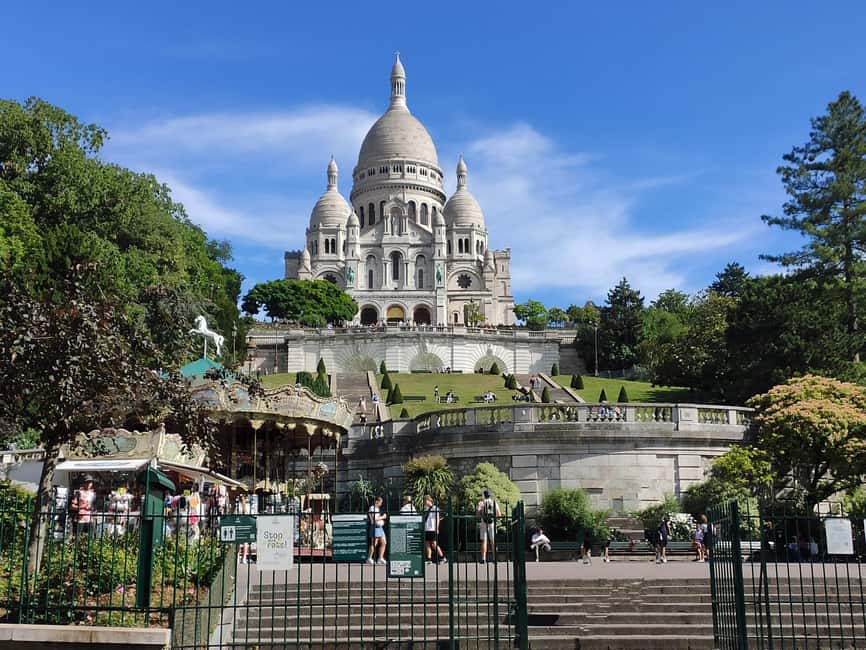
- Sacré-Cœur inside and out: you finish at the Basilica and get scenic views on the route upward
Montmartre’s art streets in a tight 2-hour format

Montmartre can feel like it’s doing too much: postcard corners, crowds, and hills that keep showing up when you least expect them. This tour is a smart antidote. It keeps you moving through the neighborhood’s highlights without turning it into a long day.
You’re paying for something practical: a guide who knows what to point out and where to stand. At $27 per person for a 2-hour, English-language guided walk, the value comes from packing in the key sights—while also helping you understand the why behind the scenery.
You should come in with two goals:
1) get your bearings in Montmartre, and
2) come away with a clear picture of what made this area a magnet for artists.
If that’s your vibe, this walk fits nicely. If you’re looking for an hours-long museum day, you’ll want to pair this with other plans for the rest of your time in Paris.
You can also read our reviews of more walking tours in Paris



Starting at Place Blanche: where the tour really begins
The meeting point is near Metro 2, Blanche, close to the Moulin Rouge. You’ll meet your guide at/near the exit of the metro station Blanche, and you can identify him by a green booklet and green badge.
That matters more than it sounds. Blanche puts you at the edge of the Montmartre story, where the neighborhood’s theatrical energy starts, before you climb into the quieter, more artsy lanes. You won’t waste time figuring out where to start or how to find the right streets.
Also, the tour is English, so you can relax and follow the story without straining through translations. The walk runs rain or shine, which is great—Paris weather doesn’t pause for good planning.
Moulin Rouge to Wall of Love: the quick-hit iconic start
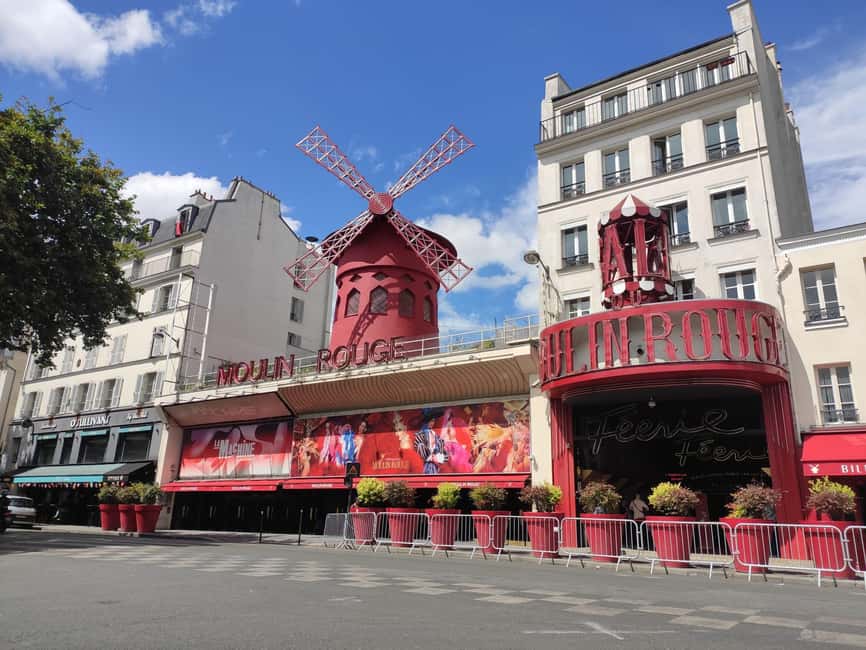
Right away, you’ll hit two of Montmartre’s most recognizable stops. The tour begins with the Moulin Rouge area, with a photo stop plus a short guided moment (about 10 minutes). Even if you know the building already from photos, you’ll learn what to notice beyond the facade.
Next comes the Wall of Love (Mur des Je T’aime). Like the Moulin Rouge, it’s a photo stop followed by a guided section (again, about 10 minutes). This is one of those locations where a local guide helps you read the details—what it represents, how it fits the neighborhood’s personality, and why it’s become part of Montmartre’s public art identity.
Two practical tips here:
- Bring your camera early. If you’re aiming for clean shots, you’ll want to catch these first while your footing is fresh.
- Watch for the guide’s positioning. These streets are narrow, and a good spot can be the difference between a postcard photo and a crowded blur.
Moulin de la Galette, Dalida statue, and La Maison Rose
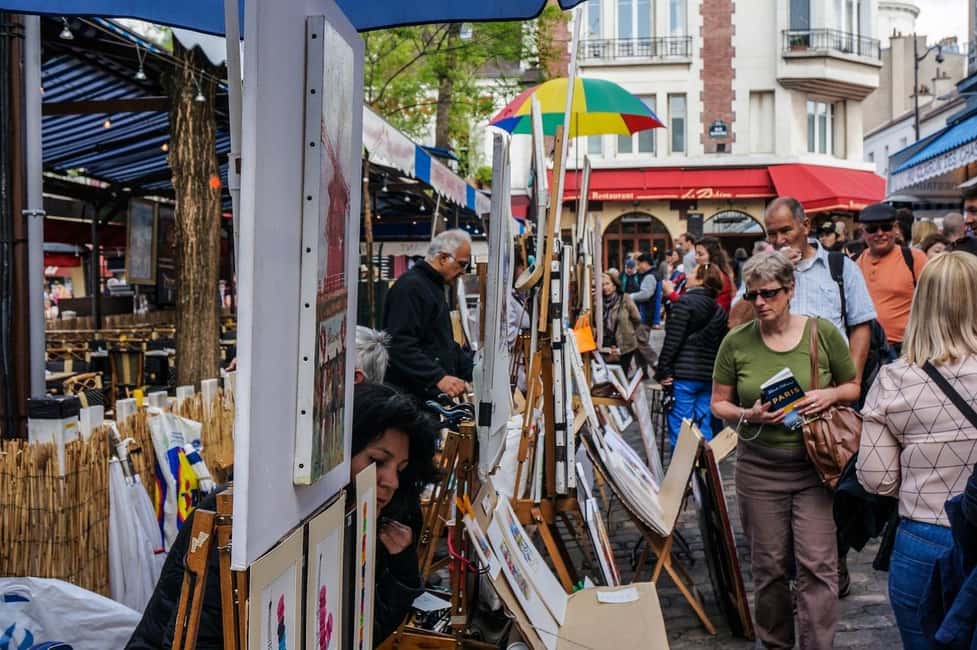
After the big names, the tour leans into Montmartre’s personality. You’ll move through more specific “you’d miss this alone” points that add texture to the neighborhood.
Expect a stop at Moulin de la Galette, again with a guided look (about 10 minutes). This is where Montmartre stops feeling like a theme and starts feeling like an actual place with layers—working life, leisure life, and the kind of everyday history that later artists latched onto.
Then you’ll see the Dalida statue, which is a nice reminder that Montmartre’s culture isn’t only painters and sketches. It’s also music, performance, and real people whose fame got connected to these streets.
You’ll also stop for La Maison Rose, a landmark known for its color and instant recognizability. It’s not just a pretty stop. A good guide uses these “easy to photograph” places to point out how the neighborhood keeps its identity even while it changes.
A small-but-useful note: at multiple stops, you’ll get guided time plus a photo moment. That’s great if you want photos, but also helpful if you’re the type who tends to look past details unless someone points them out.
Place du Tertre: the artist square with real atmosphere
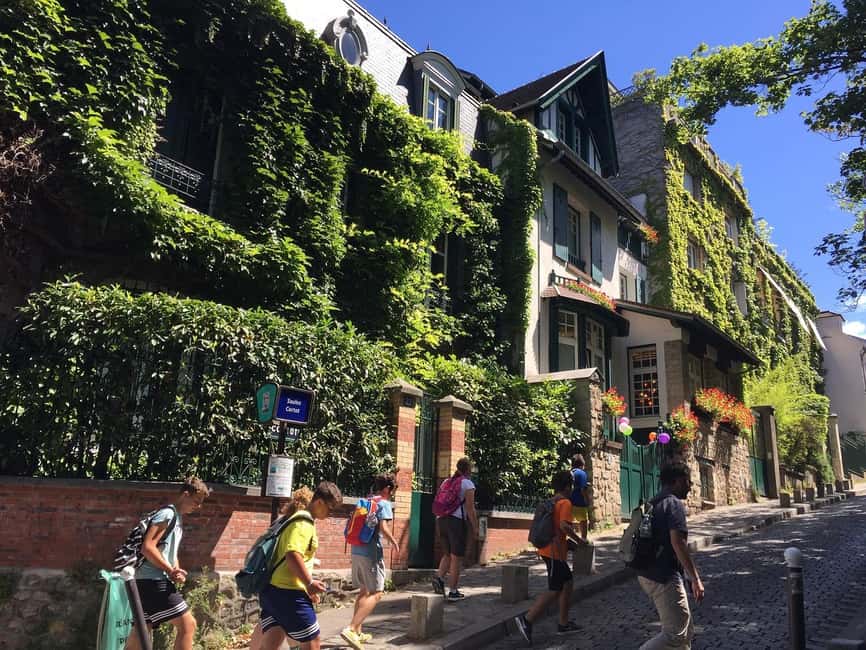
One of the tour’s biggest payoff moments is Place du Tertre, the famous square where you’ll see painters displaying their work. It’s a combination of photo stop and guided time, plus a short walk (about 10 minutes).
This is where Montmartre feels like Montmartre—literally. The energy here can be busy, because it is a magnet for artists and visitors. But with a guide, you’re not just trapped in the crowd. You get context for what you’re seeing and what makes this corner important historically and artistically.
What I like about this part is that you’re not forced to buy anything to get value. Even if you simply watch how artists set up and work, you’ll come away with a clearer picture of Montmartre as a working art scene, not only a backdrop.
You can also read our reviews of more guided tours in Paris






Sacré-Cœur: the route, the basilica, and the finishing view
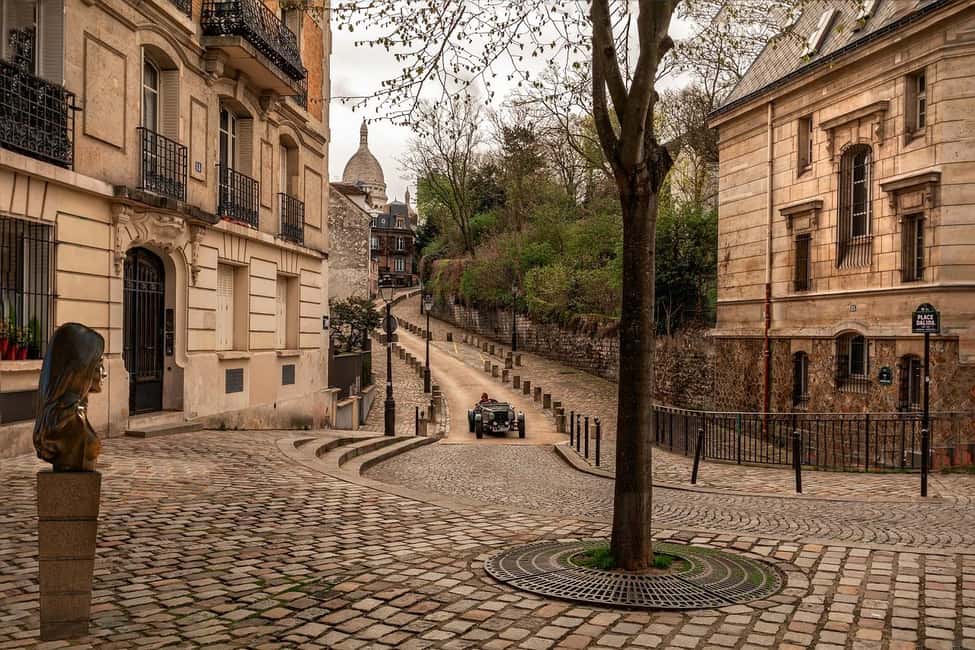
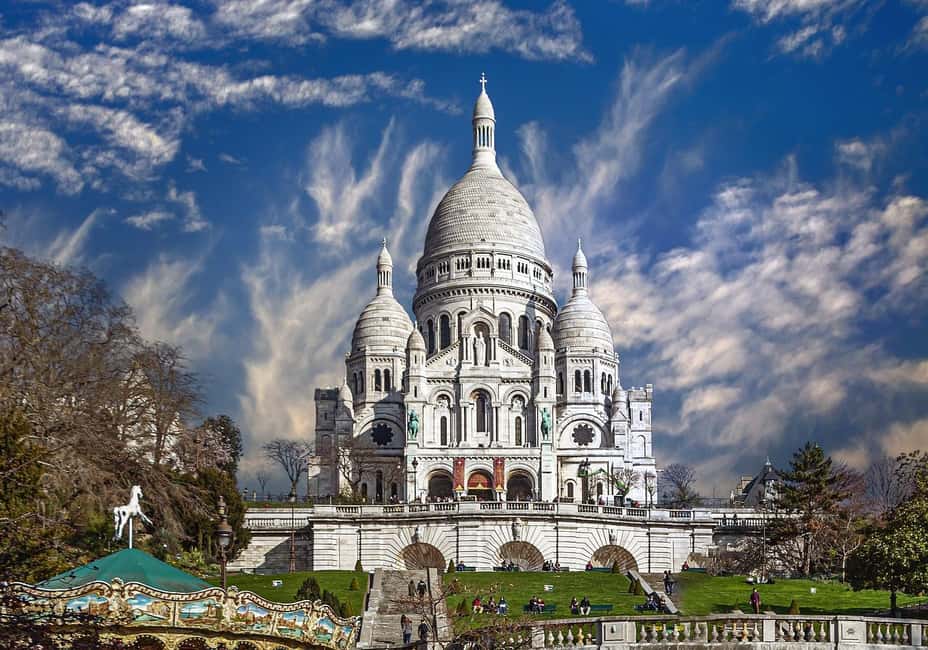
You’ll end at the Basilica of Sacré-Cœur. The tour includes both an outside photo stop and guided time, plus scenic views on the way. Then you finish by exploring outside and inside the basilica area.
This last stretch is the reason the tour works so well. Montmartre’s hills don’t just create a view—they create an experience. You feel the neighborhood changing as you climb, and the air at the top makes the effort worth it.
You’ll reach a panoramic point where you can see famous landmarks in the distance, including the Eiffel Tower, Notre Dame, and the Montparnasse Tower. That’s the moment to slow down. You’re not just taking photos; you’re mapping Paris in your head.
One detail you might notice: the route can take you in a way that reduces the amount of stair effort compared with tackling everything straight-on. In other words, you get the Sacré-Cœur payoff without turning the whole tour into a nonstop staircase workout.
The view toward Eiffel, Notre-Dame, and Montparnasse
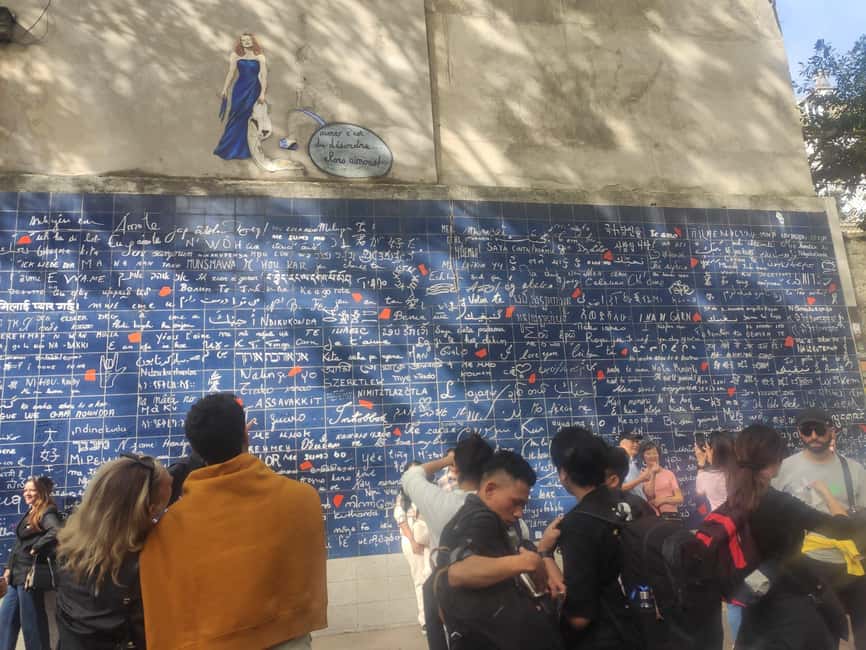
The best part of the Montmartre hill is what it lets you do mentally. Paris can look flat from street level. Up here, the city spreads out and landmarks line up in a way that makes them easier to recognize later.
On this tour, the viewpoint is part of the guiding plan. You’ll be pointed toward major landmarks as you look out, so you’re not guessing which spire is which. For first-timers, that kind of orientation is gold—especially when you’re planning the rest of your days in Paris.
If you want to maximize this part:
- Stay a moment longer than you think you need.
- Let your eyes adjust. The best “Oh, that’s it!” moments come after your first glance.
What walking feels like (and why shoes matter)
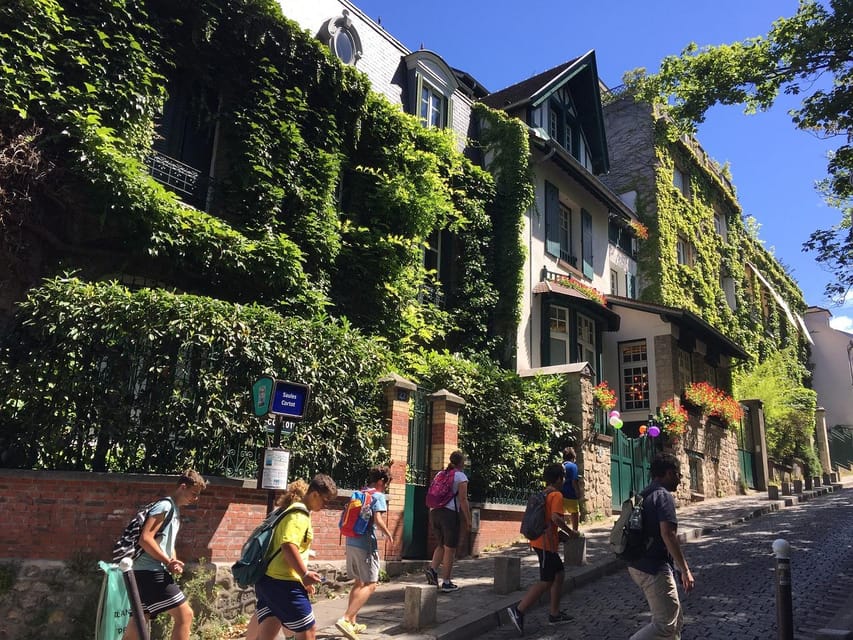
This tour runs about 2 hours, and you should plan for moderate climbs. Some parts are uphill, and you’ll be walking cobbled streets. That means footwear isn’t optional.
Here’s what you should do:
- Wear comfortable shoes with grip.
- If it’s wet, go slower on cobblestones.
- Bring a little patience for the hill. The route is designed for a guided flow, but physics still applies.
This is also why the tour is not suitable for wheelchair users or people with mobility impairments. The streets and elevation changes make that difficult.
That said, the pacing is a strength. In multiple experiences, the guide keeps things relaxed and responsive. People described the walk as not overly burdensome, with time built in for questions and pauses.
Local guide energy: how stories make the streets click

This isn’t just a list of famous places. The guide gives the connective tissue.
One guide name you’ll see connected to this tour is Samy (spelled in different ways across bookings). He’s known for using short, clear stories that help you connect famous painters and performers to the streets you’re actually standing on. The tour also calls out that famous artists such as Picasso and Van Gogh lived in this district, and the guide helps translate that fact into a sense of place.
You’ll also get something practical: photo help. Several participants noted the guide offered to take family photos and photographs during the walk. If you’re traveling as a family, that can save you the awkward “Who’s holding the camera?” routine.
A final bonus: you’ll likely get tips beyond Montmartre. Some guides share pointers for what to do next in Paris, and a few participants mentioned advice that went beyond the standard script.
Price and value: paying for guidance, not just stops
At $27 per person, this tour is priced for people who want value without turning Paris into a checklist of paid entries. You’re not paying for attractions tickets here; you’re paying for a guide to:
- route you through the neighborhood’s key spots,
- explain what you’re looking at,
- and manage the pacing so the whole thing feels doable.
The tour includes a walking guide and family photos. Food and drinks are not included, so plan to eat before or after.
Think of the price like this: the savings come from not trying to figure out Montmartre solo when your time is limited. Even if you could Google the sights, you’d still miss the “why this matters” layer that a good guide can provide while you’re on the move.
So who gets the best value?
- First-time visitors who want orientation.
- People who like art and culture but don’t want museum-heavy days.
- Families who want iconic stops without the stress of planning every turn.
Who should book this Montmartre tour
This walk is a strong fit if you want Montmartre in one concentrated hit. It’s especially good for:
- Art lovers who want the neighborhood’s painter and performer connections explained on the street.
- Photo-minded visitors who want smart stops rather than random wandering.
- Families who need pacing and help with group photos.
It may feel like work if you:
- can’t walk uphill comfortably,
- need wheelchair access,
- or dislike cobblestones and uneven pavement.
Should you book this Montmartre walking tour?
Yes, if you want a guided, efficient introduction to one of Paris’s most iconic neighborhoods—without losing a whole day. The route hits the right emotional notes: theatrical start, public-art stops, artist-square atmosphere, then Sacré-Cœur with wide views over the city.
Book it if:
- you’re in Paris for a short stay,
- you want the Eiffel Tower and Notre-Dame view moments explained and timed,
- and you appreciate a guide who helps you notice details instead of just pointing at buildings.
Skip it (or choose a different plan) if:
- hills are a major problem for you,
- you need step-free routes,
- or you’d rather spend your time seated and museum-focused rather than walking streets.
If you’re ready for a two-hour Montmartre story on foot, this is one of the easiest ways to make the neighborhood make sense fast.
FAQ
How long is the Montmartre walking tour?
The tour lasts about 2 hours.
Where do I meet the guide?
Meet your guide near the exit of Metro station Blanche (Metro 2), near the Moulin Rouge. Look for a green booklet and a green badge.
Where does the tour end?
The tour finishes at the Basilica of the Sacred Heart (Sacré-Cœur) of Paris.
Is the tour in English?
Yes, the live tour guide speaks English.
What are the main stops on the route?
You’ll visit or stop near Moulin Rouge, Wall of Love, Moulin de la Galette, Dalida Statue, La Maison Rose, Place du Tertre, and Sacré-Cœur Basilica.
Is food or drinks included?
No. Food and drinks are not included.
What should I bring?
Wear comfortable shoes for walking, including some uphill sections.
Does the tour run in rain?
Yes, it runs rain or shine.
Is this tour suitable for wheelchair users or limited mobility?
No. It is not suitable for people with mobility impairments or wheelchair users.
Is there a cancellation option?
Yes. Free cancellation is available up to 24 hours in advance for a full refund.
Can I reserve without paying right away?
Yes. You can reserve now and pay later to keep your plans flexible.