REVIEW · PARIS
Le Marais District & Jewish Quarter – Exclusive Guided Walking Tour
Book on Viator →Operated by Babylon Tours Paris · Bookable on Viator
Marais history feels close enough to touch. This guided walk threads together Le Marais and the Jewish Quarter with clear, stop-by-stop context, from the Jesuit-built St-Paul-St-Louis church to the modern pop of Centre Pompidou. I especially like how the stories explain why this neighborhood matters, not just what you’ll see.
I also really like the 2.5-hour pacing. You move at a comfortable walking tempo, with time set aside for big-name landmarks like Place des Vosges, plus the smaller street details that make the Marais feel real.
One consideration: plan for mostly outside views. Synagogues aren’t included, and security limits some interior access at certain sights—so you’ll rely on the guide’s commentary for the deeper layers.
In This Review
- Key Things I’d Prioritize on This Walk
- Le Marais and the Jewish Quarter: Why a Walk Beats a Map
- Saint-Paul-Saint-Louis Church: Jesuits, Rome, and Paris History in One Start
- Hôtel de Sully Courtyard and Place des Vosges: Royal Paris in Public View
- Pletzl and Rue des Francs Bourgeois: The Jewish Quarter’s Everyday Streets
- Musée Carnavalet (Hôtel Carnavalet) and the Marais Mansion Texture
- Rue des Rosiers and Jardin des Rosiers: Memory Between Storefronts
- Centre Pompidou and Hôtel de Ville: Modern Art Meets City Administration
- Value, Duration, and What to Expect From the 2.5-Hour Format
- Who This Tour Suits Best, and Who Might Want a Different Plan
- Should You Book This Le Marais District & Jewish Quarter Tour?
- FAQ
- How long is the Le Marais District & Jewish Quarter tour?
- What language is the tour offered in?
- Is the tour private?
- Does the tour include entry into synagogues?
- Are there admissions included for the major stops?
- Will the tour run if it rains?
- Where do I meet the guide?
- Is hotel pickup or drop-off included?
- What should I bring to make the walk easier?
- What if national celebrations affect the route?
Key Things I’d Prioritize on This Walk
- A focused route through Marais + Jewish Quarter: You get the neighborhood’s main beats in one go.
- Royal Paris to modern Paris: You’ll connect Place des Vosges, Hôtel de Ville, and Centre Pompidou.
- Landmarks you can actually picture later: Saint-Paul-St-Louis, Hôtel de Sully courtyard, Jardin des Rosiers, and more.
- Most admissions are free, but two museum entrances aren’t: Musée Carnavalet and Centre Pompidou are pass-bys.
- You won’t enter synagogues: Security restrictions mean no synagogue visits.
- Strong guide energy: Many past groups named guides like Eden, Hugo, Alasdair, François, Adrian, Agustina/Augustina, and Christine and praised clarity and organization.
Le Marais and the Jewish Quarter: Why a Walk Beats a Map
The Marais is the kind of Paris neighborhood that looks simple until you start paying attention. Then it stops being “shops and squares” and turns into a timeline you can walk through—nobility, faith, immigration, war, and reinvention all showing up in stone, street plans, and place names.
This tour is built for that shift. Instead of bouncing randomly, you follow a route that links major monuments with the smaller streets that explain how people lived. The Jewish Quarter focus matters too. You spend time around the Pletzl area and Rue des Rosiers, then connect the past to what you still see today—street level history, not just museum history.
And you’re not doing it at a sprint. The structure is tight but not rushed: around 10 minutes per main stop, with enough time to look up, notice details, and hear the story before you move on. For first-time Marais visitors, it’s a fast way to get your bearings. For repeat visitors, it’s a way to notice what you previously walked past.
You can also read our reviews of more walking tours in Paris



Saint-Paul-Saint-Louis Church: Jesuits, Rome, and Paris History in One Start
You begin at the 17th-century Eglise Saint-Paul Saint-Louis, built by the Jesuits with design inspiration tied to the Gesù in Rome. That alone sets the tone: the Marais isn’t only local; it’s part of a wider European story about religion, architecture, and influence.
What I like about starting here is that it gives you a reference point for how the neighborhood has always been shaped by big ideas coming from elsewhere. The Jesuit link helps you understand why Paris buildings in this period can feel both French and international at the same time.
Even though you won’t spend ages inside (free admission is mentioned, but some interiors may be limited), you still get the value: the guide’s commentary helps you look at the church with a historian’s eye. Think of it as learning the accent before you start listening to the whole conversation.
Practical note: churches often work best when you slow down just a little. Have a moment of quiet attention when you arrive, and you’ll pick up more from the talk.
Hôtel de Sully Courtyard and Place des Vosges: Royal Paris in Public View
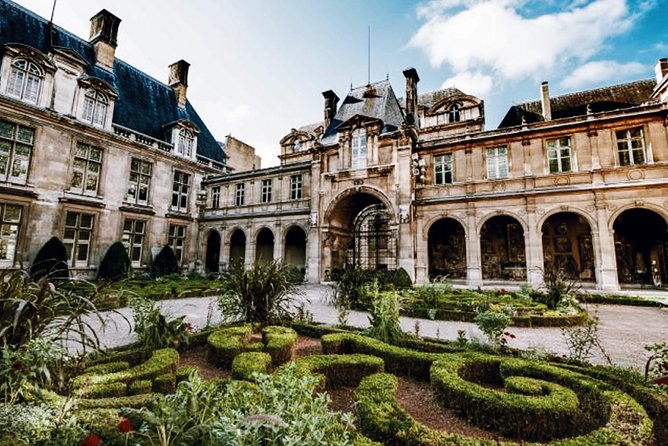
Next up is the Cour et jardin de l’Hotel de Sully, tied to a Renaissance-style mansion built between 1624 and 1630, with Baroque elements. You get the building’s “why it looks like that” explanation, including the architects Jean 1er Androuet du Cerceau and Yves Boiret.
This is one of those stops where the Marais does its best work: a grand residence feel, but within a neighborhood texture that stays walkable. You’re not just seeing a pretty facade. You’re learning how power used to live, and how those spaces still shape what you see today when you stroll the streets.
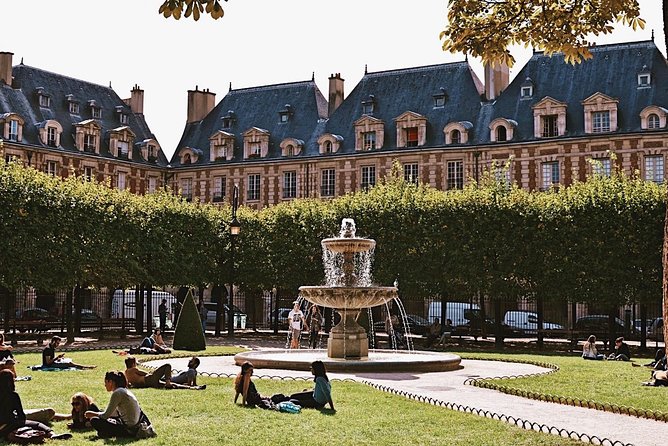
Then comes Place des Vosges, the oldest planned square in Paris. It’s famous for a reason. Even if you know the spot, it’s still worth it because a guided story turns the square into something more than postcard-perfect symmetry. You can actually “read” the intention—how planned space supported a certain kind of civic and social life.
If you’re someone who normally skips squares because you think you already know them, this stop can change your mind. It gives you the anchor you need before the tour shifts toward community history.
Pletzl and Rue des Francs Bourgeois: The Jewish Quarter’s Everyday Streets
After you’ve got your royal anchor, the walk starts moving through a different kind of Paris. The tour spends time in the Jewish Quarter area, including the Pletzl—a key part of why the Marais became known for Jewish community life in the 18th and 19th centuries.
This is where you’ll notice the difference between seeing a place and understanding it. You’re walking through a neighborhood that has layers of meaning in the street plan itself. The guide’s background helps you connect why the community mattered historically, and how that footprint shows up in the area’s rhythm and shops.
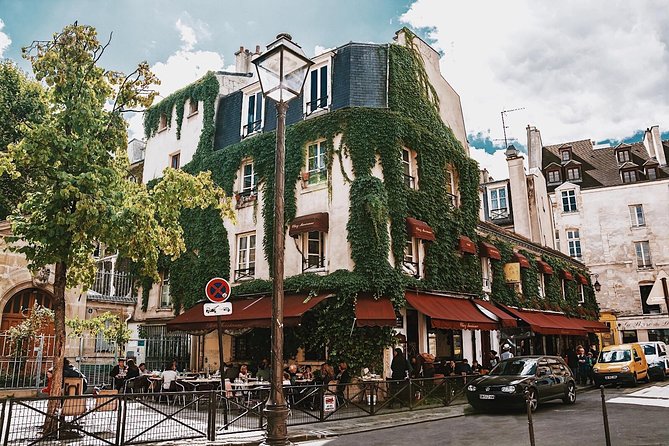
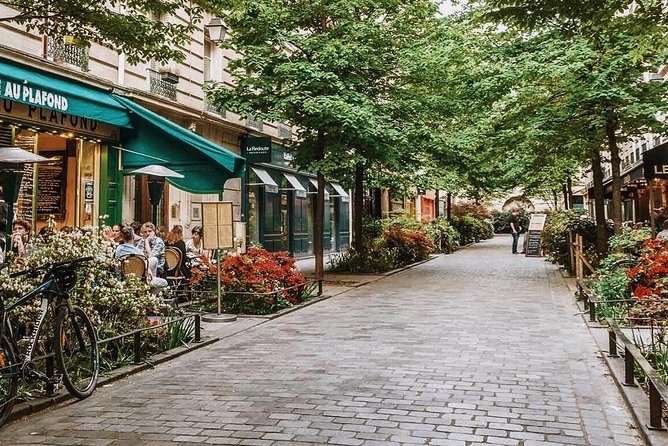
Then you head along Rue des Francs Bourgeois, known for its trendy fashion boutiques. That street name matters. It’s not only about shopping; it’s about the Marais’s evolution from noble homes to a modern style district. The guide’s job here is to help you keep both ideas in view at once: people, power, and commerce.
One small drawback you might feel: if you’re shopping-happy, it’s easy to get distracted by storefronts. That’s not a problem, but it means you should use the guide’s commentary as your “stay focused” tool. Listen first, then look. That order makes the walk far more rewarding.
Musée Carnavalet (Hôtel Carnavalet) and the Marais Mansion Texture
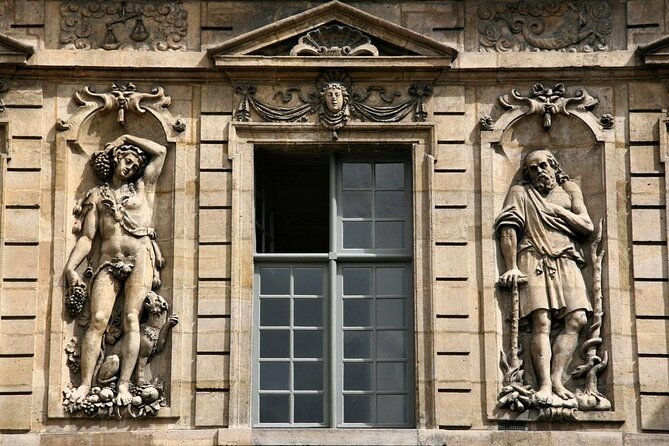
You’ll pass the Hôtel Carnavalet and see Musée Carnavalet as part of the story of Paris itself. It’s described as a rare example of Renaissance architecture in Paris, along with the museum highlighting the city’s past.
Here’s the value even if you don’t enter: the Marais is full of mansion architecture—structures built for status, then repurposed over time. When you see those buildings with a guide’s context, you start spotting the patterns that make the neighborhood feel coherent rather than random.
The museum admission is not included. That matters because it keeps the walk from turning into a long indoor detour. Instead, you get a chance to connect the architecture to what you’ll learn if you later choose to go inside on your own schedule.
If you’re the type who likes to go deep later, this stop is a smart tease. If you prefer everything included, you might want to plan a separate museum visit during your spare time. Either way, you’re better informed about where to put your next hour.
You can also read our reviews of more guided tours in Paris






Rue des Rosiers and Jardin des Rosiers: Memory Between Storefronts
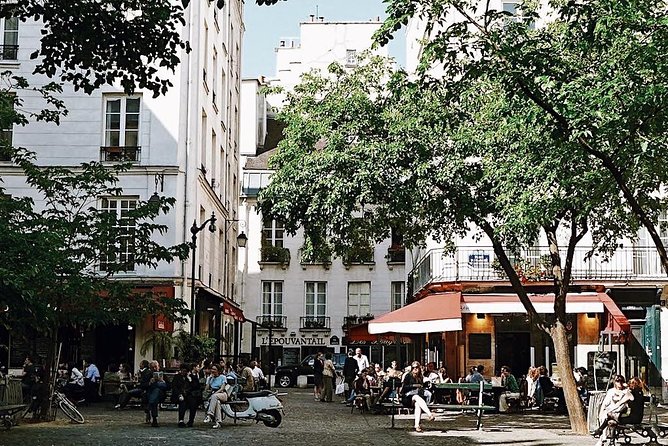
The tour then shifts into Rue des Rosiers, described as a central street within the Jewish Quarter. This is the kind of street where you’ll feel the neighborhood’s current life, while the guide anchors it to the past.
From there, you reach the Jardin des Rosiers – Joseph-Migneret, a small garden tucked between hotels and hidden behind boutiques. That detail is the whole point. You can be walking quickly and miss it completely—unless someone points it out.
What makes this garden especially meaningful is the name Joseph Migneret, a school principal who helped dozens of students by hiding them in his home during World War II, and who was eventually arrested and killed. That turns a tiny green space into a serious place to pause.
If you’re traveling with teenagers or friends who think gardens are just for photos, this stop can change the mood fast. It’s quiet, but it carries weight. You get an example of how history in Paris isn’t only in monuments; it can also live in narrow gaps between regular life.
Centre Pompidou and Hôtel de Ville: Modern Art Meets City Administration
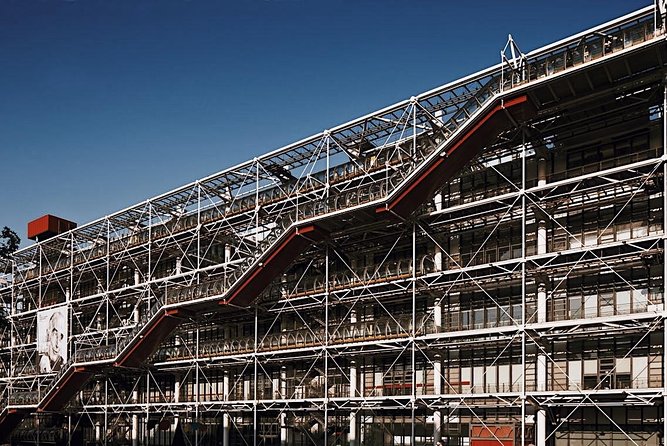
Near the end, you’ll pass Centre Pompidou, the contemporary museum known for its high-tech exterior style. The idea is described as bringing different forms of art and literature together, tied to plans associated with France’s first Minister of Cultural Affairs.
Even though museum entry is not included, the Pompidou exterior is still a payoff. It’s one of the biggest “visual pivots” in the whole route. The Marais becomes a background for something loud and experimental, which is exactly how the city works: old blocks, new impulses.
Then you end at Hôtel de Ville, Paris city hall, noted as municipal headquarters since 1357. That ending makes sense because it returns you to how Paris organized itself—government, civic identity, public space. A city hall isn’t just administrative. It’s part of the story of who counted and how decisions were made.
Just next to it, you catch a glimpse of Église Saint-Gervais-Saint-Protais, described as the first example of the French Baroque style in Paris, now associated with the Monastic Fraternities of Jerusalem. This final cluster is great for photos, but it’s also great for context. You finish knowing how the Marais connects to the wider functioning of Paris, not only its charm.
Value, Duration, and What to Expect From the 2.5-Hour Format
At about 2 hours 30 minutes, this is a strong “one-guided-block” plan. You get a tight slice of central Paris without spending your day indoors. Most stops are free-admission by design, while Musée Carnavalet and Centre Pompidou are noted as not included for admission—meaning you’re seeing them as part of the route rather than spending extra time ticketing.
The price is $59.69 per person. For me, the key value isn’t the number of landmarks. It’s the way the guide stitches them together: how noble residences connect to a planned square, how that square connects to community life, and how that all leads into a modern cultural symbol and back to city governance. If you’ve ever walked the Marais and thought, I’m seeing beauty, but I don’t know the storyline, this helps solve that.
I also like that it’s designed to run rain or shine. Paris weather can be unpredictable, and a tour that keeps moving in bad weather is more useful than one that collapses. Just dress for it. Even a great guide can’t stop you from getting annoyed in wet shoes.
If your group wants a little more exclusivity, there’s also a private experience option. Many praised guides by name—Eden, Hugo, Alasdair, François, Adrian, Agustina/Augustina, Christine—often highlighting organization, clarity, and how easily they kept groups moving, even on tough days like Christmas or during rain.
Who This Tour Suits Best, and Who Might Want a Different Plan
I’d book this if you want to understand the Marais quickly and responsibly, with a strong focus on the Jewish Quarter and the historical meaning behind the streets. It’s especially useful if you plan to do other Marais wandering afterward, because the walk gives you the landmarks you’ll use as mental anchors.
It also fits well if you care about architecture and place names, but you don’t want to spend a day bouncing between multiple museums. You’ll see important buildings, including Renaissance-era Hôtel Carnavalet style, Renaissance + Baroque elements at Hôtel de Sully, and the contrast of high-tech Pompidou.
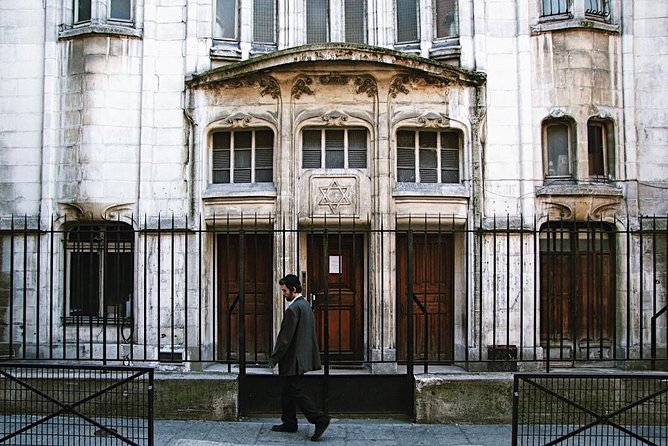
If you’re hoping for synagogue interiors, adjust your expectations now. Synagogue entry isn’t included, and access is restricted for security reasons. Some other sites can also limit interior access. You’ll get context and exterior access, not a closed-door spiritual tour.
Should You Book This Le Marais District & Jewish Quarter Tour?
Yes—if your priority is a structured, meaningful walk that makes the Marais make sense. With a 4.9 rating and about 98% recommending it, this is the kind of tour where people felt they got real value for their time.
Book it especially if:
- you want both Marais landmarks and Jewish Quarter context
- you prefer a guide that explains architecture and street history in plain language
- you’re okay with outside viewing over synagogue entrances
Skip it or pair it differently if:
- you’re specifically chasing inside museum hours at Musée Carnavalet or Centre Pompidou
- you want synagogue interior visits (not part of this route)
If you want to walk away feeling you truly understand this neighborhood—why it formed, how communities shaped it, and what the city signals when it builds new things next to old ones—this tour is a very solid bet.
FAQ
How long is the Le Marais District & Jewish Quarter tour?
It’s about 2.5 hours.
What language is the tour offered in?
It’s offered in English.
Is the tour private?
The experience notes a private walking tour where only your group participates. There’s also an option labeled semi-private, which may not apply to the private-only setup.
Does the tour include entry into synagogues?
No. Synagogue access is restricted for security reasons, and the tour does not include entry into any synagogues.
Are there admissions included for the major stops?
Many stops are listed as free admission, but Musée Carnavalet and Centre Pompidou are noted as admission not included.
Will the tour run if it rains?
Yes, the tour will run rain or shine.
Where do I meet the guide?
The start is Saint-Paul 75004, Paris. The tour ends in the Le Marais area.
Is hotel pickup or drop-off included?
No. Hotel pickup and drop-off are not included, and Uber or taxi is recommended.
What should I bring to make the walk easier?
Bring comfortable shoes and a bottle of water. The notes also suggest an umbrella for rain and a hat during summer.
What if national celebrations affect the route?
If national celebrations change the route, the tour uses an alternative route still aiming to see the highlights. The notes say refunds or discounts aren’t provided in those cases.