REVIEW · STRASBOURG
From Strasbourg: 3.5-Hour Bike Tour to Kehl
Book on GetYourGuide →Operated by Cyclorama · Bookable on GetYourGuide
The best part of this Strasbourg bike tour is that it turns a city visit into a small international journey. In 3.5 hours, you pedal from historic streets and grand imperial avenues across the Rhine into Kehl, Germany, then return along the river.
I like the broad city overview, from Petite France and the cathedral to the European institutions. I also like the cross-border stretch through the Jardin des Deux Rives, where the French-German border feels like a garden path rather than a hard line on a map.
The main consideration is the distance. You cover about 10 miles, or 16 kilometers, so you need to be comfortable riding a bicycle for several hours. The route uses good bike paths, but this is still an active tour, not a gentle sightseeing ride with frequent stops.
In This Review
- Key points to know before you book
- Starting at Place d’Austerlitz
- Petite France, Pont du Corbeau, and the cathedral
- Neustadt and the imperial side of Strasbourg
- The European Parliament and Parc de l’Orangerie
- Following the Rhine to the French-German border
- A refreshment stop in Kehl
- Returning through Strasbourg’s old defenses
- How demanding is the 3.5-hour ride?
- What makes the guide important
- Is $56 a fair price?
- Who should book this Strasbourg to Kehl bike tour?
- Should you book it?
- FAQ
- Where does the bike tour begin?
- Where does the tour end?
- How long is the tour?
- How far do you cycle?
- Which languages are available?
- Are food and drinks included?
Key points to know before you book
- Cross the Rhine by bicycle: Ride over Pont de l’Europe from Strasbourg into Kehl, Germany.
- See Strasbourg’s major sights efficiently: The route includes Petite France, Notre-Dame Cathedral, Place Broglie, Neustadt, and the European district.
- Ride roughly 16 kilometers: Plan for a real half-day outing, with cycling between stops.
- Pause in a German beer garden: Food and drinks are not included, but there is time to stop for refreshments.
- Meet at Place d’Austerlitz: The tour begins and ends in front of Cafe la Pépinière.
- Choose your language: A live guide leads the tour in English, French, or German.
Starting at Place d’Austerlitz

Your ride begins in front of Cafe la Pépinière at 10 Place d’Austerlitz, a useful location near the southern edge of Strasbourg’s historic center. The opening stop gives you a quick orientation before you set off, and Place d’Austerlitz itself is presented as Strasbourg in miniature.
That is a smart start. You get a sense of the city’s shape before covering it by bicycle, which helps the later streets and neighborhoods make more sense. Since the tour ends at the same place, you do not need to arrange a separate return transfer or figure out where to leave the bike.
The bike rental is included in the $56 price. Food and drinks are not, so bring some water and budget separately for the refreshment stop in Kehl. The tour is offered at various starting times, so check the schedule carefully when booking.
You can also read our reviews of more cycling tours in Strasbourg

Petite France, Pont du Corbeau, and the cathedral
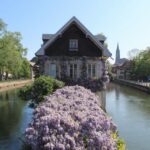
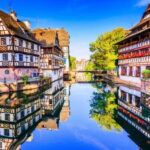
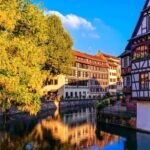
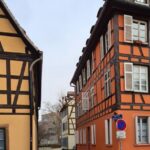
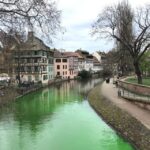
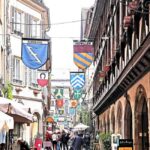
The first major part of the route takes you through several of Strasbourg’s most recognizable quarters. You ride through Petite France, the old town district known for its canals, bridges, and close-set historic streets.
A bicycle is a fine way to see this area, though you should expect a slower pace in narrow sections. The guide can point out details that are easy to miss when you are walking with your attention fixed on the next major sight. At the same time, the route does not give you unlimited time at each stop, so this is an introduction rather than a full visit to every monument.
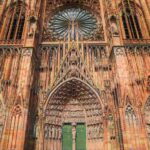
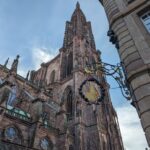
You cross Pont du Corbeau and continue toward Place Gutenberg. From there, the route arrives at Cathédrale Notre-Dame de Strasbourg, one of the city’s essential sights. Seeing the cathedral as part of a moving city tour gives you useful context, but remember that the focus is cycling around Strasbourg, not an interior cathedral visit.
The ride also takes you through the smallest streets near the cathedral and toward Place Saint-Etienne. This is one of the more appealing details of the route. Instead of staying only on the obvious sightseeing circuit, you get a look at quieter corners close to the center.
Neustadt and the imperial side of Strasbourg

The tour also passes through Neustadt, the imperial district laid out during the period when Strasbourg was under German rule. Its broad avenues and formal architecture contrast with the tighter medieval streets around Petite France and the cathedral.
This change of scale is one reason the bicycle works well here. You can cover the longer avenues without spending much of the day walking between sights, while still stopping when the guide has something useful to show you. The contrast between old Strasbourg and Neustadt gives you a clearer idea of how the city grew and changed.
Place Broglie adds another major urban view, with the opera house among its landmarks. You will not be sitting through a performance, of course, but the square helps connect Strasbourg’s civic, cultural, and architectural sides.
The route is not just a list of monuments. It moves between different parts of the city, letting you compare the old town, imperial district, institutional quarter, and riverfront. That variety is the main value of the experience.
The European Parliament and Parc de l’Orangerie
After the central districts, you cycle toward Strasbourg’s European institutions. The route includes the European Parliament, the Council of Europe, and the European Court for Human Rights.
These buildings represent Strasbourg’s modern role as a European political center. They also make a useful counterpoint to the cathedral and medieval streets. You see how the city functions today, not just how it looked in earlier centuries.
This section is particularly helpful if you are curious about Strasbourg beyond its old town. The institutions are spread out from the historic center, and reaching them by bicycle makes the distance feel manageable. You get an overview without spending time on public transport or walking a long route between districts.
The route then reaches Parc de l’Orangerie, where the pace can feel more open and relaxed. The park provides a breath of fresh air after the tighter streets and city traffic. It is also a practical point in the itinerary because the ride is not limited to buildings and squares. You get a green break before heading toward the Rhine.
The exact amount of time spent at each place can vary with the group and guide. When Jean leads, his approach is particularly focused on sharing local facts while keeping the ride moving. The tour is offered in English, French, and German, so confirm your preferred language when you reserve.
Following the Rhine to the French-German border
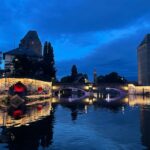
The most distinctive stretch comes as you ride toward the Jardin des Deux Rives, or Garden of the Two Banks. This cross-border park lies along the Rhine and connects Strasbourg with Kehl through gardens and paths.
The setting gives the border crossing a light, everyday feel. You are not simply being shown a line between two countries. You are riding through a shared public space and then crossing the river by bicycle over Pont de l’Europe.
That cross-border moment is the heart of the experience. Many Strasbourg tours remain within France, while this one gives you a short taste of Germany without requiring a separate day trip. The change is simple but memorable: French streets and institutions give way to the river, the bridge, and Kehl’s typical architecture.
You should not expect an exhaustive tour of Kehl. The German side is a shorter part of the route, but it adds a useful second perspective to the city visit. It also makes the ride feel like more than a standard circuit of Strasbourg’s main sights.

A refreshment stop in Kehl
The tour includes a stop at a beer garden in Kehl, where you can purchase refreshments. This is a welcome pause after the ride across the city and toward the Rhine, especially on a warm day.
Because food and drinks are not included, bring payment for anything you want at the stop. The pause is also a reminder that the outing has an active rhythm. You are not being driven between attractions, and the break gives your legs a chance to rest before the return ride.
The refreshment stop is best viewed as a chance to enjoy the setting rather than a meal included in the tour price. If you need a substantial lunch, plan that separately before or after the activity.
Returning through Strasbourg’s old defenses
After Kehl, you cross back toward Strasbourg and return to Place d’Austerlitz. The final section includes a piece of the 14th-century city wall on Rue du Fossée des Orphelins.
This is a fitting finish because the route has taken you through several layers of Strasbourg: medieval defenses, old-town streets, imperial planning, modern European institutions, and a contemporary cross-border park. You get a compact picture of the city’s past and present without staying in one neighborhood all morning.
The return to the original meeting point keeps the logistics simple. Once the bikes are handed back, you are again near the historic center, making it easy to continue exploring on foot.
How demanding is the 3.5-hour ride?
The tour covers about 16 kilometers, or 10 miles. That is not an extreme distance for a regular cyclist, but it is too much to treat as a casual stroll with occasional pedaling.
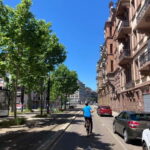
You should be comfortable riding a bicycle and handling normal city cycling conditions. The route follows Strasbourg’s strong bike-path network, and one rider specifically noted that cars were friendly toward cyclists and allowed them to pass. Still, traffic conditions can vary, and you should remain alert at crossings, bridges, and busier streets.
The tour is only suitable for people with bike-riding experience. It is not described as an outing for complete beginners, and the duration means you need enough stamina to keep riding between sightseeing stops.
Wear clothes you can pedal in and shoes that stay secure on the pedals. Since the route includes outdoor sights and a riverside section, check the weather before setting out. The tour provider supplies the bike, but the supplied information does not specify bike types, helmets, child seats, or electric-bike options, so ask directly if any of those details matter to you.
What makes the guide important
A good guide matters on a city bike tour because the route itself is only half the experience. You need someone who can explain what you are seeing without stopping the group every few minutes or turning the ride into a lecture.
Jean is described as a passionate guide who shares many facts about Strasbourg and takes the group through several neighborhoods. That combination suits this itinerary. The route is broad, and a guide adds the connections between places that might otherwise feel like separate stops.
The available languages are English, French, and German. This makes the tour practical for a mixed-language destination and gives you a better chance of asking questions in the language you prefer.
Keep in mind that the experience can feel different depending on who leads your departure. The strongest fit is someone who enjoys learning while moving, rather than someone seeking a long, detailed talk at each monument.
Is $56 a fair price?
At $56 per person, the price is reasonable if you want both bike rental and a guided overview of Strasbourg. You are covering a large portion of the city, reaching the European district, crossing into Germany, and returning to the center in 3.5 hours.
The value is strongest early in your stay. This ride can help you understand the city’s layout and show you which areas deserve a longer visit later. You also avoid renting a bicycle separately and planning a safe route to Kehl on your own.
The price is less attractive if you only want to see the cathedral and Petite France. Those areas can be explored on foot, and this tour moves beyond them partly because the cross-border route is a central feature.
The beer garden stop does not include food or drinks, and no meals or other entry fees are listed as included. Think of the $56 as payment for the bicycle, the guide, the route planning, and the time saved connecting distant districts.
Who should book this Strasbourg to Kehl bike tour?
I would recommend it to a confident cyclist who wants a wide-angle introduction to Strasbourg rather than a slow walking tour focused on one historic quarter. It suits couples, friends, and solo visitors who like seeing a city under their own power.
It is especially useful for first-time visitors with limited time. In one morning or afternoon, you can see the old town, Neustadt, the European institutions, Parc de l’Orangerie, the Rhine, and Kehl.
It may not suit you if you dislike cycling, have limited stamina, or want long unhurried visits inside museums and monuments. The tour does not list museum entries, cathedral admission, or extended interior visits. Its appeal is the route itself and the variety of places connected along the way.
Free cancellation up to 24 hours before the activity and a reserve-now, pay-later option make it easier to fit into a changing schedule. Still, check the available departure times and confirm the language before you book.
Should you book it?
Book this tour if you can comfortably ride 16 kilometers and want Strasbourg presented as a living border city, not just a collection of pretty old streets. The ride to Kehl, the crossing over the Rhine, and the stop at the Jardin des Deux Rives give it something different from a standard city circuit.
Skip it if you need a fully relaxed pace or prefer indoor sightseeing. For an active visitor, though, the combination of major landmarks, European institutions, and a French-German border crossing offers solid value at $56, with the added benefit of a guide who can give the neighborhoods a local shape.
FAQ
Where does the bike tour begin?
The tour begins in front of Cafe la Pépinière at 10 Place d’Austerlitz, 67000 Strasbourg, France.
Where does the tour end?
The activity ends back at the meeting point at Place d’Austerlitz.
How long is the tour?
The tour lasts approximately 3.5 hours.
How far do you cycle?
The route covers about 10 miles, or 16 kilometers.
Which languages are available?
The live guide leads the tour in English, French, or German.
Are food and drinks included?
No. Bike rental is included, but food and drinks are not. You can stop for refreshments at a beer garden in Kehl.