REVIEW · COLMAR
From Colmar: 3 Villages in France, Germany, and Switzerland
Book on GetYourGuide →Operated by ALSACE ORIGINAL EXPERIENCES · Bookable on GetYourGuide
In one well-packed day, you cross three national borders and see three very different towns: Freiburg in Germany, Basel in Switzerland, and Eguisheim in France. The clever part is the contrast. You get a German cathedral square, a Swiss riverside city, and an Alsatian village of colored houses without changing hotels or figuring out regional transport.
I like the small group of no more than seven and the comfortable air-conditioned minivan. I also like the guides, especially Didier and Laura, who are repeatedly praised for clear explanations, safe driving, patience, and a relaxed pace. The main drawback is time: this is an overview tour, so Basel and Eguisheim may leave you wishing for a longer visit.
In This Review
- Key points at a glance
- Why this route works from Colmar
- The quiet first glimpse of Neuf-Brisach
- Freiburg: cathedral, market, and sidewalk channels
- Basel: two halves divided by the Rhine
- Eguisheim: the day’s prettiest finish
- The guides make the difference
- What the minivan and group size mean
- Is $163 a good value?
- Who should book this day trip?
- Booking details worth knowing
- Should you book it?
- FAQ
- How long does the tour last?
- Where does the tour begin and end?
- Which countries does the tour visit?
- Which places are visited?
- Is Neuf-Brisach a full sightseeing stop?
- What languages are available?
- How many people can join the group?
- Is food included?
- Do I need a passport?
- Is the tour suitable for wheelchair users?
Key points at a glance
- Three countries in eight hours: Start and finish in Colmar, with France, Germany, and Switzerland covered in one day.
- Freiburg’s unusual cathedral: See the distinctive cathedral and surrounding market area, then explore the old streets and their open water channels.
- Basel beside the Rhine: Walk through Great Basel, with medieval lanes, bridges, cathedrals, and views over the rushing river.
- Eguisheim’s circular plan: Wander a French village built in concentric rings around a central square.
- Guides who shape the day: Didier and Laura are praised for regional knowledge, humor, kindness, and careful driving.
- A useful regional primer: At $163 per person, this works best as a broad first look rather than a substitute for full days in each town.
Why this route works from Colmar
The Upper Rhine region makes a three-country day possible because the borders are close together. From Colmar, you move through Alsace, Baden-Württemberg, and the Basel area with relatively little travel between major stops.
That geography is the real attraction. Instead of seeing three places that feel alike, you notice small shifts in architecture, language, public spaces, shopping, and city life. The experience gives you a practical sense of how France, Germany, and Switzerland meet in this corner of Europe.
Your pickup is arranged in Colmar at a selected meeting point or, where available, at your accommodation. Listed pickup points include Starbucks Café, Colmar Railway Station, and the area in front of Hotel Bristol. If your address is too far from a pickup location, you are advised to contact the provider before booking.
The day lasts eight hours, usually taking you out in the morning and returning you to Colmar in the late afternoon. Since food and drinks are not included, bring money for a meal or snacks. Bottled water is provided.
You can also read our reviews of more tours and experiences in Colmar.

The quiet first glimpse of Neuf-Brisach
The route passes by Neuf-Brisach, a fortified village and UNESCO World Heritage site dating from the late 17th century. This is an important bit of context for the day, but you should not expect a full sightseeing stop there.
Think of Neuf-Brisach as an opening view into Alsace’s military past. You see how carefully planned defensive settlements shaped the region, then continue toward Germany. If fortifications are a major interest, you may want to return independently, since the main scheduled visits are Freiburg, Basel, and Eguisheim.
This brief pass-by also helps explain the region’s changing identity. Alsace has long sat between French and German cultural spheres, and the day keeps showing you those connections in different forms.
Freiburg: cathedral, market, and sidewalk channels
Freiburg is the most substantial urban stop on the route and often the place where you get a stronger block of free time. It is one of Baden-Württemberg’s best-known cities, combining old buildings, a lively center, and a distinctly German feel.
The city’s cathedral is the visual anchor. Its unusual design gives you something more memorable than a standard church visit, especially when viewed from the surrounding square. The nearby market area adds everyday life to the scene, with stalls and places to pause.
I would make the cathedral and market your first priorities, then use the remaining time to wander. Freiburg’s narrow channels of running water, known locally as small open gutters, run alongside parts of the sidewalks. They are one of the city’s most recognizable details and give the streets a storybook quality without making the place feel like a museum.
You will also see the mix of old and new architecture that makes Freiburg useful as a first stop. It is not simply a preserved medieval town. It is a working city with historic streets, modern life, shops, and places to eat.
The time here appears to be generous enough for a walk and food, but it is still not a full day. If you are tempted by shopping, keep an eye on the meeting time. One practical criticism of this type of itinerary is that every extra browse in Freiburg reduces the time available later in Basel or Eguisheim.
Basel: two halves divided by the Rhine
After Freiburg, the minivan crosses another border into Switzerland and continues to Basel. The city is divided by the Rhine, with Great Basel on one side and Little Basel on the other. The tour focuses on Great Basel, where you can walk through older streets and take in the river.
Basel gives the day a different rhythm. Freiburg feels like a German university and market city, while Basel brings in Swiss urban polish, major cultural buildings, bridges, and the broad movement of the Rhine. The river view is one of the stop’s clearest rewards.
You can expect time to see narrow, winding lanes, cathedrals, bridges, and parts of the old center. Look for the details that set Basel apart from the French and German stops: the way the river shapes the city, the Swiss public spaces, and the blend of medieval structures with newer cultural and commercial buildings.
The stop is more about orientation than a long museum visit. Basel has plenty to explore, including high-end shops and cultural buildings, but the schedule does not allow you to cover the city in depth. If shopping is important to you, note that one piece of feedback specifically wished for more time at the final stop, and another suggested extra shopping time. This tour is better for seeing the city’s main character than for completing a shopping list.
Eguisheim: the day’s prettiest finish
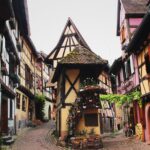
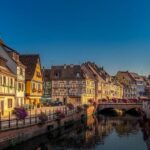
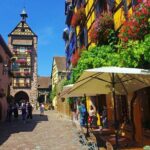
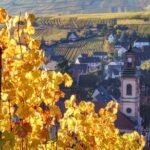
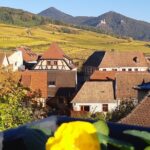
Eguisheim sits just south of Colmar and is often the emotional high point of the day. The village is arranged in concentric circles around a central plaza, an unusual layout that rewards slow wandering.
The houses are tightly packed and painted in bright colors. Add small shops, antique-looking façades, and a medieval castle, and you have a village that feels carefully composed at every turn. It is not hard to understand why Eguisheim is presented as one of France’s most beautiful villages.
The circular plan matters. Instead of following a straight main street, you can turn into one ring and then another, gradually finding courtyards, corners, and changing views of the central area. I would use your free time for exactly this kind of unhurried walk, rather than trying to see everything quickly.
Eguisheim is also the stop most affected by the clock. Several comments praise the relaxed pace overall, yet one visitor wanted more time in Eguisheim, and another wished for extra shopping at the final stop. The guide may adjust time slightly for weather or the group, but you should arrive knowing this is a short introduction, not an overnight stay.
The village can be especially appealing in the Christmas season, when its markets add to the old-world setting. At other times, its strongest appeal is the architecture and compact layout. Bring a camera, but do not spend the whole visit photographing the first square. The best part is often the walk around the rings.



The guides make the difference
The strongest pattern in the feedback is not a single monument. It is the guide.
Didier is praised again and again for his regional knowledge, humor, professionalism, and ability to explain places without overloading the group. One particularly useful detail is that he grew up in Alsace and still lives near Colmar, giving him a local connection to the area rather than only a script of dates and names.
Laura receives similar praise for patience, warmth, free time, and attention to individual needs. One visitor noted that she kept the atmosphere relaxed and made sure everyone had enough time to see the stops. Another praised her charm and regional knowledge.
That matters on a border-crossing day. You need someone who can explain the changes from one country to the next, keep the driving on schedule, answer questions, and still know when to let you explore quietly. The feedback also points to guides who communicate well in both English and French.
The best descriptions of Didier emphasize detailed but concise explanations. That is valuable here because the itinerary has a lot of movement. Long lectures would eat into walking time, while no explanation would reduce the day to a series of photo stops.
What the minivan and group size mean
Transport is by air-conditioned minivan, with the group limited to seven participants. That is a much better fit for this route than a large coach.
A small vehicle can feel more personal, and it makes pickup and drop-off simpler around Colmar. The minivan also gives you a comfortable base between walking stops, which matters during an eight-hour day crossing several borders.
The small group can affect the mood as much as the vehicle. Several people describe groups of five or six, with strangers becoming friendly by the end of the day. That is not guaranteed, but a seven-person limit gives you a reasonable chance of conversation without the crowd feel of a large excursion.
The transport has received a highly positive score, with 86 percent of ratings giving it a perfect mark. Safe, smooth driving is another repeated strength, including praise for Didier’s calm driving. That is especially welcome when the day includes motorway travel and international border crossings.
Is $163 a good value?
At $163 per person, the tour is not a cheap way to get from Colmar to nearby towns. You are paying for an eight-hour private-style experience in a small group, with a driver-guide, air-conditioned transport, bottled water, and pickup and drop-off in Colmar.
The value is strongest if you want convenience. Organizing Freiburg, Basel, and Eguisheim independently would mean checking train and bus connections, allowing for border crossings, coordinating three separate visits, and getting back to Colmar on time. The tour handles that structure for you.
You are also paying for context. A good guide connects the places instead of treating them as unrelated stops. Didier’s local background and the guides’ ability to explain the region add value that transport alone would not provide.
The value is weaker if you prefer long visits, museums, leisurely meals, or serious shopping. Three countries in a day sounds impressive because it is, but it also means each place receives only part of your attention. If you already plan to spend several days in Basel or Freiburg, you may prefer independent day trips with more control over the clock.
Food and drinks are extra, so budget for those separately. Bring your passport or national ID card, since you cross international borders. Alcohol is not allowed in the vehicle.
Who should book this day trip?
I would recommend this tour to first-time visitors based in Colmar who want a quick but meaningful introduction to the Upper Rhine region. It suits couples, families with older children, and solo visitors who prefer not to manage transport alone.
It is also a good choice for people who enjoy walking through historic centers but do not need long museum visits. The route offers cathedral views, market areas, old lanes, river scenery, and distinctive village architecture.
You should think twice if you use a wheelchair, have limited mobility, or find uneven walking difficult. The experience is not recommended for people with mobility impairments, and wheelchairs, electric wheelchairs, baby carriages, and bikes are not allowed. Expect to get out and walk around each town.
Weather can shape the day. Rain did not prevent people from enjoying the route, and one guide even shared umbrellas, but wet conditions can make cobbled streets less comfortable and views less clear. Wear practical shoes and bring a waterproof layer.
Booking details worth knowing
The tour is offered in English and French, with a live guide. Pickup is included from your hotel or Colmar address when it falls within the service area.
You can cancel up to 24 hours before departure for a full refund, and the reserve-now, pay-later option gives you some flexibility when your schedule is still changing. Check the available start times for your date, since the tour lasts a full eight hours.
The experience has an overall rating of 4.6 from 174 ratings, and transport receives a perfect score from 86 percent of participants. The most consistent strengths are the guides, smooth driving, comfortable van, small groups, and a pace that usually leaves room to explore rather than simply step out for photographs.
Should you book it?
Book this tour if you want to turn one Colmar day into a regional sampler. Freiburg gives you German city life and its distinctive cathedral, Basel adds the Rhine and Swiss character, and Eguisheim supplies the postcard finish.
I would book it especially when Didier or Laura is guiding, based on the strong praise for both their warmth and ability to explain the region without talking nonstop. Just keep your expectations realistic: you are collecting first impressions, not conquering three cities.
If you value convenience, local explanation, and a small group, $163 is fair. If you want extended shopping, museums, or long café stops, choose fewer destinations and spend more time in each.
FAQ
How long does the tour last?
The tour lasts eight hours and returns to Colmar in the late afternoon.
Where does the tour begin and end?
The tour begins in Colmar and ends with drop-off in Colmar. Pickup may be available at your hotel or address, as well as listed points including Starbucks Café, Colmar Railway Station, and in front of Hotel Bristol.
Which countries does the tour visit?
The route includes France, Germany, and Switzerland.
Which places are visited?
The main stops are Freiburg in Germany, Basel in Switzerland, and Eguisheim in France. The route also passes by the fortified village of Neuf-Brisach.
Is Neuf-Brisach a full sightseeing stop?
Neuf-Brisach is passed on the way to Germany. The main scheduled visits are Freiburg, Basel, and Eguisheim.
What languages are available?
The live tour guide service is available in English and French.
How many people can join the group?
The group is limited to seven participants.
Is food included?
No. Food and drinks are not included. Bottled water is provided.
Do I need a passport?
Yes. You should bring your passport or ID card because the route crosses international borders.
Is the tour suitable for wheelchair users?
No. The tour is not suitable for wheelchair users or people with mobility impairments. Bikes, baby carriages, and electric wheelchairs are also not allowed.