REVIEW · PARIS
Exclusive Walking Tour In Montmartre With Local Guide
Book on Viator →Operated by PromeneParis · Bookable on Viator
Montmartre reveals itself best on foot, and this private walk follows a lively thread from the Moulin Rouge to the steps of Sacré-Cœur. Along the way, guide Ezrah connects cafés, artists’ homes, old fountains, film locations, and local legends. You get more than a photo stop at the basilica.
I especially like the artist-focused route, which brings Vincent van Gogh, Picasso, Dalida, and the Bateau-Lavoir into the same story. I also like the small cultural touches, from the shiny parts of Dalida’s statue to the Wallace fountain and the chocolate shop A la Mère de Famille.
The main concern is reliability. One booking ended badly when the guide did not arrive, although a refund was arranged. The tour also lasts only about 90 minutes, so it gives you a useful introduction rather than a full day in Montmartre.
In This Review
- Key points to know before you book
- Starting beneath the red windmill at Blanche
- Café des Deux Moulins and Montmartre on screen
- Chocolate and a quick stop at A la Mère de Famille
- Rue des Abbesses and Van Gogh’s Montmartre
- Bateau-Lavoir and the Wallace fountain
- Dalida’s statue and the story behind the shine
- La Maison Rose, a postcard corner with film ties
- Place du Tertre, artists at work today
- Sacré-Cœur and the final Paris view
- What Ezrah adds to the walk
- Is $231.52 good value for a private group?
- Timing, walking effort, and practical details
- Who will get the most from this Montmartre walk?
- Should you book Exclusive Walking Tour in Montmartre?
- FAQ
- Where does the tour begin?
- Where does the tour finish?
- How long does the walking tour last?
- Is this a private tour?
- Who leads the tour?
- Is the tour suitable for children?
- Is admission included at the stops?
- Can I cancel for a full refund?
Key points to know before you book
- Private format: Your group alone takes the tour, with up to 15 people covered by the $231.52 group price.
- Local guide Ezrah: The tour depends heavily on his storytelling, humor, and ability to bring Montmartre’s people and places to life.
- A downhill-to-uphill story: You begin near Blanche and finish at Sacré-Cœur after several flights of steps.
- Art and film together: The route includes Van Gogh’s former home, the Bateau-Lavoir, Café des Deux Moulins from Amélie, and La Maison Rose.
- Good family potential: Ezrah kept children aged 8 and 11 involved with questions and conversation.
- Simple cancellation terms: Cancel at least 24 hours before the 9 a.m. start for a full refund.
Starting beneath the red windmill at Blanche
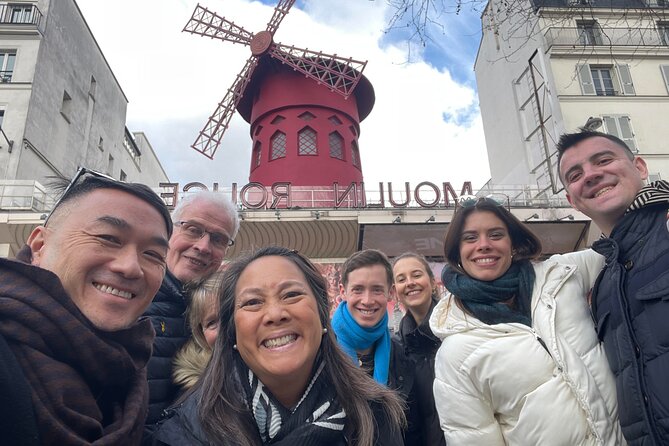
Meet at Blanche Metro station at 9 a.m. The first stop is the Moulin Rouge, right across the street. This is a smart starting point because the famous cabaret gives you an instant visual marker, while the guide can explain how Montmartre developed as a district rather than treating the windmill as an isolated attraction.
You spend about 10 minutes here. Admission is free, and the focus is the story of the red windmill and the wider neighborhood. You will not go inside the Moulin Rouge, so this part works best if you want context and photographs, not a cabaret performance.
Starting early helps you get the walk underway before the day grows more crowded. The meeting point is near public transportation, and the tour ends at Sacré-Cœur, so you do not need to return to Blanche after the walk.
You can also read our reviews of more walking tours in Paris



Café des Deux Moulins and Montmartre on screen
The next stop is Café des Deux Moulins, the restaurant where Amélie Poulain worked in the film Amélie. The stop lasts about five minutes. That is enough for a quick look and a photo, but not enough for a long café break.
This is a good example of the tour’s mix of old Paris and modern popular culture. You get a film location that many people recognize, then move into the less polished stories of artists, singers, and neighborhood life. If Amélie is important to your Paris plans, this stop adds a nice sense of place.
The short timing also keeps the walk moving. You should not expect a meal, reserved seating, or extended time inside the café. Think of it as a pointed introduction to one of Montmartre’s best-known screen locations.
Chocolate and a quick stop at A la Mère de Famille
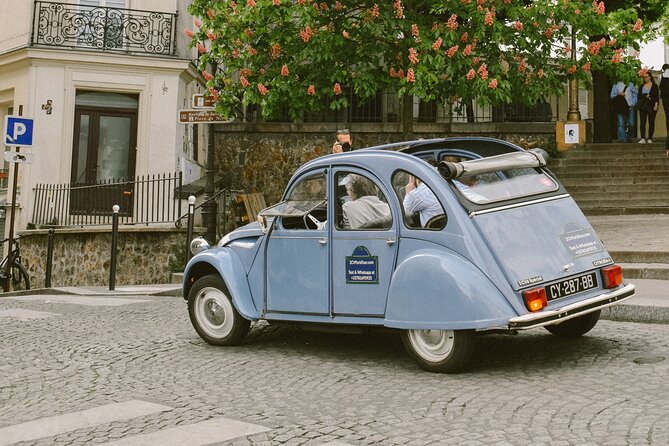
A la Mère de Famille is presented as Paris’s oldest chocolate shop. You spend around five minutes hearing about its role as a premier chocolatier for Parisians, with time to look at the shop and buy chocolate if you wish.
I like this stop because it gives the route a break from painters and famous monuments. Food shops tell you something about everyday Paris, and the chance to purchase chocolate makes this more than a pass-by photograph.
The tradeoff is time. Five minutes is enough to admire the shop and make a quick purchase, but not enough to browse at leisure. If you want to buy something, have your choice in mind and keep the group moving.
Rue des Abbesses and Van Gogh’s Montmartre
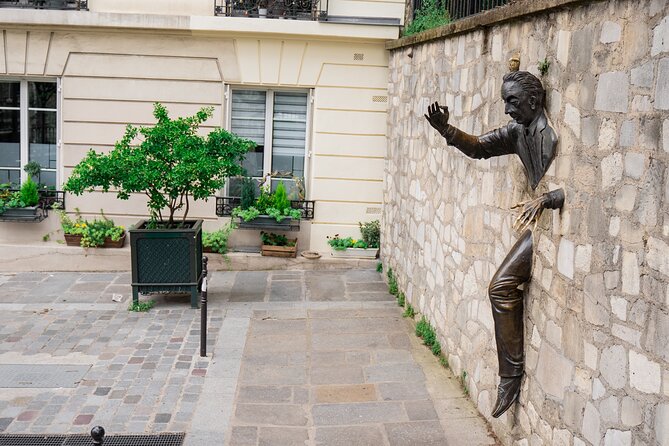
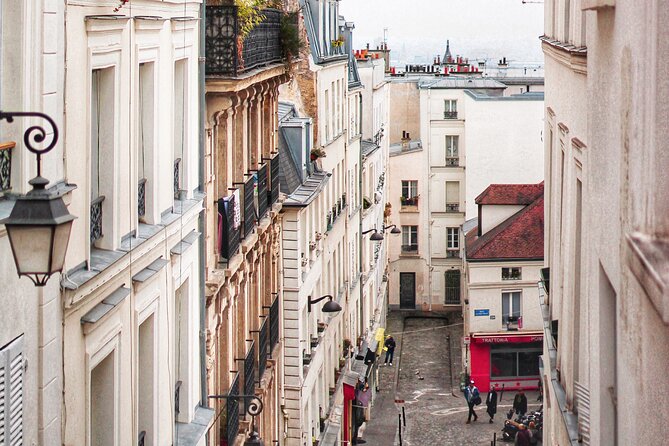
Rue des Abbesses gives the tour a longer stretch of neighborhood walking. You spend roughly 15 minutes along the street, with a small detour to the place where Vincent van Gogh lived with his brother.
This is one of the route’s most useful stops because it explains why Montmartre mattered to artists. The neighborhood was not simply a pretty setting for painters. It was also an artists’ retreat, and Ezrah uses Van Gogh’s former home to connect the district’s creative past with the way it functions today.
The value here is the connection between ordinary streets and major names. You are not only being taken to a famous museum or monument. You are walking through the places where artists lived, worked, and shaped one another’s ideas.
Bateau-Lavoir and the Wallace fountain
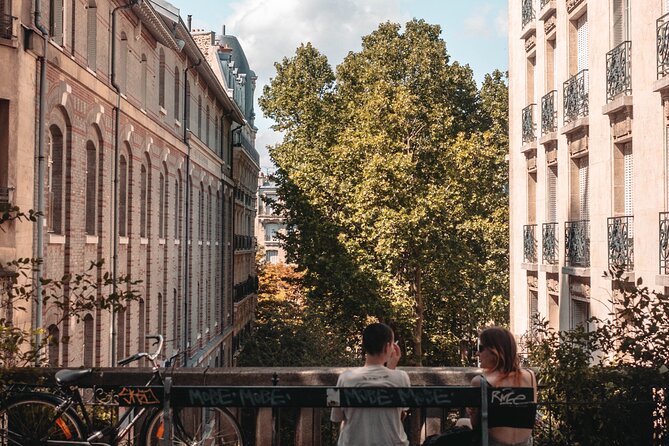
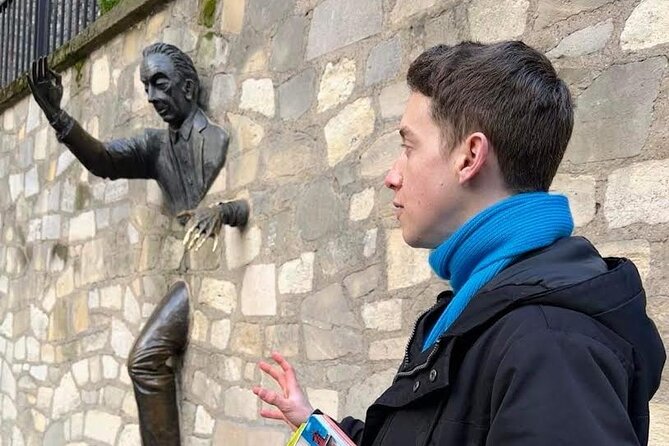
At the Bateau-Lavoir, Ezrah tells the story of the former artists’ residence and its impact on the art world. The building itself is described as unassuming, which is part of the point. Important cultural places do not always look important from the street.
You spend about 15 minutes here, including time in the nearby square. The route also takes in a historic Wallace fountain, with an explanation of how such fountains helped modernize Paris. A pause under the trees gives you a chance to rest before the route climbs toward Sacré-Cœur.
This is likely the strongest history stop on the walk. The Bateau-Lavoir expands the tour beyond celebrity names and gives you a clearer idea of Montmartre as a working community of artists. The fountain adds a civic detail that many quick sightseeing walks would skip.
Because the square includes a break from walking, this is a useful moment for families and anyone who wants a slower pace. Still, the entire tour involves walking through streets and climbing steps later, so comfortable shoes are sensible.
You can also read our reviews of more guided tours in Paris






Dalida’s statue and the story behind the shine
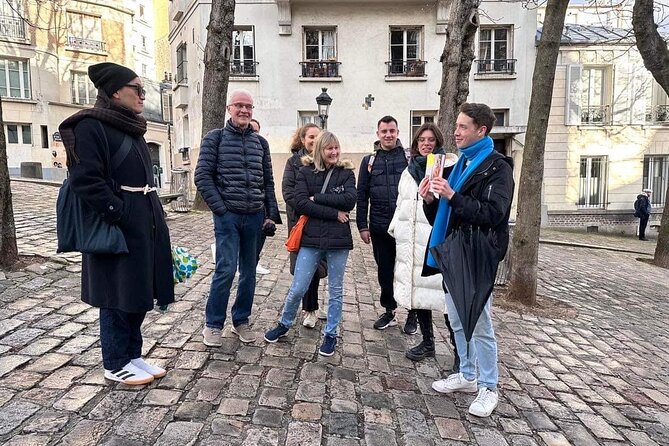
The statue of Dalida receives about five minutes. Ezrah explains the singer’s place in the French-speaking music world, her tragic ending, and why certain parts of the statue have become shiny.
That last detail gives the stop its character. A statue can look like a routine photo point until you learn how people interact with it and why parts of the sculpture have been polished by repeated touching. The story turns a small monument into a clue about local affection and public memory.
You should not expect a long biography or a formal museum presentation. This is a compact stop, designed to add personality to the walk. It also breaks up the art-focused sections with the story of a major singer.
La Maison Rose, a postcard corner with film ties
La Maison Rose is one of Montmartre’s most photographed buildings. You get time to take pictures while Ezrah explains the restaurant’s claim to fame and its appearances in films.
This stop is short, about five minutes, but it earns its place because the building captures the visual side of Montmartre. The bright exterior and compact setting make it an easy photo opportunity, especially after the longer explanations at the Bateau-Lavoir and Rue des Abbesses.
The practical point is to manage expectations. You are viewing the outside and hearing its story, not settling in for a meal. If you want to eat at La Maison Rose, plan that separately rather than expecting the tour to include a table.
Place du Tertre, artists at work today
Place du Tertre is the busiest part of the route. Restaurants and artists fill the square, and Ezrah spends about 10 minutes explaining the square and sharing facts about the artists who work there today.
This is where the past and present meet most clearly. Earlier stops focus on artists who changed Paris and the art world. Here, you see the continuing tradition of portrait painters and working artists in a public square.
The square can feel crowded, and the commercial side is more obvious here than on the quieter streets. That is not necessarily a flaw. It gives you a more honest picture of Montmartre, where old artistic identity and modern sightseeing exist side by side.
Use this stop to look closely at how the artists work and how the square functions, rather than rushing only toward the basilica. Ezrah’s fun facts should help you see beyond the familiar postcard image.
Sacré-Cœur and the final Paris view
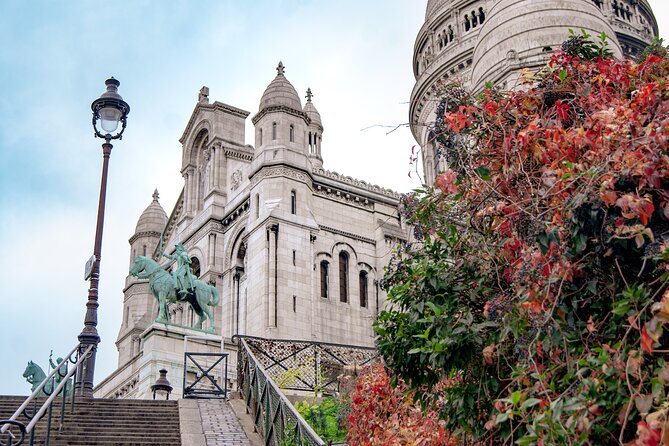
The walk finishes at the Basilica of the Sacred Heart of Montmartre. You climb a couple of flights of steps, then reach a view across Paris. Ezrah points out notable architecture in the distance and closes with the dark history of the land beneath the basilica, along with facts about the church’s architecture.
This ending makes sense. The route has moved through cafés, residences, artists’ spaces, and public squares before arriving at the district’s major monument. You finish with a broad view and a reminder that Montmartre’s story includes difficult chapters as well as romance and art.
The steps matter. The tour is not a flat stroll, and anyone with mobility concerns should think carefully about the climb. Most people can participate, and service animals are allowed, but the route still calls for ordinary walking ability.
The basilica is the final point, at 35 Rue du Chevalier de la Barre. You can continue sightseeing from there, visit the church, or enjoy the Paris view after the guided portion ends. Admission to the tour stops is free, but this does not mean every possible activity inside the area is included.
What Ezrah adds to the walk
The guide is the central reason to choose this experience instead of using a map and visiting the same spots alone. Ezrah is described as a local who enjoys uncovering the stories behind Paris streets. The strongest feedback points to his storytelling, friendly manner, humor, and ability to discuss Parisian life and culture.
That matters in Montmartre, where many sights are easy to photograph but harder to understand. A guide can explain why a plain building matters, connect a statue to a singer’s life, or show how artists shaped the neighborhood.
The family detail is especially useful. Ezrah kept children aged 8 and 11 engaged and included them in conversation. That suggests this is not a lecture aimed only at adults, though the actual experience will still depend on your group’s interests and the guide’s approach on the day.
One particularly good feature is the mixture of serious history and light gossip about famous inhabitants. Montmartre invites both. A completely formal tour could feel dry, while a tour based only on movie trivia would miss the district’s substance.
Is $231.52 good value for a private group?
The price is $231.52 per group, with as many as 15 people included. For one or two people, that is a high price for a 90-minute walk. For a larger family or group of friends, the cost becomes much easier to justify because the price does not rise per person up to the stated limit.
For example, a group of 10 would pay about $23 per person. A full group of 15 would pay about $15.43 per person. Those figures make the private format more appealing, especially if you value setting the pace and having the guide’s attention.
You are paying for a guide and a private experience, not entry tickets. Since every listed stop is free to visit, the value comes from the storytelling, route design, local perspective, and convenience of ending at Sacré-Cœur.
I would be cautious about booking this for just one person unless having a private guide is a major priority. For a family, reunion, or small group that wants one shared introduction to Montmartre, the price is more reasonable.
The tour is often booked well ahead, with an average booking time of 99 days. That suggests you should not assume a last-minute slot will be available, particularly if you need a specific morning.
Timing, walking effort, and practical details
The experience lasts about 1 hour and 30 minutes, and travel time between stops is included. That is enough for a focused introduction, but it is not a leisurely neighborhood day.
You begin at 9 a.m. at Blanche and finish at Sacré-Cœur. The early start suits anyone who wants to see Montmartre before spending the rest of the day elsewhere in Paris. It also gives you a clear plan for combining the walk with additional time at the basilica afterward.
Expect regular walking, brief stops, and stairs near the end. There is a shaded rest in a square during the Bateau-Lavoir section, which helps, but this remains a walking tour rather than a vehicle-based excursion.
The booking confirmation arrives at the time of booking, and the experience uses a mobile ticket. Public transportation is nearby. Service animals are allowed, and most people can participate.
Cancellation is free if you cancel at least 24 hours before the local start time. Changes or cancellations inside that window are not accepted for a refund.
There is one serious practical warning. A booking once went ahead without the guide arriving. A refund was arranged, but a missed morning in Paris cannot be recovered. Confirm the meeting details before the day begins and keep the provider’s contact information handy.
Who will get the most from this Montmartre walk?
I would choose this tour for a first visit to Montmartre, especially if you want the neighborhood explained rather than simply photographed. It suits people who enjoy art, film, music, local stories, and short walks between well-chosen stops.
Families may also like it because the route includes recognizable sights and the guide has shown an ability to bring children into the conversation. The private setup makes it easier to keep your own group together and ask questions.
It is less suitable if you want a long stop at every café, inside visits, extensive shopping time, or a full study of Montmartre’s art. The listed schedule is tight, and most stops last only five to 15 minutes.
You should also think about the final stairs. If anyone in your group has difficulty walking or climbing, ask for more information before booking. The tour is described as suitable for most people, but the route is still on foot and ends uphill.
Should you book Exclusive Walking Tour in Montmartre?
Book it if you want a private, story-led introduction to Montmartre and you have a group large enough to share the cost. Ezrah’s personal style appears to be the main attraction, with strong emphasis on artists, local life, film locations, and amusing details.
I would be most likely to book this for a family or group of friends who want to understand why Montmartre matters beyond Sacré-Cœur. The Bateau-Lavoir, Van Gogh’s former home, Dalida’s statue, and the Wallace fountain give the walk more substance than a simple photo circuit.
Skip it if you prefer to explore independently, need a longer and slower experience, or dislike paying a private-group price for a short tour. Also keep the guide-arrival concern in mind and confirm the appointment before setting out.
For the right group, this is a compact way to turn Montmartre’s famous sights into a connected story. You finish with a Paris view, but the better souvenir is the sense that the neighborhood is far more than the basilica on the hill.
FAQ
Where does the tour begin?
The tour begins at Blanche Metro station in Paris at 9 a.m.
Where does the tour finish?
The tour ends at the Basilica of the Sacred Heart of Montmartre, at 35 Rue du Chevalier de la Barre.
How long does the walking tour last?
The tour lasts approximately 1 hour and 30 minutes, with travel time between stops included.
Is this a private tour?
Yes. Only your group participates, with up to 15 people covered by the group price.
Who leads the tour?
The tour is led by Ezrah, a local guide who focuses on Montmartre’s history, artists, famous residents, and Parisian culture.
Is the tour suitable for children?
Most travelers can participate, and Ezrah has engaged children aged 8 and 11 during the walk. The route includes walking and steps.
Is admission included at the stops?
The listed stops have free admission. The tour does not include paid activities or meals at locations such as the Moulin Rouge, Café des Deux Moulins, or La Maison Rose.
Can I cancel for a full refund?
Yes. You can cancel at least 24 hours before the experience’s start time for a full refund. Cancellations or changes made less than 24 hours before the start are not refunded.