REVIEW · STRASBOURG
European Quarter Guided Walking Tour in Strasbourg
Book on GetYourGuide →Operated by SECRET STRASBOURG · Bookable on GetYourGuide
European Europe feels closer on foot. This 2-hour European Quarter walking tour turns Strasbourg’s unity story into real streets you can follow, and I like the small-group feel with clear, personal explanations, plus the Parc de l’Orangerie setting that makes the start instantly atmospheric. The only real drawback is it stays mostly at street level, so you’ll get context without going inside the European Parliament.
You’ll meet your guide at the Pavillon de l’Octroi near Parc de l’Orangerie, then walk through the Orangerie area and over to the Wacken district along the Ill River. Expect a paced mix of landmarks, architecture (especially Art Nouveau), and short stops for quirky details and photo moments, all guided in English, French, or German.
In This Review
- Key Points You Should Know Before You Go
- Strasbourg’s European Quarter: Why This Walk Works
- Meeting at Pavillon de l’Octroi: Getting Oriented Fast
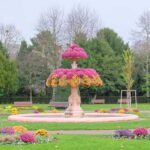
- Parc de l’Orangerie: More Than a Beautiful Opening Scene
- Orangerie District Art Nouveau: Spot the Details While You Can
- The Wacken District and the Ill River: Where Modern Europe Feels Daily
- European Court of Human Rights and the Council of Europe: Context You Can Use
- The European Parliament Exterior: What You See Without Tickets
- Short Stops That Add Character: Quirky Corners and Sculpture Details
- The Guide Factor: Clear Answers and a Personal Pace
- Price and Value: Why $47 Feels Fair for What You Get
- Who This Tour Suits Best (and Who Should Think Twice)
- Should You Book the European Quarter Guided Walk?
- FAQ
- Where does the tour start?
- How long is the European Quarter walking tour?
- What languages are available?
- Is admission to the European Parliament included?
- What should I bring with me?
- Does the tour run in bad weather?
Key Points You Should Know Before You Go

- Start in Parc de l’Orangerie and learn why it matters to Strasbourg’s modern European identity.
- Walk the Wacken district where art, cycling routes, and the Ill River frame major European institutions.
- See Art Nouveau houses in the Orangerie district at an easy, photogenic walking pace.
- Get street-level context on the European Parliament area without waiting in lines or needing special tickets.
- You’ll leave with local tips and a small group gift, not just photos of buildings.
- Rain or shine, so good shoes matter—this is still a walking tour.
Strasbourg’s European Quarter: Why This Walk Works
Strasbourg has a knack for making Europe feel like something you can point to, not just something you read about. This tour is built around that idea: you walk from green space to landmark corridors, and your guide connects what you see with how the institutions function and why the city became a symbol of unity.
What makes it especially useful is the format. It’s only about 2 hours, and the tour is designed for small groups with a guide who answers questions and keeps the pace friendly. That means you’re not rushing between highlights, and you’re not stuck listening while you barely understand what’s in front of you. I also like that you get top tips for your stay at the end, which helps the tour pay off beyond the walk itself.
You can also read our reviews of more walking tours in Strasbourg
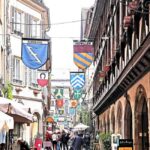
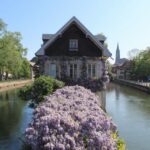

Meeting at Pavillon de l’Octroi: Getting Oriented Fast

The tour begins at the Pavillon de l’Octroi (at 2 Av. de l’Europe), which is a practical choice because it puts you close to the Orangerie park area right away. The first part is about setting your mental map: you’re learning how the European Quarter relates to Strasbourg’s ordinary neighborhoods, not just touring “official” buildings.
Right after you meet, you head into Parc de l’Orangerie for about an hour of guided time. This is a smart move. Instead of starting with hard stone and statues, you begin with a place that signals calm and local life. You also get the story of the park, so later when you see architecture and institutional buildings nearby, it makes more sense.
Tip I’d give you: if you’re arriving in Strasbourg the same day, aim to get there early enough to settle your footing and calm down your legs. The first hour isn’t all “sightseeing from a distance”—it’s guided walking plus explanations.
Parc de l’Orangerie: More Than a Beautiful Opening Scene

Parc de l’Orangerie is where the tour earns its atmosphere. Even if you’re not the type who normally cares about parks, this stop helps you understand Strasbourg’s rhythm—how green space and design sit alongside serious political geography.
During the guided walk, you’ll hear the park’s story and watch how your route sets up later contrasts. One of the best parts is that you’re not only told what to look at; you’re guided to notice the differences between the calmer park setting and the more modern, institutional skyline that comes later.
If you enjoy odd details, keep your eyes open. One guest highlighted that the sculpture elements can feel quirky, which fits the overall tone here: it’s not a dry “facts only” walk. It’s interpretive. You learn enough to make the places click.
Practical note: since the tour runs rain or shine, you’ll want good walking shoes for park paths and sidewalks. Bring a bottle of water too, especially in warmer months.
Orangerie District Art Nouveau: Spot the Details While You Can
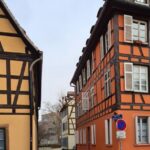
After Parc de l’Orangerie, the tour moves into the Orangerie district, where you’ll see famous Art Nouveau houses. This is one of the tour’s clear strengths because Art Nouveau can be easy to miss if you’re simply walking past. On this walk, you’re not just looking at facades—you’re getting guidance on what makes them distinctive.
The value here is timing. With a two-hour total window, you need the stops to count. Art Nouveau works best when you slow down enough to notice patterns, shapes, and the way the building style reflects the era. Your guide helps you see those features, and you’ll get photo moments that actually make sense rather than random snapshots.
One thing I like: these views are mostly street-level and low-pressure. You don’t need special access, and you’re not scrambling for the one perfect angle while the group keeps moving. It’s designed for real strolling and real photos.
The Wacken District and the Ill River: Where Modern Europe Feels Daily
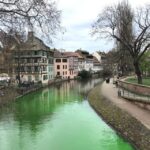
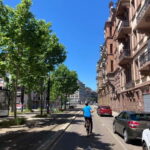
Crossing toward the Wacken district is where the tour shifts gears. You follow the Ill River, and the river walk creates a natural “bridge” between the park world and the institutional world. It also helps you understand that this European landscape isn’t isolated. It’s connected to daily movement—paths, cycling routes, and new buildings that feel part of the city’s present.
The Wacken district is described as rapidly expanding and dynamic, with a love for both art and traditions. What you learn here isn’t just that institutions exist—it’s how the area functions around them, and how European unity is physically anchored in Strasbourg’s city planning.
The walking style matters: you’re not touring like it’s a museum. You’re walking like you live nearby, noticing the mix of architecture, river views, and what feels newly built versus what feels established.
You can also read our reviews of more guided tours in Strasbourg
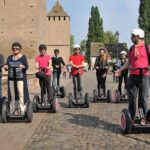

European Court of Human Rights and the Council of Europe: Context You Can Use
One of the most helpful parts of the tour is that you’re taught about major institutions right from the streets around them. The route puts you at the foot of two key organizations: the European Court of Human Rights and the Council of Europe.
You won’t be overwhelmed with legal jargon, because the guide is setting you up to understand them at street level: what they are, what kinds of work happen there, and why Strasbourg became tied to this mission. You’ll also hear fun facts delivered in a local, conversational way.
This is exactly the kind of context that improves your entire stay. Even if you never go inside, you’ll know what you’re looking at the next time you pass a building, read signage, or see news coverage tied to Europe’s institutions. It turns landmarks into meaning.
The European Parliament Exterior: What You See Without Tickets
The tour includes time focused on the European Parliament area, with guided explanation and a photo stop. Since admission is not included, the experience is designed for exterior viewing and understanding rather than entering a visitor hall.
That approach has real benefits. You avoid the common travel frustration of lining up, then racing to fit everything in. Instead, you get a guided explanation and a short window to take photos where they actually capture the right scale and setting.
If you’re hoping for a full interior tour, you should know this is not that kind of experience. But if your goal is to understand why the European Parliament matters and to place it in Strasbourg’s physical layout, the exterior-only format is still very effective—especially with a good guide who can answer questions.
Short Stops That Add Character: Quirky Corners and Sculpture Details
The tour also includes a couple of shorter stops described as lesser-known moments. These segments are valuable because they keep the walk from turning into a checklist of major landmarks.
From the information you’re given, these quick pauses can include odd sculptures and small “how did I miss that?” sights that you might otherwise skip. They also tend to be the moments where the guide’s personality shines—encouraging questions and adding small context that makes Strasbourg feel lived-in rather than staged.
In a two-hour format, these short segments are doing important work. They keep you engaged, and they make the city feel more human.
The Guide Factor: Clear Answers and a Personal Pace
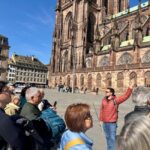
A lot of walking tours fail for one reason: the guide talks so fast and so broadly that the group can’t connect. This one aims to avoid that. One guide in particular—Matthieu—stands out for engaging participants and answering questions in a competent way, including people who care about details.
What I like about this style is the balance between storytelling and responsiveness. You’re not forced into a one-way lecture. You can ask questions, and the explanations land in a way that matches what you’re seeing right now.
Another theme in the experience is that it feels personal rather than automatic. The small group format seems to help a lot here. It also explains why you get a small gift at the end for each group—this isn’t treated like a mass route where everyone just flows through.
Price and Value: Why $47 Feels Fair for What You Get
At $47 per person for about 2 hours, you’re paying for three things that matter more than you might expect:
First, you’re paying for guided interpretation. These are big European institutions, but the context isn’t obvious from the sidewalk. The guide helps you understand the institutions’ presence, the setting along the Ill River, and the meaning behind Strasbourg’s European identity.
Second, you’re paying for structure and efficiency. In a short window, you see the Orangerie area, Art Nouveau streets, and the Wacken district in a coherent route. That’s easier than trying to piece it together on your own while also figuring out what’s worth stopping for.
Third, you get extras that add real trip value: top tips for your stay, plus a small gift for your group. One guest even mentioned a chocolate Santa for a child, which tells you the guide may tailor the “gift moment” to the vibe and timing.
If you’re in Strasbourg for a limited time, this cost makes sense. If you’re staying a full week and you don’t care about institutional context, you might get similar photos by wandering. But you would likely miss the connecting explanations that make the walk feel like more than sightseeing.
Who This Tour Suits Best (and Who Should Think Twice)
This tour is a strong match if you want an easygoing but meaningful walk. You’ll probably enjoy it most if you:
- Like architecture and want Art Nouveau pointed out in a practical way
- Want to understand Europe’s institutional landscape without booking multiple ticketed attractions
- Prefer small-group interaction over large, fast-moving crowds
- Appreciate local tips for restaurants and what to do next
You should think twice if:
- You expect an inside-the-building Parliament experience (admission is not included)
- You find longer walks tough, since this is a rain-or-shine walking route with good-shoes advice
Should You Book the European Quarter Guided Walk?
If you’re trying to get oriented in Strasbourg quickly, I’d say yes. The route connects Parc de l’Orangerie, Art Nouveau houses, and the Wacken district into one understandable story, and the guide style makes the experience feel more like a thoughtful local walk than a scripted drive-by.
Book it if you want street-level context and you like questions and answers. Skip it only if you specifically want indoor access to the European Parliament or you’re not up for a steady walking pace.
FAQ
Where does the tour start?
You meet at the Pavillon de l’Octroi, located at 2 Av. de l’Europe.
How long is the European Quarter walking tour?
The tour lasts about 2 hours.
What languages are available?
The live guide speaks English, French, or German.
Is admission to the European Parliament included?
No. You’ll have guided explanation and exterior/photo opportunities, but admission is not included.
What should I bring with me?
Bring your passport or ID card. Also, bring good walking shoes and consider bringing water.
Does the tour run in bad weather?
Yes. The tour takes place rain or shine.