REVIEW · PARIS
Eclair Baking Class with A Pastry Chef
Book on GetYourGuide →Operated by Studio Pâtisserie · Bookable on GetYourGuide
Eclairs look simple, but good ones depend on careful timing, firm piping, and dough that reaches just the right texture. This 150-minute workshop puts those details in your hands, with a Le Cordon Bleu-trained pastry chef guiding you through choux pastry, fillings, and toppings in a group limited to eight.
I like the hands-on format, since you do not simply watch a chef work. I also like the chance to make several fillings, from chocolate ganache to pastry cream, then take home a box of your own pastries. The main drawback is the strict start time: arriving more than 15 minutes late means you cannot join.
In This Review
- Key Points
- Making Eclairs in a Parisian-Style Apartment
- Why Choux Pastry Requires Precision
- From Choux Dough to Crisp Pastry Shells
- Fillings That Let You Customize the Results
- The Value of a 150-Minute Pastry Class
- Who Will Enjoy This Class Most
- Timing, Arrival, and the Small-Group Advantage
- Booking Flexibility and Practical Details
- Is the Eclair Workshop Worth Booking?
- FAQ
- How long does the eclair class last?
- Where does the pastry workshop take place?
- Is the class taught in English?
- How many people can join the class?
- What will I learn to make?
- Are ingredients and equipment included?
- What can I take home?
- Can children join the class?
Key Points
- Small class of up to eight: You get room to ask questions and receive individual help.
- Le Cordon Bleu-trained instruction: The chef explains measurements, temperatures, piping, baking, fillings, and finishing.
- French pastry focus: You work with choux pastry, the base for éclairs and other airy treats.
- Take-home box included: Your finished pastries go home with you to share or enjoy later.
- English-language workshop: The class is suitable for English speakers.
- 150-minute format: Long enough for practical work, but short enough to fit into a busy Ile-de-France itinerary.
Making Eclairs in a Parisian-Style Apartment
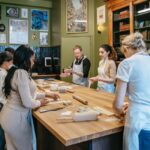
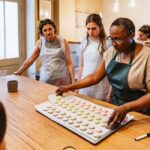
The setting is a Parisian-style apartment with a gray storefront on the ground floor. That matters because this is not a large cooking school with a classroom feel. You enter a smaller working space designed for close instruction and practical pastry work.
The exact address should be checked carefully before you set out. A discreet storefront can be easy to miss, especially if you are moving quickly through an unfamiliar neighborhood. Plan to arrive 5 to 10 minutes early, and give yourself extra time to find the entrance.
The class is taught in English, which makes the technical parts easier to follow. Pastry has its own vocabulary, and instructions about dough texture, oven temperature, and filling consistency need to be clear. You can ask questions as you work instead of trying to follow a demonstration from the back of a crowded room.
The group limit of eight is one of the strongest practical features. With a small number of people around the work area, you should have a better chance of getting help with piping pressure, dough consistency, or the appearance of your finished pastries. This is especially useful if you are new to baking and want more than a recipe to take home.
You can also read our reviews of more cooking classes in Paris
Why Choux Pastry Requires Precision
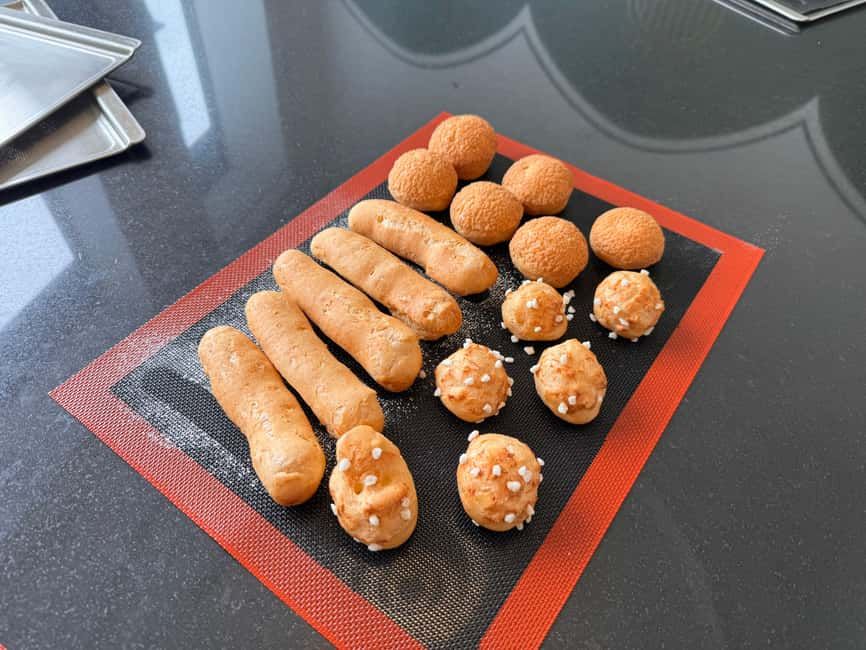
Choux pastry is made from a relatively short list of ingredients, but it is not a careless, mix-and-bake recipe. Small changes in measurement, temperature, and technique can affect the finished shell. The pastry needs to rise, form a crisp outside, and stay light inside.
The chef explains these fundamentals as part of the workshop. You learn why exact measurements matter and how temperature affects the dough. That is valuable at home, where a failed batch can leave you wondering if the problem was the proportions, the cooking time, or the way the dough was handled.
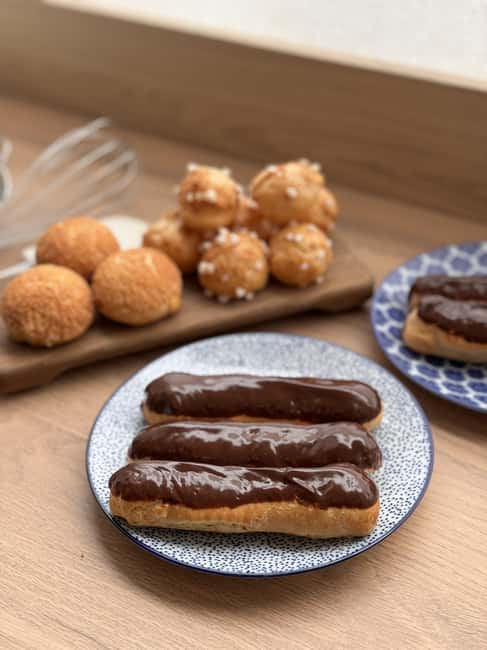
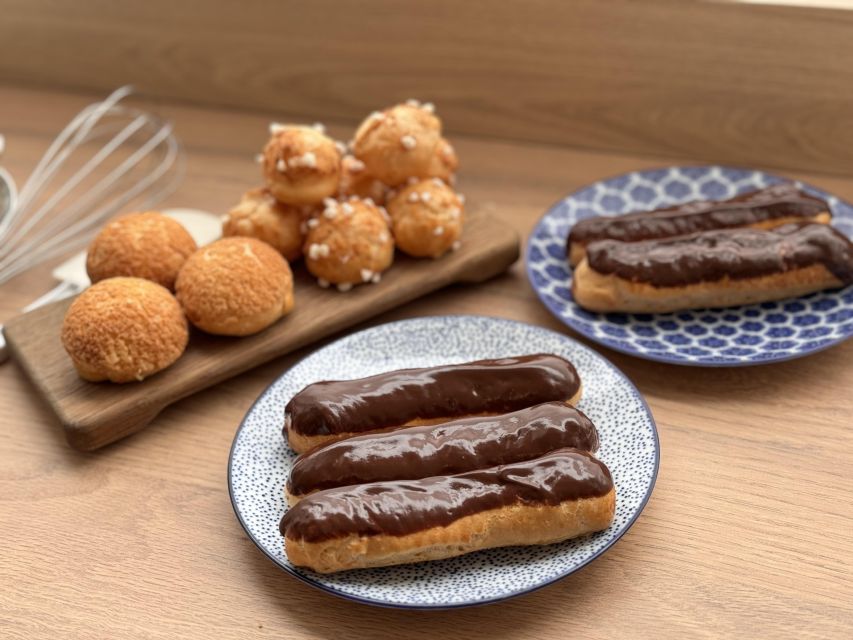
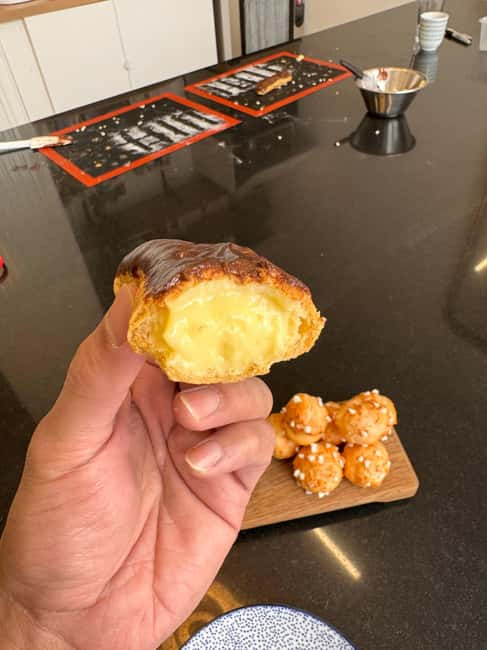
The class also covers the texture that defines a classic éclair. You are aiming for a shell that has enough structure to hold its filling, with an interior that is airy rather than heavy. The instruction focuses on how to reach that balance, not just on copying a list of ingredients.
Piping is another important step. Éclairs need an even shape so they cook properly and can be filled cleanly. Working under a pastry chef gives you a chance to correct technique as you go. That immediate feedback is far more useful than discovering after baking that your pastries are uneven or too thin.
You should still expect to do careful work. The class does not turn pastry into an effortless craft. It gives you the method and explains the reasons behind it, but you will need to measure accurately and pay attention throughout.
From Choux Dough to Crisp Pastry Shells
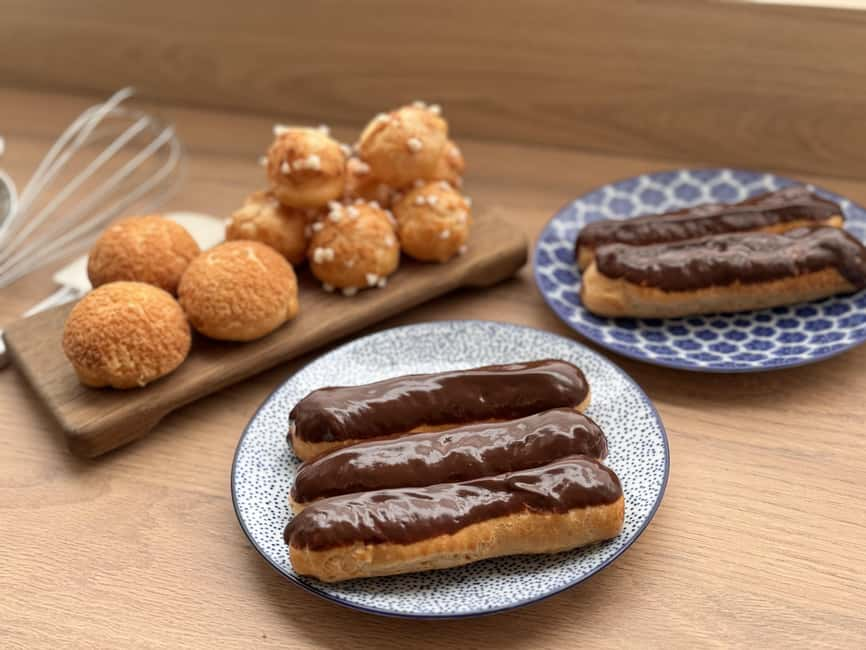
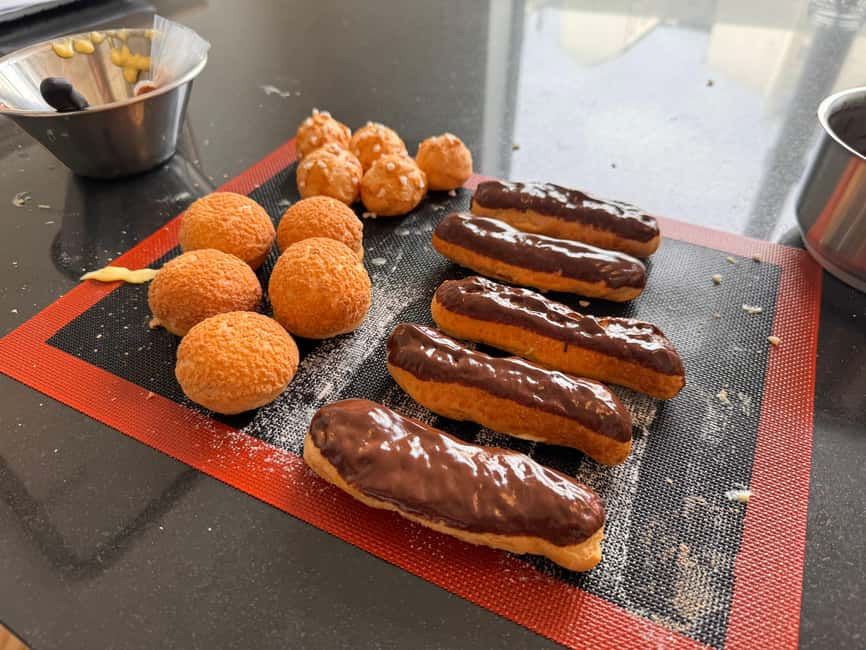
The workshop takes you through the main stages of making éclairs and other choux pastries. The process begins with the pastry itself, then moves into shaping and baking before the filling and finishing work.
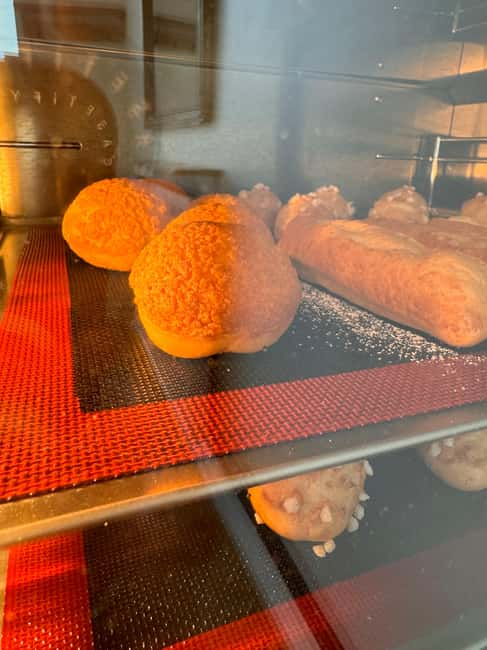
You learn the basic method for preparing choux dough and how to judge its consistency. This is a key point because choux pastry is not managed like a standard bread or cookie dough. The chef shares tips for getting the right shell and light interior, along with practical advice intended to help you repeat the results in your own kitchen.
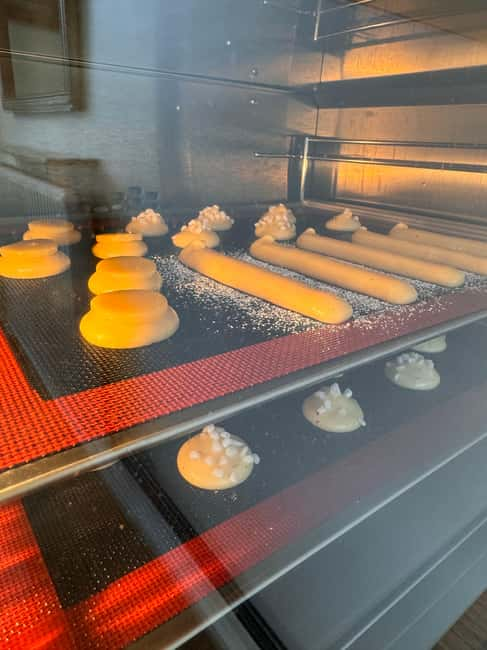
The baking stage requires patience. Opening or handling pastry at the wrong moment can affect its shape and texture, so the class gives you a chance to see how timing fits into the larger process. The 150-minute duration is long enough to cover several steps without turning the experience into an all-day commitment.
The class is not described as a meal. It is a pastry workshop, and the food you make is the main thing you eat. Coffee, tea, sparkling water, soda, and juice are included, which makes the session more comfortable, but you should plan another meal if you need lunch or dinner.
Fillings That Let You Customize the Results
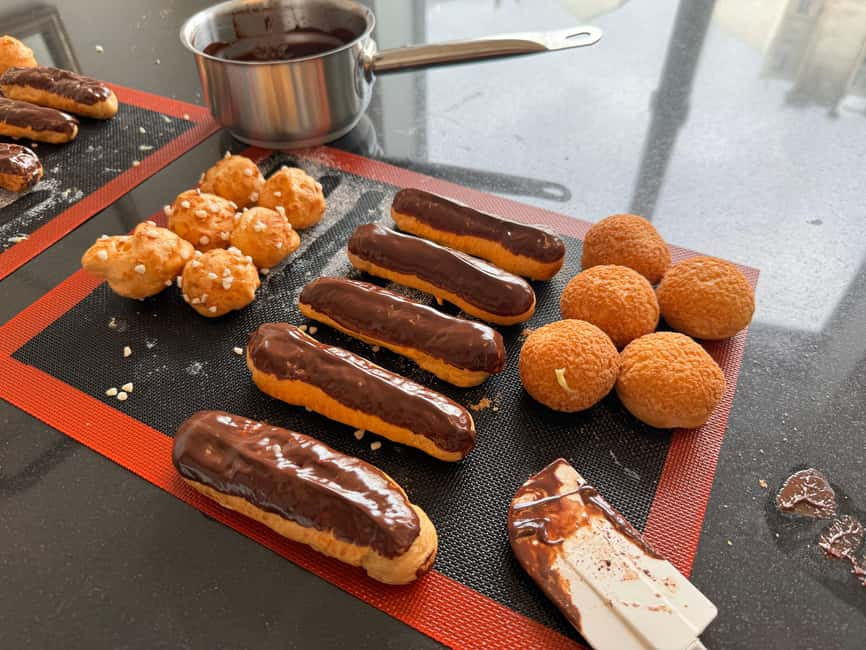
An éclair is more than a baked shell. The filling changes its weight, sweetness, and character, and this workshop gives you more than one option to work with.
You learn to prepare fillings that include chocolate ganache and pastry cream. Ganache brings a smooth, chocolate-forward finish, while pastry cream gives you a soft, creamy center. Having several choices makes the class more useful than a single fixed recipe because you can compare techniques and later adapt them to your own taste.
The filling stage also teaches an important practical lesson: the shell, filling, and topping need to work together. A delicate pastry can be overwhelmed by a heavy filling, while a plain shell benefits from a well-made cream or glaze. The chef helps connect these elements so your finished pastries feel balanced.
This is also where the workshop becomes more personal. You can customize your creations rather than producing identical pastries with no room for choice. If you already bake, you may find the filling and finishing ideas more useful than the basic dough lesson. If you are new to pastry, they provide a clear way to build confidence.
The available information does not specify every filling or topping made in the class, so you should not expect a complete menu of options. The focus is on learning several useful components and understanding how they can be combined.
The Value of a 150-Minute Pastry Class
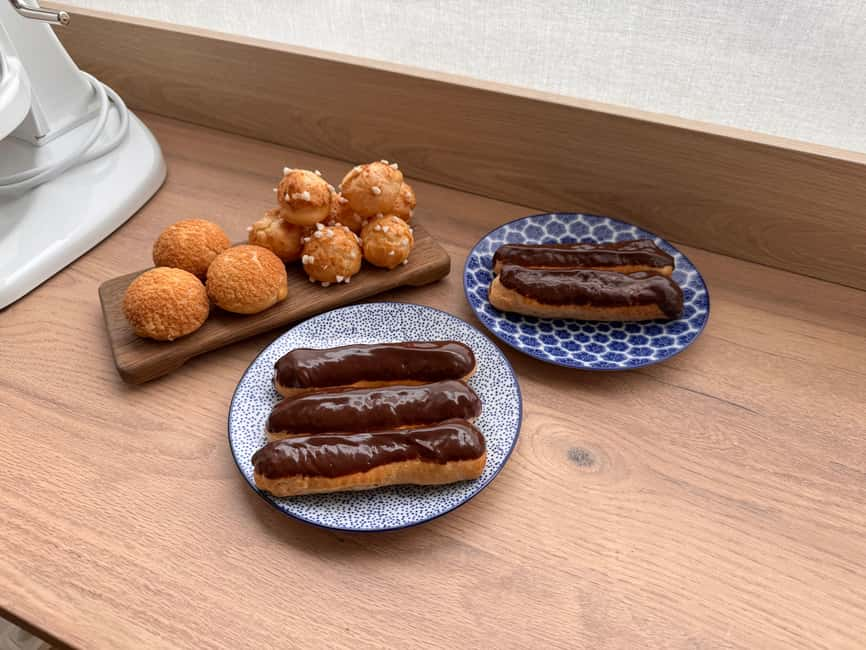
The price is $128 per person. That is not a cheap snack or a casual drop-in activity, but it includes instruction, ingredients, equipment, drinks, and a box of pastries to take home.
The strongest value comes from the teaching format. You are paying for access to an experienced pastry chef, a small group, and a structured lesson that explains why the techniques work. If you want to make éclairs at home, that guidance can save you from wasting ingredients on trial and error.
The take-home box adds a tangible part of the experience. You do not leave with only notes or a recipe. You have pastries to share with friends or enjoy later, though the number and exact selection are not specified.
For someone who only wants to taste French pastry, $128 is harder to justify. A bakery visit will cost much less and requires no two-and-a-half-hour commitment. This class makes more sense if you value learning, enjoy cooking, or want a food activity with a practical result.
The workshop also suits a special occasion or a rainy-day plan in Ile-de-France. It gives you a focused indoor activity and a skill you can continue using after your trip. Still, it is not ideal for anyone hoping to spend the session simply eating pastries while a chef does the work.
A few more Paris tours and experiences worth a look



Who Will Enjoy This Class Most
This experience is a good match for several types of visitors:
- Beginning bakers: You get a clear introduction to measurements, temperatures, dough texture, fillings, and shaping.
- Experienced home cooks: You can refine your choux technique and pick up ideas for fillings and presentation.
- Food-focused visitors: The class offers more participation than a standard tasting stop.
- Couples and small groups: The eight-person limit keeps the activity personal without making it private.
- Families with older children: Participants aged 17 and below must have an adult with them, and children under 10 are not allowed.
- English speakers: All instruction is given in English.
The age rules deserve attention when planning. This is not a young-child activity, and the pastry work may require patience and close attention. Teenagers can participate with an accompanying adult, but younger children cannot join.
The class is wheelchair accessible, which is helpful for anyone checking practical access before booking. The ground-floor setting also makes the location worth noting, though you should still confirm any personal access needs in advance.
Timing, Arrival, and the Small-Group Advantage
The class starts on time. Arrive 5 to 10 minutes early so you can find the gray storefront, enter the apartment-style venue, and settle in before instruction begins.
Do not cut this close. If you are more than 15 minutes late, you cannot join the class. That rule is reasonable for a hands-on pastry workshop because the group needs to begin together, but it means you should avoid scheduling another activity immediately beforehand.
The 150-minute length is well suited to a day with other plans. You have enough time to make the pastry, work on fillings, and finish the creations without giving up an entire day. You will still want to leave room for the possibility that the class ends close to its stated duration, especially if you have timed transport or a dinner reservation.
The small group makes a real difference here. In a larger cooking class, you might spend much of the session watching someone else pipe or mix. With no more than eight participants, you have a better chance to work directly, ask for corrections, and understand what the chef is looking for.
Booking Flexibility and Practical Details
You can reserve the class and pay later, which helps if your schedule is still changing. Free cancellation is available up to 24 hours in advance for a full refund.
Starting times vary, so check availability for your chosen date. The class takes place in Ile-de-France, and the supplied meeting-point details do not provide a full street address. Make sure you have the confirmed location and directions before leaving for the workshop.
Ingredients and equipment are included. You do not need to arrive with baking tools or supplies. Drinks include coffee, tea, sparkling water, soda, and juice, but no separate meal is provided.
The activity currently carries a 5.0 rating from three posted ratings, including one described as perfect and another giving a full recommendation. That is a very small sample, so I would treat it as a positive signal rather than proof that every class will suit every baker.
Is the Eclair Workshop Worth Booking?
I would book this class if you want to learn a French pastry technique rather than simply buy one at a bakery. The small group, English instruction, Le Cordon Bleu-trained chef, and take-home box give the $128 price a clear purpose.
It is especially appealing for anyone who has tried choux pastry before and wants to understand why results can vary. Beginners should also find the format approachable, provided they are comfortable with precise measurements and a focused two-and-a-half-hour session.
I would skip it if your schedule is tight, your main goal is a full meal, or you are bringing children under 10. For everyone else, arrive early, bring a little patience, and treat the class as both a pastry lesson and a sweet souvenir from Ile-de-France.
FAQ
How long does the eclair class last?
The class lasts 150 minutes.
Where does the pastry workshop take place?
It takes place in a Parisian-style apartment with a gray storefront on the ground floor in Ile-de-France, France.
Is the class taught in English?
Yes. The instructor teaches the class in English.
How many people can join the class?
The class is limited to eight participants.
What will I learn to make?
You will learn to make éclairs and choux pastries, including the pastry shells, fillings, and toppings.
Are ingredients and equipment included?
Yes. All necessary ingredients and equipment are included.
What can I take home?
You can take home a box of your freshly baked creations.
Can children join the class?
Children under 10 cannot participate. Anyone aged 17 or younger must be accompanied by an adult.