REVIEW · PARIS
Discovering Le Marais: Guided Walking Tour of Paris
Book on GetYourGuide →Operated by Guydeez Tours · Bookable on GetYourGuide
Le Marais feels quieter, more personal. This private guided walk strings together art, old Paris streets, and landmark stops you actually want to understand, not just snap. You’ll move through the heart of the district while your guide keeps the story clear and practical, with helpful tips for what to do next in the city.
I especially like the private format. It’s built for customization, so you can steer the pace and focus, and you’re not stuck listening to someone else’s agenda. I also like the mix of stops, from classic squares and churches to Centre Pompidou, which makes this feel like more than a single-neighborhood stroll.
One consideration: the Stravinsky Fountain has been listed as under renovation (shown as continuing until 2023). Depending on what you encounter on your date, you might have a less-than-perfect view or a temporary setup around it.
In This Review
- Key highlights worth your time
- Where the tour starts (and how it helps you get oriented fast)
- Village Saint-Paul to Place des Vosges: the Marais hits that set the tone
- City Hall library stop: architecture-adjacent, but useful
- Rue des Rosiers: where history meets modern Paris culture
- Impasse des Arbalétriers and the quiet charm of Marais shortcuts
- Notre-Dame-des-Blancs-Manteaux and Église des Billettes: churches that tell you how the area evolved
- Rue Sainte-Croix de la Bretonnerie: the street that links stories
- Centre Pompidou without the stress: art context before the crowds
- Stravinsky Fountain finish: abstract art on your way out
- Price and value: $46 for a private learning-focused walk
- Who this walking tour fits best
- A quick word on guide quality and what to do about it
- Should you book this Le Marais walking tour?
- FAQ
- How long is the Discovering Le Marais guided walking tour?
- How much does the tour cost?
- Is this tour private or shared?
- Where does the tour meet?
- What languages are available for the guide?
- What’s included in the tour price?
- Is food or drinks included?
- What if my plans change?
- Is the tour wheelchair accessible?
Key highlights worth your time

- Private and customizable: you can ask questions and shape the route focus as you go.
- Le Marais landmarks plus side streets: squares, churches, and narrow lanes are all part of the walk.
- Centre Pompidou included in the flow: you get context before you wander.
- Language options: the live guide can work in English, French, Italian, or Spanish.
- Ticket help if you want more: the team can help book visits for add-ons.
- Quick, manageable duration: 2 hours is long enough to learn, short enough to still enjoy the rest of your day.
Where the tour starts (and how it helps you get oriented fast)

You’ll meet at 26 Rue du Renard, a practical launch point for getting your bearings in the central part of Paris. From there, the tour’s logic is simple: start in the old Marais zone, move through the postcard-famous highlights, then connect to bigger art territory at Centre Pompidou, and finish at Stravinsky Fountain.
This start point matters because Le Marais can feel like a maze if you’re winging it. With a guide leading the way, you don’t spend your first hour just trying to figure out which street “counts.” You’ll come out with a mental map: where the big squares are, where the historic churches sit, and how the area’s streets connect to major Paris sights.
Also, you’re not stuck only on foot in every scenario. The tour includes walking, and it also includes public transport as part of the experience unless your specific option changes that. That flexibility is useful in Paris, where distances can look short on a map and feel longer in real time.
You can also read our reviews of more walking tours in Paris



Village Saint-Paul to Place des Vosges: the Marais hits that set the tone

The walk begins in the Le Village Saint-Paul area. This is where I like getting oriented because it’s right in that transition space between “main sights” and the smaller, everyday textures of the neighborhood. You’ll have a chance for a photo stop and a guided look that sets up what you’re about to see—basically, the Marais as a place, not just a list of monuments.
Then you’ll reach Place des Vosges, one of Paris’s most recognizable squares. What makes it special on a guided walk is the way your guide can point out what makes the space feel planned and human-scale at the same time: the geometry, the facades, and why this sort of square mattered to Paris life. Even if you’ve seen photos, this is the moment where you understand why people keep coming back to it.
What to watch for: don’t just look at the buildings. Look at the way the square “frames” movement around it. In a short tour like this, that kind of visual cue helps you enjoy the rest of Le Marais on your own afterward.
Possible drawback: if you’re the kind of traveler who wants lots of free time, you should know that this kind of guided structure keeps things moving. The upside is you gain context quickly; the downside is you won’t have an extended sitting session in the square.
City Hall library stop: architecture-adjacent, but useful

Next comes the bibliothèque de l’hôtel de ville de Paris photo stop. Even if you don’t plan to go inside, this stop can be surprisingly practical. It’s one of those “Paris clue” locations: you learn where big civic power sits in the same central areas you associate with shopping and tourism.
This is also where a good guide earns their keep. A solid explanation here helps you connect what you’re seeing to the broader city structure. You start noticing how Paris layers different functions—government, culture, daily life—in close proximity.
Tip for your follow-up day: if you like this kind of city-structure thinking, you’ll probably enjoy adding more small museums and libraries later, not just the famous ones. The tour’s value is partly that it trains your eyes.
Rue des Rosiers: where history meets modern Paris culture

Then you’ll head to Rue des Rosiers, another signature stop. This is a street you’ll recognize fast, even if you don’t know it by name. The guide’s job here is to show you what the street represents and how Le Marais became what it is today—part heritage area, part everyday neighborhood.
I like this segment because it helps you stop treating Le Marais like a theme park. You’re not only looking at old stone; you’re seeing how the area functions now. It’s also a good moment to decide what you’ll do later: snack-and-wander style, shop-by-interest, or just keep moving and save your hunger for a bigger meal.
What to keep in mind: this part of Paris can be crowded at peak times, so if you want calmer photos, you may want to adjust where you stand (your guide can suggest positions as you go).
Impasse des Arbalétriers and the quiet charm of Marais shortcuts
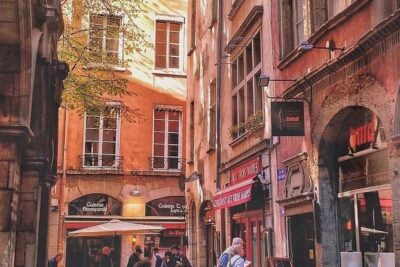
After Rue des Rosiers, the tour heads to Impasse des Arbalétriers. Impassés like this are why I still recommend guided wandering in Le Marais. These narrow passageways feel like a secret you didn’t know existed—except they aren’t completely hidden, which is the point. A guide shows you how the street system folds back on itself, creating little pockets of atmosphere.
You’ll get a photo stop plus a guided walkthrough that explains the logic of these spaces. Understanding that logic is gold because it makes the neighborhood easier to explore later without feeling lost.
If you’re mobility-limited: the tour is listed as wheelchair accessible, which is a big plus for this sort of street pattern. Still, narrow lanes can affect how comfortable it feels. If that’s you, it’s worth discussing your preferences so your guide can manage how long you spend in tight areas.
You can also read our reviews of more guided tours in Paris






Notre-Dame-des-Blancs-Manteaux and Église des Billettes: churches that tell you how the area evolved

Two church stops bring the tour’s historical storytelling into sharper focus: Notre-Dame-des-Blancs-Manteaux and Église des Billettes.
These aren’t just “pretty facades” stops. A good guide helps you read them like documents. You start to understand why people built in these spots and how the Marais became a layered community over time. Even when you don’t know the architectural vocabulary, you can still learn what to look for—simple cues that help you interpret what you see on your own later.
A quick note from how the experience is described: the churches are treated as part of the walking story, not detached sightseeing. That means you’ll get context before and after each one, which makes the visits feel connected instead of random.
Possible drawback: church exteriors are often easiest to appreciate if you take a bit of time to look up. In a short tour, you’ll be moving, so if you want extra photo time, flag it early. A private tour is the type where asking is actually worth it.
Rue Sainte-Croix de la Bretonnerie: the street that links stories

Next you’ll stroll along Rue Sainte-Croix de la Bretonnerie. This is a stop that works as a connective thread. Your guide is likely to tie together what you’ve learned so far—squares, churches, and the neighborhood’s street rhythm—so the Marais starts feeling like one coherent place.
I like this segment because it’s where you stop thinking only in individual landmarks. You start thinking in routes: which streets connect to which squares, how a lane leads you to a vista, and why the area feels structured even when it looks random.
Quick practical advice: if you’re planning to return later, note the street names your guide points out. In Le Marais, knowing one or two street anchors can save you a lot of time.
Centre Pompidou without the stress: art context before the crowds

The tour then brings you to Centre Pompidou, one of the big-name art stops in Paris. What makes adding Pompidou into a Le Marais walk so smart is timing and context. Instead of showing up cold—confused about what to see first—you arrive with a guide’s framing.
Even with a short visit time, having context changes your experience. You’ll know what the building represents, what kind of artistic world it signals, and how to approach exploring inside (even if you choose only a quick look). It’s also a nice moment to adjust plans: if Pompidou excites you, you can plan a longer visit after the tour.
Possible drawback: this is a very popular place. Even in a 2-hour program, the surrounding area can feel intense. If you’re sensitive to crowds, ask your guide how to pace your time near entrances and photo spots.
Stravinsky Fountain finish: abstract art on your way out
The tour ends at Stravinsky Fountain, featuring abstract sculptures. This is the kind of final stop that makes the whole experience feel modern and not just historical. It also gives your eyes a different visual language after churches and classic Paris stonework.
The fountain has been listed as under renovation until 2023, so you should go in expecting that it might not look exactly like the postcard version. On the day, you may still get a good view, or you may need to accept a temporary setup.
Why I like ending here: it gives you a clean “off-ramp” from the tour. You’ll finish with a memorable visual that stands apart from everything else you saw, and then you can decide what to do next—museum mode, neighborhood wander mode, or just a well-earned drink.
Price and value: $46 for a private learning-focused walk
At $46 per person for a 2-hour tour, you’re paying for something more than movement through a neighborhood. You’re paying for:
- a guide who can explain what you’re seeing in a way that sticks,
- a private format that’s built for questions and adjustment,
- and structured coverage of top sights plus the connective streets in between.
This is a good value for travelers who want their first day in Paris to feel organized. If you’re planning to cover major sights anyway, the guide’s route saves you the mental overhead of figuring it all out.
One more value detail: the experience includes help from the team to book tickets for the visits you want. That matters because in Paris, ticket logistics can be a time drain. If you use the help, the tour becomes a gateway to a smoother rest of your itinerary.
Food and drinks aren’t included, so you’ll still need to plan a snack or meal on your own. The good news: Le Marais makes it easy to do that right after the tour, without adding extra transport costs.
Who this walking tour fits best
This tour is a strong match if you:
- want a guided introduction to Le Marais that doesn’t only hit the most obvious photos,
- like architecture and art context more than pure sightseeing,
- enjoy asking questions and want answers tailored to what you care about,
- want to cover landmarks like Place des Vosges and Centre Pompidou in a single 2-hour block.
It’s also a practical choice if you’re short on time. Two hours is long enough to learn the neighborhood’s layout and themes, but short enough that you can keep exploring afterward without feeling cooked.
Finally, this is listed as offering guidance in multiple languages (English, French, Italian, Spanish). That’s helpful if you’re traveling with someone whose comfort language isn’t English.
A quick word on guide quality and what to do about it
Because the tour is private, guide quality really shows. Past experiences highlighted guides such as Térésa and Pascal, with compliments on being professional and responsive to questions. That’s a good sign.
Still, there’s one caution from the same set of feedback: not every experience hits the same bar for professionalism. My practical advice is simple. Before you go deep into questions, ask one early question that tests the kind of explanations you want (not a yes-or-no question). If the answers feel solid and specific, you’re in good shape for the whole walk.
Should you book this Le Marais walking tour?
I’d book it if you want a first-pass understanding of Le Marais plus a credible connection to major art territory at Centre Pompidou—all in a private 2-hour format.
I’d hesitate only if you’re mainly hunting for long, self-paced time in each location, or if the Stravinsky Fountain renovation will frustrate you. In that case, you might prefer a different tour where the final stop is less dependent on current conditions.
If you do book, come with two priorities: one classic (like Place des Vosges or the churches) and one modern (Pompidou or Stravinsky Fountain). The guide’s job is to help those priorities make sense together, and that’s when this tour feels like money well spent.
FAQ
How long is the Discovering Le Marais guided walking tour?
The tour runs for 2 hours.
How much does the tour cost?
It is priced at $46 per person.
Is this tour private or shared?
It’s a private group experience, described as private and exclusive with no one else in your group.
Where does the tour meet?
The meeting point is 26 Rue du Renard.
What languages are available for the guide?
The live guide can work in English, French, Italian, and Spanish.
What’s included in the tour price?
You get a walking tour and public transport (unless you select one of the option that changes this), an English-speaking guide, and help from the team to book tickets for the visits you want.
Is food or drinks included?
No, drinks or food aren’t included.
What if my plans change?
You can cancel up to 24 hours in advance for a full refund, and you can reserve now and pay later.
Is the tour wheelchair accessible?
Yes, it’s listed as wheelchair accessible.