REVIEW · PARIS
Croissants Baking Class near Eiffel Tower
Book on Viator →Operated by Aten-Te Aute · Bookable on Viator
The real treat here is not simply eating a croissant near the Eiffel Tower. It is learning how laminated dough gets its flaky layers, then seeing whether your own croissants can deliver the same buttery magic. In a private apartment in Paris’s 16th arrondissement, you work through the technique behind croissants and pain au chocolat rather than just ordering breakfast at a café.
I like the small six-person limit, which leaves room for hands-on help instead of a lecture from across the room. I also like the practical setup: ingredients and tools are supplied, and past sessions with Selene were praised for clear instruction, patience, and plenty of laughter. The main drawback is the price, $166.80 per person for about 90 minutes, so this makes the most sense if you value the lesson and the personal setting as much as the pastries.
In This Review
- Key points to know
- Learning the dough behind French breakfast
- A private Parisian apartment near Trocadéro
- What the 90-minute class covers
- Why the small group matters
- Selene’s teaching style and the hands-on feel
- The pastries you work toward
- Is $166.80 a fair price?
- Who will enjoy this class most?
- Practical planning before you book
- Should you book the croissant class?
- FAQ
- Where does the croissant baking class meet?
- Where does the activity end?
- How long does the experience last?
- Is the class offered in English?
- How many people can join the class?
- What pastries are included in the class?
Key points to know
- Private apartment near Trocadéro: The class takes place at 54bis Av. Mozart in Paris’s 16th arrondissement, close to the Eiffel Tower area.
- Croissants and pain au chocolat: You focus on the classic dough used for two of France’s best-known breakfast pastries.
- Maximum of six people: The small group allows the instructor to correct your technique and answer questions.
- English instruction: The class is offered in English, useful if your French cooking vocabulary is limited.
- About 90 minutes: This is a compact workshop that fits neatly into a Paris sightseeing day.
- All equipment provided: You do not need to bring baking tools or ingredients.
Learning the dough behind French breakfast

French pastry shops display an impressive range of sweets, but croissants belong to a slightly different family called viennoiseries. That distinction matters. A croissant is not just a pastry filled with butter or sugar. Its dough is folded and rolled with butter to create thin layers that puff in the oven.
This class centers on pâte feuilletée levée, the laminated, leavened dough used by professional bakers for croissants and related breakfast pastries. You learn the basic method rather than simply watching someone shape finished dough. That gives the session a stronger sense of purpose than a standard tasting stop.
The class also provides a little food context. You get an introduction to the difference between viennoiseries and French pastry, along with the background of these familiar treats. It is a modest history lesson, but it helps you understand why a croissant has a different structure from a tart, éclair, or macaron.
I find that useful because pastry can look simple while being technically fussy. The dough must be handled in a particular way, and the folds matter. A short workshop cannot turn you into a professional baker, but it can show you what to look for the next time you stand in front of a Paris bakery case.
You can also read our reviews of more cooking classes in Paris
A private Parisian apartment near Trocadéro
The meeting point is 54bis Av. Mozart, 75016 Paris, in the 16th arrondissement. The experience ends at the same address, so you do not need to arrange a second pickup point or find your way across town after baking.
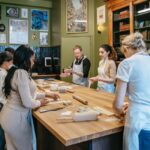
The setting is a private Parisian apartment rather than a restaurant, hotel kitchen, or large culinary school. That gives the class a more personal feel. You are stepping into a working home-style setting in an elegant part of western Paris, with the Eiffel Tower and Trocadéro area nearby.
Do not confuse near the Eiffel Tower with inside the Eiffel Tower area. The supplied location is on Avenue Mozart in the 16th arrondissement. Check your route before you leave, and allow enough time to reach the address without rushing. The meeting point is near public transportation, which makes it practical to combine with other plans in Paris.
The location works best as part of a larger day. You might schedule the class before or after time around Trocadéro, but remember that the baking itself takes about an hour and a half. Since the end point is the same as the start, you can continue sightseeing from there once the session finishes.
What the 90-minute class covers
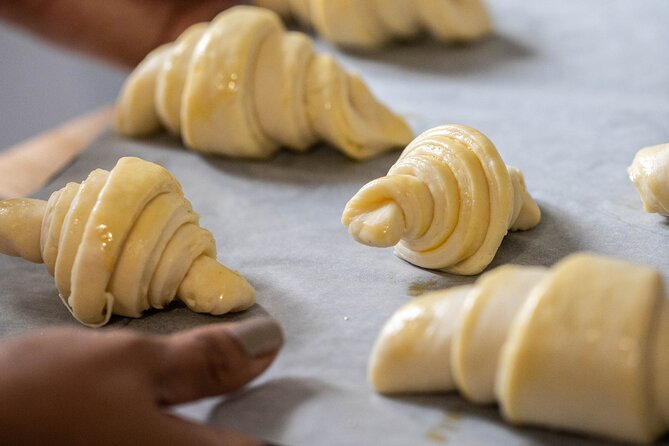
The heart of the experience is the laminated dough technique. You learn how bakers build layers by working dough with butter, folding it, and rolling it out. The information does not specify every stage or the exact amount of finished pastry you take away, so you should think of this as a focused introduction rather than a full professional baking course.
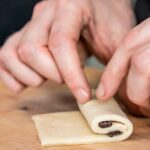
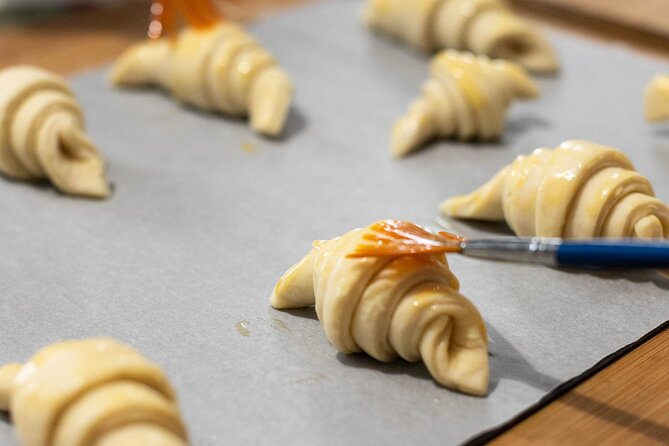
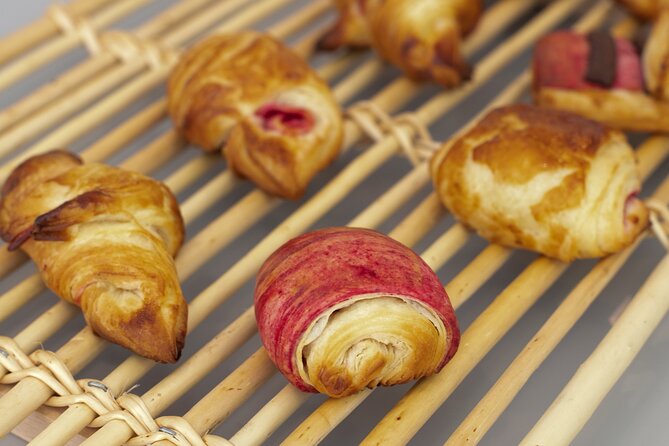
The two featured pastries are croissants and pain au chocolat. Croissants give you the classic curved shape and layered crumb. Pain au chocolat uses the same general dough but adds chocolate, giving you a useful comparison between two staples of the French breakfast table.
The class includes all ingredients and tools. That is a real convenience, especially if you are fitting the activity into a short Paris visit. You can arrive ready to work instead of carrying supplies or wondering which equipment is available.
Because the group is limited to six people, the instructor can watch how you handle the dough. That matters here. Lamination is not a subject where a quick demonstration answers every question. You may need to see how firmly to roll, how to fold the dough, or how to shape it. A small group gives you a better chance of getting direct help.
The session is offered in English, so you can follow the instructions without having to translate each step. At the same time, you are in France, working with French baking terms and classic recipes. It is a good mix for someone who wants an authentic food activity without a language barrier.
Why the small group matters
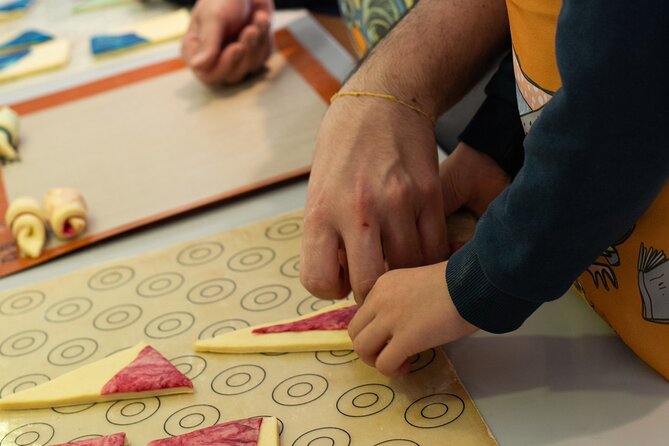
Six people is the maximum, and that changes the feel of the class. You are not one face in a large crowd. The instructor can spend time with each person, and the activity can adjust more easily to the pace of the group.
This point comes through clearly in the strongest feedback. One participant described the directions as easy to follow and appreciated that the teacher took time to teach each person properly. That is exactly what you want in a hands-on class, where the value lies in doing the work yourself.
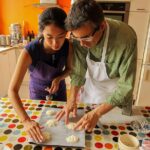
Another session had only two people, an adult daughter and her parent. They found Selene friendly and well prepared, and they enjoyed a lot of laughter during the lesson. You cannot count on having a private or nearly private class, since the group may include up to six people, but the limit keeps the setting fairly intimate.
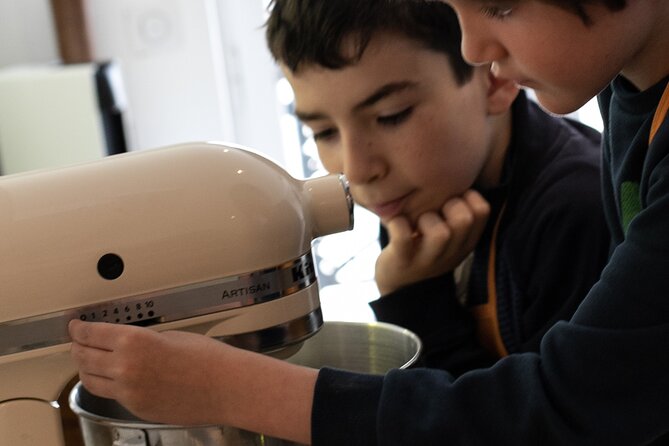
The class also suits families. One parent described it as a fun and creative activity for both children and adults. The information does not give a minimum age or specific child policy, so you should confirm those details before booking if you are planning the activity with young children.
Selene’s teaching style and the hands-on feel
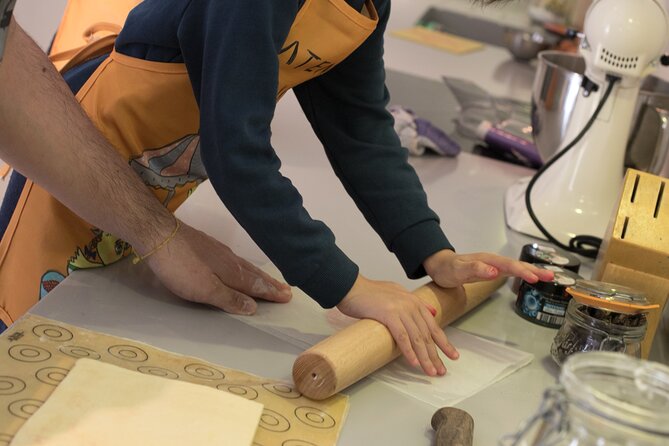
Selene is the instructor named in the available feedback. She is described as friendly, clear, and well informed about the subject. More important for this kind of class, she appears to give individual attention rather than rushing everyone through the same motions.
That personal help is one of the best reasons to choose this experience over a cheaper recipe video or a casual bakery visit. A croissant class is most useful when someone can see what you are doing and help you fix it. The small group and direct instruction support that kind of learning.
The atmosphere also seems relaxed. The session with the parent and adult daughter included plenty of laughter, which suggests the class is not built around strict culinary-school formality. That can be an advantage if you want a pleasant holiday activity instead of a high-pressure technical test.
Still, keep your expectations in check. Ninety minutes is not enough time to cover every detail of French baking, and the description does not promise a full meal, a market visit, or a wider menu. The focus stays firmly on croissants and pain au chocolat.
A few more Paris tours and experiences worth a look



The pastries you work toward
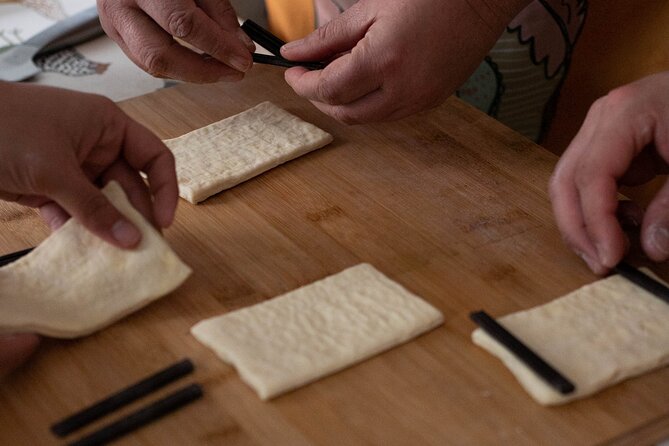
Croissants are the main event, but pain au chocolat gives the lesson another useful angle. Both rely on laminated dough, yet they produce different shapes and eating experiences. One is curved and open, while the other is rectangular and built around chocolate.
The sample menu lists croissant and pain au chocolat as dessert items. That wording may sound slightly odd to anyone used to eating them at breakfast, but the important point is clear: these are the finished pastries you will make as part of the class.
You should also understand that the final result depends partly on timing and technique. The activity teaches the dough method and pastry shaping, but the supplied details do not spell out the baking schedule or how many pastries each person makes. If taking pastries with you is important, ask the provider what is included before you reserve.
For food lovers, the payoff is not only the first bite. Once you understand laminated dough, you can look at a croissant differently. You begin to notice the layers, the shape, and the difference between a light, crisp pastry and one that is heavy or poorly formed.
Is $166.80 a fair price?
At $166.80 per person, this is an expensive 90-minute activity. The price is much higher than buying several croissants from a bakery, so you should not judge it as a food purchase alone.
The value comes from the private apartment setting, the English instruction, the ingredients and equipment, and the small group. You are paying for personal teaching and access to a technique that is difficult to understand from a printed recipe. If you are curious about baking or enjoy taking a skill home from a trip, the cost may feel justified.
The value is weaker if you simply want to eat excellent French pastry. Paris has no shortage of bakeries, and a bakery stop costs far less. You also should not book this expecting a full-day cooking school experience. The class is short and narrowly focused.
I would compare it to other paid activities in your Paris schedule. If you already have several expensive tours booked, this may be a splurge. If you want one memorable food lesson and prefer a small group to a large class, the personal attention helps explain the higher rate.
The strict cancellation terms also make the price harder to treat casually. The experience is non-refundable and cannot be changed for any reason. If the provider cancels because the minimum number of people is not reached, you will be offered another date or experience, or a full refund. Because your own cancellation does not qualify for a refund, book only when your schedule is firm.
Who will enjoy this class most?
This experience is a good match for:
- Baking fans: You get a practical introduction to professional-style laminated dough.
- Food-focused couples and families: The relaxed, creative format works for adults and children, subject to confirming age requirements.
- Repeat visitors to Paris: You get a new way to connect with French food beyond another restaurant reservation.
- Small-group learners: The six-person maximum gives you a better chance of receiving direct corrections.
- Visitors staying near western Paris: The Avenue Mozart address and nearby public transportation make the class easier to fit into a local itinerary.
It is less suitable for someone who wants a broad tour of French cuisine. You will not be making several savory dishes, visiting a food market, or covering a large set of recipes. It is also not the best pick if your only goal is a low-cost breakfast.
Practical planning before you book
The activity is offered in English and uses a mobile ticket. Confirmation is received when you book, so keep the ticket available on your phone.
Plan around the fixed address at 54bis Av. Mozart. The class both starts and ends there, and public transportation is nearby. The description places the experience in the 16th arrondissement near Trocadéro, but it does not provide a detailed walking route from a station, so use a current map when planning your arrival.
The maximum group size is six, though the actual number can be smaller. One past session had just two people, which shows that the class may feel especially personal on some dates.
You should also allow a little breathing room around the 90-minute estimate. The listed duration is approximate, and pastry work is not the sort of activity you want to join while distracted by a tight museum reservation. The exact finished pastry arrangements are not specified, so ask ahead if you need to know what you can eat or take with you.
Should you book the croissant class?
Book it if you want more than a pastry stop. The small group, English instruction, supplied equipment, and focus on laminated dough make this a useful introduction to one of France’s most recognizable baking techniques. Selene’s friendly, patient teaching style is another reason the class suits first-time bakers and families.
Skip it if $166.80 feels too high for a 90-minute activity, or if you would rather spend your food budget sampling several bakeries. This is a focused workshop, not a broad cooking tour.
For the right visitor, the best souvenir is not a box of pastries. It is knowing why a good croissant flakes, bends, and breaks the way it does.
FAQ
Where does the croissant baking class meet?
The class begins at 54bis Av. Mozart, 75016 Paris, France, in a private Parisian apartment in the 16th arrondissement near Trocadéro and the Eiffel Tower area.
Where does the activity end?
The activity ends back at the meeting point on Avenue Mozart.
How long does the experience last?
The class lasts approximately 1 hour and 30 minutes.
Is the class offered in English?
Yes. The experience is offered in English.
How many people can join the class?
The maximum group size is six people. The actual group may be smaller.
What pastries are included in the class?
The sample menu includes croissants and pain au chocolat. The class teaches the laminated dough technique used for these French breakfast pastries.