REVIEW · PARIS
Area ,Opera, Jewellery,Fashion,Palais Royal walking tour
Book on Viator →Operated by Ned · Bookable on Viator
Paris jewelry and opera in one easy walk. You’ll get a smooth orientation of the Opéra area while moving through Palais Royal and the luxury corridor around Place Vendôme, guided by Ned. I especially like the relaxed pace and the way Ned turns big landmarks into clear stories you can actually use while you wander on your own. One thing to consider: the walk is focused on the outside and nearby cultural stops, and an inside visit to the Opera House costs extra.
This is a smart 2 hours 10 minutes plan with a small group (max 5) and a mobile ticket in English. Most people can do it comfortably, and it’s a good match if you want context without spending your whole day in lines.
With an average booking window of 58 days in advance and a very high overall rating, this one tends to sell. I like that you’re not rushed, and you get time to ask questions as you go.
In This Review
- Key Things to Know Before You Go
- Why This Walk Works: Opéra, Fashion, and Jewelry in One Line
- Starting at Palais Royal’s Garden: Where Power Meets Culture
- Comédie-Française and Molière: Theatre as a Living Institution
- Rue Saint-Honoré: The Street Where Chic Shows Up Daily
- Eglise Saint-Roch: Large Church, Mixed Styles, Practical Scale
- Place-Vendôme: Why Louis XIV and Napoleon’s Footprints Lead to Jewelry
- Palais Garnier Area: Grand Opera Outside, Optional Inside
- Musée du Parfum – Fragonard: Scent as Modern Luxury
- Price and Time Value: Is $74.49 Worth It?
- Practical Tips That Make This Tour Easier
- Who This Tour Fits Best
- Should You Book This Opéra, Jewellery, and Fashion Walking Tour?
- FAQ
- How long is the Palais Royal, Opéra, and Fashion walking tour?
- How much does the tour cost?
- What language is the tour offered in?
- Is the group size small?
- Do I need to buy tickets for the stops?
- Where does the tour start and end?
- When does the tour depart?
Key Things to Know Before You Go
- Small group, real conversation: Max 5 people means questions don’t get lost in a crowd.
- Fashion and jewelry focus, not just landmarks: You’ll walk the streets where luxury brands cluster.
- Multiple free admission stops: The route lists free entry for the sights you stop at.
- Opera exterior first, interior optional: If you want inside the Opera, budget the extra 14 Euro.
- English tour with a mobile ticket: Handy for getting started on time.
- Ends near Opéra: Easy to keep exploring after the tour.
Why This Walk Works: Opéra, Fashion, and Jewelry in One Line
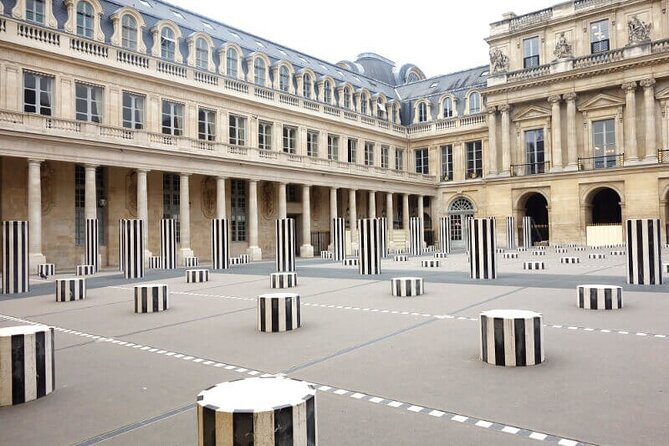
Paris can feel like a choose-your-own-adventure city. This tour is one of the simpler ways to get oriented fast, without bouncing around neighborhoods all day. You start in the 1st arrondissement and end at Opéra, so the route naturally leads you from government and culture zones into the shopping-and-luxury streets that many people associate with Paris style.
You’re also getting more than a photo route. The stops are tied together by themes—art and performance, power and architecture, and then the modern language of luxury. That makes it easier to understand what you’re seeing later, when you pass the same buildings on your own.
Ned’s approach (from the way she teaches and keeps things moving) is part of the value. People often want facts. They also want the human angle—why something was built, how it fits into Paris life now, and what to notice while you’re walking.
One practical note: wear shoes you’re okay walking in. This is a city-center route with several short segments, and you’ll want stable footing if you stop to take photos or read details on façades.
You can also read our reviews of more walking tours in Paris


Starting at Palais Royal’s Garden: Where Power Meets Culture
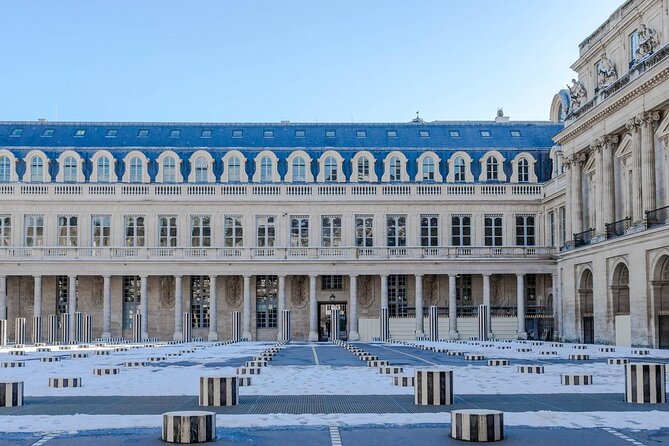
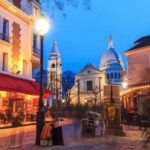
You begin at the Jardin du Palais Royal area, ordered in 1633 by Cardinal de Richelieu. It’s a smart first stop because it sets the “why” behind a lot of Paris space. This palace-and-garden complex sits close to the Louvre, and it was positioned so Richelieu could stay near the king—an early example of how proximity to power shaped city planning.
What I like here is the contrast. You’re in the heart of Paris, close to major institutions, yet the Jardin du Palais Royal gives you a calmer visual rhythm—space, greenery, and the sense that this place has been used for centuries. The area is also described as hidden among government and cultural buildings like the Constitutional Council and the Ministry of Culture and Communication, plus Comédie-Française and the Theatre du Palais Royal.
The stop is marked as free and only about 20 minutes, so treat it as a launchpad. Look up at the surrounding context, then glance toward the cultural anchors nearby. Even if you don’t go inside every building, you’ll start recognizing the “Paris pattern” that repeats across the city: formal power buildings, then arts institutions right beside them.
If you enjoy Paris when it’s a little less obvious, start here. This is the kind of space that helps you feel the city’s structure, not just its highlights.
Comédie-Française and Molière: Theatre as a Living Institution
Next you move to La Comedie Francaise, where you’ll hear about Molière and why his plays still matter. The key idea is simple: Comédie-Française isn’t just important historically—it’s described as the oldest active theatre company in the world. That’s a rare status, and it changes how you think about the building.
You also get a quick chance to connect French theatre to the wider European culture story. Molière’s plays have been translated into major living languages, but the company’s long-running tradition is what keeps the work anchored in France rather than turning it into a museum-only idea.
This stop is short (around 5 minutes) and free, so it works best if you treat it as a spotlight, not a deep dive. Ask Ned one good question, something like what you’ll see or hear later if you attend a performance. In a small-group format, you can often get a direct recommendation without it turning into a lecture.
Rue Saint-Honoré: The Street Where Chic Shows Up Daily
Then the tour shifts into the everyday Paris you can feel through your feet. Rue Saint Honore runs 1,840 meters (that’s about 6,036 feet), tying the central area to the prestigious 8th arrondissement. It’s known for a trendy side, and the route makes that obvious with the mix of cultural/historical references and the straight-up shopping atmosphere.
This is where the tour’s fashion-and-jewelry angle becomes real. You’ll see Haussmann-style façades setting up a kind of stage for chic boutiques. Even if you don’t buy anything, the street teaches you how luxury branding lives on the street level: storefront rhythm, window displays, and the way pedestrians flow through the space day and night.
One useful approach: slow down for one block. Pick a single building façade and notice the lines, the spacing, and how the street feels different depending on where you’re standing. Ned’s storytelling here helps you read the architecture instead of just walking past it.
This stop is about 25 minutes, and it’s free. It’s also a great time to ask what else in the area is worth a quick look after the tour ends—especially if your interests skew toward fashion, accessories, or perfume.
Eglise Saint-Roch: Large Church, Mixed Styles, Practical Scale
After the shopping street, you step into a more architectural moment with Eglise Saint-Roch. It’s described as one of the larger churches in Paris, with a plan inspired by Notre-Dame-de-Paris and a length of 126 meters. That scale matters. It can make the city feel even bigger because the church stretches your sense of space.
Because the church took many decades to build, you’ll see multiple architectural styles mixing together—classical alongside baroque elements. For me, that mix is more interesting than a pure single-style building. It reflects how cities change over time, even when the site’s purpose stays the same.
This stop is about 15 minutes and free, so don’t plan to exhaust the inside. Instead, focus on what you can catch quickly: the overall shape, the way styles appear to transition, and any exterior detail you can photograph without blocking other people.
If you’re someone who likes churches but hates long museum-style stops, this timing is a good balance.





Place-Vendôme: Why Louis XIV and Napoleon’s Footprints Lead to Jewelry
Now you hit one of the most “Paris-luxury” named spaces for jewelry: Place-Vendome. The square was laid out in 1702 as a monument to the glory of Louis XIV’s armies, the Sun King. Later, it’s described that the Vendôme Column replaced the original monument to celebrate Napoleon Bonaparte’s victory at Austerlitz in 1805, modeled after Trajan’s Column in Rome.
That’s the storyline you want before you look at the shops. Otherwise it can feel like a generic shopping square. With the historical context, it reads like a place where state power helped shape the physical center of elite life. Today, the square is well known for luxury boutiques and jewelry—and the link makes more sense when you know the square’s ceremonial background.
This stop is about 20 minutes and free. Use it well. Stand at one edge of the square first and take in the geometry. Then walk toward the shopping side and look at the storefront style and window displays. You’ll notice that the luxury look is consistent even across different brands—it’s designed to feel like the square belongs to the same world.
If you care about jewelry, this is one of the most useful parts of the tour. It’s not only where people sell sparkling things. It’s where Paris signals status through space, not just products.
Palais Garnier Area: Grand Opera Outside, Optional Inside
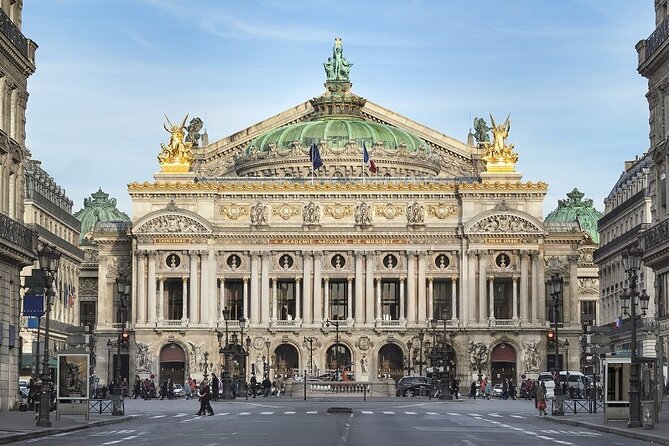
The tour reaches Palais Garnier, the glamorous opera house commissioned by Emperor Napoleon III as part of a broader reconstruction of Paris. A competition was held in 1860 for the best design, and the building became a long-term center of cultural excellence, hosting high-profile operas and ballet.
Even if you never plan to see a performance, Palais Garnier is worth seeing in person. The energy is in the scale and the visual confidence of the architecture. And because this tour keeps you outdoors and nearby, you can watch the crowd movement and understand why this area has a reputation for style and culture.
Here’s the key practical detail: a visit inside the Opera House costs 14 Euro and is not included in the tour price. That means you can keep moving through the neighborhood without committing to extra time right away.
If you’re deciding on the spot, I’d weigh it like this:
- If you want architecture and interior details, plan for the extra 14 Euro.
- If you prefer to spend your limited time on street-level fashion and nearby museums, enjoy Palais Garnier from the outside and keep your day flexible.
This stop is about 25 minutes and free for the outside portions. It ends up being one of the most satisfying “big moment” stops because the tour’s theme—culture and luxury—comes together in a single location.
Musée du Parfum – Fragonard: Scent as Modern Luxury

Before the tour ends, you stop at the Musée du Parfum – Fragonard near Opéra Garnier. This is a fun add-on because it treats perfume as a luxury object with a long timeline—and it’s described as one-of-a-kind, instructive, and tied to everyday life.
The museum uses objects across time to tell the story. You’ll see ancient-style items like kohl pots, pomanders, vinaigrettes, perfume burners, pots-pourris, smelling salt bottles, and precious flasks. The collection also traces perfume history from Ancient Egypt to the 20th century.
This is why it fits the rest of the tour. The fashion and jewelry story is about taste, identity, and craft. Perfume is the same idea—but in the sense of smell, not just sight. It helps you understand why Paris brands treat scent like something you wear.
The museum stop is listed as about 15 minutes and admission is noted as free for this tour. Given the short time, treat it as a “sampling history” moment. If you love it, you can always plan a longer independent visit later.
Price and Time Value: Is $74.49 Worth It?
At $74.49 per person for roughly 2 hours 10 minutes, this tour is priced in the mid-range for a Paris walking experience. The value comes from two things: you get a tight route covering major landmarks tied to theatre, churches, and luxury shopping, and most stops are free at the point of entry.
You’re also getting a guide who can answer questions while you walk, which is hard to replicate on your own when you’re moving quickly between districts. A small group (max 5) makes that part more real than theoretical.
The one cost you should plan for is the optional Opera interior, listed at 14 Euro. If you add that, your spend goes up—but you’re still getting a guided context for the outside area and the surrounding stops.
If you’re doing a tight first day and you want a fast mental map of where to go next—especially if your interests lean toward fashion, accessories, and luxury—this price usually feels fair.
Practical Tips That Make This Tour Easier
- Bring a phone you can use for the mobile ticket. You’ll want it ready at the start.
- Plan for a daytime pace. This tour starts at 10:00 am and stays around the center city; you’ll walk, stop, and move on.
- Ask one question at each major shift. Richelieu and Palais Royal, then theatre with Comédie-Française, then luxury zones at Rue Saint-Honoré and Place-Vendôme.
- If the Opera interior matters, budget the 14 Euro early. Decide before you’re tired and standing outside with limited time.
Also, since the tour is offered in English, you can focus on the stories without needing translation apps.
Who This Tour Fits Best
This is a strong match if you:
- Want fashion and jewelry context tied to the actual Paris streets where luxury is concentrated.
- Like culture stops that are short but meaningful: garden, theatre landmark, church scale, opera-area architecture, and a museum-with-a-theme.
- Prefer a small group format where you can ask questions instead of listening from the back.
It’s also a good fit for first-timers who want a readable route from central start to Opéra finish. And if you’re already planning to spend time shopping, you’ll appreciate knowing the history and planning logic behind the area instead of just following storefronts.
Should You Book This Opéra, Jewellery, and Fashion Walking Tour?
I’d book it if your goal is to get oriented quickly while you learn why the Opéra area feels the way it does—where politics, performance, architecture, and luxury meet in a walkable chain of stops. The small-group size and the guide’s storytelling style are the main reasons it works, not just the list of famous names.
Skip or rethink it if you’re specifically hoping for a full guided interior experience of the Opera House without extra fees, since the inside visit isn’t included. If you’re okay with that and you like mixing street-level style with cultural context, this is a very solid use of your time.
If you want, tell me your travel dates and what you care about most (fashion history, jewelry shopping, perfume, or opera architecture), and I’ll suggest how to pair this walk with a smart follow-up plan near Opéra.
FAQ
How long is the Palais Royal, Opéra, and Fashion walking tour?
It runs for about 2 hours 10 minutes.
How much does the tour cost?
The price is $74.49 per person.
What language is the tour offered in?
The tour is offered in English.
Is the group size small?
Yes. The tour is described as having a maximum of 5 travelers.
Do I need to buy tickets for the stops?
Most stops listed on the tour are free (including Jardin du Palais Royal, Comédie-Française area stop, and Place-Vendome). A visit inside the Opera House is not included and costs 14 Euro.
Where does the tour start and end?
It starts at Le Nemours 2 à 7, Galerie de Nemours, 2 Place Colette, 75001 Paris, and ends at Pl. de l’Opéra, 75009 Paris.
When does the tour depart?
The start time is 10:00 am. Confirmation is received at booking time.