REVIEW · PARIS
Classical Perfume Workshop in Paris Ier
Book on Viator →Operated by Molinard Parfums GLB SAS · Bookable on Viator
The best part of this Paris workshop is that you leave with more than a bottle of perfume. You learn how a scent is built, then use a genuine perfume organ to make a fragrance that is yours. It is a hands-on session, not a sales pitch disguised as a lesson.
I like the patient guidance and the chance to test many notes before committing. I also like the practical souvenir: a 50 ml bottle, plus a diploma and a stored formula for future reorders. The main drawback is the firm schedule. Arriving more than 15 minutes late means cancellation, with no refund.
In This Review
- Key points to know before you book
- Creating a Paris perfume on Rue Saint-Honoré
- The first stage: learning how perfume is built
- Using the perfume organ and 90 essences
- Refining your personal fragrance
- The 50 ml bottle and what you take home
- Is $102.03 a good value?
- Who will enjoy this workshop most?
- Group size, timing, and the late-arrival rule
- What the workshop teaches you about perfume
- Small drawbacks to keep in mind
- Should you book the Molinard Paris perfume workshop?
- FAQ
- Where does the perfume workshop take place?
- How long does the experience last?
- How many essences can I choose from?
- What do I take home?
- Is an instructor included?
- Can I order the same perfume again?
- Is food or drink included?
- Can children participate?
- How large is the group?
- What happens if I arrive late?
Key points to know before you book
- Choose from 90 essences: You can compare many notes and build a fragrance around your own taste.
- Learn top, heart, and base notes: The workshop explains the basic structure behind a finished perfume.
- Take home 50 ml of your blend: Your personal eau de parfum is included, along with a diploma.
- Get hands-on help: Guides such as Samantha assist with combining notes and adjusting the final scent.
- Plan for a strict 90-minute appointment: The session begins at Molinard Paris 1er, 270 Rue Saint-Honoré.
- Check the age and group limit: The information gives both age 6 and age 10 as minimums, and lists group limits of 10 and 20, so confirm the details when booking.
Creating a Paris perfume on Rue Saint-Honoré
This workshop takes place at Molinard Paris 1er, at 270 Rue Saint-Honoré in the 1st arrondissement. You meet at the shop and finish there, making it easy to combine with time around the Louvre, the Tuileries, or central Paris shopping streets.
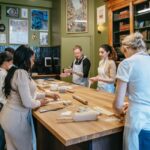
The setting matters here. The workshop uses a downstairs room described as beautiful, giving the class a calmer feel than a quick retail demonstration. You are there to smell, compare, ask questions, and make decisions at your own pace within the 90-minute session.
You do not need to arrive with a technical understanding of perfume. The instructor introduces the basic ideas first, then helps you apply them. That makes this a good choice for someone who loves fragrance but cannot tell a top note from a base note, as well as for someone already familiar with perfume families.
The experience is offered by Molinard, a French perfume house. The workshop presents perfume making as both an art and a bit of science. You work with individual essences, consider how they combine, and gradually move toward a finished scent.
A few more Paris tours and experiences worth a look


The first stage: learning how perfume is built
The class begins with an explanation of French perfume and the parts that make up a fragrance. You learn about top, heart, and base notes, terms that can seem abstract until you smell them side by side.
Top notes are the first impression of a perfume. They tend to appear quickly and fade sooner. Heart notes give the fragrance its central character, while base notes last longer and help anchor the blend. You do not need to memorize a textbook definition. The useful part is noticing how a scent changes over time.
This short lesson gives you a better way to describe what you like. Instead of saying that you want something nice, you can think in terms of fresh, warm, floral, woody, spicy, or other scent qualities. The instructor also explains how notes can complement or contrast with each other.
That guidance is important because a perfume can smell appealing on its own but work poorly in a blend. A skilled instructor can help you avoid adding too many competing notes. The named host Samantha received especially warm praise for being kind and helpful, while other instructors were described as patient and clear when answering questions.
The class does not promise that every first idea will be perfect. That is part of the fun. You test combinations, notice what changes, and make adjustments before settling on the final formula.
Using the perfume organ and 90 essences
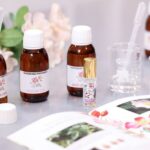
The central tool is a traditional perfume organ, a display arranged with fragrance ingredients for sampling and blending. You choose from 90 essences, which gives you plenty of room to develop a personal direction.
You will smell individual ingredients and decide which ones appeal to you. Some may immediately catch your attention. Others may be more useful as supporting notes. The instructor helps you think about balance, strength, and how one ingredient affects another.
This is where the workshop feels more personal than buying a bottle from a department store. A shop lets you compare finished products. Here, you create the combination yourself. You can make choices based on memory, mood, or simple curiosity.
You should pace yourself during this section. Smelling too many scents in quick succession can make it harder to tell them apart. The instructor is there to help, but you still need to give your nose time to reset and keep track of the notes you prefer.
The 90-minute schedule gives the activity enough space for experimenting, but not so much that you lose focus. You will not spend an entire afternoon making dozens of versions. Instead, you get a compact introduction to perfume composition with a finished product at the end.
Refining your personal fragrance
After choosing a direction, you begin combining the selected essences. This is the stage where the instructor’s help becomes most useful. You can ask whether two notes will work together, decide if a blend needs more depth, or remove an ingredient that dominates the formula.
The goal is not to produce a famous perfume replica. It is to make a scent that suits you. One couple used the workshop to prepare fragrances for their wedding, leaving with two bespoke scents refined with help from the perfume expert. That makes the experience especially appealing for a birthday, anniversary, wedding trip, or other personal occasion.
You can also make this a shared activity. Couples compare their choices, friends sample one another’s creations, and families can work on separate perfumes during the same session. One account described a group of six enjoying the process and trying each other’s fragrances.
The social side is worth noting. You will likely work near other people making their own decisions, and the experience can be more fun when everyone is willing to compare results. At the same time, fragrance is personal. A scent you love may not appeal to someone else, so the workshop is best approached with curiosity rather than a search for one correct formula.
The 50 ml bottle and what you take home
The price includes a 50 ml bottle of eau de parfum. That is a useful size for a personal fragrance and gives the experience a lasting souvenir rather than a tiny sample vial.
You also receive a diploma. It is a lighthearted keepsake, but it adds to the sense that you completed a real introduction to perfume making. All equipment and materials are included, so you do not need to bring bottles, droppers, or other supplies.
A practical bonus is that Molinard keeps your blend on file for future reorders. If you return to Paris or want the same fragrance later, you can ask about reproducing your formula. This is one of the strongest reasons to choose a custom perfume workshop over a simple scent consultation.
The shop also offers a 20 percent discount after the workshop, according to the experience details provided by past participants. That can make additional purchases tempting, especially if you find a Molinard fragrance you like. The discount is useful, but remember that the $102.03 price already covers the class, materials, bottle, instructor, and diploma. Food and drinks are not included.




Is $102.03 a good value?
At $102.03 per person, this is not a budget activity. You are paying for a guided lesson, access to 90 essences, professional equipment, a 50 ml finished perfume, and a personal formula you may be able to reorder.
The value depends on what you want from a Paris activity. If you only want a bottle of French perfume, you can spend less in a shop. If you want an activity that teaches you something and produces a personal souvenir, the price is easier to justify.
I think the cost works best for couples, perfume fans, and people celebrating something. The wedding example shows how the workshop can become part of a larger memory rather than another item on a sightseeing checklist. It also suits families looking for an indoor activity that is creative and not centered on a major monument.
The price may feel high if you have little interest in fragrance or if your schedule is already packed with paid attractions. Ninety minutes is not a huge time commitment, but the class requires your attention. You are making choices throughout, not simply watching a demonstration.
Who will enjoy this workshop most?
Perfume lovers are the obvious match, but you do not need a large fragrance collection to enjoy the session. If you like experimenting, comparing scents, or making something personal, you can get a lot from it.
Couples are especially well suited to the format. You can create separate perfumes, compare your choices, or make scents connected to a special occasion. Friends can turn it into a relaxed group activity, and the group size is small enough to keep the experience manageable.
Families should check the age rule carefully. The information says children must be at least 6 years old, while another description says the workshop is from age 10. Since those details do not match, confirm the minimum age for your chosen session before paying.
The activity is also suitable for most people in general, and it is near public transportation. No special fitness ability is suggested or required. The work is done indoors and involves smelling and blending rather than walking between sights.
Group size, timing, and the late-arrival rule
The workshop lasts about 90 minutes. That is long enough to explain the basics, test ingredients, blend a scent, and fill your bottle. It is short enough to fit into a day of sightseeing in central Paris.
The group limit is not stated consistently. One part gives a maximum of 20 people, while the additional information says a maximum of 10 travelers. A group of 10 would offer more room for individual help, while 20 could feel more like a class. Confirm the actual number for your date if group size matters to you.
Arrive early. A delay of more than 15 minutes results in cancellation, and the booking cannot be changed or refunded. This is especially important if you are coming from another appointment, relying on public transportation, or trying to squeeze the class between timed museum entries.
I would not schedule a major attraction immediately afterward. The workshop itself has a fixed end time, but you may want a few extra minutes to browse the shop, collect your finished bottle, or simply let the fragrance settle before rushing away.
What the workshop teaches you about perfume
The most useful lesson is that perfume is not just one smell. It is a sequence that develops as different notes appear and fade.
The workshop helps you notice structure. You may begin with a bright opening, add a central note that gives the fragrance its character, and finish with something that lasts longer on the skin. The instructor explains how notes can support or challenge each other, which gives you a better basis for choosing.
That knowledge can improve your future perfume shopping. You will have a clearer idea of why one fragrance feels too sharp, too sweet, too heavy, or too plain. Even if your custom blend becomes an occasional scent rather than an everyday favorite, the lesson continues to be useful.
The process also makes perfume feel less mysterious. You are shown the ingredients and the decisions behind the final product. For many people, that is more interesting than simply buying a bottle with a polished label and a French name.
Small drawbacks to keep in mind
The strict cancellation policy is the biggest practical concern. This experience is non-refundable and cannot be amended for any reason, so double-check your date, time, and party size before booking.
Fragrance is also subjective. The instructor can guide you, but no one can guarantee that your final blend will match your first idea. Smell fatigue may become an issue if you test too many essences at once, so take your time and avoid rushing into a formula.
The age and group limits need clarification because the supplied details conflict. That does not necessarily affect most bookings, but it matters if you are bringing a young child or planning a larger party.
Finally, food and drinks are not included. That is hardly surprising for a perfume class, but plan a café stop separately if you are building a meal around the appointment.
Should you book the Molinard Paris perfume workshop?
Book it if you want a distinctly Parisian activity that is creative, personal, and easy to fit into a sightseeing day. The 90 essences, perfume organ, expert guidance, 50 ml bottle, diploma, and stored formula make this more than a standard fragrance-shopping stop.
I would especially recommend it for couples, perfume fans, families with eligible children, and anyone marking a special event. Samantha and the other instructors bring a helpful, patient approach, and the beautiful setting adds polish without taking attention away from the activity.
Skip it if you are looking for the cheapest souvenir, dislike strong smells, or have a schedule that cannot tolerate a firm appointment. Confirm the age requirement and actual group limit before booking, arrive well ahead of time, and remember that the purchase is non-refundable. For the right visitor, this is a thoughtful way to take home a small piece of Paris that exists nowhere else.
FAQ
Where does the perfume workshop take place?
The workshop begins and ends at Molinard Paris 1er, located at 270 Rue Saint-Honoré, 75001 Paris, France.
How long does the experience last?
The workshop lasts approximately 1 hour and 30 minutes.
How many essences can I choose from?
The workshop provides access to 90 essences for smelling, comparing, and blending.
What do I take home?
You receive a 50 ml bottle of your custom eau de parfum and a diploma.
Is an instructor included?
Yes. An instructor is included and guides you through the fragrance structure, ingredient choices, and blending process.
Can I order the same perfume again?
The blend can be kept on file for future reorders, according to the experience details.
Is food or drink included?
No. Food and drinks are not included.
Can children participate?
The additional information says children must be at least 6 years old, while the workshop description says from age 10. Confirm the applicable minimum age before booking.
How large is the group?
The information gives two different limits: 20 people per group in one description and a maximum of 10 travelers in another. Confirm the group size for your session.
What happens if I arrive late?
A delay of more than 15 minutes results in cancellation of the workshop. The experience is non-refundable and cannot be changed for any reason.